No portrait yet
Nyindu Erotic
Mwenga Territory, on the edge of the Itombwe highlands, South Kivu province, eastern Democratic Republic of the Congo
Kinyindu (Bantu, Niger-Congo); Swahili as regional lingua franca, French in schooling and administration
Mainly Christian (Catholic, Protestant, Pentecostal), with ancestral beliefs and customary authority still significant
Great Lakes Bantu people of South Kivu; linguistically related to the neighboring Shi and Fuliiru
About Nyindu People
The Nyindu, who call themselves Banyindu, are one of the smaller peoples of South Kivu, and much of what defines them is holding their own ground among larger neighbors. Eastward are the Shi, with their old kingdoms around Bukavu. Westward lie the forest lands of the Lega. To the south and southeast are the Bembe and the Fuliiru. The Nyindu live in Mwenga Territory between them, on the edge of the Itombwe highlands. There are not many of them, but they have their own language, their own customary chiefs and a sharp sense of which hills belong to whom.
Kinyindu is a Bantu language usually grouped with Shi and Fuliiru among the Great Lakes languages of the Kivu region. It is mostly spoken at home and in the village. Swahili, the common language of eastern Congo, is used at the market, in church and on the road. French is for school certificates and government offices. Many Nyindu move between Kinyindu and Swahili without a second thought. Public religious life is Christian, both Catholic and Protestant, and Pentecostal churches are gaining ground here as they are across the Kivus. Older ideas have not disappeared. Ancestors still matter, and customary chiefs still hold authority over land, which in this part of Congo is never a small thing.
Land runs through recent Nyindu history. Banyamulenge cattle herders also graze the Itombwe plateau above Nyindu villages, and competing claims to customary authority there fed directly into the Congo wars that began in 1996. Mwenga Territory went through massacres, rebel occupation and years of shifting armed control. Militias drawn partly from Nyindu communities fought in the highlands alongside Bembe and Fuliiru groups. The Itombwe forests are among the richest mountain forests of the Albertine Rift. They were declared a nature reserve in 2006, which added conservation rules to an already crowded argument over who may farm, hunt and dig where.
Daily life is agricultural: cassava, bananas, beans and maize grown on steep fields, plus goats and chickens. Many young men are drawn to small-scale gold digging, which has shaped the Mwenga economy since colonial mining companies arrived. It is remote, hard country, reached by roads that turn to mud in the rains, and the Nyindu remain rooted in it.
Related ethnic groups
Groups that share Nyindu's homeland, region, language, or religious tradition. These are likely candidates for comparative phenotype reference.
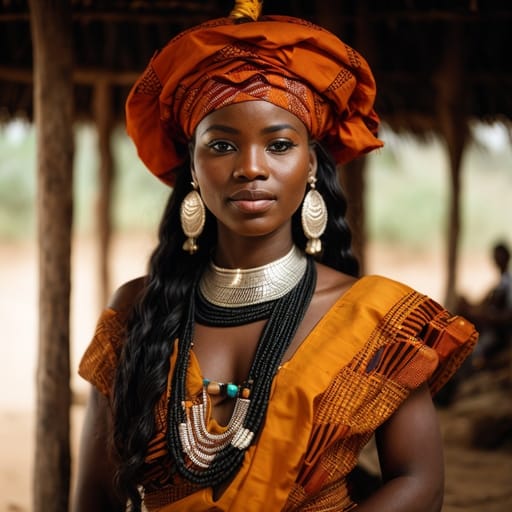
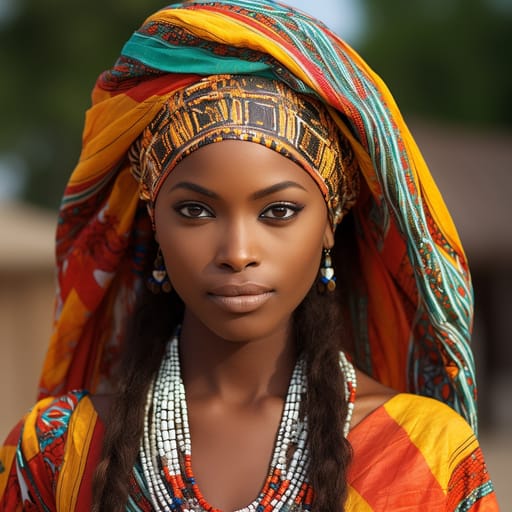
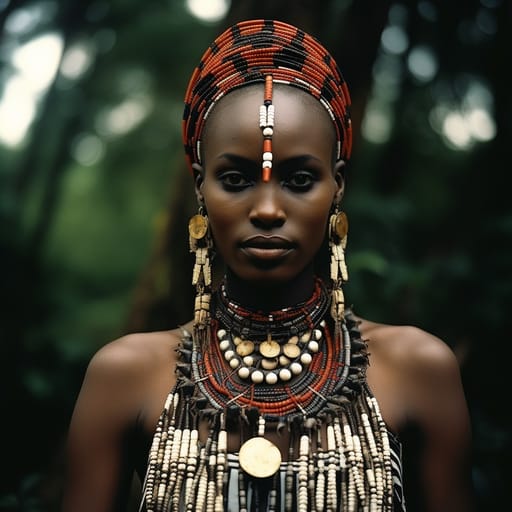
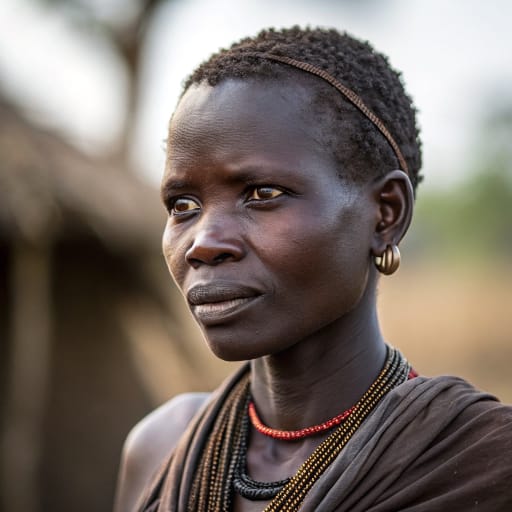
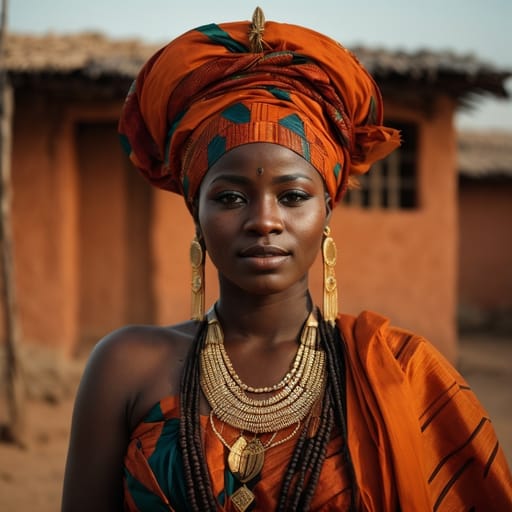
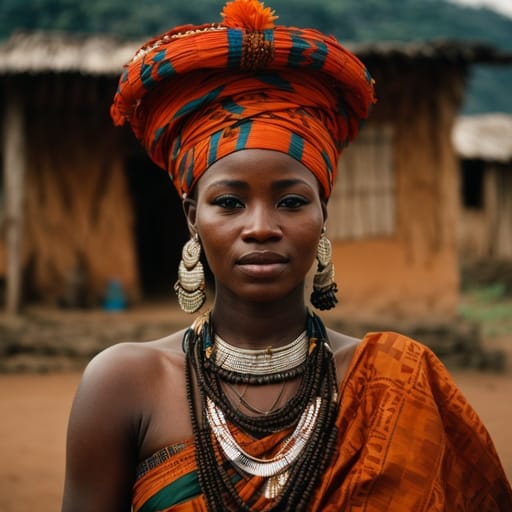
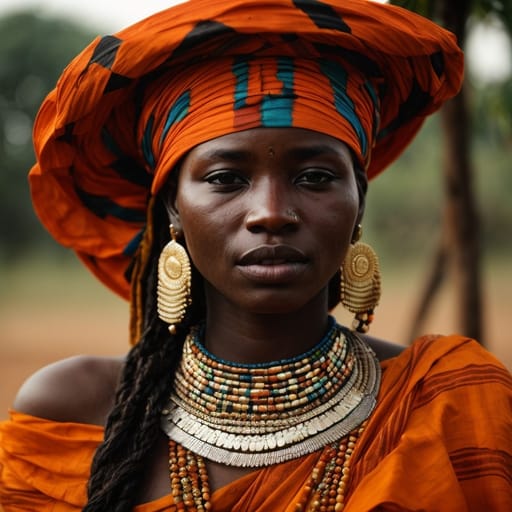
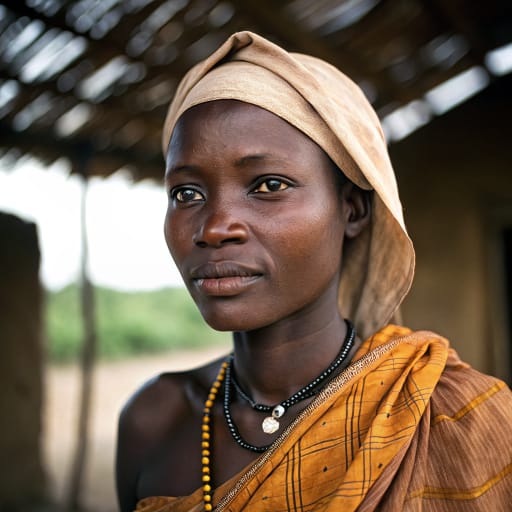
Typical Nyindu Phenotypes
Reference for AI generation: hair, eyes, skin, facial structure, build
Nyindu Body & Anatomy Reference
Anatomy by feature, Bantu / Central African Niger-Congo phenotype
Nyindu Boobs & Breasts
Bust reference for Nyindu women: medium-to-large cup, full, projecting, which is typical of Bantu / Central African Niger-Congo ancestry. Areolas measure about 32-48mm across, with deep-brown pigmentation. Body type (mesomorph with strong gluteal-femoral fat deposition) shapes the bust as well, so Nyindu tits are usually fuller projection than East African; comparable to West African norm. In AI imagery, keep the forward-set shape rather than drifting toward the smaller East African conical profile.
Nyindu Ass & Hips
The Nyindu ass is typically full, projected, wide-set glutes, which sets it apart from the slim narrow-hip Cushitic East African profile. Underneath, the pelvis shows broad iliac crests, gynoid pelvic pattern, part of the Bantu / Central African Niger-Congo skeletal pattern. For Nyindu butt pics and AI renders, match that silhouette and the overall build (mesomorph with strong gluteal-femoral fat deposition).
Nyindu Vagina & Pussy
Nyindu pussy and vulvar anatomy presents deep-brown labial pigmentation, fuller labia minora, consistent with the Bantu / Central African Niger-Congo phenotype's pigmentation pattern. Nyindu pubic hair is typically tightly-coiled coarse texture, dense distribution, in the inverted-triangle pattern. For anatomically accurate Nyindu pussy renders the labial coloration should match the surrounding deep-brown skin tone with a continuous gradient, and the hair should keep its tightly-coiled coarse texture.
Nyindu Dicks & Penis
Nyindu dicks follow the Bantu / Central African Niger-Congo reference data: regional mean ~14cm erect; above-average girth; deep-brown shaft pigmentation. Shaft color should track the deep-brown skin tone with a smooth change toward the glans, and Nyindu pubic hair keeps its tightly-coiled coarse texture.
Nyindu Body, Curves & Build
Nyindu body type and overall build presents as mesomorph with strong gluteal-femoral fat deposition, with mean adult female BMI 23-26: the characteristic Bantu / Central African Niger-Congo habitus. Nyindu curves and proportions should keep the regional skeletal frame (height, shoulder-to-hip ratio, limb proportions) rather than a generic mesomorph default.
Nyindu Skin Tone & Hair Texture
Nyindu skin sits in the deep-brown (Fitzpatrick VI) band. Hair is typically tight 4A-4C coil, in keeping with the Bantu / Central African Niger-Congo phenotype. In nude renders the skin should stay one even tone from face to body, and body, pubic and head hair should match.
Explore phenotype categories
Structured taxonomy with peer-reviewed scales · 22 anatomical categories
Erotic Poses & Sex Positions
From the pose catalog: 219 named positions with reference skeletons
Frequently asked questions about Nyindu people
Where is the Nyindu homeland?
The Nyindu homeland is Mwenga Territory, on the edge of the Itombwe highlands, South Kivu province, eastern Democratic Republic of the Congo in Central Africa.
What language do Nyindu people speak?
Nyindu people primarily speak Kinyindu (Bantu, Niger-Congo); Swahili as regional lingua franca, French in schooling and administration.
What religion do Nyindu people practice?
The predominant religion among Nyindu people is Mainly Christian (Catholic, Protestant, Pentecostal), with ancestral beliefs and customary authority still significant.






Make your own Nyindu images
Five a day, free, no credits to buy. The studio starts from this group's phenotype data, so you can set body type, pose and style and keep the traits accurate.
Start with Nyindu