No portrait yet
Ngando Erotic
Equatorial rainforest of Tshuapa Province (formerly part of Équateur), Democratic Republic of the Congo, around Djolu between the Lopori and Maringa rivers
Longando (Niger-Congo, Bantu, Mongo group); Lingala widely used as a regional lingua franca, French in school and administration
Mostly Christian (Catholic and Protestant), with respect for ancestors and customary taboos still observed
Part of the wider Mongo cluster of Bantu peoples of the central Congo Basin; also recorded as Bongando
About Ngando People
The Ngando are a Congo Basin forest people who know themselves first by language and lineage: they speak Longando, and they belong to patrilineal clans tied to particular villages and stretches of forest. Their home is Tshuapa Province in the Democratic Republic of the Congo, around Djolu, in the wet lowland country between the Lopori and Maringa rivers. Older sources often write the name as Bongando. Longando is one of the Mongo languages of the Bantu family, which puts the Ngando in close linguistic company with the Nkundo, Ekonda and other Mongo peoples living inside the great bend of the Congo River. Lingala carries trade and travel between these communities, and French is the language of school and government. Village life still leans on the forest. Families clear fields for cassava and other crops and let old plots grow back, while hunting, trapping and river fishing fill out the table. Catholic and Protestant missions arrived in the colonial period, and Christianity is now the majority faith, though respect for ancestors and older rules about food have not gone away.
Those food rules made the Ngando unexpectedly familiar to scientists. Around the village of Wamba, where Japanese primatologists have followed wild bonobos since the 1970s, many Ngando refused to eat the apes, with a story that makes bonobos and people distant kin. Researchers have credited that taboo with helping one of the best studied bonobo populations survive. The protection frayed during the Congo wars of the late 1990s and early 2000s, when soldiers, outsiders and hunger reached deep into the forest and research at Wamba was interrupted. Those wars were not the region's first catastrophe. Under King Leopold II's Congo Free State, the Lopori and Maringa basins were rubber concession territory, and collection quotas were enforced with hostage taking, mutilation and killing. Belgian colonial rule, independence and long decades of neglect followed. Today the Ngando live in a remote corner of the country where roads are few and the state is thin, and their villages remain the working center of life in the forest.
Related ethnic groups
Groups that share Ngando's homeland, region, language, or religious tradition. These are likely candidates for comparative phenotype reference.
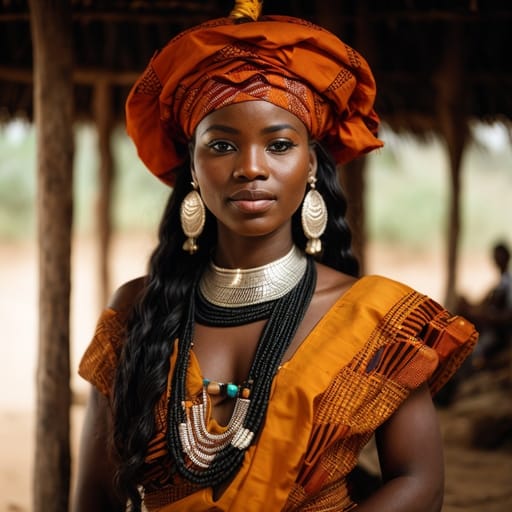
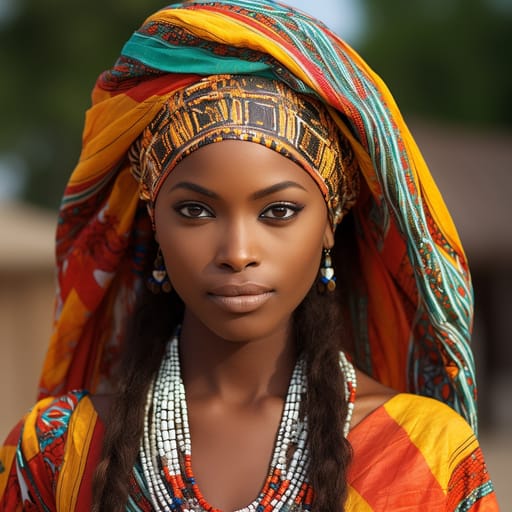
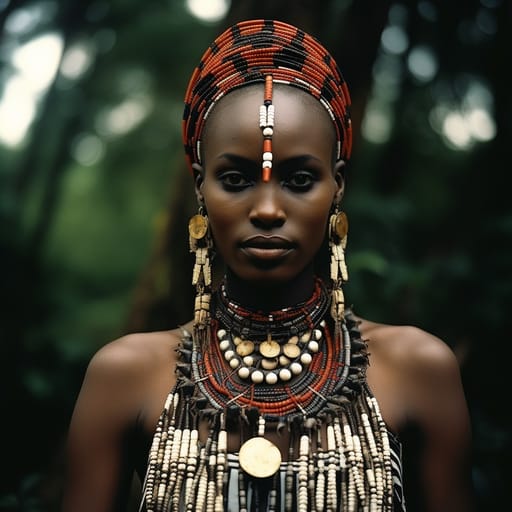
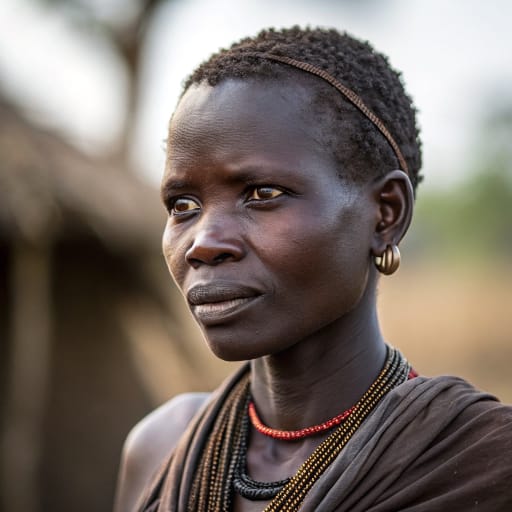
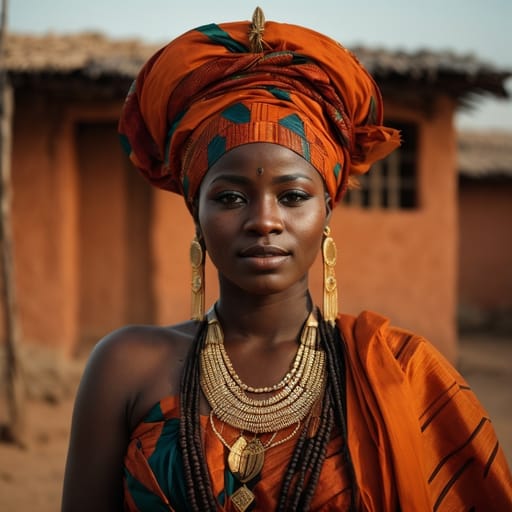
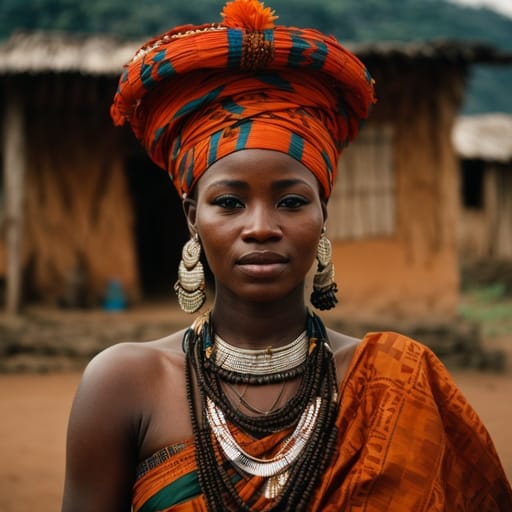
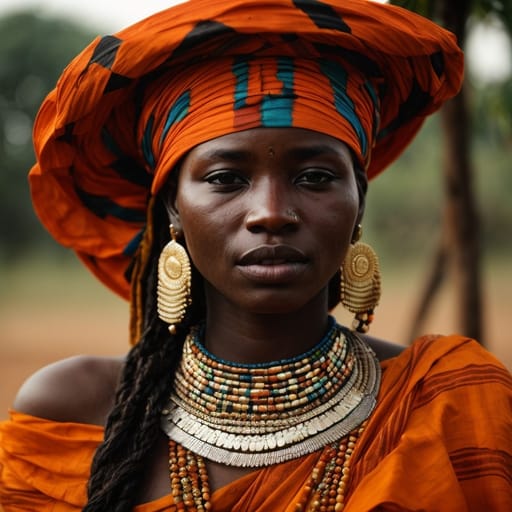
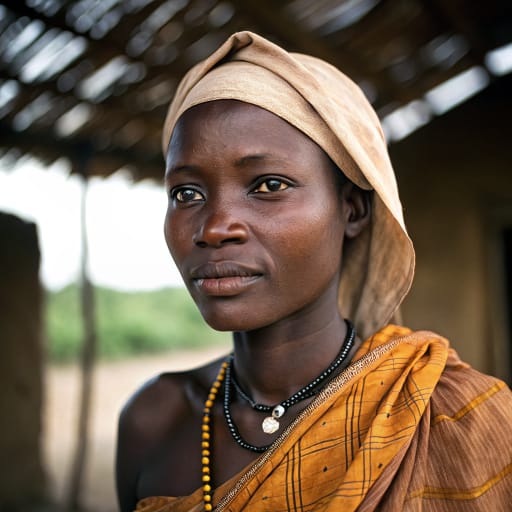
Typical Ngando Phenotypes
Reference for AI generation: hair, eyes, skin, facial structure, build
Ngando Body & Anatomy Reference
Anatomy by feature, Bantu / Central African Niger-Congo phenotype
Ngando Boobs & Breasts
Bust reference for Ngando women: medium-to-large cup, full, projecting, which is typical of Bantu / Central African Niger-Congo ancestry. Areolas measure about 32-48mm across, with deep-brown pigmentation. Body type (mesomorph with strong gluteal-femoral fat deposition) shapes the bust as well, so Ngando tits are usually fuller projection than East African; comparable to West African norm. In AI imagery, keep the forward-set shape rather than drifting toward the smaller East African conical profile.
Ngando Ass & Hips
The Ngando ass is typically full, projected, wide-set glutes, which sets it apart from the slim narrow-hip Cushitic East African profile. Underneath, the pelvis shows broad iliac crests, gynoid pelvic pattern, part of the Bantu / Central African Niger-Congo skeletal pattern. For Ngando butt pics and AI renders, match that silhouette and the overall build (mesomorph with strong gluteal-femoral fat deposition).
Ngando Vagina & Pussy
Ngando pussy and vulvar anatomy presents deep-brown labial pigmentation, fuller labia minora, consistent with the Bantu / Central African Niger-Congo phenotype's pigmentation pattern. Ngando pubic hair is typically tightly-coiled coarse texture, dense distribution, in the inverted-triangle pattern. For anatomically accurate Ngando pussy renders the labial coloration should match the surrounding deep-brown skin tone with a continuous gradient, and the hair should keep its tightly-coiled coarse texture.
Ngando Dicks & Penis
Ngando dicks follow the Bantu / Central African Niger-Congo reference data: regional mean ~14cm erect; above-average girth; deep-brown shaft pigmentation. Shaft color should track the deep-brown skin tone with a smooth change toward the glans, and Ngando pubic hair keeps its tightly-coiled coarse texture.
Ngando Body, Curves & Build
Ngando body type and overall build presents as mesomorph with strong gluteal-femoral fat deposition, with mean adult female BMI 23-26: the characteristic Bantu / Central African Niger-Congo habitus. Ngando curves and proportions should keep the regional skeletal frame (height, shoulder-to-hip ratio, limb proportions) rather than a generic mesomorph default.
Ngando Skin Tone & Hair Texture
Ngando skin sits in the deep-brown (Fitzpatrick VI) band. Hair is typically tight 4A-4C coil, in keeping with the Bantu / Central African Niger-Congo phenotype. In nude renders the skin should stay one even tone from face to body, and body, pubic and head hair should match.
Explore phenotype categories
Structured taxonomy with peer-reviewed scales · 22 anatomical categories
Erotic Poses & Sex Positions
From the pose catalog: 219 named positions with reference skeletons
Frequently asked questions about Ngando people
Where is the Ngando homeland?
The Ngando homeland is Equatorial rainforest of Tshuapa Province (formerly part of Équateur), Democratic Republic of the Congo, around Djolu between the Lopori and Maringa rivers in Central Africa.
What language do Ngando people speak?
Ngando people primarily speak Longando (Niger-Congo, Bantu, Mongo group); Lingala widely used as a regional lingua franca, French in school and administration.
What religion do Ngando people practice?
The predominant religion among Ngando people is Mostly Christian (Catholic and Protestant), with respect for ancestors and customary taboos still observed.






Make your own Ngando images
Five a day, free, no credits to buy. The studio starts from this group's phenotype data, so you can set body type, pose and style and keep the traits accurate.
Start with Ngando