No portrait yet
Nyamusa Erotic
Western Equatoria State, South Sudan, in wooded savanna country shared with other small Central Sudanic farming peoples.
Nyamusa-Molo, with Nyamusa and Molo dialects (Central Sudanic, Bongo-Bagirmi branch, Bongo-Baka group; often placed within Nilo-Saharan)
Christianity (Anglican and Catholic churches predominate in the region) alongside traditional beliefs; specifics for the Nyamusa are poorly documented.
Two dialect communities, Nyamusa and Molo. Part of the Morokodo-Beli cluster of Bongo-Baka speaking peoples, alongside the Beli, Morokodo and Modo.
About Nyamusa People
The Nyamusa are one of the smallest named peoples of South Sudan, a farming community in Western Equatoria whose identity rests on a language shared with almost no one else. That language, Nyamusa-Molo, takes its double name from its two dialect communities, the Nyamusa and the Molo. The figure most often quoted for its speakers, which dates from the 1970s, is about 1,200, and nobody has published a reliable number since. In a state where the Zande are the largest group and the Moru, Baka and Mundu are the familiar names, the Nyamusa rarely make it onto a map.
Their speech places them firmly in a family. Nyamusa-Molo is Central Sudanic, part of the Bongo-Baka group, and its nearest relatives are Morokodo, Beli and Modo, spoken by other small peoples across the border country of Western Equatoria and Lakes. Linguists treat them as a tight cluster, close enough that the line between language and dialect is argued over. The wider family runs far to the west, through the Bongo to the Sara and Bagirmi languages of Chad. It is unrelated to Zande, which is Ubangian, and linked only distantly, if at all, to the Nilotic speech of the Dinka to the north.
That divide is also a way of life. The peoples of this cluster are cultivators, not herders. They grow sorghum, millet, groundnuts, sesame and cassava in wooded savanna where tsetse fly has long made cattle keeping difficult, and they round out the harvest with hunting, fishing and wild honey. The Dinka have an old word, Jur, for cattle-less outsiders of this kind, and it still clings to the names of the Nyamusa's closest linguistic kin, the Jur Beli and Jur Modo.
History has not been gentle with small farming peoples here. In the nineteenth century, Khartoum-based ivory and slave traders planted fortified camps across the region and raided the villages around them. The twentieth century brought two long civil wars, and fighting reached Western Equatoria again after 2015. Churches, mainly Anglican and Catholic, are now the public face of religion in the area, and they tend to sit alongside older ideas about ancestors, misfortune and healing instead of replacing them. How the Nyamusa themselves strike that balance has never been written down in any detail. Like most speakers of small South Sudanese languages, they live in several tongues at once: their own at home, a bigger neighbor's in the market, Juba Arabic on the road, English at school. The record on them amounts to a classification and a headcount, which says more about who has been keeping the record than about the people themselves.
Related ethnic groups
Groups that share Nyamusa's homeland, region, language, or religious tradition. These are likely candidates for comparative phenotype reference.
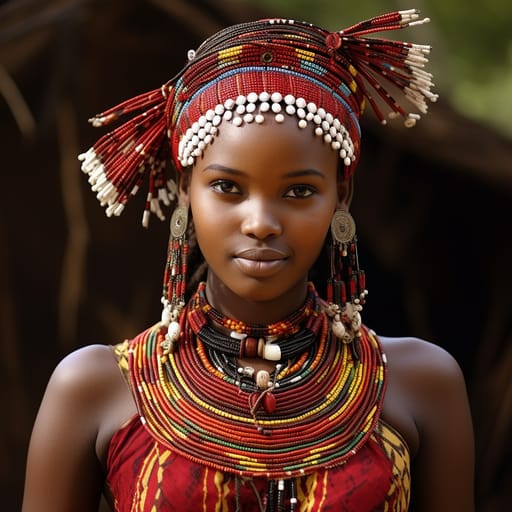
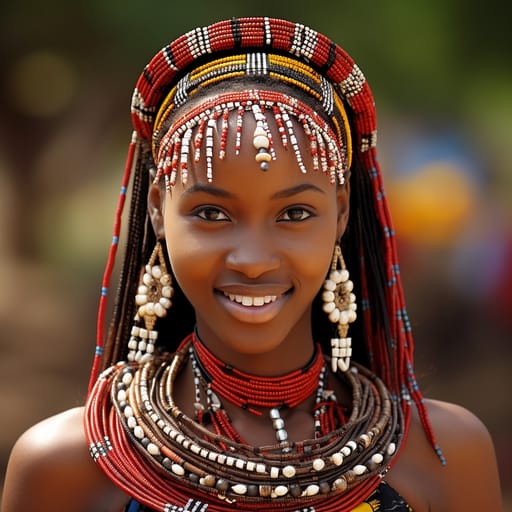
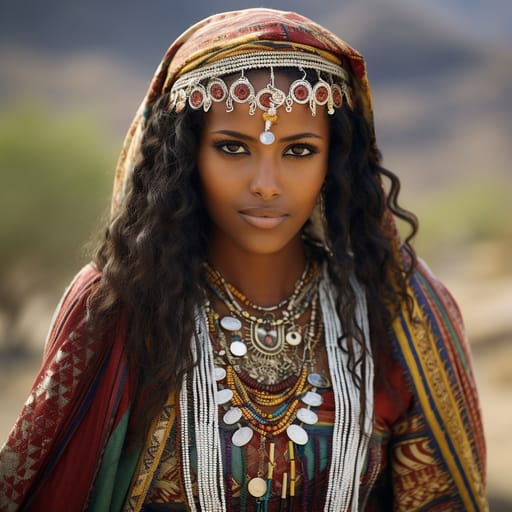
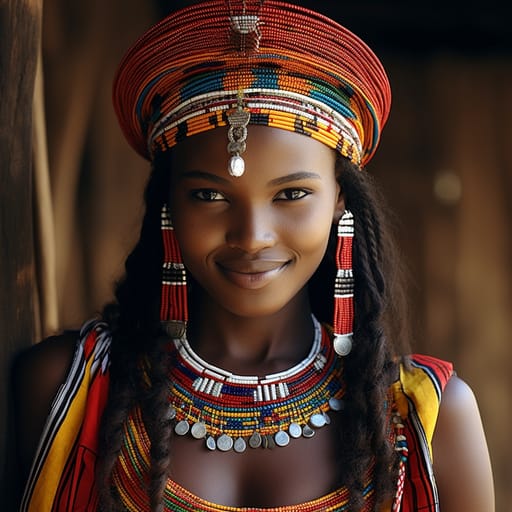
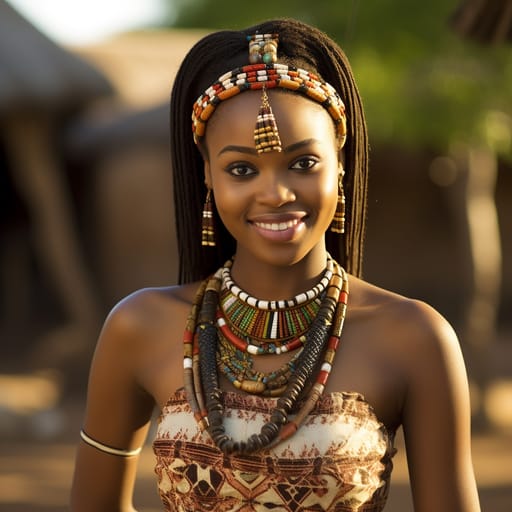
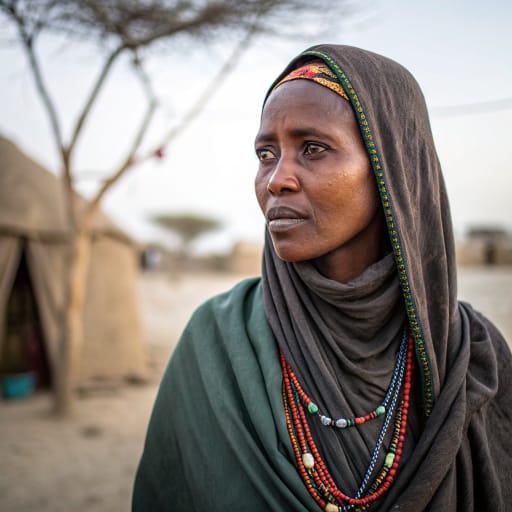
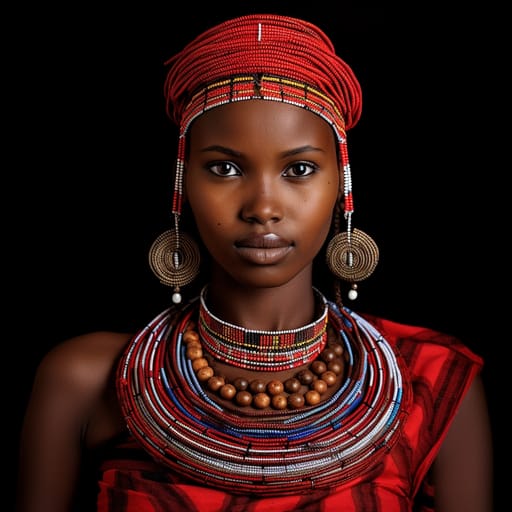
Typical Nyamusa Phenotypes
Reference for AI generation: hair, eyes, skin, facial structure, build
Nyamusa Body & Anatomy Reference
Per-feature anatomical profile for AI nude generation: Cushitic / Nilo-Cushitic East African phenotype
Nyamusa Boobs & Breasts
Nyamusa boobs follow the Cushitic / Nilo-Cushitic East African profile: small-to-medium-cup, high-set, conical. Areolar diameter is usually 28-38mm, and the coloring is moderate-to-high areolar pigmentation against the brown-to-deep-brown skin tone. Breast shape tracks body composition (lean ectomorph-to-mesomorph, mean adult female BMI 19-22), so Nyamusa breasts tend to be firmer and less projecting than the African-American or West African norm. Expect a forward-set shape, not the lateral spread of the West African phenotype.
Nyamusa Ass & Hips
Nyamusa ass and hip morphology presents as small-to-medium, high-set, rounded, distinctly different from the wide-set heavy-projection West African or African-American norm. The Nyamusa pelvic profile shows narrow-to-medium iliac crests, longer torso-to-leg ratio, anchored in the Cushitic / Nilo-Cushitic East African skeletal pattern. Nyamusa butt shots in adult AI imagery should render the small-to-medium, high-set, rounded silhouette with the overall build (lean ectomorph-to-mesomorph) and the fat distribution typical of the Cushitic / Nilo-Cushitic East African phenotype.
Nyamusa Vagina & Pussy
Nyamusa pussy anatomy typically shows brown-to-deep-brown labial pigmentation, narrow-to-medium labia minora projection. Pubic hair is usually tightly-coiled coarse texture, densely distributed. In AI-generated Nyamusa nudes, labial color should blend into the brown to deep brown skin with a gradual transition, and the hair should keep its tightly-coiled coarse texture.
Nyamusa Dicks & Penis
Penis reference for Nyamusa men: regional mean ~13.5cm erect, moderate girth, ~12cm circumference. Coloring: deeper-pigmented than the West African norm. An accurate Nyamusa cock in AI imagery matches the surrounding brown to deep brown skin rather than a generic porn default. Circumcision depends on religion and custom, not ancestry.
Nyamusa Body, Curves & Build
The Nyamusa figure is generally lean ectomorph-to-mesomorph, with mean adult female BMI 19-22, characteristic of Cushitic / Nilo-Cushitic East African ancestry. AI image tools tend to flatten regional body types into a few stock shapes; here the Nyamusa build is kept as its own reference.
Nyamusa Skin Tone & Hair Texture
Skin: brown to deep brown (Fitzpatrick V-VI). Hair: tight 4A-4C coil, often worn natural or in braided/twisted protective styles. Both are typical of Cushitic / Nilo-Cushitic East African ancestry. The most common mistake in AI nudes of Nyamusa women is a body rendered lighter than the face.
Explore phenotype categories
Structured taxonomy with peer-reviewed scales · 22 anatomical categories
Erotic Poses & Sex Positions
From the pose catalog: 219 named positions with reference skeletons
Frequently asked questions about Nyamusa people
Where is the Nyamusa homeland?
The Nyamusa homeland is Western Equatoria State, South Sudan, in wooded savanna country shared with other small Central Sudanic farming peoples. in Eastern Africa.
What language do Nyamusa people speak?
Nyamusa people primarily speak Nyamusa-Molo, with Nyamusa and Molo dialects (Central Sudanic, Bongo-Bagirmi branch, Bongo-Baka group; often placed within Nilo-Saharan).
What religion do Nyamusa people practice?
The predominant religion among Nyamusa people is Christianity (Anglican and Catholic churches predominate in the region) alongside traditional beliefs; specifics for the Nyamusa are poorly documented..






Make your own Nyamusa images
Five a day, free, no credits to buy. The studio starts from this group's phenotype data, so you can set body type, pose and style and keep the traits accurate.
Start with Nyamusa