No portrait yet
Nande Erotic
Highlands of Beni and Lubero territories, North Kivu, eastern Democratic Republic of the Congo, around the cities of Butembo and Beni; close kin (the Konzo) live on the Ugandan side of the Rwenzori Mountains.
Kinande, also called Nande or Yira (Great Lakes Bantu, Niger-Congo); Congo Swahili and French are widely used.
Mostly Christian, chiefly Roman Catholic and Baptist, with Adventist and other Protestant churches; older beliefs in the creator Nyamuhanga and ancestral spirits persist.
Part of the wider Yira (Bayira) people together with the Konzo of Uganda; clans include the Baswagha, Bashu, Bamate, Batangi and Basukali.
About Nande People
The Nande are the farmers and traders of the highlands west of the Rwenzori Mountains and Lake Edward, in the Beni and Lubero territories of North Kivu in eastern Democratic Republic of the Congo. They call themselves Yira, a name they share with the Konzo on the Ugandan slopes of the same mountains. The two are one people split by a colonial border drawn through the range: same clans, nearly the same language, and oral histories that bring the ancestors across the Semliki valley from what is now western Uganda several centuries ago.
Kinande is a Great Lakes Bantu language, tonal and intricate enough to have drawn a steady line of linguists, and close to Lhukonzo across the border. Most Nande also speak the Congolese Swahili of the east, with French for school and paperwork. Society is organized around clans such as the Baswagha, Bashu, Bamate, Batangi and Basukali, whose names still mark the chiefdoms on the administrative map. Chiefs were historically held responsible for rain and the health of the land, not just for politics. Today most Nande are Christian, Catholic or Baptist for the most part, and the churches run many of the schools and clinics that the state does not. Older ideas about Nyamuhanga, the creator, and about ancestral spirits persist alongside.
A Nande name tells you where someone falls in the family. Sons are named in birth order, Paluku, Kambale, Kasereka, Kakule, Katembo, Mbusa, and daughters likewise, Masika, Kavira, Kavugho, Kahambu. The result is a city like Butembo where half the shop signs seem to carry the same handful of names.
Butembo is the other thing the Nande are known for. From the 1980s, as the Zairian state hollowed out, Nande merchants built their own trade routes: highland vegetables, coffee and gold going out, goods coming in from Kampala, Mombasa, Dubai and later Guangzhou. They helped pay for road repairs, an airstrip and power projects largely without Kinshasa, and scholars of African economies treat the city as a case study in commerce that works where government does not. The cool, densely settled hills around it grow potatoes, beans, wheat, and cinchona for quinine.
The years since 2014 have been hard. The Beni area has endured repeated massacres attributed mainly to the ADF, an armed group of Ugandan origin, and then an Ebola epidemic, from 2018 to 2020, that centered on Beni and Butembo. Distrust of outside authorities, earned over decades, complicated the response. The trading houses, the churches and the clan networks are what have held.
Related ethnic groups
Groups that share Nande's homeland, region, language, or religious tradition. These are likely candidates for comparative phenotype reference.
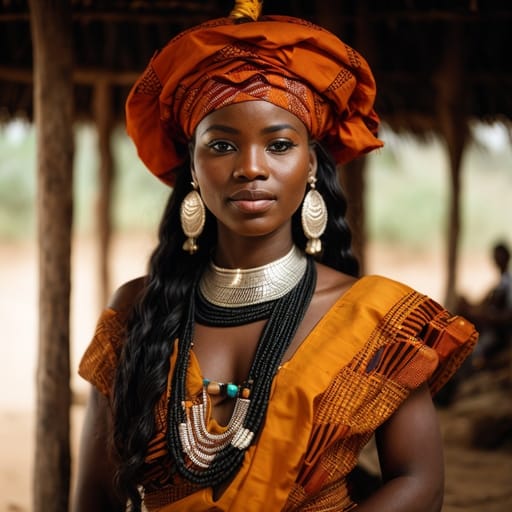
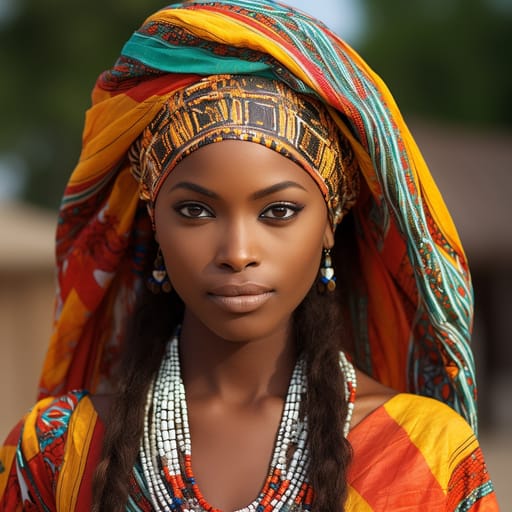
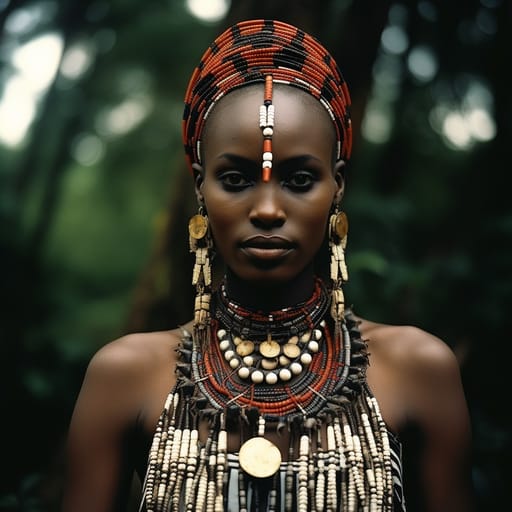
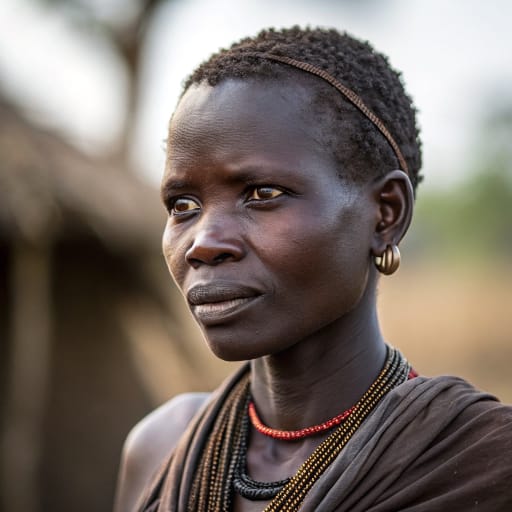
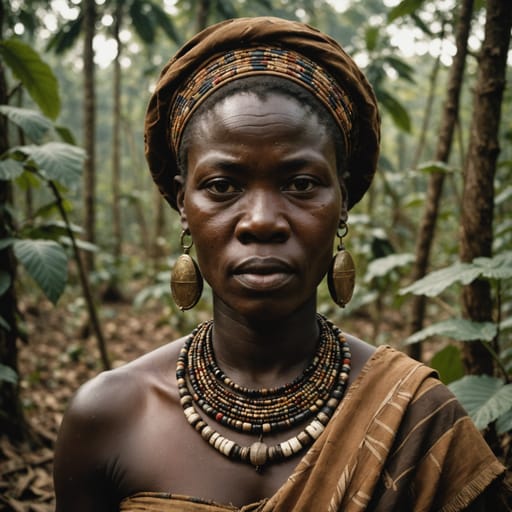
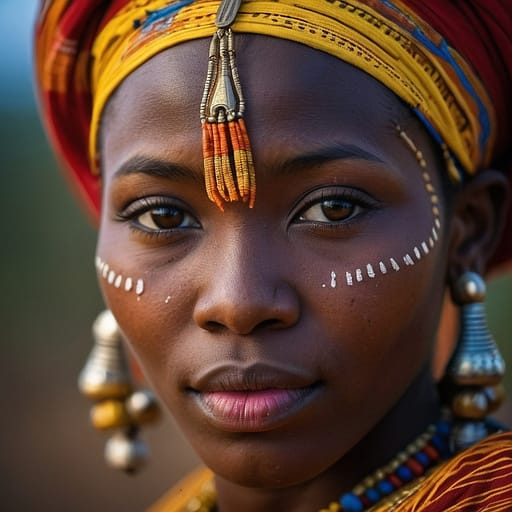
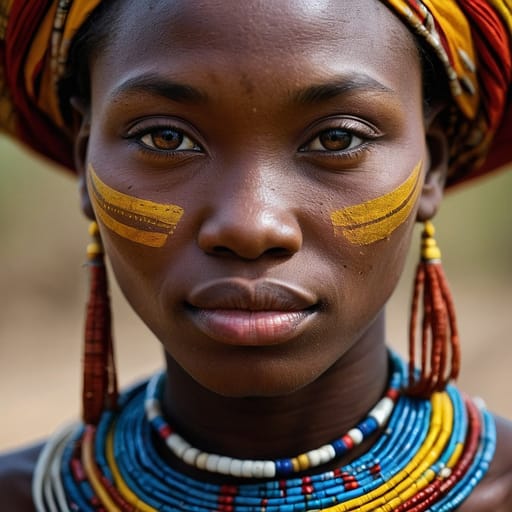
Typical Nande Phenotypes
Reference for AI generation: hair, eyes, skin, facial structure, build
Nande Body & Anatomy Reference
Bantu / Central African Niger-Congo phenotype: anatomy reference for AI nude generation
Nande Boobs & Breasts
Nande boobs follow the Bantu / Central African Niger-Congo profile: medium-to-large cup, full, projecting. Areolar diameter is usually 32-48mm, and the coloring is deep-brown areolar pigmentation against the deep-brown skin tone. Breast shape tracks body composition (mesomorph with strong gluteal-femoral fat deposition, mean adult female BMI 23-26), so Nande breasts tend to be fuller projection than East African; comparable to West African norm. Expect a forward-set shape, not the smaller East African conical profile.
Nande Ass & Hips
Nande ass and hip morphology presents as full, projected, wide-set glutes, distinctly different from the slim narrow-hip Cushitic East African profile. The Nande pelvic profile shows broad iliac crests, gynoid pelvic pattern, anchored in the Bantu / Central African Niger-Congo skeletal pattern. Nande butt shots in adult AI imagery should render the full, projected, wide-set glutes silhouette with the overall build (mesomorph with strong gluteal-femoral fat deposition) and the fat distribution typical of the Bantu / Central African Niger-Congo phenotype.
Nande Vagina & Pussy
Nande pussy anatomy typically shows deep-brown labial pigmentation, fuller labia minora. Pubic hair is usually tightly-coiled coarse texture, dense distribution. In AI-generated Nande nudes, labial color should blend into the deep-brown skin with a gradual transition, and the hair should keep its tightly-coiled coarse texture.
Nande Dicks & Penis
Penis reference for Nande men: regional mean ~14cm erect, above-average girth. Coloring: deep-brown shaft pigmentation. An accurate Nande cock in AI imagery matches the surrounding deep-brown skin rather than a generic porn default. Circumcision depends on religion and custom, not ancestry.
Nande Body, Curves & Build
The Nande figure is generally mesomorph with strong gluteal-femoral fat deposition, with mean adult female BMI 23-26, characteristic of Bantu / Central African Niger-Congo ancestry. AI image tools tend to flatten regional body types into a few stock shapes; here the Nande build is kept as its own reference.
Nande Skin Tone & Hair Texture
Skin: deep-brown (Fitzpatrick VI). Hair: tight 4A-4C coil. Both are typical of Bantu / Central African Niger-Congo ancestry. The most common mistake in AI nudes of Nande women is a body rendered lighter than the face.
Explore phenotype categories
Structured taxonomy with peer-reviewed scales · 22 anatomical categories
Erotic Poses & Sex Positions
From the pose catalog: 219 named positions with reference skeletons
Frequently asked questions about Nande people
Where is the Nande homeland?
The Nande homeland is Highlands of Beni and Lubero territories, North Kivu, eastern Democratic Republic of the Congo, around the cities of Butembo and Beni; close kin (the Konzo) live on the Ugandan side of the Rwenzori Mountains. in Central Africa.
What language do Nande people speak?
Nande people primarily speak Kinande, also called Nande or Yira (Great Lakes Bantu, Niger-Congo); Congo Swahili and French are widely used..
What religion do Nande people practice?
The predominant religion among Nande people is Mostly Christian, chiefly Roman Catholic and Baptist, with Adventist and other Protestant churches; older beliefs in the creator Nyamuhanga and ancestral spirits persist..






Make your own Nande images
Five a day, free, no credits to buy. The studio starts from this group's phenotype data, so you can set body type, pose and style and keep the traits accurate.
Start with Nande