Help us get this right
Does this portrait look right for Molise Croats?
Nobody has judged this one yet. You would be the first.
Molise Croats Erotic
Acquaviva Collecroce, Montemitro and San Felice del Molise, province of Campobasso, Molise, Italy; ancestral origin in the Dalmatian hinterland of present-day Croatia
Molise Croatian, locally na-našu (South Slavic, Indo-European); Italian (Romance, Indo-European)
Roman Catholic
A historic Croatian minority in Italy; village communities of Acquaviva Collecroce (Kruč), Montemitro (Mundimitar) and San Felice del Molise (Filić)
About Molise Croats People
The Molise Croats descend from Slavic-speaking families who crossed the Adriatic about five centuries ago and never fully gave up who they were. They live in three hill villages in the province of Campobasso in southern Italy: Acquaviva Collecroce, Montemitro and San Felice del Molise. In their own speech the villages are Kruč, Mundimitar and Filić. They are Italian citizens, and they go to school, work and vote as Italians. At home, though, many still speak a language their neighbors cannot follow, and they call it simply na-našu, "our way."
Their ancestors left the Dalmatian hinterland in the late 1400s and early 1500s, pushed out by the Ottoman advance. Linguists trace their speech to the Shtokavian-Ikavian dialects around the lower Neretva. The settlers arrived in a Molise emptied by earthquake and plague, where landlords were glad to take on new tenants. There were once more of these villages. Place names like San Giacomo degli Schiavoni, "of the Slavs," mark communities that switched to Italian long ago. The three that kept the language did so through isolation, farming and the plain habit of speaking to children in the old tongue.
What they speak today is neither standard Croatian nor an Italian dialect. It keeps words and forms that fell out of use across the Adriatic centuries ago. It has also borrowed Italian vocabulary and sentence patterns for everything the sixteenth century had no word for. Speakers of standard Croatian recognize it as related but do not always follow it. Italy protects it under its 1999 law on historic linguistic minorities. Since the nineteenth century, contact with Croatia has brought scholars, cultural associations and a renewed sense of kinship. Still, the number of fluent speakers is small and getting older.
They are Roman Catholic, as their ancestors were in Dalmatia, and faith has never set them apart from their Italian neighbors. Parish feasts, processions and the church calendar shape village life much as they do anywhere in rural Molise. The difference is in the words. In Acquaviva Collecroce, spring arrives on the first of May with the Maja: a tall frame covered in greenery and flowers, carried through the streets by a man hidden inside while people sing in the local speech. Emigration to northern Italy and abroad has thinned all three villages. Whether the language survives now depends on whether the people who leave keep speaking it.
Related ethnic groups
Groups that share Molise Croats's homeland, region, language, or religious tradition. These are likely candidates for comparative phenotype reference.
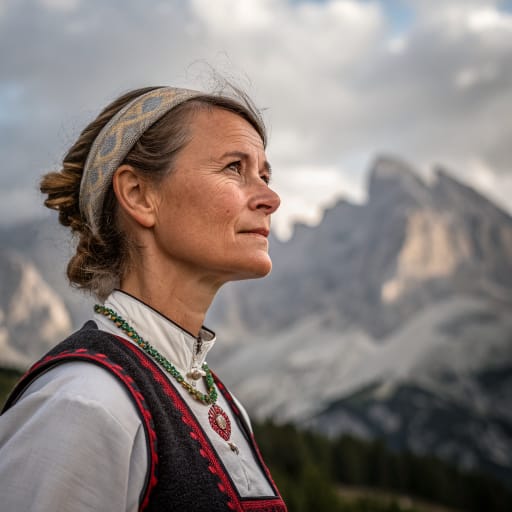
Ladins
same region (Southern Europe)
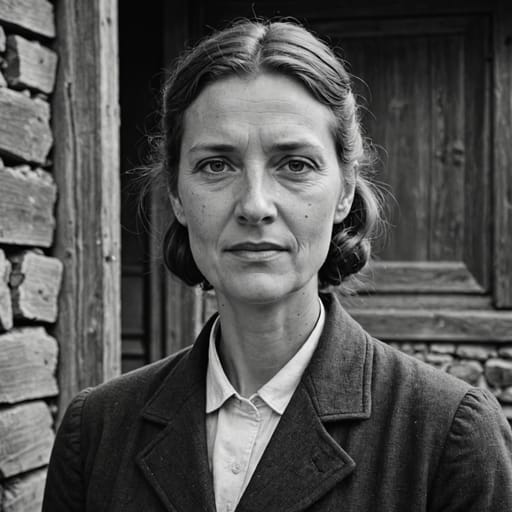
Gottscheers
same region (Southern Europe)
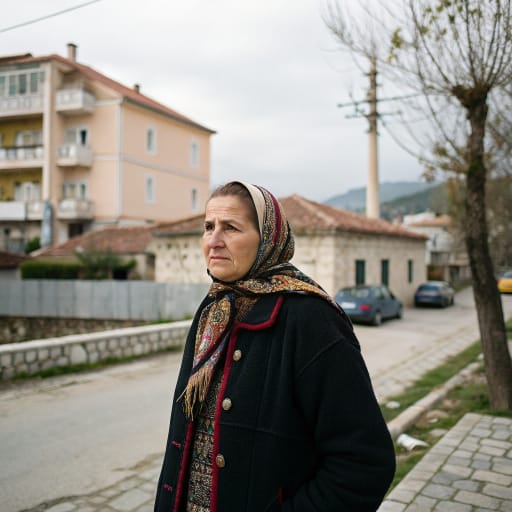
Arbanasi
same region (Southern Europe)
Pasiegos
same region (Southern Europe)
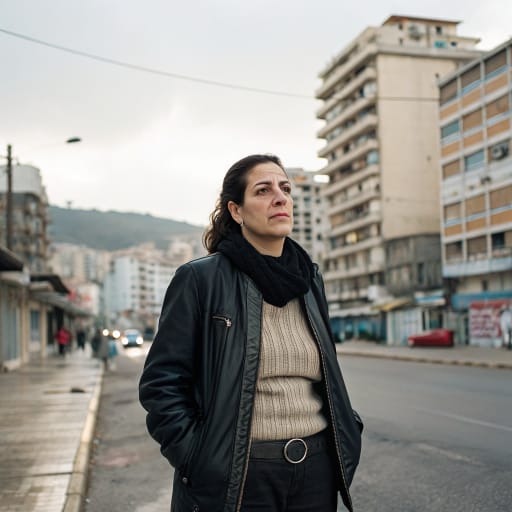
Maniots
same region (Southern Europe)
Picentes
same region (Southern Europe)
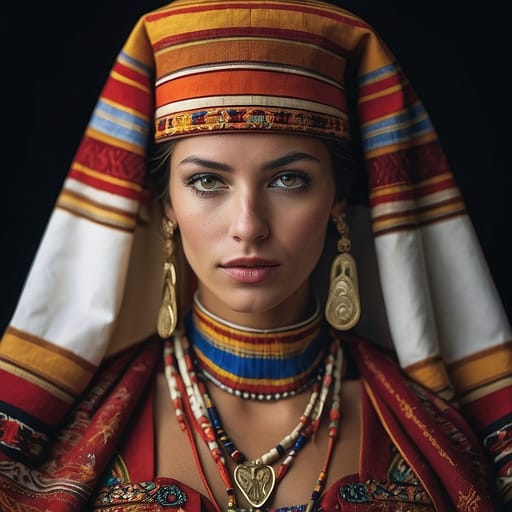
Andorra Other
same region (Southern Europe)
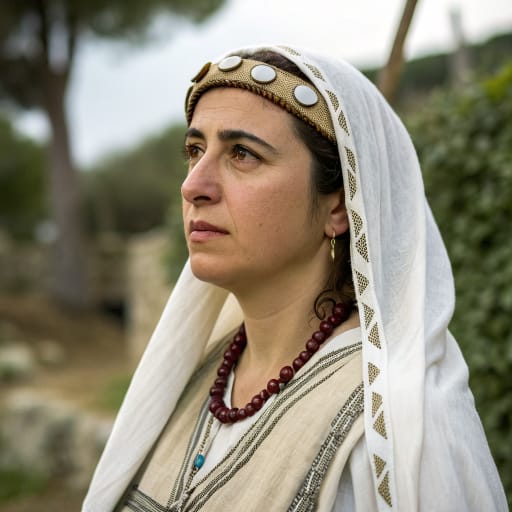
Aeolians
same region (Southern Europe)
Typical Molise Croats Phenotypes
Reference for AI generation: hair, eyes, skin, facial structure, build
Molise Croats Body & Anatomy Reference
Per-feature anatomical profile for AI nude generation: Southern European / Mediterranean phenotype
Molise Croats Boobs & Breasts
The typical Molise Croats bust is medium-to-large cup, full, moderate-to-high projection, in line with the wider Southern European / Mediterranean pattern. Areolas usually fall in the 32-46mm range, with medium-brown to dark-brown areolar pigmentation against the olive-to-light-brown skin tone. Compared with the lighter pigmentation of the Northern European bust, Molise Croats breasts sit forward and are generally full and projecting, generally the classic Mediterranean curvy bust profile. A faithful AI render of Molise Croats tits keeps that shape and areola size.
Molise Croats Ass & Hips
Butt shape among Molise Croats women: medium-to-full, moderate-to-high projection, broader hip profile, over medium-to-wide iliac crests, full gluteal-femoral fat distribution. This follows Southern European / Mediterranean ancestry and looks quite unlike the slim Northern European narrow-hip pattern. An accurate Molise Croats ass in adult AI imagery keeps both the silhouette and the overall build (mesomorph with full hip-and-bust deposition) instead of a generic average.
Molise Croats Vagina & Pussy
Vulvar anatomy among Molise Croats women: medium-brown to dark-brown labial pigmentation, fuller labia minora. Pubic hair tends to be wavy-to-curly medium-coarse dark texture, dense distribution, in the usual inverted-triangle pattern. Both follow Southern European / Mediterranean pigmentation, which is why Molise Croats pussy renders should not fall back on a pale, sparse Western template.
Molise Croats Dicks & Penis
The Molise Croats cock profile, from Southern European / Mediterranean anthropometric data: regional mean ~13-14cm erect; moderate girth; medium-brown shaft pigmentation. Pubic hair has a wavy-to-curly medium-coarse dark texture and forms the usual inverted-V pattern. Whether Molise Croats men are circumcised follows religious and cultural practice rather than phenotype.
Molise Croats Body, Curves & Build
Build and curves among Molise Croats women follow the Southern European / Mediterranean pattern: mesomorph with full hip-and-bust deposition, mean adult female BMI 24-28. Proportions matter as much as skin tone, so Molise Croats figures should keep their regional height and limb ratios.
Molise Croats Skin Tone & Hair Texture
The Molise Croats skin range is olive to medium (Fitzpatrick III-IV), and hair tends to be wavy-to-curly 2B-3B, dark-brown to black. That combination marks the Southern European / Mediterranean phenotype, and skin tone is the trait AI generators most often get wrong for Molise Croats women.
Explore phenotype categories
Structured taxonomy with peer-reviewed scales · 22 anatomical categories
Erotic Poses & Sex Positions
From the pose catalog: 219 named positions with reference skeletons
Frequently asked questions about Molise Croats people
Where is the Molise Croats homeland?
The Molise Croats homeland is Acquaviva Collecroce, Montemitro and San Felice del Molise, province of Campobasso, Molise, Italy; ancestral origin in the Dalmatian hinterland of present-day Croatia in Southern Europe.
What language do Molise Croats people speak?
Molise Croats people primarily speak Molise Croatian, locally na-našu (South Slavic, Indo-European); Italian (Romance, Indo-European).
What religion do Molise Croats people practice?
The predominant religion among Molise Croats people is Roman Catholic.






Make your own Molise Croats images
Five a day, free, no credits to buy. The studio starts from this group's phenotype data, so you can set body type, pose and style and keep the traits accurate.
Start with Molise Croats