Help us get this right
Does this portrait look right for Arbanasi?
Nobody has judged this one yet. You would be the first.
Arbanasi Erotic
Arbanasi and nearby parts of Zadar, northern Dalmatia, Croatia; ancestral villages around Lake Skadar in present-day Montenegro and Albania
Croatian (Indo-European, South Slavic); traditionally the Arbanasi dialect of Gheg Albanian (Indo-European, Albanian), now spoken mainly by older residents
Roman Catholic
Albanians of Zadar; a historic offshoot of the Gheg-speaking Catholic Albanians of the Lake Skadar region, part of the wider Albanian diaspora
About Arbanasi People
The Arbanasi are the Albanians of Zadar. They have lived on the Dalmatian coast for three centuries under a name that is older than most of the buildings around them. Arbanasi is an old Croatian word for Albanians. It also became the name of the settlement their ancestors founded just outside Zadar's walls, which is now a neighborhood of the city. Dress and looks don't set them apart. Family history, faith and a dialect that survived far from home do, though fewer people speak that dialect every year.
Their story begins in the early 18th century. Catholic families from the villages around Lake Skadar, in the borderland between today's Montenegro and Albania, left Ottoman territory for Venetian Dalmatia. The move began in 1726 with the backing of Vicko Zmajević, the Archbishop of Zadar. It also suited Venice, which wanted farmers and defenders on land emptied by decades of war. The newcomers farmed the country around the town and built their parish life around the Church of Our Lady of Loreto. Their Catholic faith was the reason they left. It was also what tied them to their new neighbors, and it is still central to how the community sees itself.
The Arbanasi dialect belongs to Gheg, the northern branch of Albanian. It keeps features of Skadar-region speech from three hundred years ago. Cut off from other Albanian speakers, it took in a heavy layer of Croatian and Venetian Italian words. Today most Arbanasi use Croatian day to day, and the dialect lives on mainly among older residents.
The 20th century pulled the community in several directions. Between the world wars, Zadar was an Italian enclave, and the Arbanasi suburb, then called Borgo Erizzo, sat inside it. After 1945 the city became part of Yugoslavia, and some families left for Italy along with Zadar's Italians. Most of those who stayed came to think of themselves as Croats of Albanian origin. For many, being Arbanasi is a heritage rather than a separate nationality: Albanian by ancestry, Croatian by citizenship and daily life, Dalmatian by habit. That mix sets them apart from Albanians who came to Croatia more recently, and from other old Albanian communities abroad such as the Arbëreshë of southern Italy.
Related ethnic groups
Groups that share Arbanasi's homeland, region, language, or religious tradition. These are likely candidates for comparative phenotype reference.
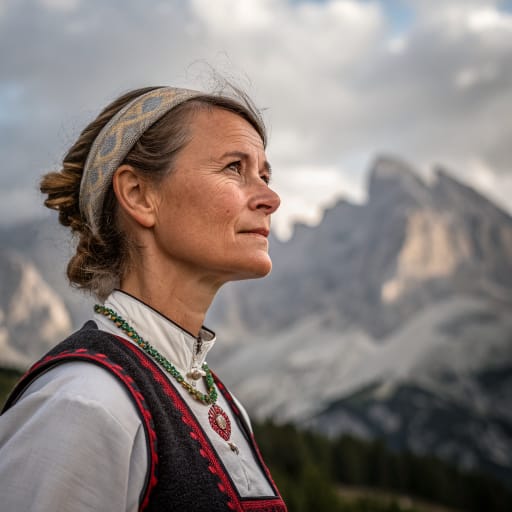
Ladins
same region (Southern Europe)
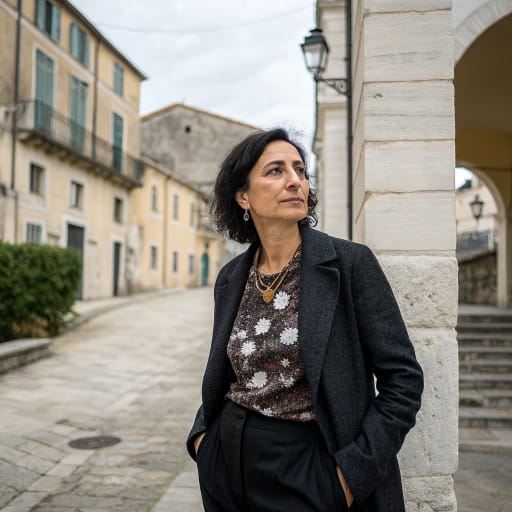
Molise Croats
same region (Southern Europe)
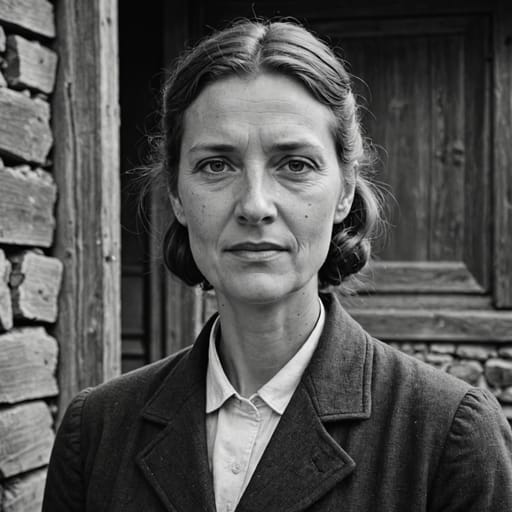
Gottscheers
same region (Southern Europe)
Pasiegos
same region (Southern Europe)
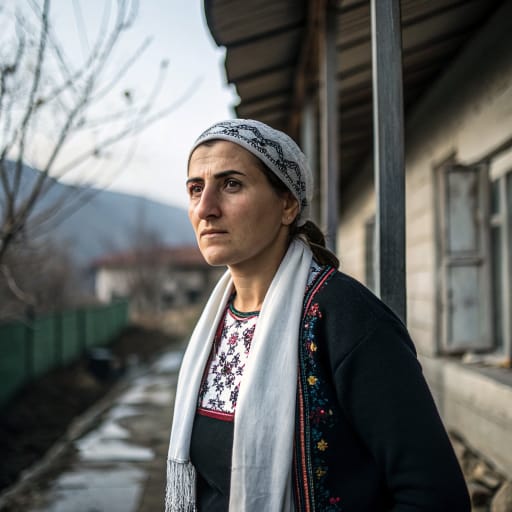
Ghegs
same region (Southern Europe)
Italian Sub Saharan African
same region (Southern Europe)
Siculensi
same region (Southern Europe)
Greek Albanian
same region (Southern Europe)
Typical Arbanasi Phenotypes
Reference for AI generation: hair, eyes, skin, facial structure, build
Arbanasi Body & Anatomy Reference
Southern European / Mediterranean phenotype: anatomy reference for AI nude generation
Arbanasi Boobs & Breasts
The typical Arbanasi bust is medium-to-large cup, full, moderate-to-high projection, in line with the wider Southern European / Mediterranean pattern. Areolas usually fall in the 32-46mm range, with medium-brown to dark-brown areolar pigmentation against the olive-to-light-brown skin tone. Compared with the lighter pigmentation of the Northern European bust, Arbanasi breasts sit forward and are generally full and projecting, generally the classic Mediterranean curvy bust profile. A faithful AI render of Arbanasi tits keeps that shape and areola size.
Arbanasi Ass & Hips
Butt shape among Arbanasi women: medium-to-full, moderate-to-high projection, broader hip profile, over medium-to-wide iliac crests, full gluteal-femoral fat distribution. This follows Southern European / Mediterranean ancestry and looks quite unlike the slim Northern European narrow-hip pattern. An accurate Arbanasi ass in adult AI imagery keeps both the silhouette and the overall build (mesomorph with full hip-and-bust deposition) instead of a generic average.
Arbanasi Vagina & Pussy
Vulvar anatomy among Arbanasi women: medium-brown to dark-brown labial pigmentation, fuller labia minora. Pubic hair tends to be wavy-to-curly medium-coarse dark texture, dense distribution, in the usual inverted-triangle pattern. Both follow Southern European / Mediterranean pigmentation, which is why Arbanasi pussy renders should not fall back on a pale, sparse Western template.
Arbanasi Dicks & Penis
The Arbanasi cock profile, from Southern European / Mediterranean anthropometric data: regional mean ~13-14cm erect; moderate girth; medium-brown shaft pigmentation. Pubic hair has a wavy-to-curly medium-coarse dark texture and forms the usual inverted-V pattern. Whether Arbanasi men are circumcised follows religious and cultural practice rather than phenotype.
Arbanasi Body, Curves & Build
Build and curves among Arbanasi women follow the Southern European / Mediterranean pattern: mesomorph with full hip-and-bust deposition, mean adult female BMI 24-28. Proportions matter as much as skin tone, so Arbanasi figures should keep their regional height and limb ratios.
Arbanasi Skin Tone & Hair Texture
The Arbanasi skin range is olive to medium (Fitzpatrick III-IV), and hair tends to be wavy-to-curly 2B-3B, dark-brown to black. That combination marks the Southern European / Mediterranean phenotype, and skin tone is the trait AI generators most often get wrong for Arbanasi women.
Explore phenotype categories
Structured taxonomy with peer-reviewed scales · 22 anatomical categories
Erotic Poses & Sex Positions
From the pose catalog: 219 named positions with reference skeletons
Frequently asked questions about Arbanasi people
Where is the Arbanasi homeland?
The Arbanasi homeland is Arbanasi and nearby parts of Zadar, northern Dalmatia, Croatia; ancestral villages around Lake Skadar in present-day Montenegro and Albania in Southern Europe.
What language do Arbanasi people speak?
Arbanasi people primarily speak Croatian (Indo-European, South Slavic); traditionally the Arbanasi dialect of Gheg Albanian (Indo-European, Albanian), now spoken mainly by older residents.
What religion do Arbanasi people practice?
The predominant religion among Arbanasi people is Roman Catholic.






Make your own Arbanasi images
Five a day, free, no credits to buy. The studio starts from this group's phenotype data, so you can set body type, pose and style and keep the traits accurate.
Start with Arbanasi