Help us get this right
Does this portrait look right for Mohawk?
Nobody has judged this one yet. You would be the first.
Mohawk Erotic
Historically the Mohawk Valley of upstate New York; today communities at Akwesasne, Kahnawake, Kanesatake, Tyendinaga, Wahta and Six Nations of the Grand River, across New York, Ontario and Quebec (United States and Canada)
Kanien'kéha, or Mohawk (Iroquoian, Northern Iroquoian branch); English and French
Longhouse religion and traditional Haudenosaunee ceremony; Roman Catholicism, notably at Kahnawake; Anglicanism, notably at Tyendinaga
Easternmost nation of the Haudenosaunee, the Six Nations Iroquois Confederacy; three matrilineal clans, Turtle, Wolf and Bear; communities include Akwesasne, Kahnawake, Kanesatake, Tyendinaga, Wahta and Six Nations of the Grand River
About Mohawk People
The Mohawk call themselves Kanien'kehá:ka, People of the Flint, and for centuries they have been the Keepers of the Eastern Door of the Haudenosaunee, the confederacy outsiders named the Iroquois. The position was literal: their Mohawk Valley villages in what is now upstate New York faced the Hudson, the Dutch and then the English, and they handled the confederacy's eastern diplomacy and defense. Tradition holds they were the first nation to accept the Peacemaker's Great Law, the constitution that bound five nations, later six, into one longhouse. The name Mohawk itself is an Algonquian exonym, not their own.
Society is matrilineal and organized into three clans, Turtle, Wolf and Bear. Clan mothers hold the chiefs' titles, choose the men who carry them, and can remove them, and land and descent pass through women. Clan mothers still sit in the traditional councils at Akwesasne, Kahnawake and elsewhere, often alongside elected councils created under Canadian or US law, and the friction between the two systems is a live political fact.
The American Revolution cost the Mohawk their valley. Most sided with the British under leaders like Joseph Brant, and after 1783 they rebuilt on the Grand River and the Bay of Quinte in Ontario. Other communities had formed a century earlier at Catholic missions near Montreal; Kahnawake is the best known, and Kateri Tekakwitha, canonized in 2012, lived and died there. Kanien'kéha, a Northern Iroquoian language closest to Oneida, is spoken by a minority today but taught in immersion schools that Kahnawake and Akwesasne have run since the late 1970s. Religious life runs on parallel tracks: Longhouse ceremonies, many following the Code of Handsome Lake, Catholicism at Kahnawake, and Anglicanism at Tyendinaga, home to one of the two Royal Chapels of the Mohawks.
The skyline of New York City is partly Mohawk work. Kahnawake men took up high steel after a railway bridge was built beside their reserve in the 1880s, and generations of ironworkers commuted to Manhattan, keeping a Brooklyn enclave called Little Caughnawaga into the 1960s. The Mohawk also sit astride an international border. Akwesasne is cut by the line between New York, Ontario and Quebec, so one community answers to two countries and three of its own councils. The 1990 standoff at Kanesatake, when a golf course expansion threatened a burial ground, became a 78-day national crisis in Canada and reshaped Indigenous politics there. Lacrosse remains a Haudenosaunee gift to the world, and the Haudenosaunee Nationals travel on their own passports. The haircut that borrows the Mohawk name owes more to Hollywood than to the Mohawk Valley.
Related ethnic groups
Groups that share Mohawk's homeland, region, language, or religious tradition. These are likely candidates for comparative phenotype reference.
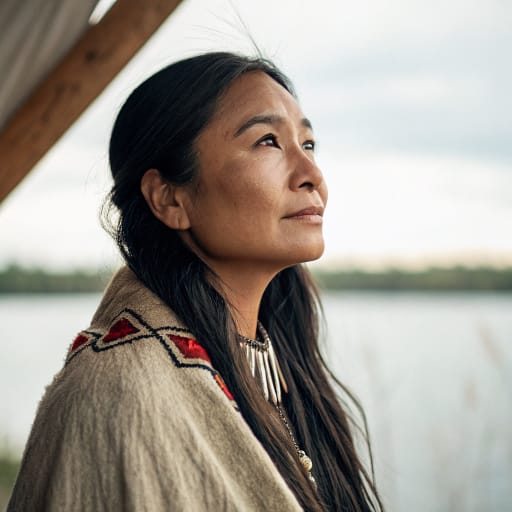
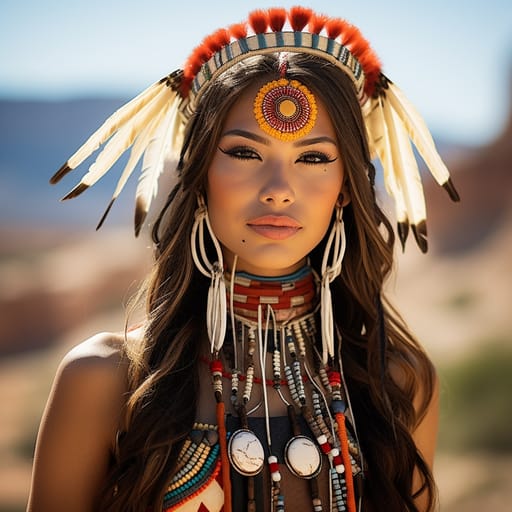
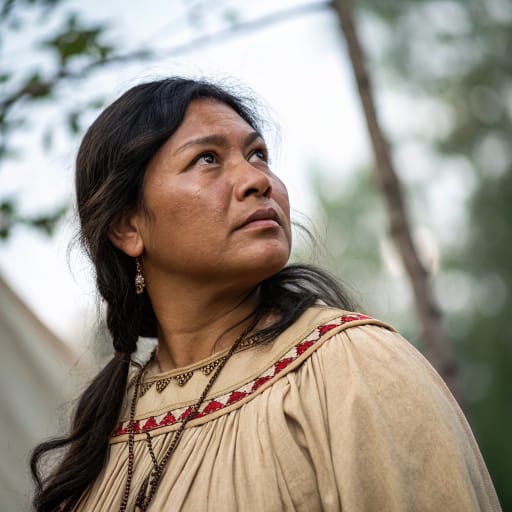
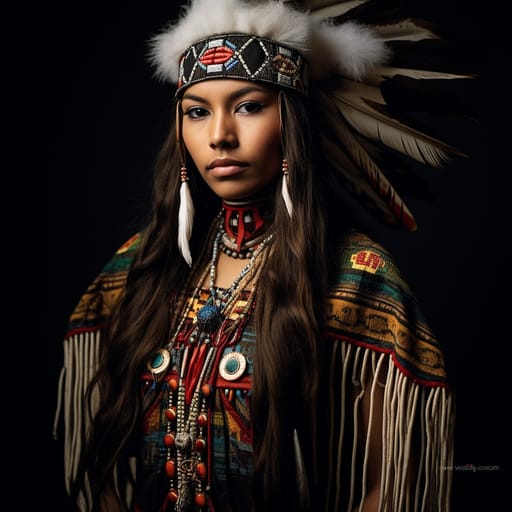
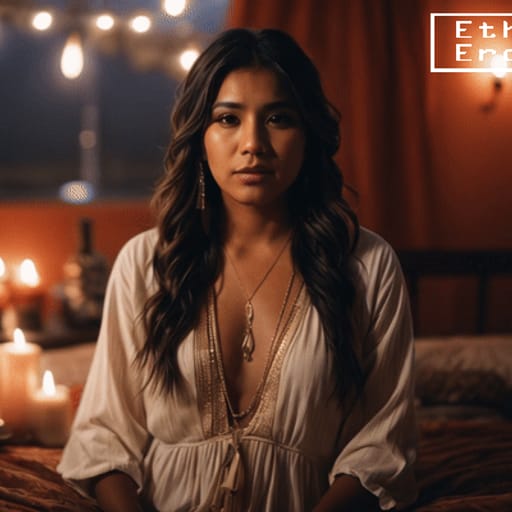
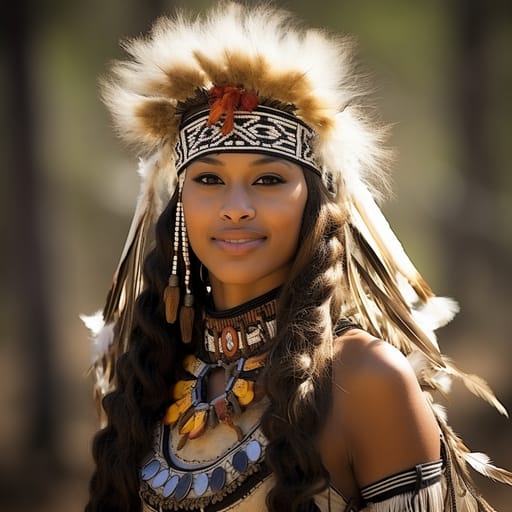
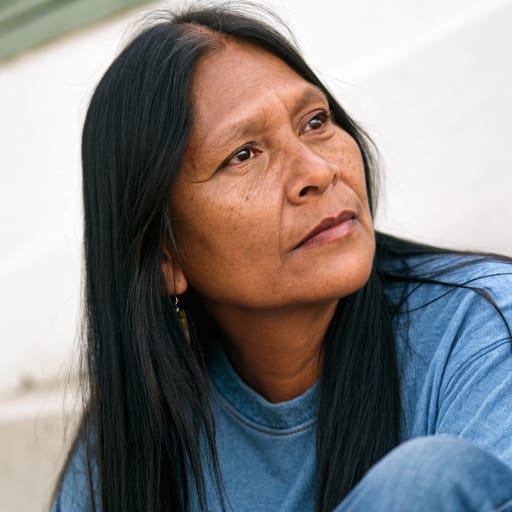
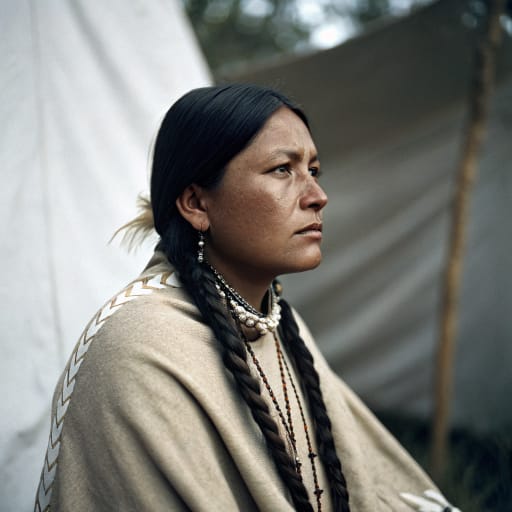
Typical Mohawk Phenotypes
Reference for AI generation: hair, eyes, skin, facial structure, build
Mohawk Body & Anatomy Reference
Per-feature anatomical profile for AI nude generation: Indigenous Northern American / Algonquian-Iroquoian phenotype
Mohawk Boobs & Breasts
Bust reference for Mohawk women: medium cup, moderate projection, which is typical of Indigenous Northern American / Algonquian-Iroquoian ancestry. Areolas measure about 30-44mm across, with medium-brown pigmentation. Body type (mesomorph, broader frame in northern Indigenous populations) shapes the bust as well, so Mohawk tits are usually full and moderate projection. In AI imagery, keep the forward-set shape rather than drifting toward the smaller East Asian bust.
Mohawk Ass & Hips
The Mohawk ass is typically medium, moderate-to-full projection, which sets it apart from the slim East Asian narrow-hip profile. Underneath, the pelvis shows medium iliac crests, part of the Indigenous Northern American / Algonquian-Iroquoian skeletal pattern. For Mohawk butt pics and AI renders, match that silhouette and the overall build (mesomorph, broader frame in northern Indigenous populations).
Mohawk Vagina & Pussy
Mohawk pussy and vulvar anatomy presents medium-brown labial pigmentation, consistent with the Indigenous Northern American / Algonquian-Iroquoian phenotype's pigmentation pattern. Mohawk pubic hair is typically straight medium-coarse texture, in the inverted-triangle pattern. For anatomically accurate Mohawk pussy renders the labial coloration should match the surrounding copper to medium-brown skin tone with a continuous gradient, and the hair should keep its straight medium-coarse texture.
Mohawk Dicks & Penis
Mohawk dicks follow the Indigenous Northern American / Algonquian-Iroquoian reference data: regional mean ~13cm erect; moderate girth; medium-brown shaft pigmentation. Shaft color should track the copper to medium-brown skin tone with a smooth change toward the glans, and Mohawk pubic hair keeps its straight medium-coarse texture.
Mohawk Body, Curves & Build
Mohawk body type and overall build presents as mesomorph, broader frame in northern Indigenous populations, with mean adult female BMI 25-28: the characteristic Indigenous Northern American / Algonquian-Iroquoian habitus. Mohawk curves and proportions should keep the regional skeletal frame (height, shoulder-to-hip ratio, limb proportions) rather than a generic mesomorph default.
Mohawk Skin Tone & Hair Texture
Mohawk skin sits in the copper to medium-brown (Fitzpatrick III-V) band. Hair is typically straight 1A, dark-brown to black, often thick and dense, in keeping with the Indigenous Northern American / Algonquian-Iroquoian phenotype. In nude renders the skin should stay one even tone from face to body, and body, pubic and head hair should match.
Explore phenotype categories
Structured taxonomy with peer-reviewed scales · 22 anatomical categories
Erotic Poses & Sex Positions
From the pose catalog: 219 named positions with reference skeletons
Frequently asked questions about Mohawk people
Where is the Mohawk homeland?
The Mohawk homeland is Historically the Mohawk Valley of upstate New York; today communities at Akwesasne, Kahnawake, Kanesatake, Tyendinaga, Wahta and Six Nations of the Grand River, across New York, Ontario and Quebec (United States and Canada) in North America.
What language do Mohawk people speak?
Mohawk people primarily speak Kanien'kéha, or Mohawk (Iroquoian, Northern Iroquoian branch); English and French.
What religion do Mohawk people practice?
The predominant religion among Mohawk people is Longhouse religion and traditional Haudenosaunee ceremony; Roman Catholicism, notably at Kahnawake; Anglicanism, notably at Tyendinaga.






Make your own Mohawk images
Five a day, free, no credits to buy. The studio starts from this group's phenotype data, so you can set body type, pose and style and keep the traits accurate.
Start with Mohawk