Help us get this right
Does this portrait look right for Mandaeans?
One tap. It takes a second and it is recorded.
2 say it looks right, 0 say it looks off.
Mandaeans Erotic
Also known as: Mandaean
Southern Mesopotamia
Afro-Asiatic / Semitic / Central Semitic / Northwest Semitic / Aramaic / Eastern Aramaic / Southeastern Aramaic / Mandaic
Mandaeism
Iraq, Iran
About Mandaeans People
The Mandaeans are the last surviving practitioners of a Gnostic religion from late antiquity, a faith that traces its ritual lineage to John the Baptist rather than to Jesus, Muhammad, or Moses. They are tied to running water — not symbolically, but operationally. Baptism, repeated throughout life rather than performed once, is the central act of their religion, and it requires a flowing river. This single requirement has shaped where they live, how their priesthood functions, and why their dispersal over the past three decades has been catastrophic in a way other diasporas are not.
Their ancestral homeland is the marshland and river country of southern Iraq and the Iranian province of Khuzestan, where the Tigris and Euphrates braid out toward the Gulf. They speak Mandaic, an Eastern Aramaic language that is now mostly liturgical — daily speech is Arabic for the Iraqi community and Persian for the Iranian one — but the script and the priestly register have been preserved with unusual care, partly because their scriptures, the Ginza Rabba and the Book of John, are read aloud in ritual. Mandaic sits in the same Aramaic continuum as the language of the Talmud and the Syriac of the Eastern Christian churches, but its Gnostic vocabulary and cosmology are its own.
Mandaean theology distinguishes sharply between the World of Light and the material world, and reserves real reverence for figures most other Abrahamic traditions either ignore or dismiss — John the Baptist is venerated; Jesus and Abraham are treated as false prophets. The community is organized around a hereditary priesthood, the tarmidia and the higher ganzibria, and ordination is closed to converts: you are born Mandaean or you are not one. This rule, combined with strict endogamy, has kept the group cohesive for centuries but leaves it acutely vulnerable to demographic shock.
That shock has come. The 2003 Iraq war and the violence that followed pushed most Iraqi Mandaeans out of the country; estimates of those remaining inside Iraq have collapsed from the tens of thousands to a few thousand. The Iranian community in Ahvaz is older and more stable but small. The largest concentrations are now in Sweden, Australia, and the United States, where priests have had to improvise — consecrating swimming pools, building artificial flowing-water installations — to keep a riverine religion functioning in cities that have no proper river at all.
Related ethnic groups
Groups that share Mandaeans's homeland, region, language, or religious tradition. These are likely candidates for comparative phenotype reference.
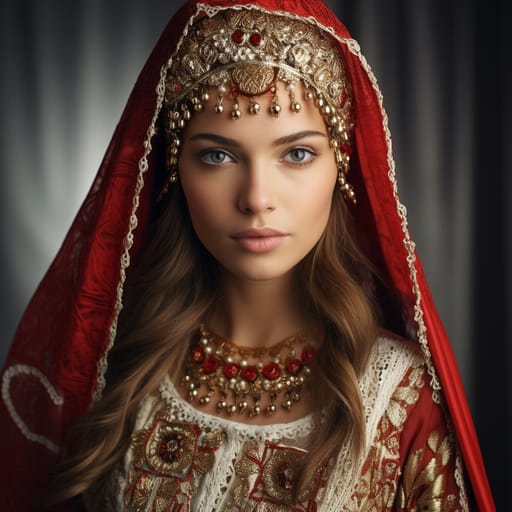
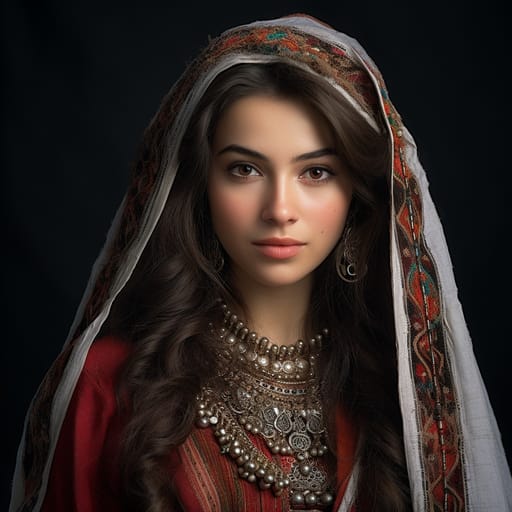
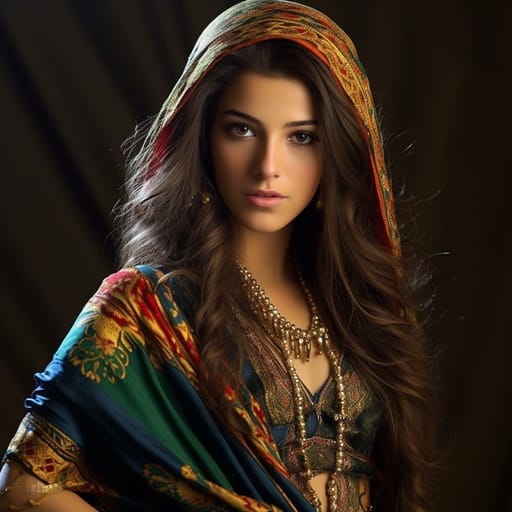
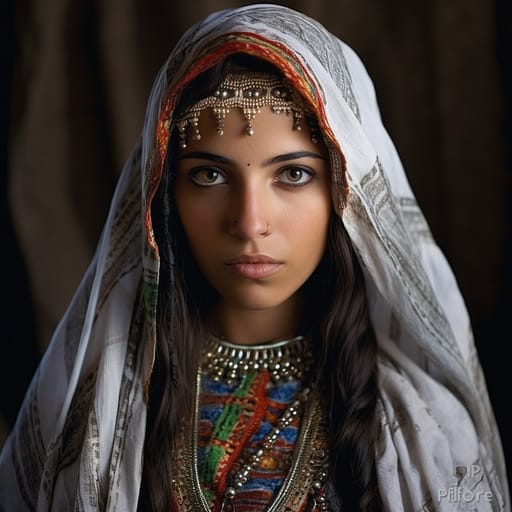
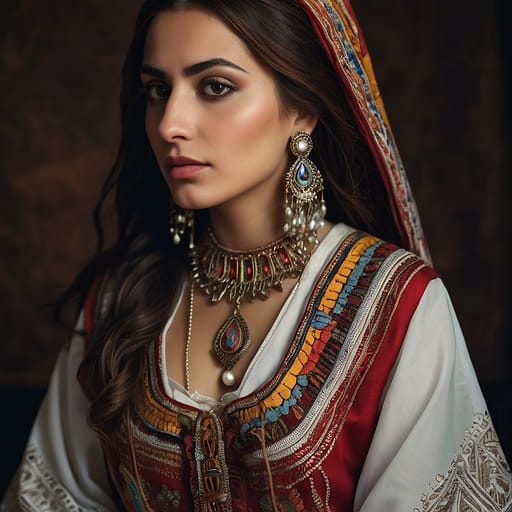
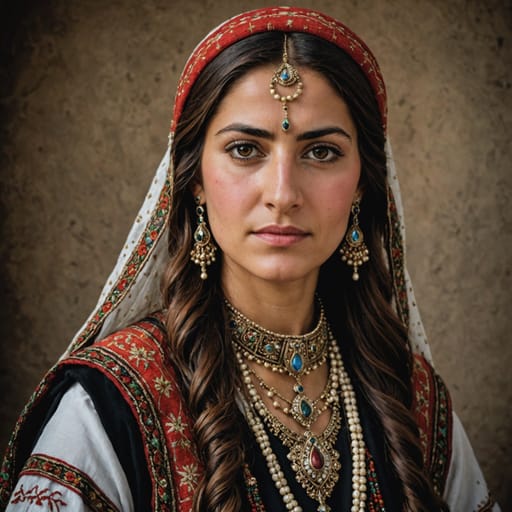
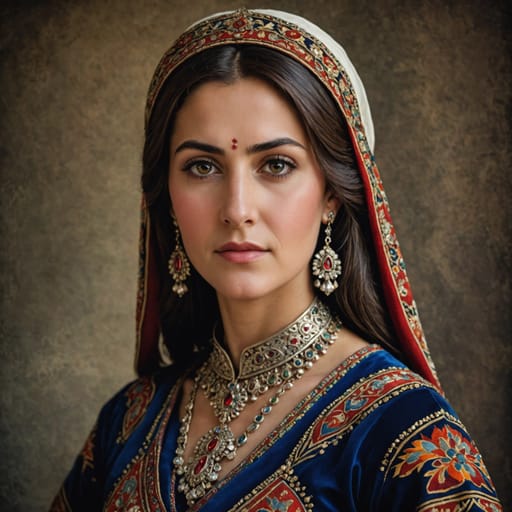
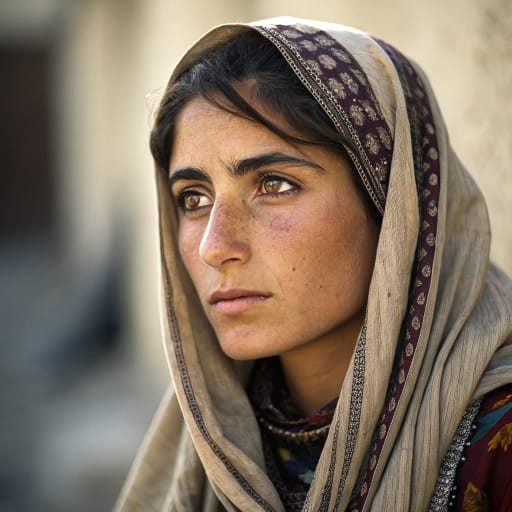
Typical Mandaeans Phenotypes
Reference for AI generation: hair, eyes, skin, facial structure, build
Mandaeans are a small endogamous community from the marshlands and river towns of southern Iraq and Khuzestan in Iran, and centuries of in-group marriage have produced a phenotype that is recognizably Mesopotamian but visibly distinct from the surrounding Arab and Persian populations. Hair is overwhelmingly dark — deep brown to true black — with a wavy-to-loosely-curly texture predominating; straight hair appears but is less common, and tight coils are rare. Greying tends toward steel and silver rather than yellow tones. Beard growth in men is dense and fast, often with a reddish cast in the stubble that doesn't match the scalp.
Eyes run from medium hazel through warm brown to near-black, with light eyes uncommon but documented, particularly in the Iranian branch around Ahvaz. The eye opening is typically almond-shaped and deep-set under a defined brow ridge; no epicanthic fold. Skin sits in the Fitzpatrick III–IV range, with olive and warm bronze undertones; the marsh-dwelling Iraqi subgroup historically tans to a deeper IV after sun exposure, while the Iranian Mandaeans, more urbanized, often present lighter. Sallow undertones are typical, and the contrast between covered and exposed skin is pronounced.
Facial structure is the most distinctive register. The nose is the signature feature — long, narrow at the bridge, with a high straight or gently convex profile and tight alar wings, closer to Levantine and Assyrian forms than to Peninsular Arab. Lips are medium in fullness, the lower fuller than the upper. Jaws are oval to slightly long, with cheekbones that read more forward than wide; the overall face shape tends vertical rather than broad.
Build is medium. Men cluster around 170–175 cm, women around 158–162 cm, with a tendency toward slim-to-mesomorphic frames in youth and central adiposity in middle age. Iraqi and Iranian Mandaeans share the same core phenotype; the Iranian branch trends slightly fairer and taller, the Iraqi branch slightly darker and more compact.
Mandaeans Body & Anatomy Reference
Per-feature anatomical profile for AI nude generation: Levantine / Mediterranean Middle Eastern phenotype
Mandaeans Boobs & Breasts
Mandaeans boobs follow the Levantine / Mediterranean Middle Eastern profile: medium-to-large cup, full, moderate-to-high projection. Areolar diameter is usually 32-46mm, and the coloring is medium-brown to dark-brown areolar pigmentation against the olive-to-light-brown skin tone. Breast shape tracks body composition (mesomorph with fuller hip-and-bust deposition, mean adult female BMI 25-28), so Mandaeans breasts tend to be full and soft, fuller projection than the North-African Berber norm. Expect a forward-set shape, not the smaller East Asian bust profile.
Mandaeans Ass & Hips
Mandaeans ass and hip morphology presents as medium-to-full, moderate projection, broader hip profile, distinctly different from the slim East Asian narrow-hip profile. The Mandaeans pelvic profile shows medium-to-wide iliac crests, fuller gluteal-femoral deposition, anchored in the Levantine / Mediterranean Middle Eastern skeletal pattern. Mandaeans butt shots in adult AI imagery should render the medium-to-full, moderate projection, broader hip profile silhouette with the overall build (mesomorph with fuller hip-and-bust deposition) and the fat distribution typical of the Levantine / Mediterranean Middle Eastern phenotype.
Mandaeans Vagina & Pussy
Mandaeans pussy anatomy typically shows medium-brown to dark-brown labial pigmentation, fuller labia minora. Pubic hair is usually wavy-to-coiled medium-coarse dark texture, dense distribution. In AI-generated Mandaeans nudes, labial color should blend into the olive to medium-brown skin with a gradual transition, and the hair should keep its wavy-to-coiled medium-coarse dark texture.
Mandaeans Dicks & Penis
Penis reference for Mandaeans men: regional mean ~14cm erect, moderate-to-above-average girth. Coloring: medium-brown shaft pigmentation. An accurate Mandaeans cock in AI imagery matches the surrounding olive to medium-brown skin rather than a generic porn default. Circumcision depends on religion and custom, not ancestry.
Mandaeans Body, Curves & Build
The Mandaeans figure is generally mesomorph with fuller hip-and-bust deposition, with mean adult female BMI 25-28, characteristic of Levantine / Mediterranean Middle Eastern ancestry. AI image tools tend to flatten regional body types into a few stock shapes; here the Mandaeans build is kept as its own reference.
Mandaeans Skin Tone & Hair Texture
Skin: olive to medium-brown (Fitzpatrick III-V). Hair: wavy-to-curly 2B-3B, predominantly dark-brown to black. Both are typical of Levantine / Mediterranean Middle Eastern ancestry. The most common mistake in AI nudes of Mandaeans women is a body rendered lighter than the face.
Data depth
20/100Coverage of image-grounded phenotype observations · drives AI generation diversity
- Sample size
- 10/40· 3 images
- Image quality
- 0/30· 0% high
- Confidence
- 10/20· mean 0.57
- Source diversity
- 0/10· wikipedia
- ·Small sample (n<10)
- ·Mostly low-quality source images
- ·Wikipedia-only source, not population-representative
Observed Distribution: Image Sample
Empirical observations from analyzed photographs · supplementary signal, not population truth
Sample: 3 images analyzed (3 wikipedia). Quality: 0 high, 2 medium, 1 low, 0 very_low. Avg analyzer confidence: 0.57.
Skin tone (Fitzpatrick): II (33%), III (33%), IV (33%)
Hair color: black (67%), dark brown (33%)
Hair texture: straight (33%), wavy (33%), covered (33%)
Eye color: dark brown (67%), unclear (33%)
Epicanthic fold: 0% present, 100% absent, 0% unclear
Caveats: Sample size 3 is small, so the observed distribution should be treated as suggestive, not definitive. Quality skews toward older or low-resolution photos; phenotype detail may be lossy. Sample is 100% Wikipedia notable people, which skews toward male, public-life, and modern figures, not population-representative.
Last aggregated: May 7, 2026
Explore phenotype categories
Structured taxonomy with peer-reviewed scales · 22 anatomical categories
Notable Mandaeans People
10 reference figures, sourced from Wikipedia
- Abdul Jabbar Abdullah, 1911-1969), wave theory physicist, dynamical meteorologist, and President Eme…
- Nouman Abid Al-Jader, 1916-1991), University of Michigan (Ann Arbor) graduate (1950); acting dean o…
- Lamia Abbas Amara, 1929-2021), poet and pioneer of modern Arabic poetry. She was the niece of Ga…
- Zahroun Amara, world renowned niello silversmith. People that are known to have owned his si…
- Ganzibra, Dakheel Edan (1881-1964), patriarch and international head of the Mandaeans f…
- Rishama, Abdullah bar Negm (early 1900s-2009), patriarch and head of the Mandaeans in …
- Najiya Murrani, 1919-2011), author, poet.
- Aziz Sbahi, secretary of the Iraqi Communist Party; writer.
- Zaidoon Treeko, 1961-), Oud player, composer, and poet.
- Jalal Shaker, footballer.
Erotic Poses & Sex Positions
From the pose catalog: 219 named positions with reference skeletons
Frequently asked questions about Mandaeans people
Where is the Mandaeans homeland?
The Mandaeans homeland is Southern Mesopotamia in Western Asia.
What language do Mandaeans people speak?
Mandaeans people primarily speak Afro-Asiatic / Semitic / Central Semitic / Northwest Semitic / Aramaic / Eastern Aramaic / Southeastern Aramaic / Mandaic.
What religion do Mandaeans people practice?
The predominant religion among Mandaeans people is Mandaeism.
What are other names for Mandaeans people?
Mandaeans people are also known as Mandaean.






Make your own Mandaeans images
Five a day, free, no credits to buy. The studio starts from this group's phenotype data, so you can set body type, pose and style and keep the traits accurate.
Start with Mandaeans