Help us get this right
Does this portrait look right for Maka?
Nobody has judged this one yet. You would be the first.
Maka Erotic
Upper Nyong (Haut-Nyong) division of Cameroon's East Region, around Abong-Mbang, Doumé and Nguélémendouka, with some villages in the Centre Region
Makaa (Niger-Congo, Bantu, Makaa-Njem group); French widely spoken as a second language
Mostly Christian, largely Roman Catholic, alongside persistent traditional beliefs about djambe, an occult force tied to witchcraft and healing
Makaa-Njem branch of forest Bantu (Guthrie zone A80), related to the Njem, Koonzime and Bekwil; organized in patrilineal clans
About Maka People
The Maka, also written Makaa, are forest farmers of eastern Cameroon. What sets them apart is not a founding kingdom but a long history of doing without one. Before colonial rule there was no Maka king and no paramount chief. Authority sat with patrilineal lineages and with village elders, who settled disputes in long public palavers where a good speaker carried real weight. The German conquest of the early 1900s met stubborn resistance. German and French administrators later appointed chiefs, but those chiefs never fully replaced the older, more argumentative way of running things.
Maka country is the upper Nyong basin in the East Region: rain forest and farm clearings around Abong-Mbang, Doumé and Nguélémendouka, with a few villages across the line in the Centre Region. Households clear and rotate forest plots, growing cassava, plantains and groundnuts to eat and cocoa or coffee to sell. Many people still hunt and gather in the surrounding bush. Villages often stretch out in a line along the roads, a layout pushed by colonial officials who wanted people where they could be counted and taxed.
Makaa is a Bantu language of the Makaa-Njem group, a cluster of forest languages spread across southeastern Cameroon and into Congo, Gabon and the Central African Republic. Its close relatives include Njem, Koonzime and Bekwil. The Beti languages spoken to the west, such as Ewondo, belong to a separate branch. Most Maka also speak French, the language of school and government here.
Christianity is the majority faith, mostly Catholic, and Doumé is still the seat of a diocese. It lives alongside an idea the Maka have become known for well beyond Cameroon: djambe, a hidden force said to live in a person's belly. Djambe can make someone a gifted healer or a dangerous witch. People use it to explain sudden wealth, political success and deaths nobody can account for. Schooling and cash did not make these ideas fade. Talk of djambe has moved on to salaried jobs, elections and the newly rich, which is why the anthropologist Peter Geschiere built much of his work on witchcraft and modern politics on long fieldwork among the Maka.
Related ethnic groups
Groups that share Maka's homeland, region, language, or religious tradition. These are likely candidates for comparative phenotype reference.
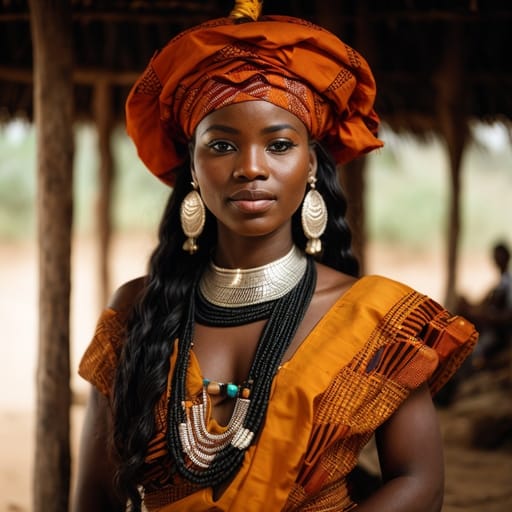
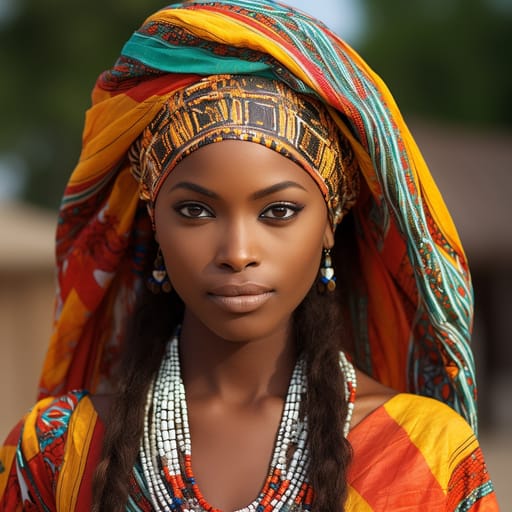
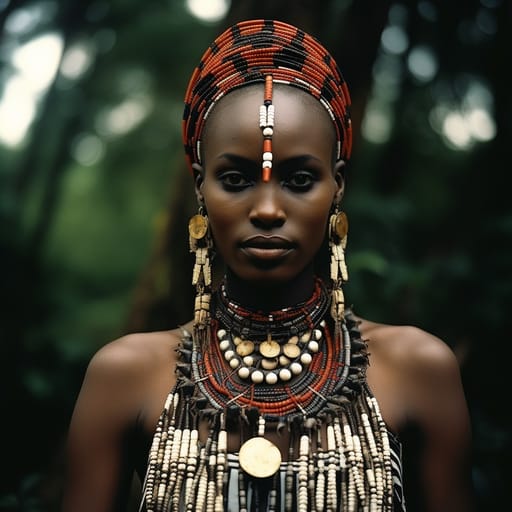
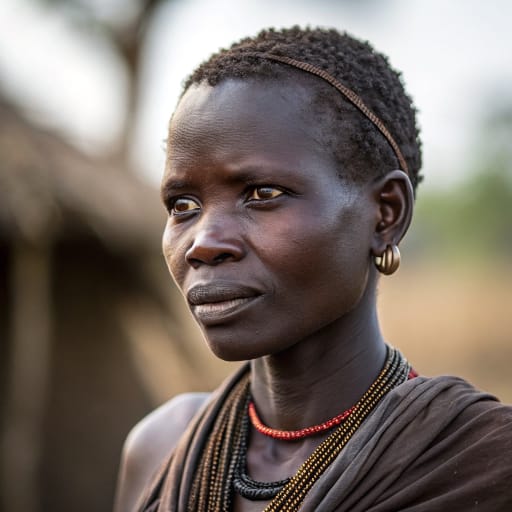
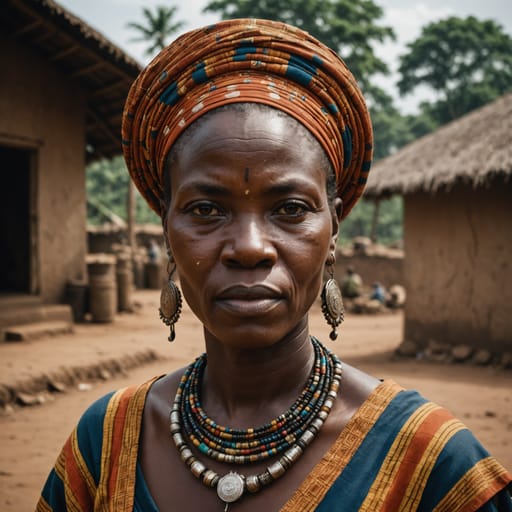
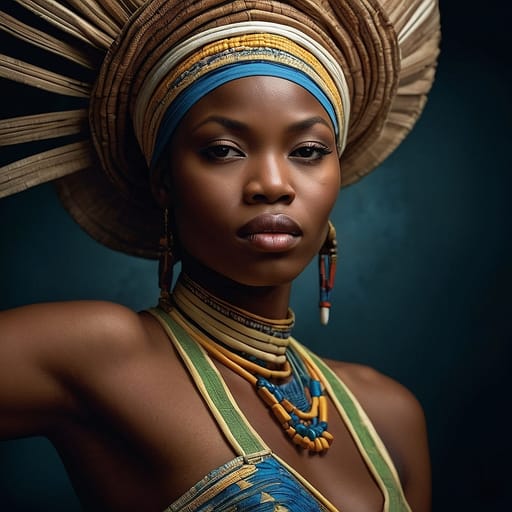
Typical Maka Phenotypes
Reference for AI generation: hair, eyes, skin, facial structure, build
Maka Body & Anatomy Reference
Bantu / Central African Niger-Congo phenotype: anatomy reference for AI nude generation
Maka Boobs & Breasts
Maka tits and boobs run medium-to-large cup, full, projecting, the classic Bantu / Central African Niger-Congo bust profile. Maka nipples and areolas show deep-brown areolar pigmentation against the deep-brown skin tone, with areolar diameter typically in the 32-48mm range and forward-set positioning rather than the smaller East African conical profile. Maka breasts trend fuller projection than East African; comparable to West African norm, a function of the mesomorph with strong gluteal-femoral fat deposition body habitus and the mean adult female BMI 23-26. For anatomically accurate AI-generated Maka nudes the render preserves the medium-to-large cup, full, projecting shape, 32-48mm areolas with deep-brown pigmentation, and the torso proportions of the Bantu / Central African Niger-Congo phenotype.
Maka Ass & Hips
Maka hips and butt usually read as full, projected, wide-set glutes. The skeletal base is broad iliac crests, gynoid pelvic pattern, the Bantu / Central African Niger-Congo pattern. Set against the slim narrow-hip Cushitic East African profile, the difference is easy to see, and the hip-to-waist ratio is often what identifies Maka women in photos.
Maka Vagina & Pussy
Expect deep-brown labial pigmentation, fuller labia minora on Maka women, in keeping with Bantu / Central African Niger-Congo ancestry. The pubic hair is tightly-coiled coarse texture, dense distribution. Coloring should run evenly from the deep-brown skin of the thighs to the labia, and Maka nude imagery should keep the hair's tightly-coiled coarse texture.
Maka Dicks & Penis
Maka dick and penile anatomy in adult AI generation should anchor on the regional reference data: regional mean ~14cm erect, above-average girth, and deep-brown shaft pigmentation. The Maka cock profile reflects the Bantu / Central African Niger-Congo population's anthropometric measurements. The shaft pigmentation should track the surrounding deep-brown skin tone, and the pubic hair should keep its tightly-coiled coarse texture in the typical inverted-V escutcheon.
Maka Body, Curves & Build
Maka body type: mesomorph with strong gluteal-femoral fat deposition, with mean adult female BMI 23-26. This is the typical Bantu / Central African Niger-Congo build. Height range, shoulder-to-hip ratio and fat distribution all follow from it, which is what an accurate Maka nude body should show.
Maka Skin Tone & Hair Texture
Maka skin tone falls in the deep-brown (Fitzpatrick VI) band, the surface signal most often miscalibrated by generic AI nude generators. Maka hair texture is typically tight 4A-4C coil, characteristic of the Bantu / Central African Niger-Congo phenotype. In Maka nude renders the skin should hold that band consistently across the body.
Explore phenotype categories
Structured taxonomy with peer-reviewed scales · 22 anatomical categories
Erotic Poses & Sex Positions
From the pose catalog: 219 named positions with reference skeletons
Frequently asked questions about Maka people
Where is the Maka homeland?
The Maka homeland is Upper Nyong (Haut-Nyong) division of Cameroon's East Region, around Abong-Mbang, Doumé and Nguélémendouka, with some villages in the Centre Region in Central Africa.
What language do Maka people speak?
Maka people primarily speak Makaa (Niger-Congo, Bantu, Makaa-Njem group); French widely spoken as a second language.
What religion do Maka people practice?
The predominant religion among Maka people is Mostly Christian, largely Roman Catholic, alongside persistent traditional beliefs about djambe, an occult force tied to witchcraft and healing.






Make your own Maka images
Five a day, free, no credits to buy. The studio starts from this group's phenotype data, so you can set body type, pose and style and keep the traits accurate.
Start with Maka