Help us get this right
Does this portrait look right for Lohar?
Nobody has judged this one yet. You would be the first.
Lohar Erotic
Northern and western India (Rajasthan, Gujarat, Uttar Pradesh, Bihar, Madhya Pradesh, Maharashtra, Punjab, Haryana), the Nepal Terai, and Punjab and Sindh in Pakistan.
Regional Indo-Aryan languages: Hindi, Rajasthani (Marwari, Mewari), Gujarati, Bhojpuri, Maithili, Punjabi, Marathi, Urdu, Nepali (Indo-European, Indo-Aryan)
Mostly Hindu, with Vishwakarma as patron deity; Sikh (Ramgarhia) in Punjab; Muslim (Saifi) in Uttar Pradesh, Bihar and Pakistan
Occupational blacksmith caste within the wider Vishwakarma and Panchal artisan grouping; sub-groups include Gadia (Gaduliya) Lohar, Ramgarhia, Saifi, Multani Lohar and Panchal Lohar
About Lohar People
The Lohar are defined by the forge. The name comes from the Sanskrit word for iron, and for centuries it meant one thing across northern India: the family that made and mended the plowshare, the sickle, the axle pin and the door hinge over a hand-worked bellows. They are a caste rather than a tribe, so there is no single homeland. Lohar communities are spread through Rajasthan, Gujarat, Uttar Pradesh, Bihar, Madhya Pradesh, Maharashtra, Punjab and Haryana, across the Nepal Terai, and into Pakistani Punjab and Sindh. They speak whatever the region speaks, Marwari, Gujarati, Hindi, Bhojpuri, Punjabi, Marathi or Urdu, all Indo-Aryan. What binds them is the trade, the surname and a shared claim of descent from Vishwakarma, the divine craftsman.
Religion follows the map. Most Lohars are Hindu and keep Vishwakarma Puja, when the tools of the trade are cleaned, garlanded and left untouched for the day. In Punjab a large share are Sikh and counted with carpenters as Ramgarhia, a community that grew prosperous in workshops and later in the building trades of East Africa and Britain. In Uttar Pradesh, Bihar and Pakistan there are Muslim Lohars, many of whom now go by Saifi. Regional sub-groups run into the dozens, but the one outsiders know is the Gadia Lohar of Rajasthan, wandering smiths who live and travel in ox carts hung with brass. Their own account says they were armorers to the rulers of Mewar and swore, after the Mughals took Chittorgarh in the sixteenth century, never to sleep on a cot or light a lamp at night until the fort was won back. Nehru led a procession of Gadia Lohar carts through its gates in 1955 to release them from the vow, and some families settled. Many did not, and their carts still pull up at the edge of villages before the harvest to sharpen blades and reforge worn tools.
The twentieth century was hard on the trade. Factory implements and cheap steel undercut the village forge, and most Lohars now farm, weld, drive, run hardware shops or work in construction, with the anvil kept for side income or dropped altogether. Status is as varied as everything else: most states list Lohars as Other Backward Classes, while in Bihar a long fight over whether they were the same people as the Lohara tribe, and so due Scheduled Tribe status, ended at the Supreme Court in 2022 with the answer no. Vishwakarma associations push from the other direction, lobbying for recognition as a skilled artisan lineage rather than a service caste. The forge is no longer where most Lohars earn a living, but it is still where they locate who they are.
Related ethnic groups
Groups that share Lohar's homeland, region, language, or religious tradition. These are likely candidates for comparative phenotype reference.
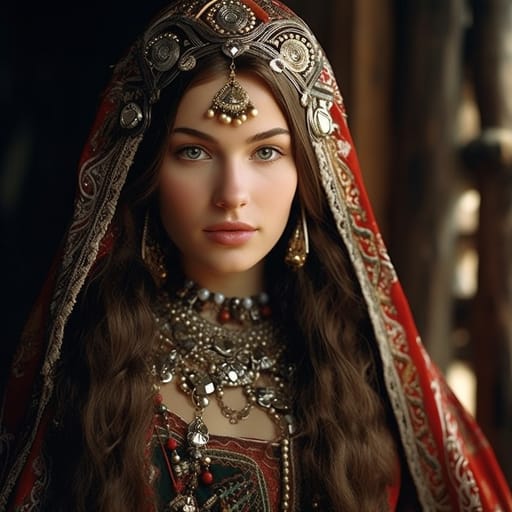
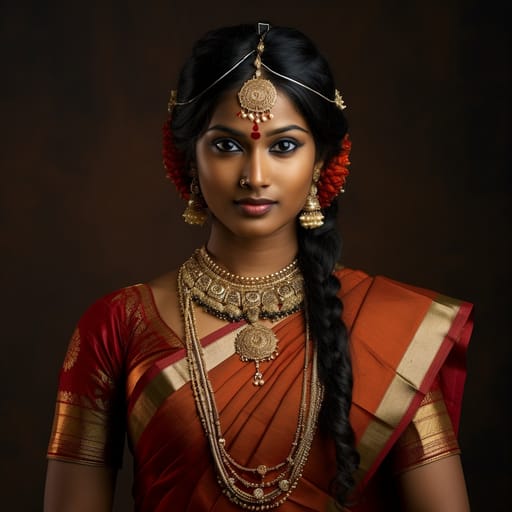
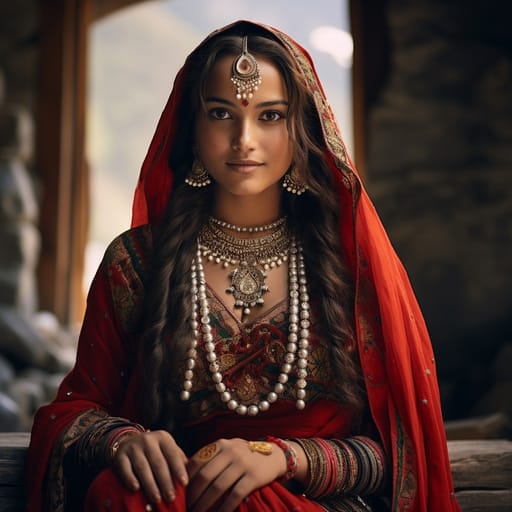
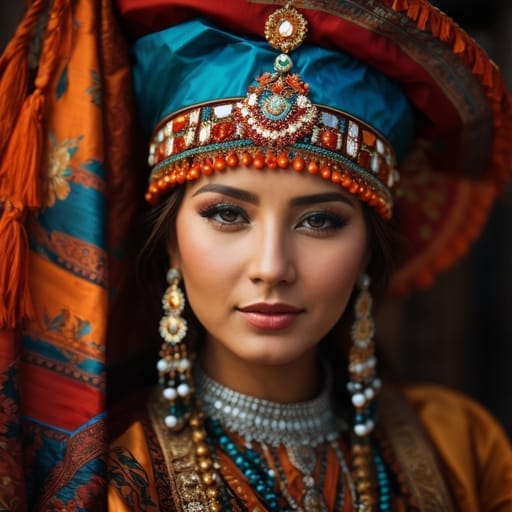
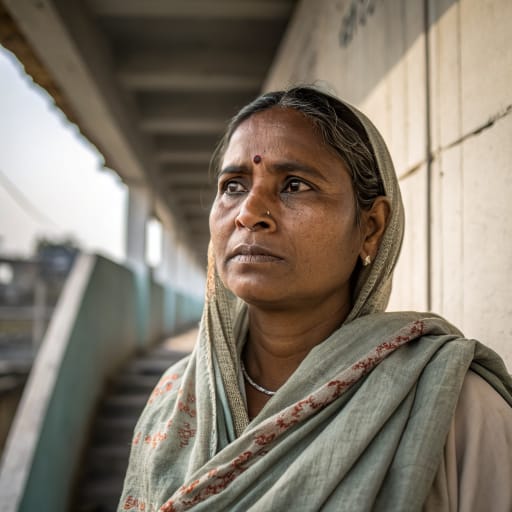
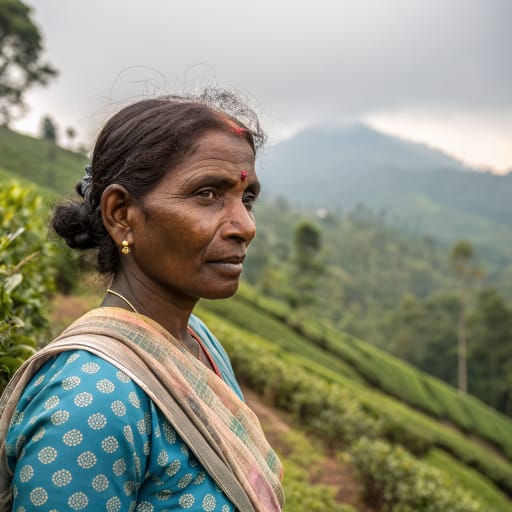
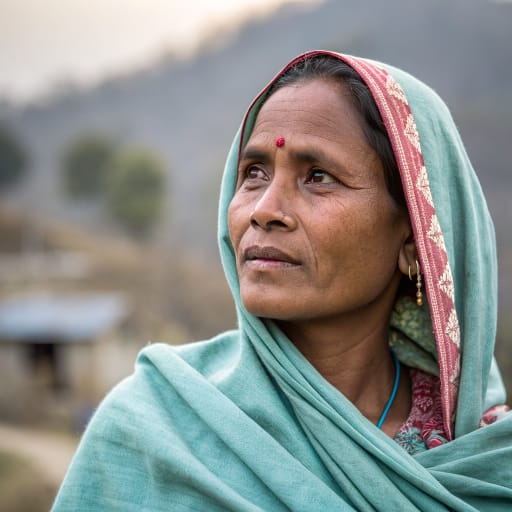
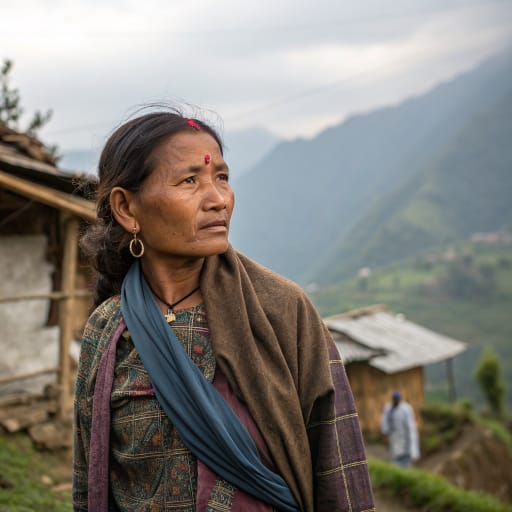
Typical Lohar Phenotypes
Reference for AI generation: hair, eyes, skin, facial structure, build
Lohar Body & Anatomy Reference
Indo-Aryan / Dravidian South Asian phenotype: anatomy reference for AI nude generation
Lohar Boobs & Breasts
Lohar tits and boobs run medium-to-large cup, moderate-to-full projection, the classic Indo-Aryan / Dravidian South Asian bust profile. Lohar nipples and areolas show medium-brown to dark-brown areolar pigmentation against the wheatish-to-brown skin tone, with areolar diameter typically in the 32-46mm range and forward-set positioning rather than the smaller East Asian bust profile. Lohar breasts trend full and soft, generally fuller than the East Asian norm, a function of the endomorph-to-mesomorph with fuller hip deposition body habitus and the mean adult female BMI 22-25. For anatomically accurate AI-generated Lohar nudes the render preserves the medium-to-large cup, moderate-to-full projection shape, 32-46mm areolas with medium-brown to dark-brown pigmentation, and the torso proportions of the Indo-Aryan / Dravidian South Asian phenotype.
Lohar Ass & Hips
Lohar hips and butt usually read as medium-to-full, moderate-to-high projection, classic curvy hip profile. The skeletal base is medium-to-wide iliac crests, full gluteal-femoral fat distribution, the Indo-Aryan / Dravidian South Asian pattern. Set against the slim hip profile of East Asian women, the difference is easy to see, and the hip-to-waist ratio is often what identifies Lohar women in photos.
Lohar Vagina & Pussy
Expect medium-brown to dark-brown labial pigmentation, fuller labia minora projection on Lohar women, in keeping with Indo-Aryan / Dravidian South Asian ancestry. The pubic hair is straight-to-wavy coarse texture, dense distribution. Coloring should run evenly from the wheatish to brown skin of the thighs to the labia, and Lohar nude imagery should keep the hair's straight-to-wavy coarse texture.
Lohar Dicks & Penis
Lohar dick and penile anatomy in adult AI generation should anchor on the regional reference data: regional mean ~13cm erect, moderate girth, and medium-brown shaft pigmentation. The Lohar cock profile reflects the Indo-Aryan / Dravidian South Asian population's anthropometric measurements. The shaft pigmentation should track the surrounding wheatish to brown skin tone, and the pubic hair should keep its straight-to-wavy coarse texture in the typical inverted-V escutcheon.
Lohar Body, Curves & Build
Lohar body type: endomorph-to-mesomorph with fuller hip deposition, with mean adult female BMI 22-25. This is the typical Indo-Aryan / Dravidian South Asian build. Height range, shoulder-to-hip ratio and fat distribution all follow from it, which is what an accurate Lohar nude body should show.
Lohar Skin Tone & Hair Texture
Lohar skin tone falls in the wheatish to brown (Fitzpatrick III-V) band, the surface signal most often miscalibrated by generic AI nude generators. Lohar hair texture is typically straight-to-wavy 1A-2B, dense, dark-brown to black, characteristic of the Indo-Aryan / Dravidian South Asian phenotype. In Lohar nude renders the skin should hold that band consistently across the body.
Explore phenotype categories
Structured taxonomy with peer-reviewed scales · 22 anatomical categories
Erotic Poses & Sex Positions
From the pose catalog: 219 named positions with reference skeletons
Frequently asked questions about Lohar people
Where is the Lohar homeland?
The Lohar homeland is Northern and western India (Rajasthan, Gujarat, Uttar Pradesh, Bihar, Madhya Pradesh, Maharashtra, Punjab, Haryana), the Nepal Terai, and Punjab and Sindh in Pakistan. in Southern Asia.
What language do Lohar people speak?
Lohar people primarily speak Regional Indo-Aryan languages: Hindi, Rajasthani (Marwari, Mewari), Gujarati, Bhojpuri, Maithili, Punjabi, Marathi, Urdu, Nepali (Indo-European, Indo-Aryan).
What religion do Lohar people practice?
The predominant religion among Lohar people is Mostly Hindu, with Vishwakarma as patron deity; Sikh (Ramgarhia) in Punjab; Muslim (Saifi) in Uttar Pradesh, Bihar and Pakistan.






Make your own Lohar images
Five a day, free, no credits to buy. The studio starts from this group's phenotype data, so you can set body type, pose and style and keep the traits accurate.
Start with Lohar