Help us get this right
Does this portrait look right for Jaunsari?
Nobody has judged this one yet. You would be the first.
Jaunsari Erotic
Jaunsar-Bawar, the hill tract between the Yamuna and Tons rivers in Dehradun district, Uttarakhand, northern India (Chakrata, Kalsi and Tyuni areas).
Jaunsari, with the Bawari variety in the north (Indo-European, Indo-Aryan, Western Pahari); Hindi widely used as a second language.
Hinduism centered on the regional deity Mahasu Devta, alongside village gods and traditions tied to the Mahabharata.
Jaunsaris of the lower tract and Bawaris of the upper; caste strata include Khasa Rajputs and Brahmins, Bajgis and Koltas. Part of the wider Western Pahari (Khasa) hill peoples.
About Jaunsari People
The Jaunsaris are the hill people of Jaunsar-Bawar, a wedge of steep country in the northwest corner of Uttarakhand, pinned between the Yamuna and the Tons. What sets them apart is direction: their neighbors to the east are Garhwali, but Jaunsari life faces west, toward Sirmaur and the Shimla hills of Himachal Pradesh. The region belonged to the Sirmaur kingdom before the Gorkhas overran it, and the British attached it to Dehradun only after the war of 1814 to 1816. The language follows the same logic. Jaunsari is a Western Pahari tongue, closer to Sirmauri across the river than to Garhwali next door, with a Bawari variety spoken in the higher, snowier north.
They are Hindu, but the working center of religious life is Mahasu Devta, four brother deities whose main temple stands at Hanol on the Tons. One brother, Chalda Mahasu, has no fixed seat at all: he travels by palanquin from village to village on a circuit that takes years to complete. Mahasu is judge as much as god, and an oath sworn in his name still settles disputes that might otherwise reach a courtroom. Villages are grouped into units called khats, each under a hereditary headman, the sayana. Families trace their descent to the Pandavas of the Mahabharata, and some in Bawar to the rival Kauravas. That epic claim was long the stated charter for fraternal polyandry, in which brothers shared one wife and kept the terraced land undivided. The practice has largely faded, though it still dominates what outsiders write about the place. Less noticed are customs that gave women unusual room: bride price rather than dowry, a wedding party that travels from the bride's village to the groom's, accepted divorce and remarriage, and a sharp distinction between a woman's freedom as a daughter in her natal village and her duties as a wife in her husband's.
In 1967 the government granted Scheduled Tribe status by territory rather than by community, so landowning Khasa Rajputs and Brahmins hold the same tribal label as the Koltas and Bajgis, Dalit groups who historically worked those fields as bound laborers and served as village drummers. That arrangement remains a live argument. Most families still farm ginger, tomatoes, peas and kidney beans on terraces, with apples higher up. The calendar turns on Bissu in April, with its mock archery duels called thoda, the winter feasting of Maroj, and in many villages a Diwali kept a full month after the rest of India, lit by wooden torches instead of fireworks.
Related ethnic groups
Groups that share Jaunsari's homeland, region, language, or religious tradition. These are likely candidates for comparative phenotype reference.
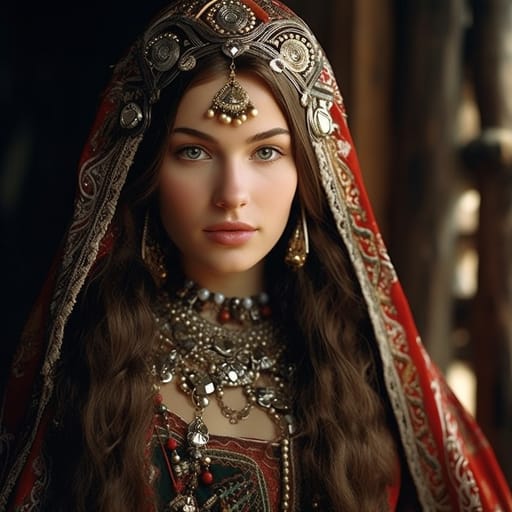
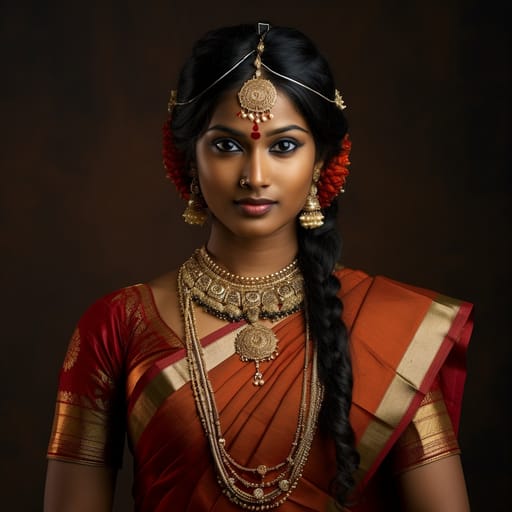
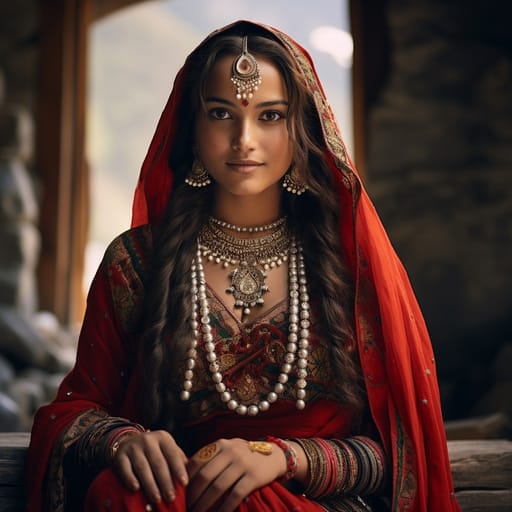
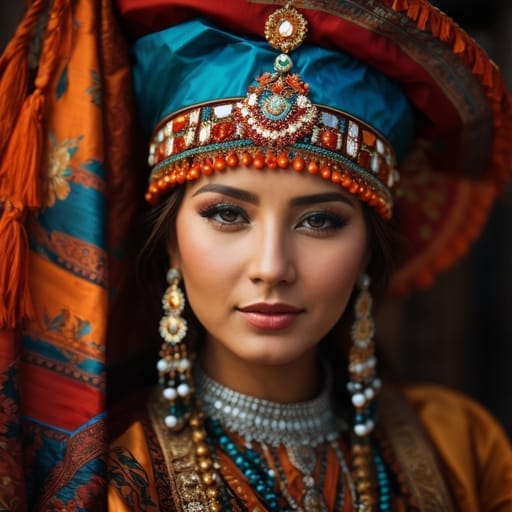
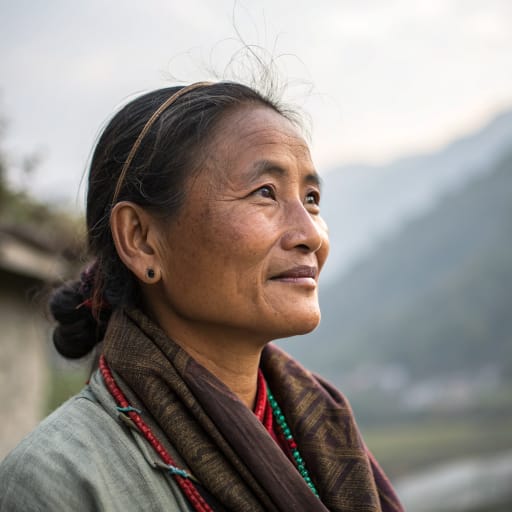
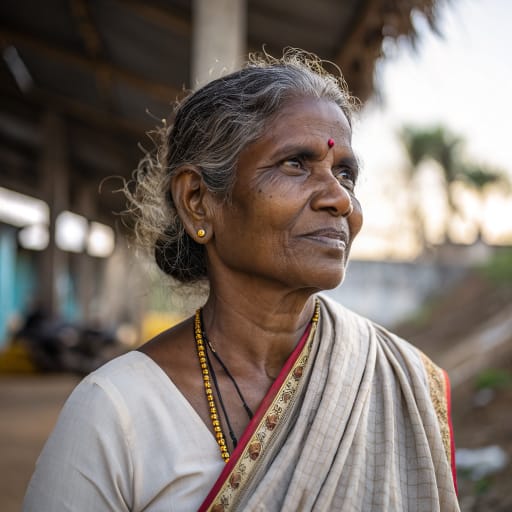
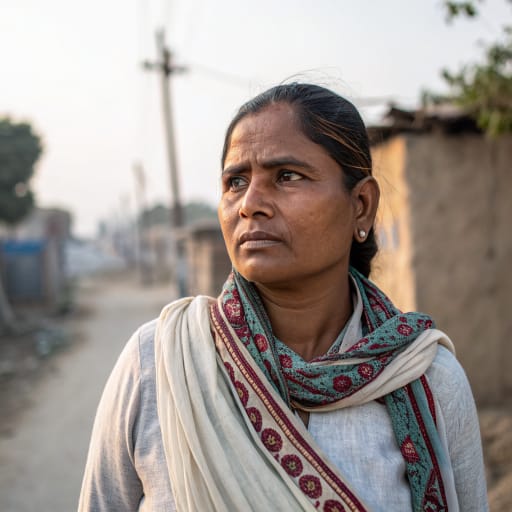
Typical Jaunsari Phenotypes
Reference for AI generation: hair, eyes, skin, facial structure, build
Jaunsari Body & Anatomy Reference
Per-feature anatomical profile for AI nude generation: Indo-Aryan / Dravidian South Asian phenotype
Jaunsari Boobs & Breasts
The typical Jaunsari bust is medium-to-large cup, moderate-to-full projection, in line with the wider Indo-Aryan / Dravidian South Asian pattern. Areolas usually fall in the 32-46mm range, with medium-brown to dark-brown areolar pigmentation against the wheatish-to-brown skin tone. Compared with the smaller East Asian bust profile, Jaunsari breasts sit forward and are generally full and soft, generally fuller than the East Asian norm. A faithful AI render of Jaunsari tits keeps that shape and areola size.
Jaunsari Ass & Hips
Butt shape among Jaunsari women: medium-to-full, moderate-to-high projection, classic curvy hip profile, over medium-to-wide iliac crests, full gluteal-femoral fat distribution. This follows Indo-Aryan / Dravidian South Asian ancestry and looks quite unlike the slim hip profile of East Asian women. An accurate Jaunsari ass in adult AI imagery keeps both the silhouette and the overall build (endomorph-to-mesomorph with fuller hip deposition) instead of a generic average.
Jaunsari Vagina & Pussy
Vulvar anatomy among Jaunsari women: medium-brown to dark-brown labial pigmentation, fuller labia minora projection. Pubic hair tends to be straight-to-wavy coarse texture, dense distribution, in the usual inverted-triangle pattern. Both follow Indo-Aryan / Dravidian South Asian pigmentation, which is why Jaunsari pussy renders should not fall back on a pale, sparse Western template.
Jaunsari Dicks & Penis
The Jaunsari cock profile, from Indo-Aryan / Dravidian South Asian anthropometric data: regional mean ~13cm erect; moderate girth; medium-brown shaft pigmentation. Pubic hair has a straight-to-wavy coarse texture and forms the usual inverted-V pattern. Whether Jaunsari men are circumcised follows religious and cultural practice rather than phenotype.
Jaunsari Body, Curves & Build
Build and curves among Jaunsari women follow the Indo-Aryan / Dravidian South Asian pattern: endomorph-to-mesomorph with fuller hip deposition, mean adult female BMI 22-25. Proportions matter as much as skin tone, so Jaunsari figures should keep their regional height and limb ratios.
Jaunsari Skin Tone & Hair Texture
The Jaunsari skin range is wheatish to brown (Fitzpatrick III-V), and hair tends to be straight-to-wavy 1A-2B, dense, dark-brown to black. That combination marks the Indo-Aryan / Dravidian South Asian phenotype, and skin tone is the trait AI generators most often get wrong for Jaunsari women.
Explore phenotype categories
Structured taxonomy with peer-reviewed scales · 22 anatomical categories
Erotic Poses & Sex Positions
From the pose catalog: 219 named positions with reference skeletons
Frequently asked questions about Jaunsari people
Where is the Jaunsari homeland?
The Jaunsari homeland is Jaunsar-Bawar, the hill tract between the Yamuna and Tons rivers in Dehradun district, Uttarakhand, northern India (Chakrata, Kalsi and Tyuni areas). in Southern Asia.
What language do Jaunsari people speak?
Jaunsari people primarily speak Jaunsari, with the Bawari variety in the north (Indo-European, Indo-Aryan, Western Pahari); Hindi widely used as a second language..
What religion do Jaunsari people practice?
The predominant religion among Jaunsari people is Hinduism centered on the regional deity Mahasu Devta, alongside village gods and traditions tied to the Mahabharata..






Make your own Jaunsari images
Five a day, free, no credits to buy. The studio starts from this group's phenotype data, so you can set body type, pose and style and keep the traits accurate.
Start with Jaunsari