No portrait yet
Qassar Erotic
Northern India, notably Uttar Pradesh and Bihar, and Pakistan, notably Punjab
Urdu and Hindi, with regional Punjabi, Bhojpuri and Awadhi (Indo-European, Indo-Aryan)
Sunni Islam
Muslim counterpart of the Hindu Dhobi washerman caste; one of the Pasmanda occupational biradaris of South Asian Muslims, also known as Muslim Dhobi
About Qassar People
The Qassar are the Muslim washermen of northern India and Pakistan, a hereditary occupational community that most neighbors still call Dhobi. Qassar is an Arabic word for a fuller, someone who washes and whitens cloth. Choosing it is deliberate: it names the same trade in the vocabulary of Islam instead of the vocabulary of caste. Over the past century several South Asian Muslim artisan groups made the same move, with weavers taking the name Ansari and butchers taking Qureshi. The Qassar belong to that pattern of a people renaming themselves on their own terms.
They are generally held to descend from Hindu Dhobis who converted to Islam, and conversion did not break up the old structure. The trade stayed, and so did endogamy: marriages are arranged within the biradari, the brotherhood of related families. Communities have also traditionally kept a council of elders to settle disputes and enforce custom. Their faith is Sunni Islam, lived in ordinary terms through Friday prayers, the Ramadan fast and the two Eids. At home people speak Urdu or Hindi, which are close to one language in everyday speech. They also speak the regional Indo-Aryan language of their district: Punjabi on the Pakistani side, Bhojpuri or Awadhi on the Gangetic plain.
The traditional work was outdoor and physically punishing. Washermen gathered bundles of laundry from client households and carried them to a river, canal or tank. There they beat the cloth clean against stone slabs, dried it in the sun and brought it back pressed. In villages, payment often came partly in grain at harvest. The riverside washing place, the ghat, gave Hindi and Urdu one of their best known proverbs: the washerman's dog belongs neither to the house nor to the ghat. People still say it about anyone stranded between two worlds.
Today much of the trade has moved into shops. Qassar families run laundries, dry cleaning counters and the ironing stalls found on streets in North Indian and Pakistani towns, and many others have left washing altogether. In India the community's position also has a political edge. Hindu Dhobis are listed as a Scheduled Caste in many states, but the law limits that category to Hindus, Sikhs and Buddhists, so Muslim washermen doing identical work are left out. Their demand for equal recognition is now one strand of Pasmanda politics, the movement of backward-caste Muslims who argue that caste inside South Asian Islam is real and should be counted.
Related ethnic groups
Groups that share Qassar's homeland, region, language, or religious tradition. These are likely candidates for comparative phenotype reference.
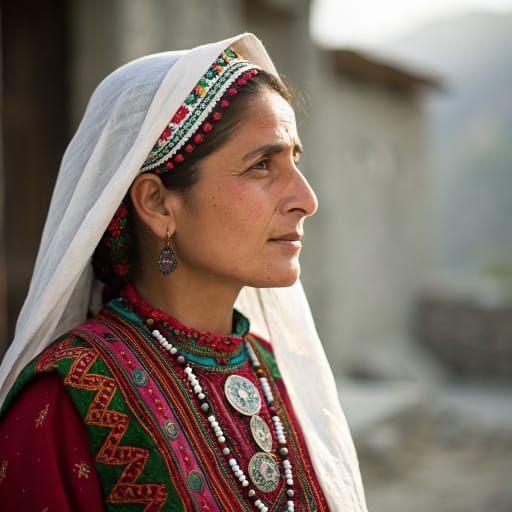
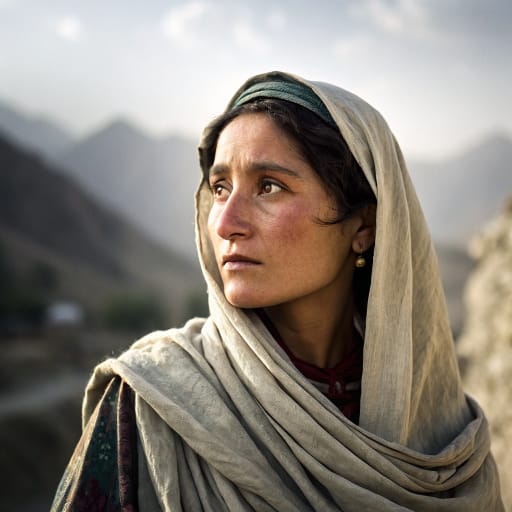
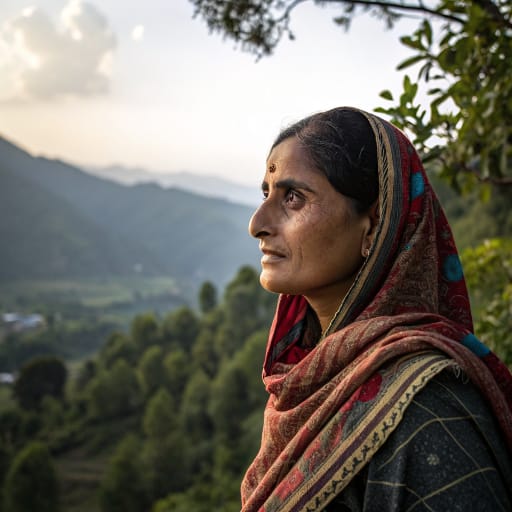
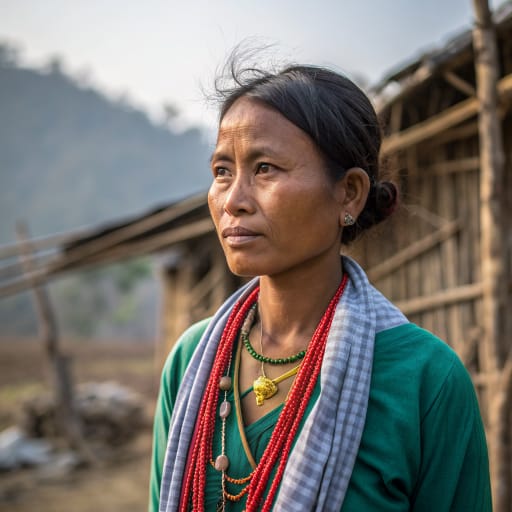
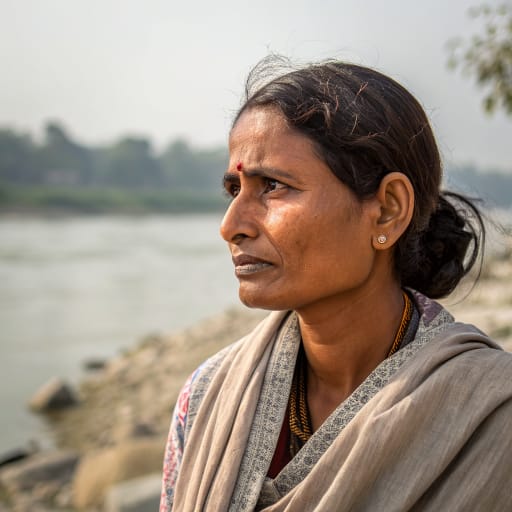
Typical Qassar Phenotypes
Reference for AI generation: hair, eyes, skin, facial structure, build
Qassar Body & Anatomy Reference
Per-feature anatomical profile for AI nude generation: Indo-Aryan / Dravidian South Asian phenotype
Qassar Boobs & Breasts
The typical Qassar bust is medium-to-large cup, moderate-to-full projection, in line with the wider Indo-Aryan / Dravidian South Asian pattern. Areolas usually fall in the 32-46mm range, with medium-brown to dark-brown areolar pigmentation against the wheatish-to-brown skin tone. Compared with the smaller East Asian bust profile, Qassar breasts sit forward and are generally full and soft, generally fuller than the East Asian norm. A faithful AI render of Qassar tits keeps that shape and areola size.
Qassar Ass & Hips
Butt shape among Qassar women: medium-to-full, moderate-to-high projection, classic curvy hip profile, over medium-to-wide iliac crests, full gluteal-femoral fat distribution. This follows Indo-Aryan / Dravidian South Asian ancestry and looks quite unlike the slim hip profile of East Asian women. An accurate Qassar ass in adult AI imagery keeps both the silhouette and the overall build (endomorph-to-mesomorph with fuller hip deposition) instead of a generic average.
Qassar Vagina & Pussy
Vulvar anatomy among Qassar women: medium-brown to dark-brown labial pigmentation, fuller labia minora projection. Pubic hair tends to be straight-to-wavy coarse texture, dense distribution, in the usual inverted-triangle pattern. Both follow Indo-Aryan / Dravidian South Asian pigmentation, which is why Qassar pussy renders should not fall back on a pale, sparse Western template.
Qassar Dicks & Penis
The Qassar cock profile, from Indo-Aryan / Dravidian South Asian anthropometric data: regional mean ~13cm erect; moderate girth; medium-brown shaft pigmentation. Pubic hair has a straight-to-wavy coarse texture and forms the usual inverted-V pattern. Whether Qassar men are circumcised follows religious and cultural practice rather than phenotype.
Qassar Body, Curves & Build
Build and curves among Qassar women follow the Indo-Aryan / Dravidian South Asian pattern: endomorph-to-mesomorph with fuller hip deposition, mean adult female BMI 22-25. Proportions matter as much as skin tone, so Qassar figures should keep their regional height and limb ratios.
Qassar Skin Tone & Hair Texture
The Qassar skin range is wheatish to brown (Fitzpatrick III-V), and hair tends to be straight-to-wavy 1A-2B, dense, dark-brown to black. That combination marks the Indo-Aryan / Dravidian South Asian phenotype, and skin tone is the trait AI generators most often get wrong for Qassar women.
Explore phenotype categories
Structured taxonomy with peer-reviewed scales · 22 anatomical categories
Erotic Poses & Sex Positions
From the pose catalog: 219 named positions with reference skeletons
Frequently asked questions about Qassar people
Where is the Qassar homeland?
The Qassar homeland is Northern India, notably Uttar Pradesh and Bihar, and Pakistan, notably Punjab in Southern Asia.
What language do Qassar people speak?
Qassar people primarily speak Urdu and Hindi, with regional Punjabi, Bhojpuri and Awadhi (Indo-European, Indo-Aryan).
What religion do Qassar people practice?
The predominant religion among Qassar people is Sunni Islam.






Make your own Qassar images
Five a day, free, no credits to buy. The studio starts from this group's phenotype data, so you can set body type, pose and style and keep the traits accurate.
Start with Qassar