Help us get this right
Does this portrait look right for Layap?
Nobody has judged this one yet. You would be the first.
Layap Erotic
Laya Gewog in Gasa District, the high northwestern corner of Bhutan near the border with Tibet (China)
Layakha (Sino-Tibetan, Tibetic), closely related to Dzongkha
Drukpa Kagyu Buddhism, with veneration of local mountain and place deities
Bhutanese highland yak herders; culturally Tibetic, close to the Lunap of Lunana and related to the wider Dzongkha-speaking Ngalop population
About Layap People
Say "Laya" to most Bhutanese and they picture a woman in a pointed bamboo hat. The Layap are the small community living in and around Laya, a high village in Gasa District in the far northwest of Bhutan. It sits near 3,800 meters, under snow peaks, close to the Tibetan border. They are herders first. Yaks carry their loads, feed them and clothe them, and the animals set the pace of the year. Trips down to the valleys have long been how butter, cheese and dried meat become rice and other goods the high country cannot grow. Tibet lies just over the passes, and daily life in Laya has more in common with the plateau than with the rice terraces of central Bhutan.
Their language, Layakha, is a Tibetic language closely related to Dzongkha, Bhutan's national language. Lowland Bhutanese can still hear the difference at once. The Lunap of Lunana, even more remote, speak a close relative. In religion the Layap follow Bhutan's Drukpa Kagyu Buddhism, but in Laya it sits alongside older loyalties to local mountain and place deities. People still keep those deities on good terms with offerings, because weather, herds and health are all thought to depend on them.
Dress is where the Layap stand out most. Women wear the conical hat of woven bamboo with a thin spike at its peak, along with long dark robes of yak and sheep wool. They keep their hair long in a country where short hair has long been the norm for women. Silver ornaments and strings of beads finish the outfit. For many women this is still everyday clothing, not something saved for festivals.
The last two decades have changed Laya faster than the centuries before them. In 2004 Bhutan legalized the harvest of cordyceps, the caterpillar fungus prized in Chinese medicine. Since then, spring collection on the high slopes has brought real cash into highland households. Solar panels, phones and schooling followed, and many young Layap now spend years away in Thimphu or beyond. Since 2016 Laya has hosted the Royal Highlander Festival, which gathers herders and their yaks from across the north. The village is also a stop on the Snowman Trek, known as one of the hardest treks in the Himalayas. Tourism and cordyceps money have not replaced the herds, but they have made yak herding one way to make a living among several, not the only one.
Related ethnic groups
Groups that share Layap's homeland, region, language, or religious tradition. These are likely candidates for comparative phenotype reference.

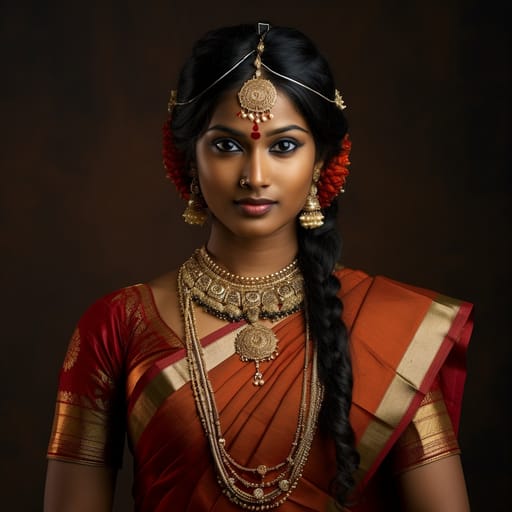
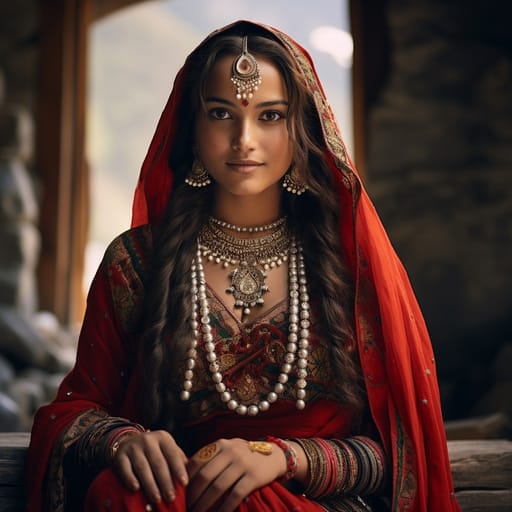
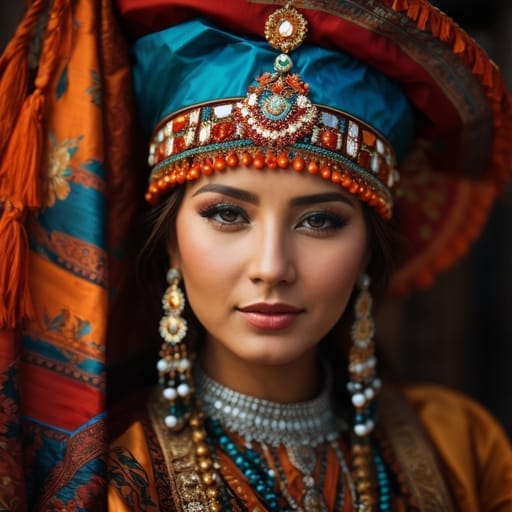
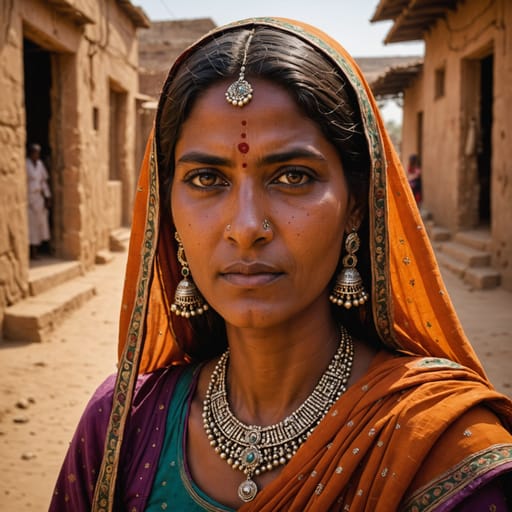
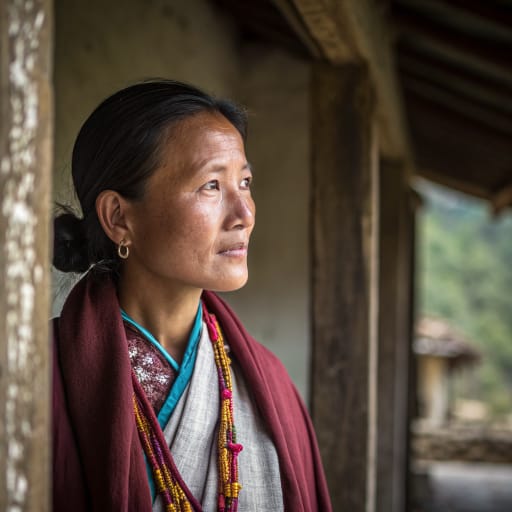

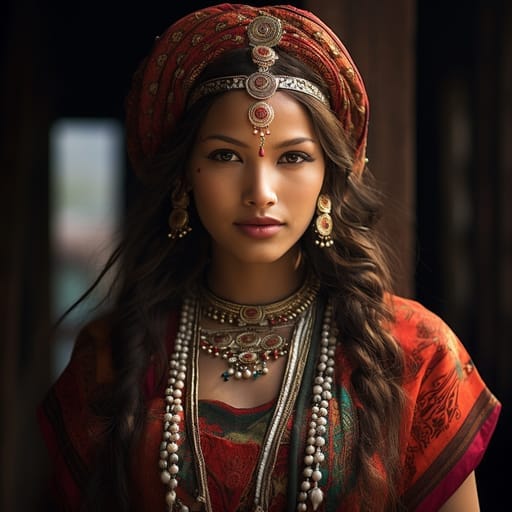
Typical Layap Phenotypes
Reference for AI generation: hair, eyes, skin, facial structure, build
Layap Body & Anatomy Reference
Per-feature anatomical profile for AI nude generation: Indo-Aryan / Dravidian South Asian phenotype
Layap Boobs & Breasts
Bust reference for Layap women: medium-to-large cup, moderate-to-full projection, which is typical of Indo-Aryan / Dravidian South Asian ancestry. Areolas measure about 32-46mm across, with medium-brown to dark-brown pigmentation. Body type (endomorph-to-mesomorph with fuller hip deposition) shapes the bust as well, so Layap tits are usually full and soft, generally fuller than the East Asian norm. In AI imagery, keep the forward-set shape rather than drifting toward the smaller East Asian bust profile.
Layap Ass & Hips
The Layap ass is typically medium-to-full, moderate-to-high projection, classic curvy hip profile, which sets it apart from the slim hip profile of East Asian women. Underneath, the pelvis shows medium-to-wide iliac crests, full gluteal-femoral fat distribution, part of the Indo-Aryan / Dravidian South Asian skeletal pattern. For Layap butt pics and AI renders, match that silhouette and the overall build (endomorph-to-mesomorph with fuller hip deposition).
Layap Vagina & Pussy
Layap pussy and vulvar anatomy presents medium-brown to dark-brown labial pigmentation, fuller labia minora projection, consistent with the Indo-Aryan / Dravidian South Asian phenotype's pigmentation pattern. Layap pubic hair is typically straight-to-wavy coarse texture, dense distribution, in the inverted-triangle pattern. For anatomically accurate Layap pussy renders the labial coloration should match the surrounding wheatish to brown skin tone with a continuous gradient, and the hair should keep its straight-to-wavy coarse texture.
Layap Dicks & Penis
Layap dicks follow the Indo-Aryan / Dravidian South Asian reference data: regional mean ~13cm erect; moderate girth; medium-brown shaft pigmentation. Shaft color should track the wheatish to brown skin tone with a smooth change toward the glans, and Layap pubic hair keeps its straight-to-wavy coarse texture.
Layap Body, Curves & Build
Layap body type and overall build presents as endomorph-to-mesomorph with fuller hip deposition, with mean adult female BMI 22-25: the characteristic Indo-Aryan / Dravidian South Asian habitus. Layap curves and proportions should keep the regional skeletal frame (height, shoulder-to-hip ratio, limb proportions) rather than a generic mesomorph default.
Layap Skin Tone & Hair Texture
Layap skin sits in the wheatish to brown (Fitzpatrick III-V) band. Hair is typically straight-to-wavy 1A-2B, dense, dark-brown to black, in keeping with the Indo-Aryan / Dravidian South Asian phenotype. In nude renders the skin should stay one even tone from face to body, and body, pubic and head hair should match.
Explore phenotype categories
Structured taxonomy with peer-reviewed scales · 22 anatomical categories
Erotic Poses & Sex Positions
From the pose catalog: 219 named positions with reference skeletons
Frequently asked questions about Layap people
Where is the Layap homeland?
The Layap homeland is Laya Gewog in Gasa District, the high northwestern corner of Bhutan near the border with Tibet (China) in Southern Asia.
What language do Layap people speak?
Layap people primarily speak Layakha (Sino-Tibetan, Tibetic), closely related to Dzongkha.
What religion do Layap people practice?
The predominant religion among Layap people is Drukpa Kagyu Buddhism, with veneration of local mountain and place deities.






Make your own Layap images
Five a day, free, no credits to buy. The studio starts from this group's phenotype data, so you can set body type, pose and style and keep the traits accurate.
Start with Layap