Help us get this right
Does this portrait look right for Marwaris?
One tap. It takes a second and it is recorded.
0 say it looks right, 1 says it looks off.
Marwaris Erotic
Marwar region of western Rajasthan, India, centered on Jodhpur in the Thar Desert; large mercantile diaspora across India, especially Kolkata, Mumbai and Assam, with communities in Nepal and in Sindh, Pakistan
Marwari (Indo-Aryan, Rajasthani group of the Western Zone), written in Devanagari and historically in the Mahajani merchant script; Hindi widely used, with Bengali, Nepali or Sindhi in the diaspora
Predominantly Hindu, largely Vaishnava among the trading castes; significant Jain minority, especially among Oswals; smaller Muslim minority; folk cults such as Ramdev Pir and the Bishnoi sect cross sectarian lines
Regional Marwaris of all castes, including Rathore Rajputs, Jats, Bishnois, Raikas, Charans, Meghwals and Bhils, and the mercantile Marwari diaspora of Agarwal, Maheshwari, Oswal and Khandelwal trading communities; part of the wider Rajasthani people
About Marwaris People
Ask who counts as Marwari and you get two answers that only partly overlap. Inside Rajasthan the word means the people of Marwar, the dry country west of the Aravalli hills around Jodhpur, whatever their caste: the Rathore Rajputs who built Jodhpur in 1459, Jat and Bishnoi farmers, Raika camel herders, Charan bards, Meghwal weavers, and the Muslim Langa and Manganiyar musicians who still sing for Hindu patrons. In the rest of India the word means something narrower: the trading families, mostly Agarwal, Maheshwari, Oswal and Khandelwal by caste, who left Marwar and neighboring Shekhawati from the eighteenth century onward and ended up running a remarkable share of the country's private industry. Both share Marwari, a Western Indo-Aryan language with the same medieval roots as Gujarati, which the Indian census still files under Hindi despite centuries of its own bardic poetry.
The homeland explains the migration. Marwar takes its name from the Sanskrit word for desert, and the Thar gives it a few weeks of rain a year, brackish wells, and a kitchen built on what keeps: millet, ghee, buttermilk, and dried ker berries and sangri beans. Scarcity pushed sons into trade, and a web of caste, kinship and credit carried them out. Merchants walked and rode camels to Malwa and Bengal, then took the railways to Calcutta, Bombay and the Assam tea districts, sleeping in communal basa lodging houses and learning the parta system of daily accounts under a senior clerk before striking out alone. A hundi bill written in Jodhpur could settle a debt on the far side of the subcontinent on reputation alone. Out of that world came the Birla, Bajaj and Goenka houses, and the community spread further to Nepal, where Marwari firms anchor the wholesale trade, and into Sindh in Pakistan, where Marwari-speaking Hindu villages persist around Tharparkar.
Religion sits close to the ledger. Most Marwaris are Hindu, the merchant castes strongly Vaishnava and the Oswals largely Jain, and both traditions bind vegetarianism, charity and the family firm into one way of life. Marwar's folk saints matter as much as scripture. Ramdev Pir at Ramdevra draws Hindus and Muslims to the same shrine, and the Bishnoi sect founded by Jambheshwar in 1485 forbids cutting green trees, a rule for which 363 villagers at Khejarli died in 1730 rather than let the Jodhpur court fell their khejri. The region gave the world jodhpur breeches, the Marwari horse with its inward-curving ears and the bandhani tie-dye of its women's veils, and its men still tie the tall Jodhpuri safa for a wedding whether they live in Pali or Kolkata.
Related ethnic groups
Groups that share Marwaris's homeland, region, language, or religious tradition. These are likely candidates for comparative phenotype reference.
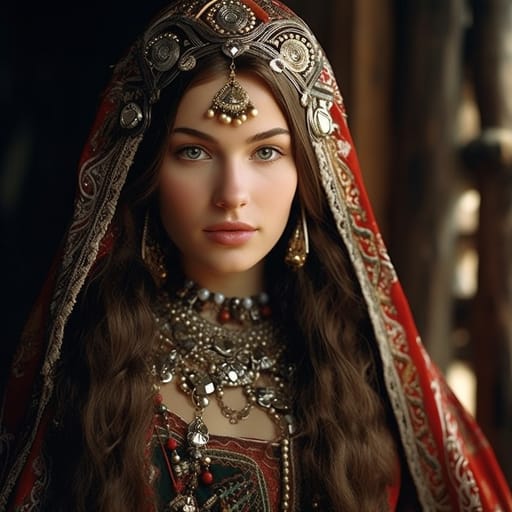
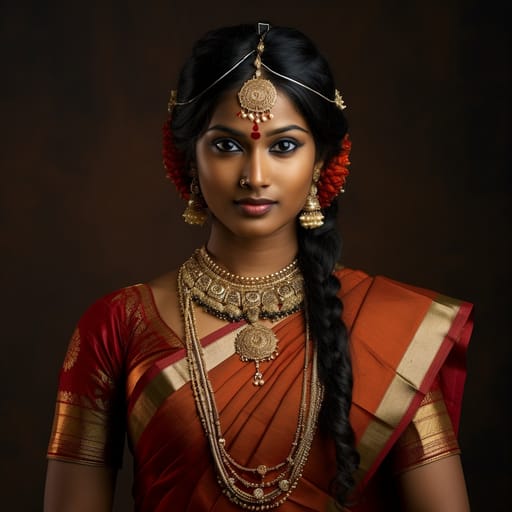
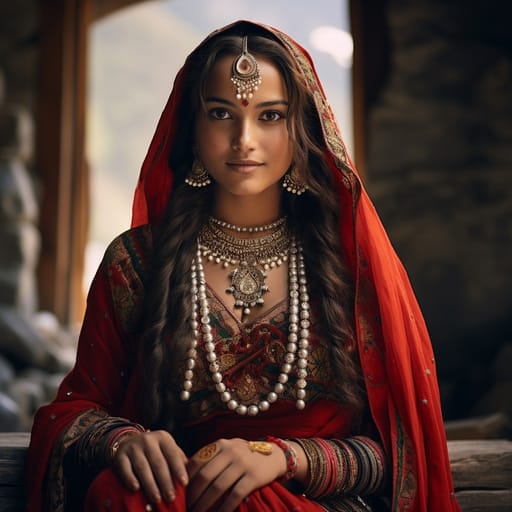
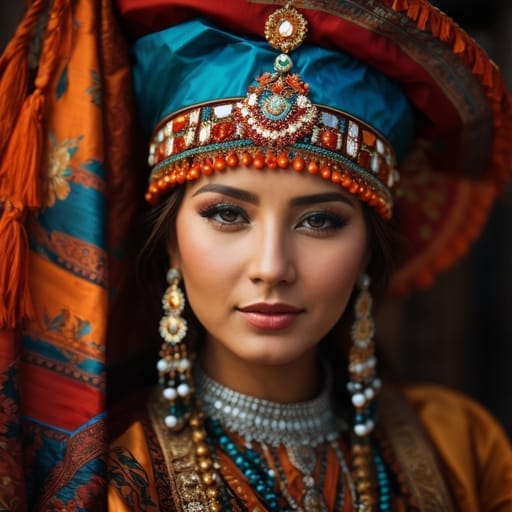
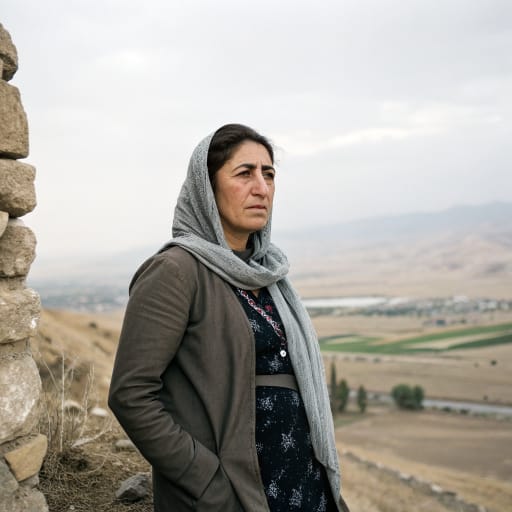
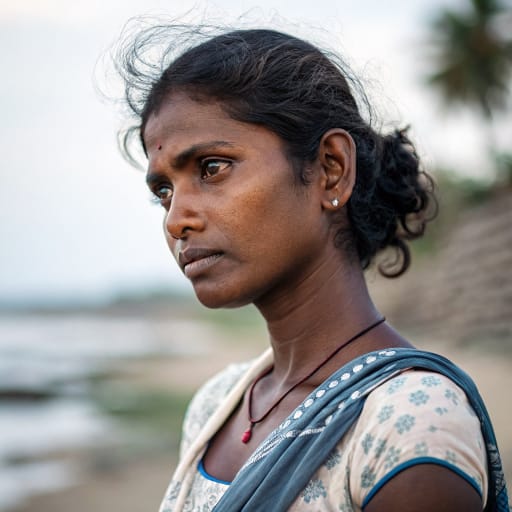
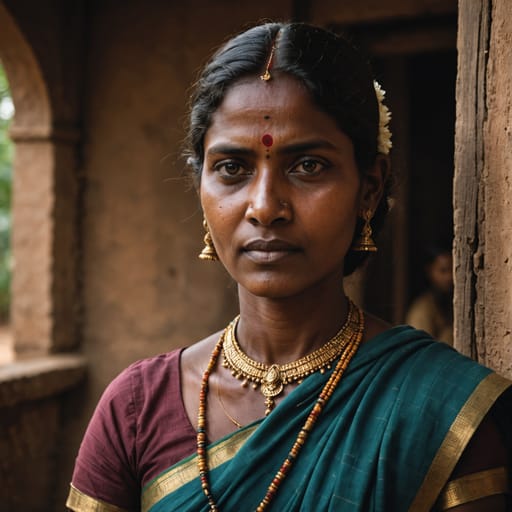
Typical Marwaris Phenotypes
Reference for AI generation: hair, eyes, skin, facial structure, build
Marwaris Body & Anatomy Reference
Anatomy by feature, Indo-Aryan / Dravidian South Asian phenotype
Marwaris Boobs & Breasts
Marwaris tits and boobs run medium-to-large cup, moderate-to-full projection, the classic Indo-Aryan / Dravidian South Asian bust profile. Marwaris nipples and areolas show medium-brown to dark-brown areolar pigmentation against the wheatish-to-brown skin tone, with areolar diameter typically in the 32-46mm range and forward-set positioning rather than the smaller East Asian bust profile. Marwaris breasts trend full and soft, generally fuller than the East Asian norm, a function of the endomorph-to-mesomorph with fuller hip deposition body habitus and the mean adult female BMI 22-25. For anatomically accurate AI-generated Marwaris nudes the render preserves the medium-to-large cup, moderate-to-full projection shape, 32-46mm areolas with medium-brown to dark-brown pigmentation, and the torso proportions of the Indo-Aryan / Dravidian South Asian phenotype.
Marwaris Ass & Hips
Marwaris hips and butt usually read as medium-to-full, moderate-to-high projection, classic curvy hip profile. The skeletal base is medium-to-wide iliac crests, full gluteal-femoral fat distribution, the Indo-Aryan / Dravidian South Asian pattern. Set against the slim hip profile of East Asian women, the difference is easy to see, and the hip-to-waist ratio is often what identifies Marwaris women in photos.
Marwaris Vagina & Pussy
Expect medium-brown to dark-brown labial pigmentation, fuller labia minora projection on Marwaris women, in keeping with Indo-Aryan / Dravidian South Asian ancestry. The pubic hair is straight-to-wavy coarse texture, dense distribution. Coloring should run evenly from the wheatish to brown skin of the thighs to the labia, and Marwaris nude imagery should keep the hair's straight-to-wavy coarse texture.
Marwaris Dicks & Penis
Marwaris dick and penile anatomy in adult AI generation should anchor on the regional reference data: regional mean ~13cm erect, moderate girth, and medium-brown shaft pigmentation. The Marwaris cock profile reflects the Indo-Aryan / Dravidian South Asian population's anthropometric measurements. The shaft pigmentation should track the surrounding wheatish to brown skin tone, and the pubic hair should keep its straight-to-wavy coarse texture in the typical inverted-V escutcheon.
Marwaris Body, Curves & Build
Marwaris body type: endomorph-to-mesomorph with fuller hip deposition, with mean adult female BMI 22-25. This is the typical Indo-Aryan / Dravidian South Asian build. Height range, shoulder-to-hip ratio and fat distribution all follow from it, which is what an accurate Marwaris nude body should show.
Marwaris Skin Tone & Hair Texture
Marwaris skin tone falls in the wheatish to brown (Fitzpatrick III-V) band, the surface signal most often miscalibrated by generic AI nude generators. Marwaris hair texture is typically straight-to-wavy 1A-2B, dense, dark-brown to black, characteristic of the Indo-Aryan / Dravidian South Asian phenotype. In Marwaris nude renders the skin should hold that band consistently across the body.
Explore phenotype categories
Structured taxonomy with peer-reviewed scales · 22 anatomical categories
Erotic Poses & Sex Positions
From the pose catalog: 219 named positions with reference skeletons
Frequently asked questions about Marwaris people
Where is the Marwaris homeland?
The Marwaris homeland is Marwar region of western Rajasthan, India, centered on Jodhpur in the Thar Desert; large mercantile diaspora across India, especially Kolkata, Mumbai and Assam, with communities in Nepal and in Sindh, Pakistan in Southern Asia.
What language do Marwaris people speak?
Marwaris people primarily speak Marwari (Indo-Aryan, Rajasthani group of the Western Zone), written in Devanagari and historically in the Mahajani merchant script; Hindi widely used, with Bengali, Nepali or Sindhi in the diaspora.
What religion do Marwaris people practice?
The predominant religion among Marwaris people is Predominantly Hindu, largely Vaishnava among the trading castes; significant Jain minority, especially among Oswals; smaller Muslim minority; folk cults such as Ramdev Pir and the Bishnoi sect cross sectarian lines.






Make your own Marwaris images
Five a day, free, no credits to buy. The studio starts from this group's phenotype data, so you can set body type, pose and style and keep the traits accurate.
Start with Marwaris