Kwagu'ł Erotic
Tsaxis (Fort Rupert), near Port Hardy on northern Vancouver Island, British Columbia, Canada
Kwak'wala, Fort Rupert dialect (Wakashan, Northern Wakashan branch); English
Christianity, historically Anglican, alongside potlatch and winter ceremonial traditions
One of the Kwakwaka'wakw nations; formed from four related groups that settled at Fort Rupert in 1849; governed today as the Kwakiutl First Nation
About Kwagu'ł People
The Kwagu'ł are the people whose name outsiders borrowed for a whole nation. When Franz Boas worked at Fort Rupert on northern Vancouver Island in the 1890s, he called what he recorded Kwakiutl, and for most of the twentieth century that word covered every community speaking Kwak'wala, from the Nimpkish River to the mainland inlets. Those communities now call themselves Kwakwaka'wakw, the Kwak'wala speakers. The old label has gone back to the people it came from: the Kwagu'ł of Tsaxis, the village at Fort Rupert near Port Hardy.
Tsaxis itself came out of a turning point. In 1849 the Hudson's Bay Company built a post there to work nearby coal, and four related Kwagu'ł groups settled around it, leaving older villages to the east. In 1851 their leaders signed two of the Douglas Treaties, which sets them apart from most of their neighbors. Kwak'wala belongs to the northern branch of the Wakashan family. It is close kin to Heiltsuk and Haisla up the coast and only distantly related to Nuu-chah-nulth on the island's west side. George Hunt, who was raised at Fort Rupert and worked with Boas, filled thousands of pages with texts in the local dialect, and they are still a key record of the language. Today most fluent speakers are elders.
Social life runs through the 'na'mima, kin groups that hold inherited names, crests, songs, dances and rights to particular places. Those privileges only count once they are shown in public at the potlatch. There a host family displays them before invited guests and pays the guests to serve as witnesses. Canada outlawed the potlatch from 1885 to 1951, and families kept it going quietly. In 1953 Mungo Martin, the Kwagu'ł chief and carver who restored and recarved old totem poles for museums, held an open potlatch in a big house he had built in Victoria. It was a public signal that the practice had outlasted the ban.
Most Kwagu'ł are Christian, with Anglican roots going back to nineteenth-century missions. The church has not pushed aside the winter ceremonial, with its Hamat'sa dancers, red cedar bark rings and carved transformation masks, and the two calendars run side by side. Carving families, the Hunts foremost among them, keep Fort Rupert a working center of Northwest Coast art rather than a place people visit to remember it.
Related ethnic groups
Groups that share Kwagu'ł's homeland, region, language, or religious tradition. These are likely candidates for comparative phenotype reference.
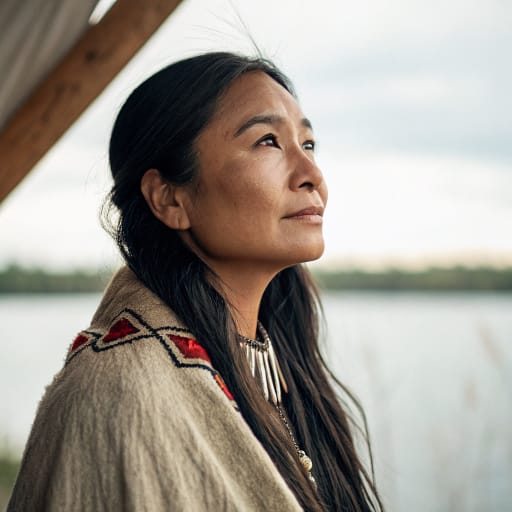
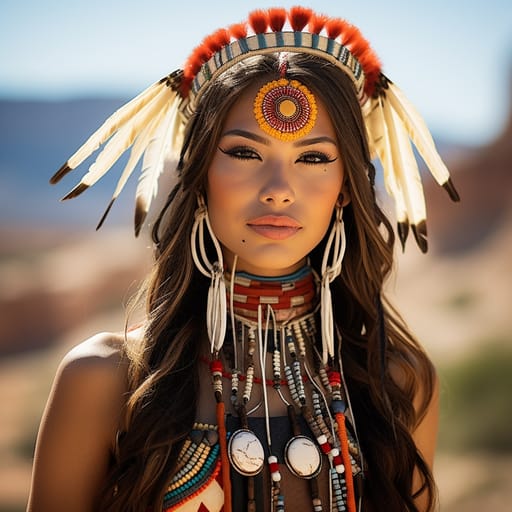
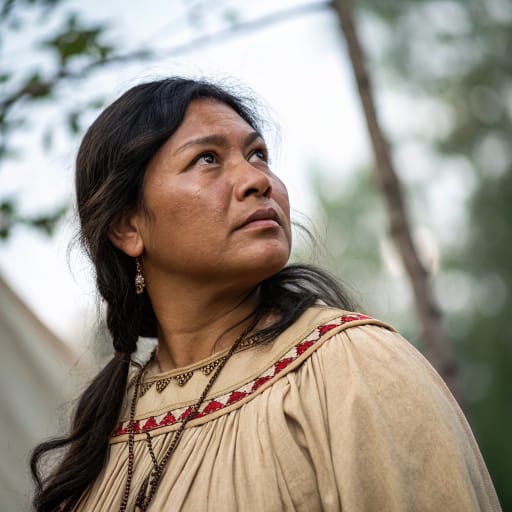
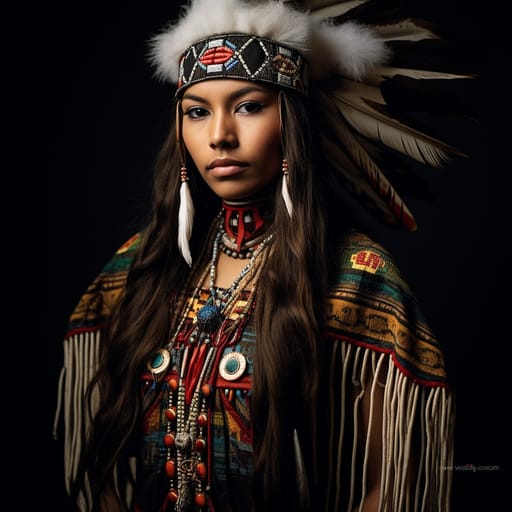
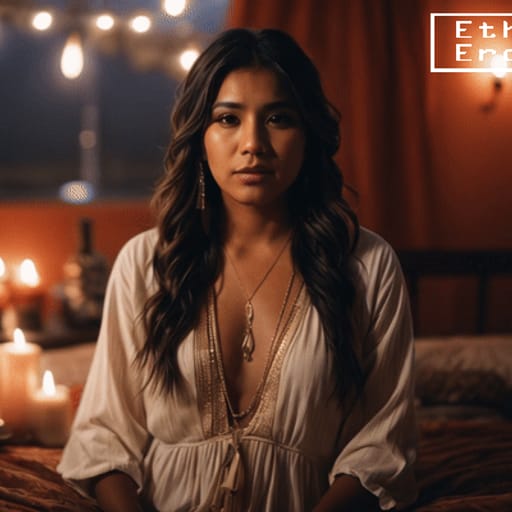
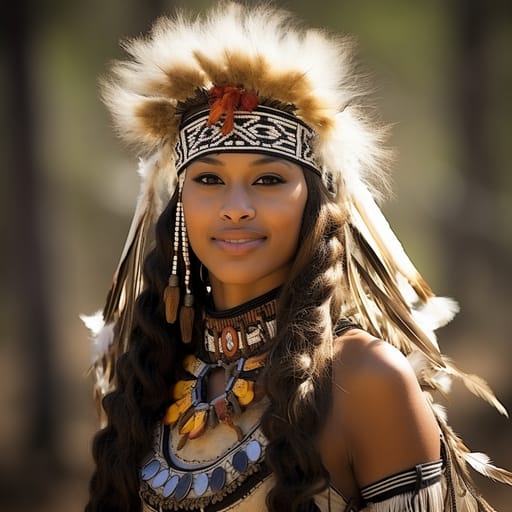
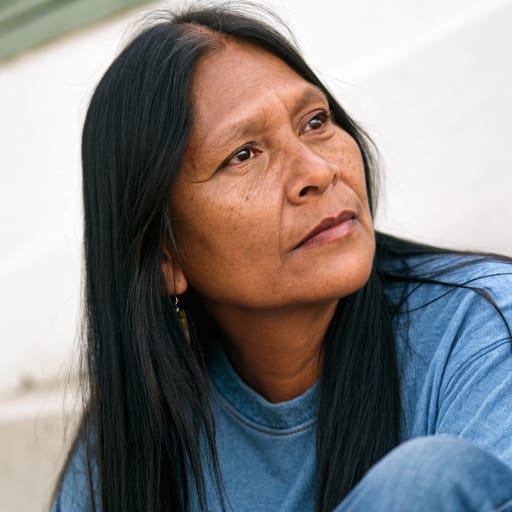
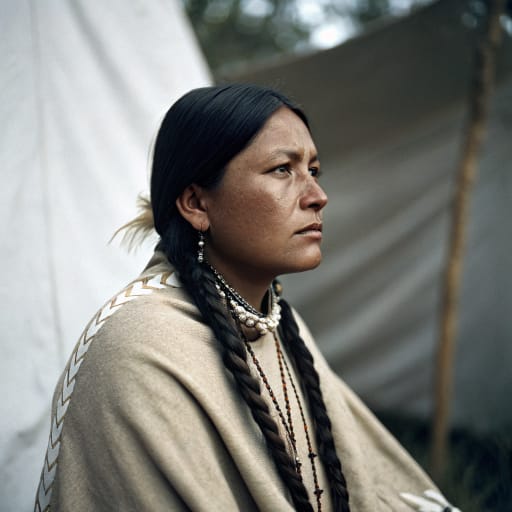
Typical Kwagu'ł Phenotypes
Reference for AI generation: hair, eyes, skin, facial structure, build
Kwagu'ł Body & Anatomy Reference
Indigenous Northern American / Algonquian-Iroquoian phenotype: anatomy reference for AI nude generation
Kwagu'ł Boobs & Breasts
Kwagu'ł tits and boobs run medium cup, moderate projection, the classic Indigenous Northern American / Algonquian-Iroquoian bust profile. Kwagu'ł nipples and areolas show medium-brown areolar pigmentation against the copper-to-medium-brown skin tone, with areolar diameter typically in the 30-44mm range and forward-set positioning rather than the smaller East Asian bust. Kwagu'ł breasts trend full and moderate projection, a function of the mesomorph, broader frame in northern Indigenous populations body habitus and the mean adult female BMI 25-28. For anatomically accurate AI-generated Kwagu'ł nudes the render preserves the medium cup, moderate projection shape, 30-44mm areolas with medium-brown pigmentation, and the torso proportions of the Indigenous Northern American / Algonquian-Iroquoian phenotype.
Kwagu'ł Ass & Hips
Kwagu'ł hips and butt usually read as medium, moderate-to-full projection. The skeletal base is medium iliac crests, the Indigenous Northern American / Algonquian-Iroquoian pattern. Set against the slim East Asian narrow-hip profile, the difference is easy to see, and the hip-to-waist ratio is often what identifies Kwagu'ł women in photos.
Kwagu'ł Vagina & Pussy
Expect medium-brown labial pigmentation on Kwagu'ł women, in keeping with Indigenous Northern American / Algonquian-Iroquoian ancestry. The pubic hair is straight medium-coarse texture. Coloring should run evenly from the copper to medium-brown skin of the thighs to the labia, and Kwagu'ł nude imagery should keep the hair's straight medium-coarse texture.
Kwagu'ł Dicks & Penis
Kwagu'ł dick and penile anatomy in adult AI generation should anchor on the regional reference data: regional mean ~13cm erect, moderate girth, and medium-brown shaft pigmentation. The Kwagu'ł cock profile reflects the Indigenous Northern American / Algonquian-Iroquoian population's anthropometric measurements. The shaft pigmentation should track the surrounding copper to medium-brown skin tone, and the pubic hair should keep its straight medium-coarse texture in the typical inverted-V escutcheon.
Kwagu'ł Body, Curves & Build
Kwagu'ł body type: mesomorph, broader frame in northern Indigenous populations, with mean adult female BMI 25-28. This is the typical Indigenous Northern American / Algonquian-Iroquoian build. Height range, shoulder-to-hip ratio and fat distribution all follow from it, which is what an accurate Kwagu'ł nude body should show.
Kwagu'ł Skin Tone & Hair Texture
Kwagu'ł skin tone falls in the copper to medium-brown (Fitzpatrick III-V) band, the surface signal most often miscalibrated by generic AI nude generators. Kwagu'ł hair texture is typically straight 1A, dark-brown to black, often thick and dense, characteristic of the Indigenous Northern American / Algonquian-Iroquoian phenotype. In Kwagu'ł nude renders the skin should hold that band consistently across the body.
Explore phenotype categories
Structured taxonomy with peer-reviewed scales · 22 anatomical categories
Erotic Poses & Sex Positions
From the pose catalog: 219 named positions with reference skeletons
Frequently asked questions about Kwagu'ł people
Where is the Kwagu'ł homeland?
The Kwagu'ł homeland is Tsaxis (Fort Rupert), near Port Hardy on northern Vancouver Island, British Columbia, Canada in North America.
What language do Kwagu'ł people speak?
Kwagu'ł people primarily speak Kwak'wala, Fort Rupert dialect (Wakashan, Northern Wakashan branch); English.
What religion do Kwagu'ł people practice?
The predominant religion among Kwagu'ł people is Christianity, historically Anglican, alongside potlatch and winter ceremonial traditions.






Make your own Kwagu'ł images
Five a day, free, no credits to buy. The studio starts from this group's phenotype data, so you can set body type, pose and style and keep the traits accurate.
Start with Kwagu'ł