Help us get this right
Does this portrait look right for Kokang?
Nobody has judged this one yet. You would be the first.
Kokang Erotic
The Kokang region of northern Shan State, Myanmar, between the Salween River and the Yunnan border, centered on Laukkai; communities also in Lashio, Mandalay and Yangon.
Kokang Mandarin, a Southwestern Mandarin dialect close to Yunnanese (Sino-Tibetan, Sinitic); Burmese as a second language.
Chinese folk religion and ancestor veneration, Buddhism and Taoism; small Christian minority.
Han Chinese of Yunnanese descent; officially one of Myanmar's 135 national races, listed under the Shan group.
About Kokang People
The Kokang hold an unusual place in Myanmar's official list of peoples. They are Han Chinese by ancestry and speak Mandarin at home, yet the state counts them as one of the country's indigenous national races, not as a foreign minority. That sets them apart from the Hokkien and Cantonese families of Yangon and Mandalay, who are still widely treated as outsiders. The Kokang came overland from neighboring Yunnan over many generations. They settled a rugged pocket of hills in northern Shan State, between the Salween River and the Chinese border, and the people and the place share one name.
They speak a Southwestern Mandarin close to what you hear across the border in Yunnan. It is written in Chinese characters and taught in Chinese-language schools. Burmese is a second language, spoken most by Kokang who have moved to Lashio, Mandalay or Yangon. Religious life follows a familiar Chinese pattern: household altars, respect for ancestors, Buddhist temples and Taoist and folk gods, plus a small Christian minority. Spring Festival and Mid-Autumn mark the year. In Laukkai, the main town, the Chinese yuan is used more than the Burmese kyat.
For generations the Yang clan ruled Kokang as hereditary chiefs under the larger Shan state of Hsenwi. Family tradition traces the Yangs to Ming loyalists who fled the Qing conquest. The border deals Britain and China made in the 1890s left Kokang inside British Burma, and the Yangs gave up their powers in 1959 along with the other Shan chiefs. After that the hills filled with militias and opium fields. Olive Yang, a daughter of the ruling house who dressed as a man, led her own armed band there in the 1950s. Under the 2008 constitution the area became the Kokang Self-Administered Zone.
From the late 1960s the Communist Party of Burma held the region. In 1989 Kokang commanders led the mutiny that broke the party apart. Under Pheung Kya-shin they formed the Myanmar National Democratic Alliance Army and signed a ceasefire that left them in charge for twenty years. A military offensive in 2009 pushed Pheung out and sent tens of thousands of civilians fleeing into China, and fighting broke out again in 2015. In January 2024, during a joint rebel offensive, the MNDAA retook Laukkai. China was pressing hard at the time over the scam compounds that had grown up in the town. For ordinary Kokang, this history has meant fleeing across the border again and again, and it has left family ties that reach as easily into Yunnan as down to Lashio.
Related ethnic groups
Groups that share Kokang's homeland, region, language, or religious tradition. These are likely candidates for comparative phenotype reference.
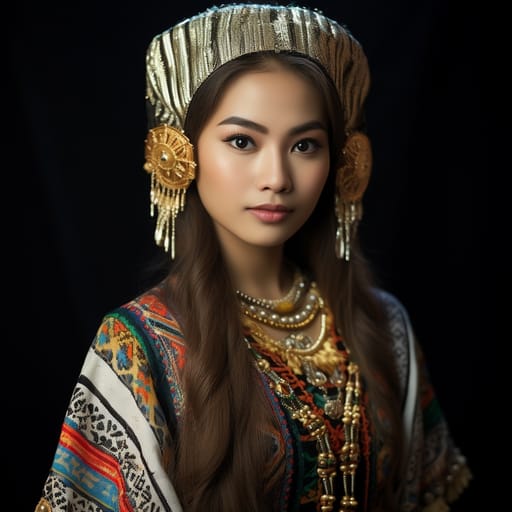
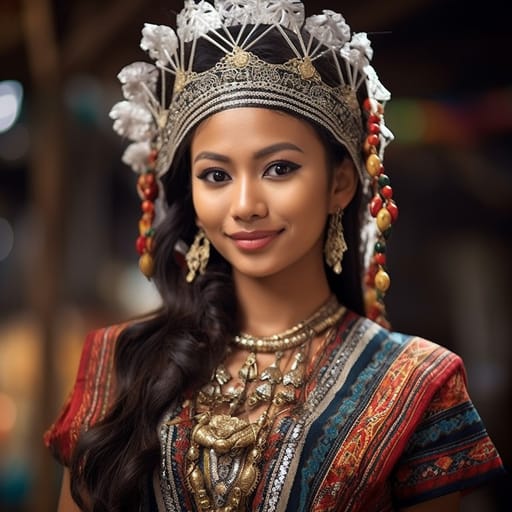
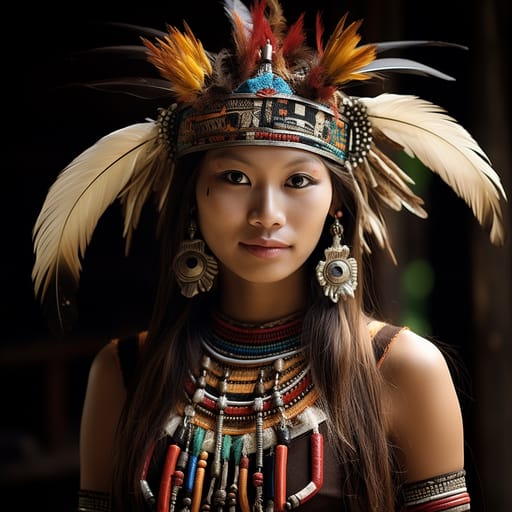
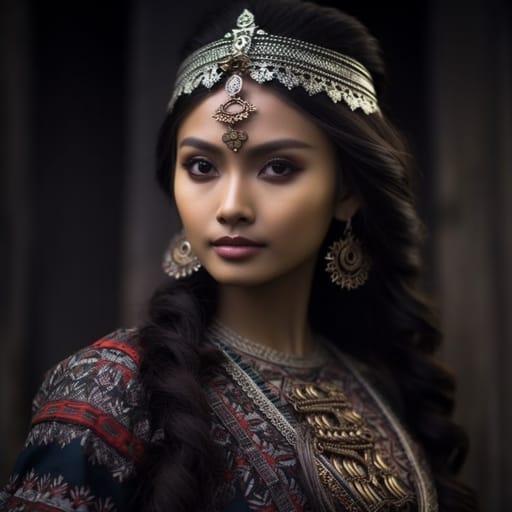
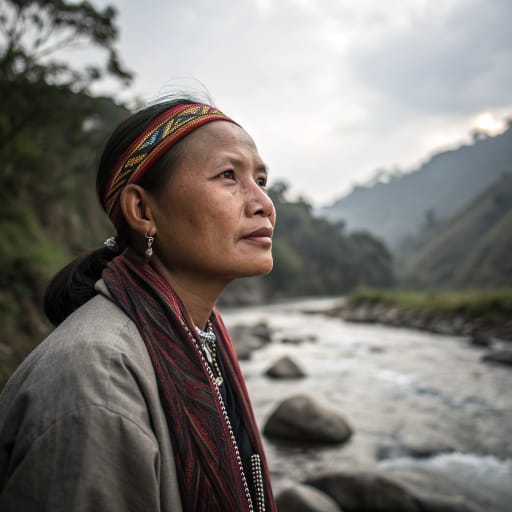
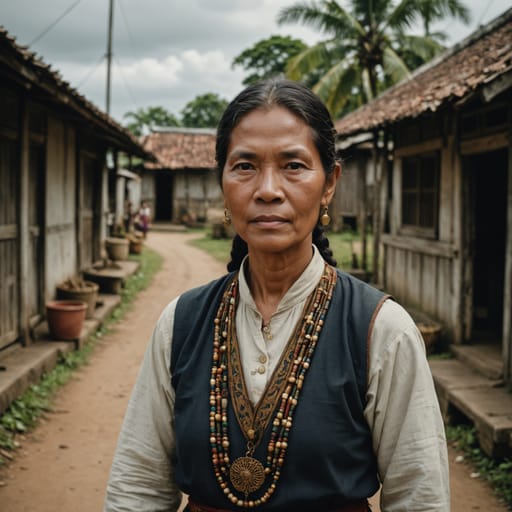
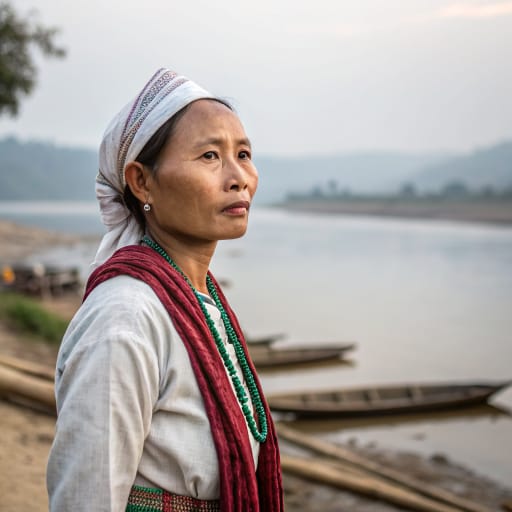
Typical Kokang Phenotypes
Reference for AI generation: hair, eyes, skin, facial structure, build
Kokang Body & Anatomy Reference
Per-feature anatomical profile for AI nude generation: Southeast Asian Austronesian / Austroasiatic phenotype
Kokang Boobs & Breasts
Bust reference for Kokang women: small-to-medium cup, modest projection, which is typical of Southeast Asian Austronesian / Austroasiatic ancestry. Areolas measure about 26-38mm across, with medium-brown to dark-brown pigmentation. Body type (ectomorph, petite frame) shapes the bust as well, so Kokang tits are usually firm, modest projection. In AI imagery, keep the forward-set shape rather than drifting toward the fuller South Asian or Polynesian bust.
Kokang Ass & Hips
The Kokang ass is typically small-to-medium, modest projection, narrower hip profile, which sets it apart from the fuller glutes of the Pacific Islander phenotype. Underneath, the pelvis shows narrow-to-medium iliac crests, part of the Southeast Asian Austronesian / Austroasiatic skeletal pattern. For Kokang butt pics and AI renders, match that silhouette and the overall build (ectomorph, petite frame).
Kokang Vagina & Pussy
Kokang pussy and vulvar anatomy presents medium-brown to dark-brown labial pigmentation, consistent with the Southeast Asian Austronesian / Austroasiatic phenotype's pigmentation pattern. Kokang pubic hair is typically straight-to-wavy fine-to-medium texture, in the inverted-triangle pattern. For anatomically accurate Kokang pussy renders the labial coloration should match the surrounding tan to medium-brown skin tone with a continuous gradient, and the hair should keep its straight-to-wavy fine-to-medium texture.
Kokang Dicks & Penis
Kokang dicks follow the Southeast Asian Austronesian / Austroasiatic reference data: regional mean ~11cm erect; moderate girth; medium-brown shaft pigmentation. Shaft color should track the tan to medium-brown skin tone with a smooth change toward the glans, and Kokang pubic hair keeps its straight-to-wavy fine-to-medium texture.
Kokang Body, Curves & Build
Kokang body type and overall build presents as ectomorph, petite frame, with mean adult female BMI 20-23: the characteristic Southeast Asian Austronesian / Austroasiatic habitus. Kokang curves and proportions should keep the regional skeletal frame (height, shoulder-to-hip ratio, limb proportions) rather than a generic mesomorph default.
Kokang Skin Tone & Hair Texture
Kokang skin sits in the tan to medium-brown (Fitzpatrick III-V) band. Hair is typically straight-to-wavy 1A-2A, dark-brown to black, in keeping with the Southeast Asian Austronesian / Austroasiatic phenotype. In nude renders the skin should stay one even tone from face to body, and body, pubic and head hair should match.
Explore phenotype categories
Structured taxonomy with peer-reviewed scales · 22 anatomical categories
Erotic Poses & Sex Positions
From the pose catalog: 219 named positions with reference skeletons
Frequently asked questions about Kokang people
Where is the Kokang homeland?
The Kokang homeland is The Kokang region of northern Shan State, Myanmar, between the Salween River and the Yunnan border, centered on Laukkai; communities also in Lashio, Mandalay and Yangon. in Southeast Asia.
What language do Kokang people speak?
Kokang people primarily speak Kokang Mandarin, a Southwestern Mandarin dialect close to Yunnanese (Sino-Tibetan, Sinitic); Burmese as a second language..
What religion do Kokang people practice?
The predominant religion among Kokang people is Chinese folk religion and ancestor veneration, Buddhism and Taoism; small Christian minority..






Make your own Kokang images
Five a day, free, no credits to buy. The studio starts from this group's phenotype data, so you can set body type, pose and style and keep the traits accurate.
Start with Kokang