No portrait yet
Khotta Erotic
The Ganges and Mahananda borderland: Malda and Murshidabad in West Bengal and Sahebganj and Pakur in Jharkhand, India, and Chapai Nawabganj in Bangladesh
Khotta, a Hindustani variety shaped by Bengali contact (Indo-Aryan, Indo-European); Bengali or Hindi also widely spoken
Sunni Islam
Communities on both sides of the India and Bangladesh border, divided by the 1947 Partition; part of the Muslim population of the Bengal and Bihar borderland
About Khotta People
The Khotta are Muslims of the Bengal borderland, and the thing that sets them apart from their neighbors is the way they talk. Most Muslims in this region speak Bengali at home. Khotta families speak a form of Hindustani, and that difference is what makes them a people of their own. Outsiders gave them the name. In Bengali, khotta is an old and not very friendly word for Hindi speakers from upcountry, meaning the plains to the west. The community has carried it long enough that it now works as a plain name, though some people still use it as an insult. Their home is the flat country cut by the Ganges and the Mahananda rivers, where West Bengal, Jharkhand and Bangladesh meet: Malda and Murshidabad, Sahebganj and Pakur, and Chapai Nawabganj on the Bangladeshi side. This is mango and rice country, and most Khotta live in villages and market towns rather than big cities. Their language is Indo-Aryan, the same family as Bengali and Hindi, which is part of why it's hard to classify. It is usually described as a form of Hindustani shaped by long contact with Bengali: close to the speech of the plains to the west, with Bengali words mixed in. Most speakers also use Bengali or Hindi, depending on where they live, since those are the languages of school and government.
The Khotta are Sunni Muslims, and their faith sets the rhythm of the day and the year: the mosque and Friday prayer, the Ramadan fast, the two Eids. They share that faith with their Bengali-speaking Muslim neighbors, so religion doesn't set them apart. Language does. The biggest break in their modern history came with Partition in 1947. The new border split the old Malda district, giving its Nawabganj subdivision to East Pakistan, now Bangladesh, and leaving the rest in India. A community that had shared rivers, markets and mosques was divided between two countries. Since then the Khotta have been a small language community on both sides of a guarded international border. On both sides, their neighbors still see them the same way: Muslims of Bengal whose everyday speech still points west.
Related ethnic groups
Groups that share Khotta's homeland, region, language, or religious tradition. These are likely candidates for comparative phenotype reference.
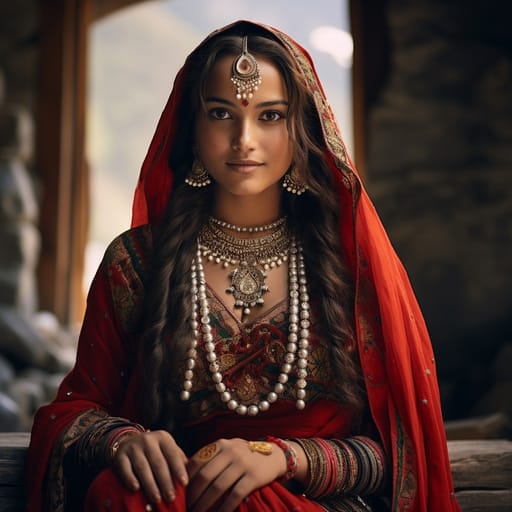
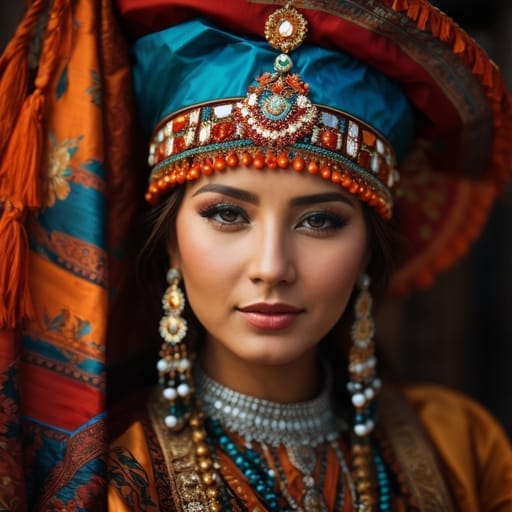
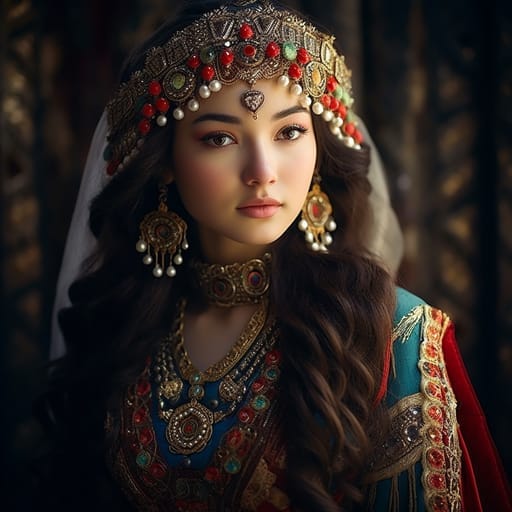
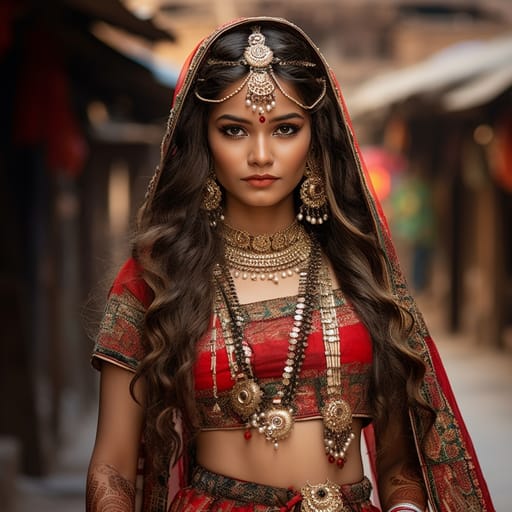
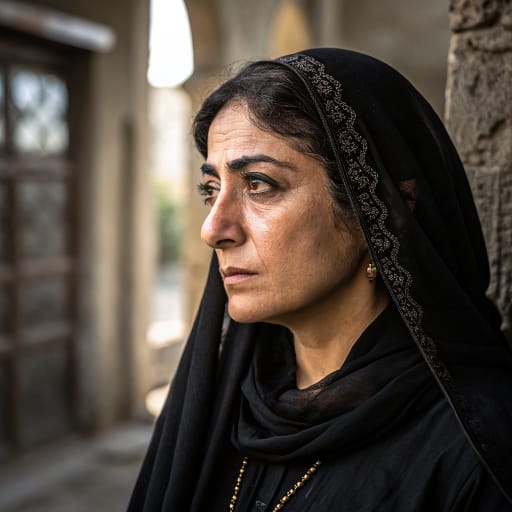
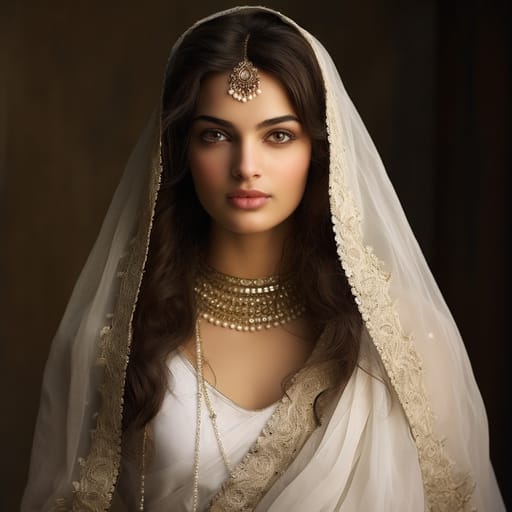
Typical Khotta Phenotypes
Reference for AI generation: hair, eyes, skin, facial structure, build
Khotta Body & Anatomy Reference
Indo-Aryan / Dravidian South Asian phenotype: anatomy reference for AI nude generation
Khotta Boobs & Breasts
The typical Khotta bust is medium-to-large cup, moderate-to-full projection, in line with the wider Indo-Aryan / Dravidian South Asian pattern. Areolas usually fall in the 32-46mm range, with medium-brown to dark-brown areolar pigmentation against the wheatish-to-brown skin tone. Compared with the smaller East Asian bust profile, Khotta breasts sit forward and are generally full and soft, generally fuller than the East Asian norm. A faithful AI render of Khotta tits keeps that shape and areola size.
Khotta Ass & Hips
Butt shape among Khotta women: medium-to-full, moderate-to-high projection, classic curvy hip profile, over medium-to-wide iliac crests, full gluteal-femoral fat distribution. This follows Indo-Aryan / Dravidian South Asian ancestry and looks quite unlike the slim hip profile of East Asian women. An accurate Khotta ass in adult AI imagery keeps both the silhouette and the overall build (endomorph-to-mesomorph with fuller hip deposition) instead of a generic average.
Khotta Vagina & Pussy
Vulvar anatomy among Khotta women: medium-brown to dark-brown labial pigmentation, fuller labia minora projection. Pubic hair tends to be straight-to-wavy coarse texture, dense distribution, in the usual inverted-triangle pattern. Both follow Indo-Aryan / Dravidian South Asian pigmentation, which is why Khotta pussy renders should not fall back on a pale, sparse Western template.
Khotta Dicks & Penis
The Khotta cock profile, from Indo-Aryan / Dravidian South Asian anthropometric data: regional mean ~13cm erect; moderate girth; medium-brown shaft pigmentation. Pubic hair has a straight-to-wavy coarse texture and forms the usual inverted-V pattern. Whether Khotta men are circumcised follows religious and cultural practice rather than phenotype.
Khotta Body, Curves & Build
Build and curves among Khotta women follow the Indo-Aryan / Dravidian South Asian pattern: endomorph-to-mesomorph with fuller hip deposition, mean adult female BMI 22-25. Proportions matter as much as skin tone, so Khotta figures should keep their regional height and limb ratios.
Khotta Skin Tone & Hair Texture
The Khotta skin range is wheatish to brown (Fitzpatrick III-V), and hair tends to be straight-to-wavy 1A-2B, dense, dark-brown to black. That combination marks the Indo-Aryan / Dravidian South Asian phenotype, and skin tone is the trait AI generators most often get wrong for Khotta women.
Explore phenotype categories
Structured taxonomy with peer-reviewed scales · 22 anatomical categories
Erotic Poses & Sex Positions
From the pose catalog: 219 named positions with reference skeletons
Frequently asked questions about Khotta people
Where is the Khotta homeland?
The Khotta homeland is The Ganges and Mahananda borderland: Malda and Murshidabad in West Bengal and Sahebganj and Pakur in Jharkhand, India, and Chapai Nawabganj in Bangladesh in Southern Asia.
What language do Khotta people speak?
Khotta people primarily speak Khotta, a Hindustani variety shaped by Bengali contact (Indo-Aryan, Indo-European); Bengali or Hindi also widely spoken.
What religion do Khotta people practice?
The predominant religion among Khotta people is Sunni Islam.






Make your own Khotta images
Five a day, free, no credits to buy. The studio starts from this group's phenotype data, so you can set body type, pose and style and keep the traits accurate.
Start with Khotta