No portrait yet
Kereks Erotic
The Bering Sea coast of southeastern Chukotka, Russia, between Cape Navarin and the Gulf of Anadyr, centered on the villages of Mainypilgino, Khatyrka and Beringovsky.
Kerek (Chukotko-Kamchatkan, Chukotkan branch), now extinct as a spoken language; Russian and Chukchi in daily use.
Traditionally shamanic and animist, with a Raven trickster cycle shared with the Koryak and Itelmen; nominally Russian Orthodox since the nineteenth century.
Two territorial and dialect groups, the Mainypilgino in the south and the Khatyrka and Navarin group in the north; part of the wider Chukotko-Kamchatkan world alongside the Chukchi, Koryak and Alutor.
About Kereks People
The Kereks named themselves after the water: ankalgakku, the people by the sea. That is more or less their whole geography, a thin band of Bering Sea coast in southeastern Chukotka running from Cape Navarin down toward the Gulf of Anadyr. No trees, wind off the water most of the year, fog that can sit for weeks. What separated them from every neighbor was that they stayed put. The Chukchi and the Koryak built their lives around reindeer and moved with the herds. The Kereks did not herd. They hunted seal from the shore and the ice, took fish at the river mouths, gathered eggs and greens and whatever the tide left, and they bred dogs. The dogs mattered more than that sentence suggests: Kerek dogs were sought after along the coast, and dog traction, not reindeer, was how a family moved anything heavy. It also made them vulnerable. Russian fur collectors reached the Anadyr in the middle of the seventeenth century, and through the eighteenth the expanding Chukchi raided the coastal settlements repeatedly, absorbing Kerek households as dependents. Soviet consolidation of small villages in the mid twentieth century finished the process by moving what remained into mixed settlements where Chukchi and Russian were the working languages.
Kerek belongs to the Chukotko-Kamchatkan family, on the Chukotkan side, close enough to Koryak that some linguists have argued it is a dialect of it and most now treat it as its own language. It had two dialects of its own, one around Mainypilgino in the south and one around Khatyrka and Navarin in the north, reportedly quite far apart. It is gone as a spoken language, and what survives is a dictionary and a body of oral literature recorded largely by a single ethnographer, Vladilen Leontiev, in the 1960s and 1970s. Much of that material turns on Kutkynnyaku the Raven, the greedy, inventive, regularly humiliated creator the Kereks share with the Koryak and the Itelmen. Orthodox baptism arrived in the nineteenth century and settled on top of shamanic practice rather than displacing it. Because census takers routinely registered Kereks as Chukchi, they nearly vanished on paper before they vanished in fact. Russian census returns this century have counted them in single figures. They remain on the federal list of Indigenous small-numbered peoples of the North, and the handful who claim the name live in Beringovsky District and Anadyr.
Related ethnic groups
Groups that share Kereks's homeland, region, language, or religious tradition. These are likely candidates for comparative phenotype reference.
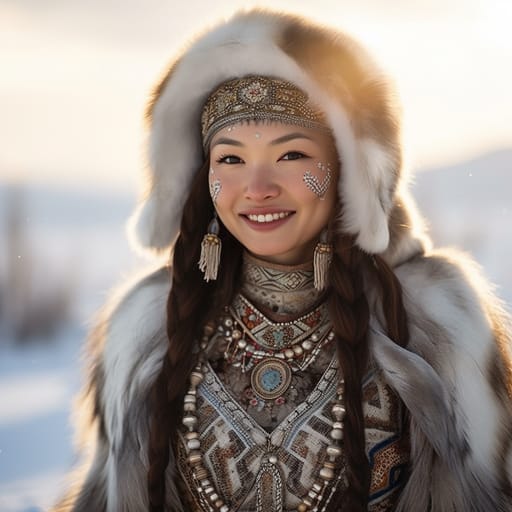
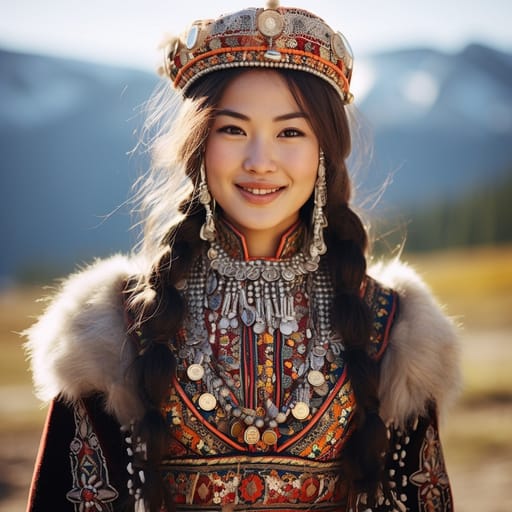
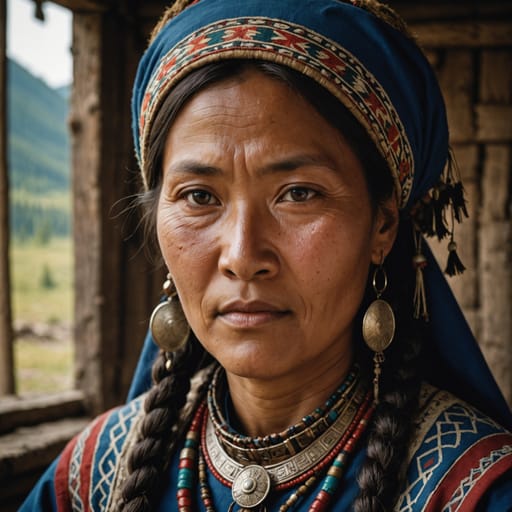
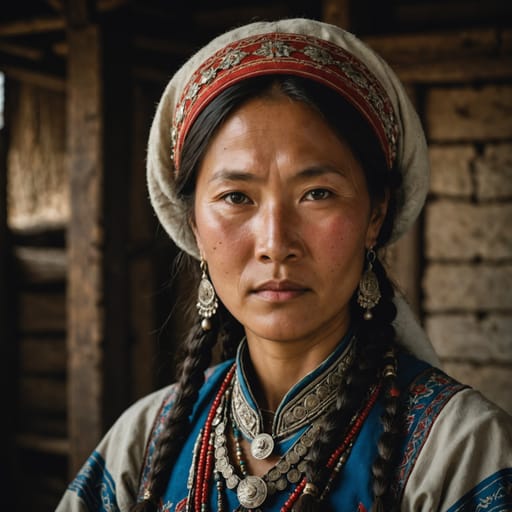
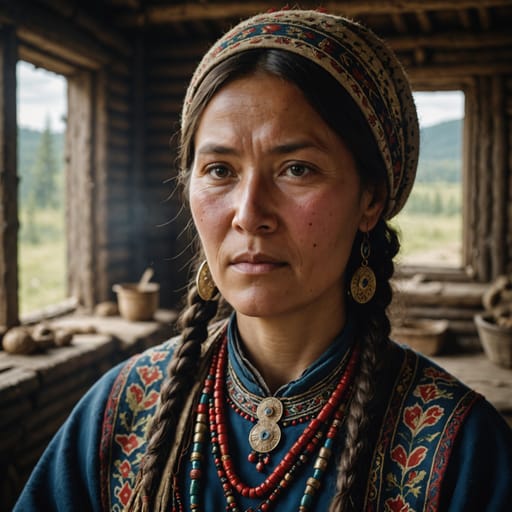
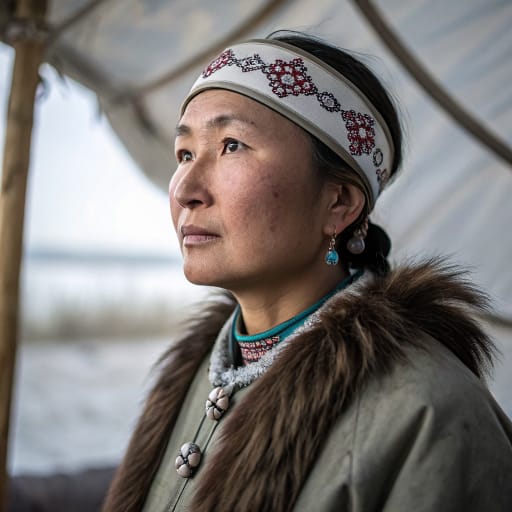
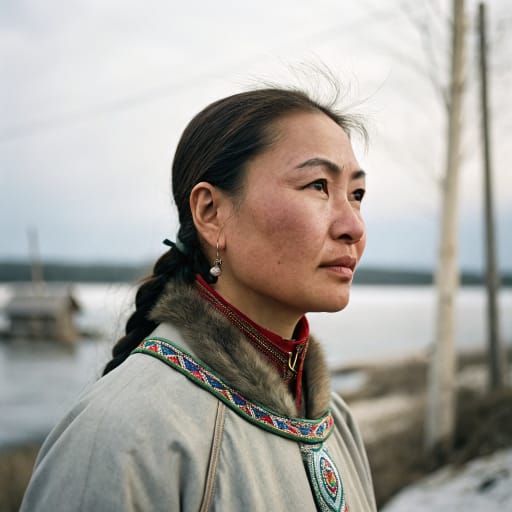
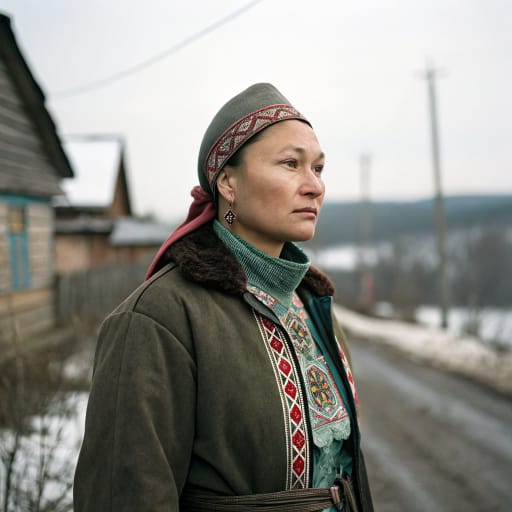
Typical Kereks Phenotypes
Reference for AI generation: hair, eyes, skin, facial structure, build
Kereks Body & Anatomy Reference
Siberian Indigenous / Tungusic phenotype: anatomy reference for AI nude generation
Kereks Boobs & Breasts
The typical Kereks bust is small-to-medium cup, modest projection, in line with the wider Siberian Indigenous / Tungusic pattern. Areolas usually fall in the 26-38mm range, with medium-brown areolar pigmentation against the light-to-medium skin tone. Compared with the fuller Central Asian or East Asian bust, Kereks breasts sit forward and are generally firm, modest projection. A faithful AI render of Kereks tits keeps that shape and areola size.
Kereks Ass & Hips
Butt shape among Kereks women: small-to-medium, modest projection, over narrow-to-medium iliac crests. This follows Siberian Indigenous / Tungusic ancestry and looks quite unlike the broader Central Asian hip profile. An accurate Kereks ass in adult AI imagery keeps both the silhouette and the overall build (mesomorph, broader stocky frame adapted to cold climate) instead of a generic average.
Kereks Vagina & Pussy
Vulvar anatomy among Kereks women: medium-brown labial pigmentation. Pubic hair tends to be straight fine-to-medium texture, sparser distribution, in the usual inverted-triangle pattern. Both follow Siberian Indigenous / Tungusic pigmentation, which is why Kereks pussy renders should not fall back on a pale, sparse Western template.
Kereks Dicks & Penis
The Kereks cock profile, from Siberian Indigenous / Tungusic anthropometric data: regional mean ~12cm erect; moderate girth; medium-brown shaft pigmentation. Pubic hair has a straight fine-to-medium texture and forms the usual inverted-V pattern. Whether Kereks men are circumcised follows religious and cultural practice rather than phenotype.
Kereks Body, Curves & Build
Build and curves among Kereks women follow the Siberian Indigenous / Tungusic pattern: mesomorph, broader stocky frame adapted to cold climate, mean adult female BMI 22-25. Proportions matter as much as skin tone, so Kereks figures should keep their regional height and limb ratios.
Kereks Skin Tone & Hair Texture
The Kereks skin range is light to medium (Fitzpatrick II-IV), and hair tends to be straight 1A, dark-brown to black. That combination marks the Siberian Indigenous / Tungusic phenotype, and skin tone is the trait AI generators most often get wrong for Kereks women.
Explore phenotype categories
Structured taxonomy with peer-reviewed scales · 22 anatomical categories
Erotic Poses & Sex Positions
From the pose catalog: 219 named positions with reference skeletons
Frequently asked questions about Kereks people
Where is the Kereks homeland?
The Kereks homeland is The Bering Sea coast of southeastern Chukotka, Russia, between Cape Navarin and the Gulf of Anadyr, centered on the villages of Mainypilgino, Khatyrka and Beringovsky. in Northern Asia.
What language do Kereks people speak?
Kereks people primarily speak Kerek (Chukotko-Kamchatkan, Chukotkan branch), now extinct as a spoken language; Russian and Chukchi in daily use..
What religion do Kereks people practice?
The predominant religion among Kereks people is Traditionally shamanic and animist, with a Raven trickster cycle shared with the Koryak and Itelmen; nominally Russian Orthodox since the nineteenth century..






Make your own Kereks images
Five a day, free, no credits to buy. The studio starts from this group's phenotype data, so you can set body type, pose and style and keep the traits accurate.
Start with Kereks