Help us get this right
Does this portrait look right for Siberian Bukharans?
Nobody has judged this one yet. You would be the first.
Siberian Bukharans Erotic
Western Siberia, Russia, chiefly Tobolsk, Tyumen, Tara and Tomsk; originally from Central Asian cities such as Bukhara, Samarkand, Tashkent and Khiva (Uzbekistan)
Chagatai (Turkic, Karluk) and Persian (Indo-European, Iranian) among early settlers; later Siberian Tatar (Turkic, Kipchak)
Sunni Islam (Hanafi school)
Central Asian merchant and clerical settlers, mostly Uzbek and Tajik in origin, with communities in Tobolsk, Tyumen, Tara and Tomsk; later absorbed into the Siberian Tatars
About Siberian Bukharans People
The Siberian Bukharans were Muslim settlers from Central Asia who lived in the towns and villages of western Siberia from the sixteenth century into the nineteenth, and their descendants today are part of the Siberian Tatar population around Tobolsk, Tyumen and Tomsk. The name was never precise. Russian officials called almost any trader from the south a Bukharan, whether he came from Bukhara, Samarkand, Tashkent or Khiva. What held the group together was not a single origin but a way of life: long-distance trade, Islamic learning and a legal status of their own inside the Russian state.
Their story starts before the Russians arrived. Kuchum, the last khan of Sibir, looked to Bukhara for religious teachers to anchor Islam among his subjects, and Bukharan merchants were already trading in his lands. When Yermak's Cossacks and the Muscovite troops behind them broke the khanate in the 1580s and 1590s, the Bukharans stayed, and Moscow found them useful. They ran caravans linking Siberian towns with the Kazakh steppe, Central Asia and China, and the tsars rewarded them with trading privileges and lighter taxes. Some worked as guides, interpreters and envoys. Seitkul Ablin, a Bukharan of Tobolsk, carried Russian goods to Beijing in the mid-seventeenth century on some of the earliest Russian missions to the Qing court.
The first arrivals spoke Chagatai Turkic and Persian. Over generations of marriage into local Tatar families, their households shifted to Siberian Tatar, a Kipchak Turkic language, while Chagatai and Arabic stayed on as languages of writing and prayer. The Bukharans were Sunni Muslims, and religion was their most lasting export. They built mosques, taught in Qur'anic schools and supplied many of the region's mullahs, and the Islam of the Siberian Tatars still carries the imprint of those teachers.
Their separate status did not survive. Through the eighteenth and nineteenth centuries the state wore down Bukharan privileges and folded the community into the same categories as Tatars, townspeople and merchants. With a shared faith, a shared language and generations of intermarriage, little was left to mark the line. Russian censuses now count them among the Tatars, though some descendants in the Tyumen and Tomsk regions still call themselves Bukharans.
Related ethnic groups
Groups that share Siberian Bukharans's homeland, region, language, or religious tradition. These are likely candidates for comparative phenotype reference.
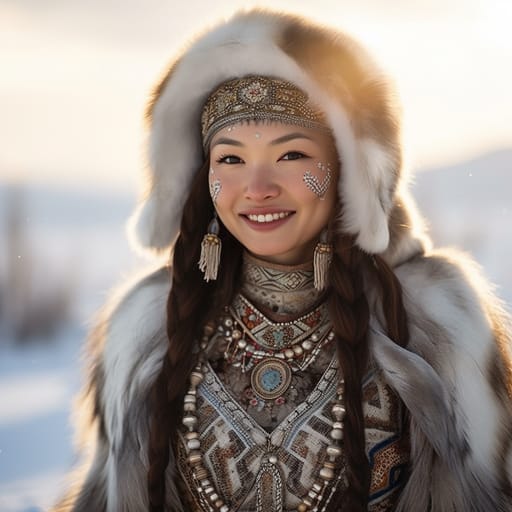
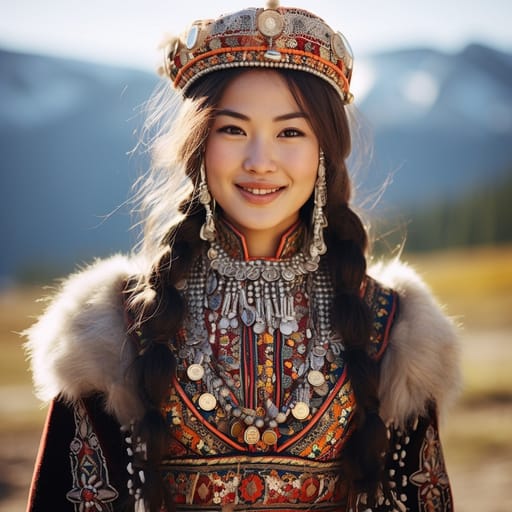
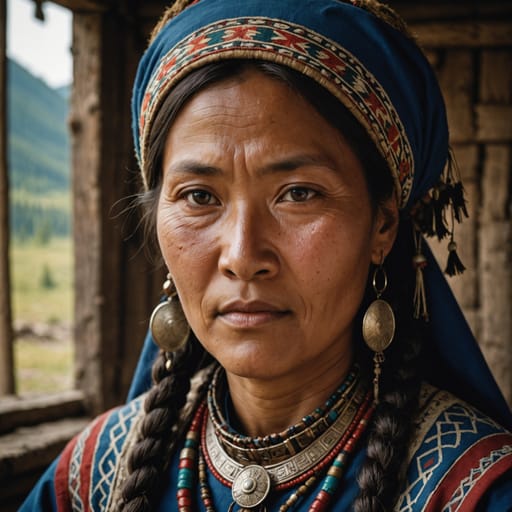
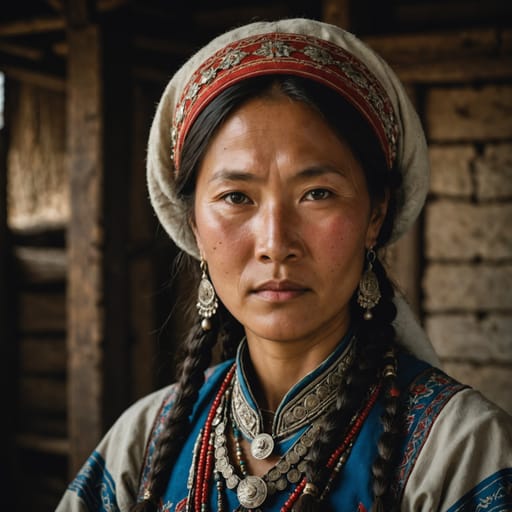
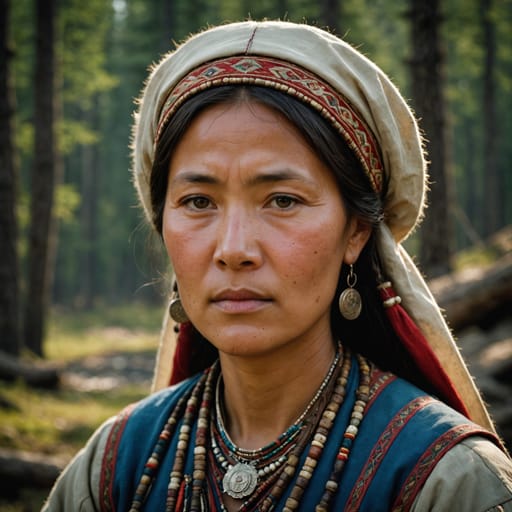
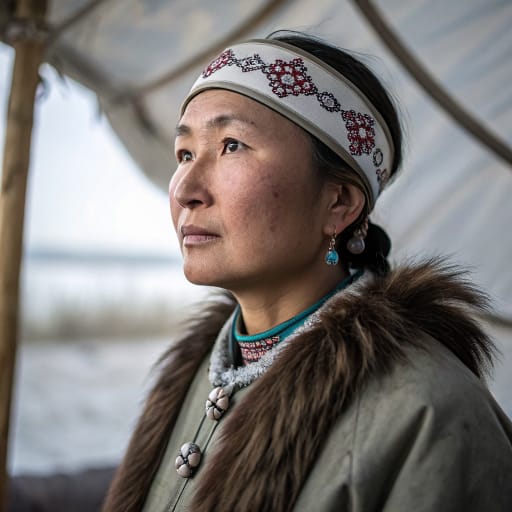
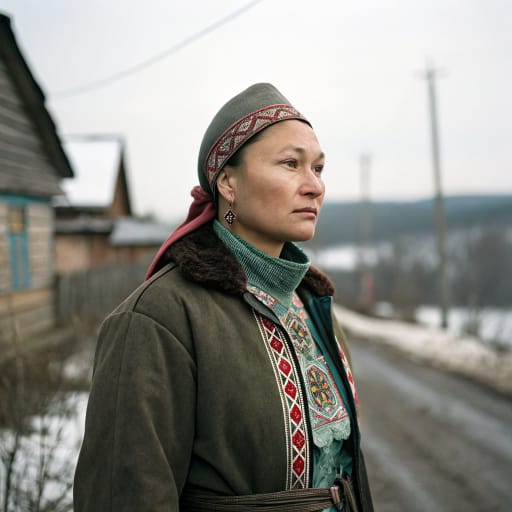
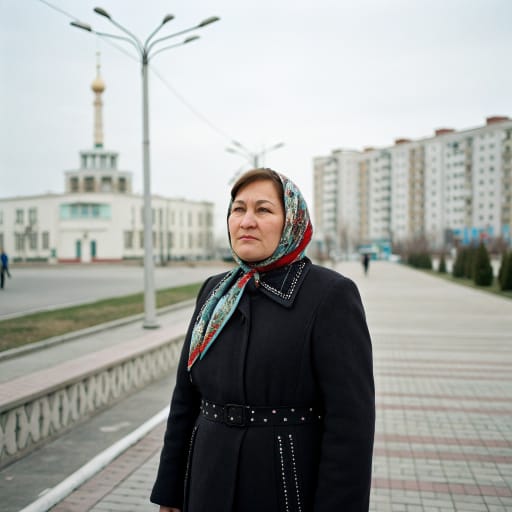
Typical Siberian Bukharans Phenotypes
Reference for AI generation: hair, eyes, skin, facial structure, build
Siberian Bukharans Body & Anatomy Reference
Siberian Indigenous / Tungusic phenotype: anatomy reference for AI nude generation
Siberian Bukharans Boobs & Breasts
Siberian Bukharans boobs follow the Siberian Indigenous / Tungusic profile: small-to-medium cup, modest projection. Areolar diameter is usually 26-38mm, and the coloring is medium-brown areolar pigmentation against the light-to-medium skin tone. Breast shape tracks body composition (mesomorph, broader stocky frame adapted to cold climate, mean adult female BMI 22-25), so Siberian Bukharans breasts tend to be firm, modest projection. Expect a forward-set shape, not the fuller Central Asian or East Asian bust.
Siberian Bukharans Ass & Hips
Siberian Bukharans ass and hip morphology presents as small-to-medium, modest projection, distinctly different from the broader Central Asian hip profile. The Siberian Bukharans pelvic profile shows narrow-to-medium iliac crests, anchored in the Siberian Indigenous / Tungusic skeletal pattern. Siberian Bukharans butt shots in adult AI imagery should render the small-to-medium, modest projection silhouette with the overall build (mesomorph, broader stocky frame adapted to cold climate) and the fat distribution typical of the Siberian Indigenous / Tungusic phenotype.
Siberian Bukharans Vagina & Pussy
Siberian Bukharans pussy anatomy typically shows medium-brown labial pigmentation. Pubic hair is usually straight fine-to-medium texture, sparser distribution. In AI-generated Siberian Bukharans nudes, labial color should blend into the light to medium skin with a gradual transition, and the hair should keep its straight fine-to-medium texture.
Siberian Bukharans Dicks & Penis
Penis reference for Siberian Bukharans men: regional mean ~12cm erect, moderate girth. Coloring: medium-brown shaft pigmentation. An accurate Siberian Bukharans cock in AI imagery matches the surrounding light to medium skin rather than a generic porn default. Circumcision depends on religion and custom, not ancestry.
Siberian Bukharans Body, Curves & Build
The Siberian Bukharans figure is generally mesomorph, broader stocky frame adapted to cold climate, with mean adult female BMI 22-25, characteristic of Siberian Indigenous / Tungusic ancestry. AI image tools tend to flatten regional body types into a few stock shapes; here the Siberian Bukharans build is kept as its own reference.
Siberian Bukharans Skin Tone & Hair Texture
Skin: light to medium (Fitzpatrick II-IV). Hair: straight 1A, dark-brown to black. Both are typical of Siberian Indigenous / Tungusic ancestry. The most common mistake in AI nudes of Siberian Bukharans women is a body rendered lighter than the face.
Explore phenotype categories
Structured taxonomy with peer-reviewed scales · 22 anatomical categories
Erotic Poses & Sex Positions
From the pose catalog: 219 named positions with reference skeletons
Frequently asked questions about Siberian Bukharans people
Where is the Siberian Bukharans homeland?
The Siberian Bukharans homeland is Western Siberia, Russia, chiefly Tobolsk, Tyumen, Tara and Tomsk; originally from Central Asian cities such as Bukhara, Samarkand, Tashkent and Khiva (Uzbekistan) in Northern Asia.
What language do Siberian Bukharans people speak?
Siberian Bukharans people primarily speak Chagatai (Turkic, Karluk) and Persian (Indo-European, Iranian) among early settlers; later Siberian Tatar (Turkic, Kipchak).
What religion do Siberian Bukharans people practice?
The predominant religion among Siberian Bukharans people is Sunni Islam (Hanafi school).






Make your own Siberian Bukharans images
Five a day, free, no credits to buy. The studio starts from this group's phenotype data, so you can set body type, pose and style and keep the traits accurate.
Start with Siberian Bukharans