Help us get this right
Does this portrait look right for Ekhirits?
Nobody has judged this one yet. You would be the first.
Ekhirits Erotic
West of Lake Baikal in Irkutsk Oblast, Russia (Olkhon Island, Ust-Orda area, upper Lena), with a branch in the Barguzin valley of Buryatia
Buryat, western Ekhirit-Bulagat dialects (Mongolic); Russian widely spoken
Shamanism with Russian Orthodox influence; Tibetan Buddhism among Barguzin communities
One of the four main Buryat tribes, alongside the Bulagats, Khori and Khongodors; divided into patrilineal clans, with Verkholensk, Olkhon and Barguzin communities
About Ekhirits People
The Ekhirits are one of the four main tribes of the Buryat people. Their country is the western side of Lake Baikal: Olkhon Island, the edge of the steppe and taiga around Bayandai and Ust-Orda, and the upper Lena near Kachug and Verkholensk. A second branch lives across the lake in the Barguzin valley of Buryatia. Being Ekhirit is a matter of descent. Buryat identity has always come in layers of nation, tribe and clan, and Ekhirit families trace clan membership through the father's line. That membership still counts at the clan offerings held each summer. In legend the Ekhirits are closely paired with the neighboring Bulagats, and the two names are joined in the Ekhirit-Bulagat district east of Irkutsk.
They speak Buryat, a Mongolic language. Their western dialects, shared with the Bulagats, sound noticeably different from the Khori-based literary standard used in Ulan-Ude. Russian now dominates daily life for most people, and fluent Buryat is more and more a language of the older generation.
Religion is where the western Buryats part ways with their eastern cousins. Tibetan Buddhism reshaped Transbaikalia but made much less headway west of the lake, so the older shamanic tradition held on. Under the tsars, Russian authorities added Orthodox baptism on top of it. Offerings of milk and vodka to the spirits of a place survived Soviet suppression and came back into the open after 1991. So did the clan rites called tailgan and the reverence for sites like the rock at Cape Burkhan on Olkhon. The Barguzin Ekhirits live among Buddhist neighbors and lean more toward the lamas.
Russian Cossacks reached the Lena and Baikal in the 17th century, built forts and demanded tribute in furs. Over the following centuries the Ekhirits took up hay-making and farming. Many gave up felt tents for many-sided log yurts and, later, Russian-style houses. In 1937 Moscow cut their districts out of the Buryat-Mongol republic and made them a separate Ust-Orda Buryat district inside Irkutsk Oblast. That split outlasted the Soviet Union, although the Ust-Orda district lost its autonomous status in 2008 and was absorbed fully into the oblast. Western Buryat storytellers also kept alive some of the longest versions of the Geser epic, recited over several nights.
Related ethnic groups
Groups that share Ekhirits's homeland, region, language, or religious tradition. These are likely candidates for comparative phenotype reference.
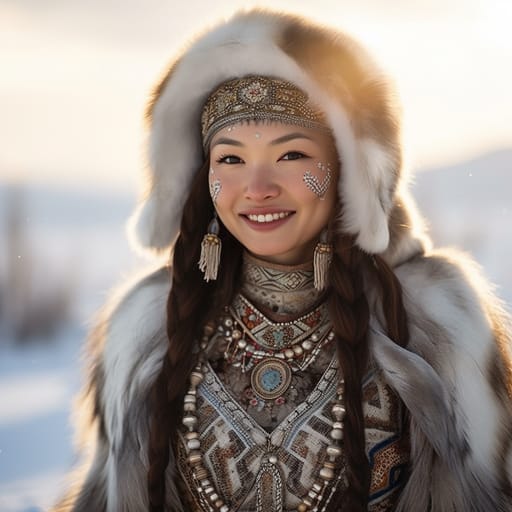
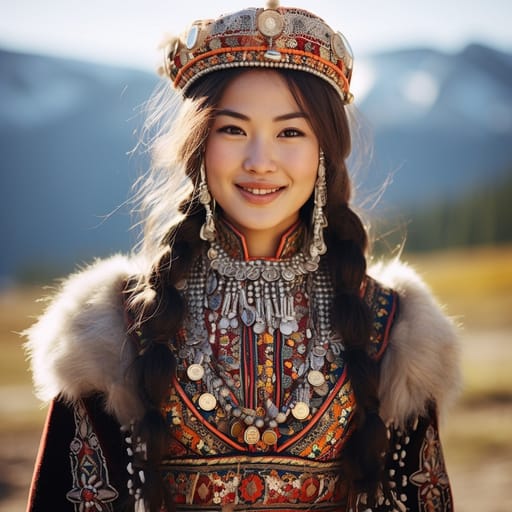
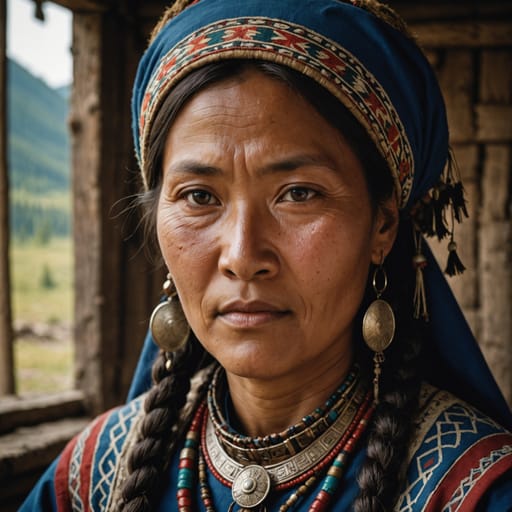
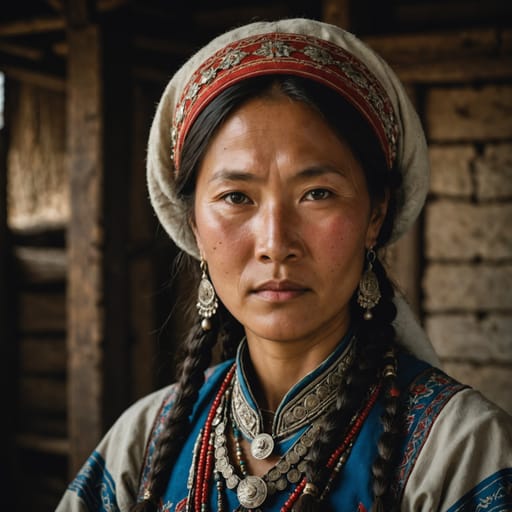
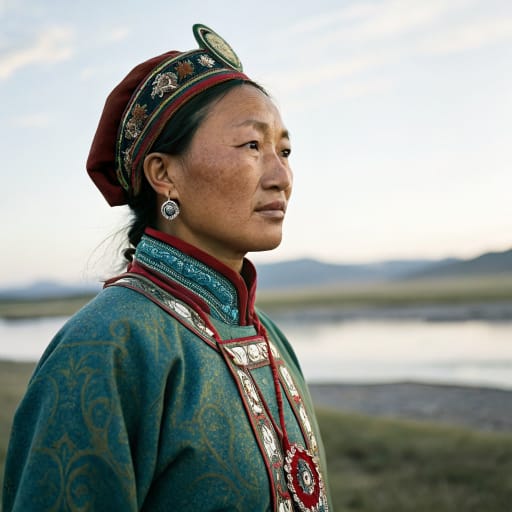
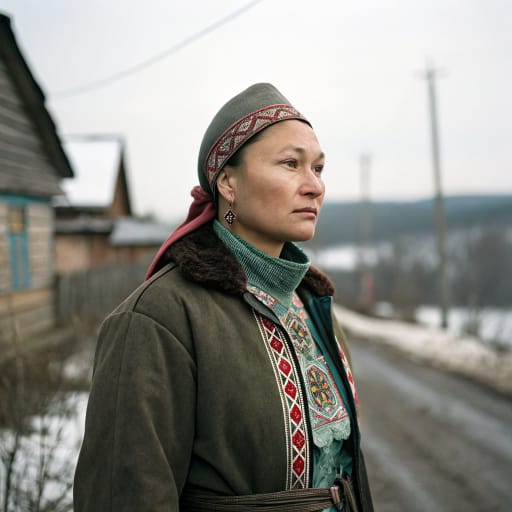
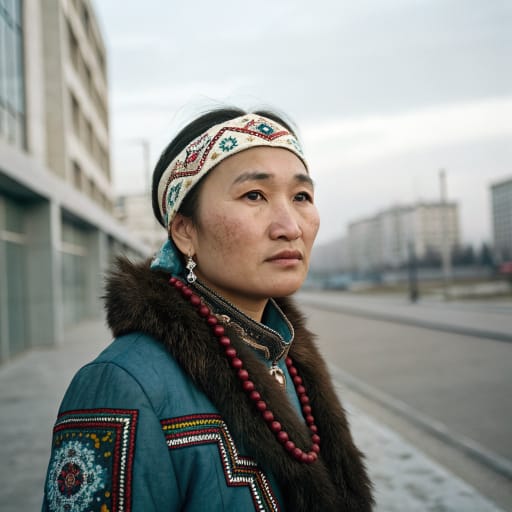
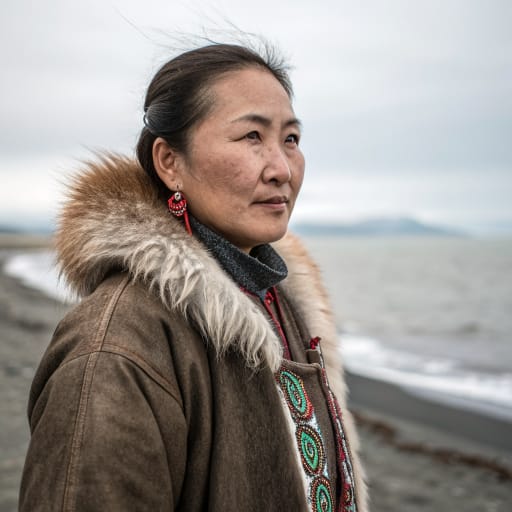
Typical Ekhirits Phenotypes
Reference for AI generation: hair, eyes, skin, facial structure, build
Ekhirits Body & Anatomy Reference
Per-feature anatomical profile for AI nude generation: Siberian Indigenous / Tungusic phenotype
Ekhirits Boobs & Breasts
The typical Ekhirits bust is small-to-medium cup, modest projection, in line with the wider Siberian Indigenous / Tungusic pattern. Areolas usually fall in the 26-38mm range, with medium-brown areolar pigmentation against the light-to-medium skin tone. Compared with the fuller Central Asian or East Asian bust, Ekhirits breasts sit forward and are generally firm, modest projection. A faithful AI render of Ekhirits tits keeps that shape and areola size.
Ekhirits Ass & Hips
Butt shape among Ekhirits women: small-to-medium, modest projection, over narrow-to-medium iliac crests. This follows Siberian Indigenous / Tungusic ancestry and looks quite unlike the broader Central Asian hip profile. An accurate Ekhirits ass in adult AI imagery keeps both the silhouette and the overall build (mesomorph, broader stocky frame adapted to cold climate) instead of a generic average.
Ekhirits Vagina & Pussy
Vulvar anatomy among Ekhirits women: medium-brown labial pigmentation. Pubic hair tends to be straight fine-to-medium texture, sparser distribution, in the usual inverted-triangle pattern. Both follow Siberian Indigenous / Tungusic pigmentation, which is why Ekhirits pussy renders should not fall back on a pale, sparse Western template.
Ekhirits Dicks & Penis
The Ekhirits cock profile, from Siberian Indigenous / Tungusic anthropometric data: regional mean ~12cm erect; moderate girth; medium-brown shaft pigmentation. Pubic hair has a straight fine-to-medium texture and forms the usual inverted-V pattern. Whether Ekhirits men are circumcised follows religious and cultural practice rather than phenotype.
Ekhirits Body, Curves & Build
Build and curves among Ekhirits women follow the Siberian Indigenous / Tungusic pattern: mesomorph, broader stocky frame adapted to cold climate, mean adult female BMI 22-25. Proportions matter as much as skin tone, so Ekhirits figures should keep their regional height and limb ratios.
Ekhirits Skin Tone & Hair Texture
The Ekhirits skin range is light to medium (Fitzpatrick II-IV), and hair tends to be straight 1A, dark-brown to black. That combination marks the Siberian Indigenous / Tungusic phenotype, and skin tone is the trait AI generators most often get wrong for Ekhirits women.
Explore phenotype categories
Structured taxonomy with peer-reviewed scales · 22 anatomical categories
Erotic Poses & Sex Positions
From the pose catalog: 219 named positions with reference skeletons
Frequently asked questions about Ekhirits people
Where is the Ekhirits homeland?
The Ekhirits homeland is West of Lake Baikal in Irkutsk Oblast, Russia (Olkhon Island, Ust-Orda area, upper Lena), with a branch in the Barguzin valley of Buryatia in Northern Asia.
What language do Ekhirits people speak?
Ekhirits people primarily speak Buryat, western Ekhirit-Bulagat dialects (Mongolic); Russian widely spoken.
What religion do Ekhirits people practice?
The predominant religion among Ekhirits people is Shamanism with Russian Orthodox influence; Tibetan Buddhism among Barguzin communities.






Make your own Ekhirits images
Five a day, free, no credits to buy. The studio starts from this group's phenotype data, so you can set body type, pose and style and keep the traits accurate.
Start with Ekhirits