No portrait yet
Altai Erotic
Altai Republic in southern Siberia, Russia, with smaller communities in Altai Krai and Kemerovo Oblast, and a few thousand in western Mongolia and Xinjiang, China
Altai: Southern Altai and Northern Altai (Turkic, Kipchak and Siberian branches respectively); Russian widely spoken
Burkhanism (Ak Jang), shamanism, Russian Orthodoxy, with some Tibetan Buddhist influence
Southern Altai: Altai-kizhi, Telengit, Teleut; Northern Altai: Tubalar, Chelkan, Kumandin; part of the wider Turkic peoples of Siberia
About Altai People
The Altai are the Turkic people of the mountains that carry their name, where Russia, Kazakhstan, Mongolia and China fold into one another in southern Siberia. Most live in the Altai Republic, a Russian federal subject in which they are the titular nationality but not the majority, with smaller communities in Altai Krai and Kemerovo Oblast and scattered kin in western Mongolia and Xinjiang whom those states count as Oirat Mongols. Altai is a modern umbrella. Under it sit the Altai-kizhi of the high steppe valleys, the Telengit near the Mongolian frontier, the Teleut, and the forest peoples of the north, the Tubalar, Chelkan and Kumandin, who hunted, fished and gathered pine nuts rather than herding horses and sheep. Southern Altai speech is close to Kyrgyz; the northern dialects lean toward Shor and Khakas on the Siberian side. Russian is the language of school and town, and the northern varieties are now spoken mainly by the old.
Religion here is layered rather than chosen. Shamanic practice never left: a traveler still ties a pale ribbon to a birch at a mountain pass and leaves the spirit of the Altai something to eat. The Dzungar Khanate added Buddhist influence before its collapse in 1756 pushed Altai clans under Russian protection, Orthodox missionaries followed in the nineteenth century, and in 1904 the visions of a shepherd named Chet Chelpan launched Ak Jang, the White Faith, which rejected blood sacrifice and Russian priests alike and waited for a messianic Oirot Khan. Tsarist police broke up its first gathering, Soviet policy buried it, and it has been practiced in the open again since the 1990s. Clan identity, the seok, still decides whom one may marry, and asking someone's seok remains an ordinary way to place them. Kai, the guttural throat-sung epic performed to a two-stringed topshur, can run for hours and passes down a lineage of named singers. The 1993 excavation of a tattooed Pazyryk-era woman from the Ukok plateau, and the long campaign to bring her back from Novosibirsk, showed how tightly Altaians bind land, ancestors and their own standing as its people. Every second summer the El-Oiyn games fill a valley with wrestling, horse racing and archery, and with the pointed hats and long belted robes that spend the rest of the year folded in a chest.
Related ethnic groups
Groups that share Altai's homeland, region, language, or religious tradition. These are likely candidates for comparative phenotype reference.
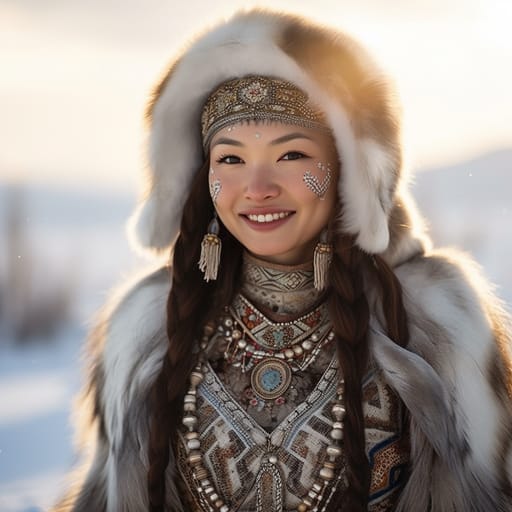
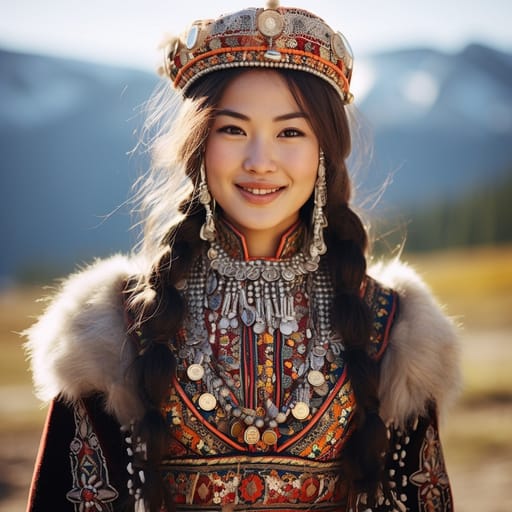
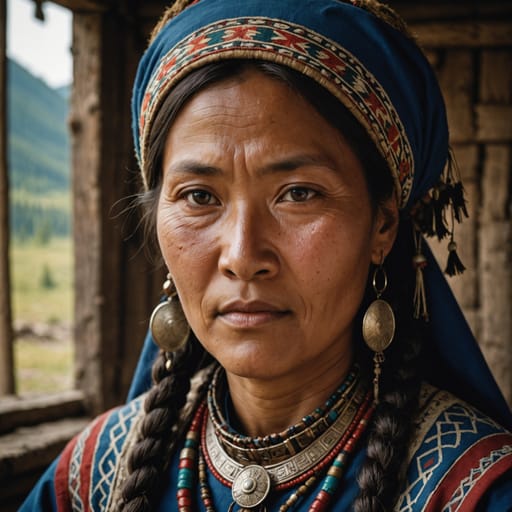
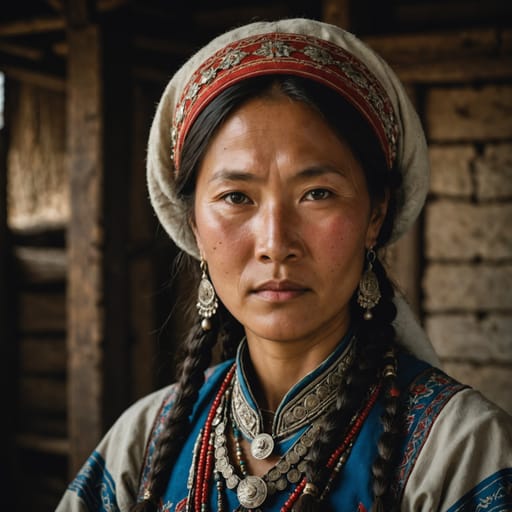
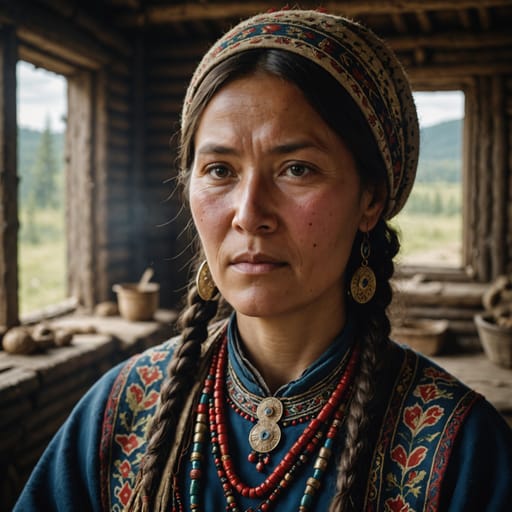
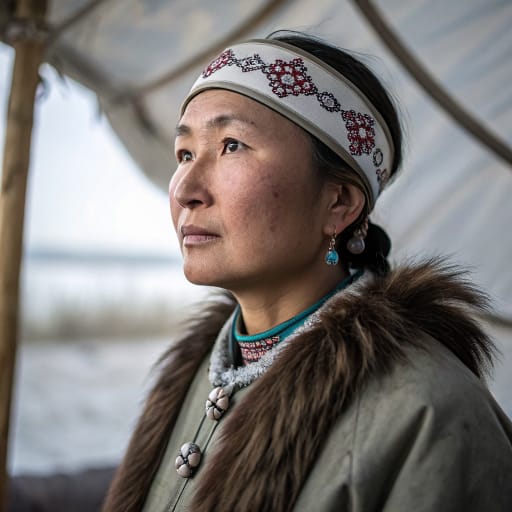
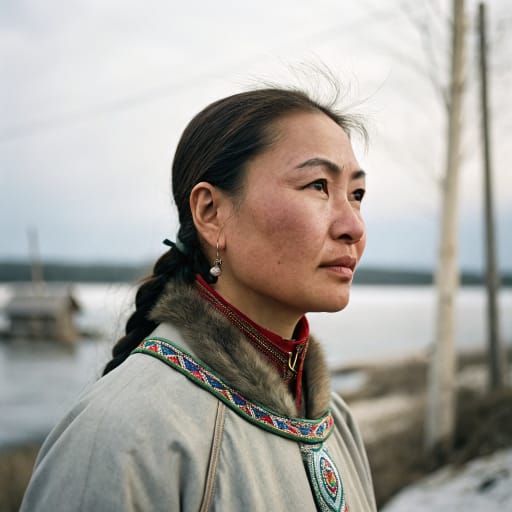
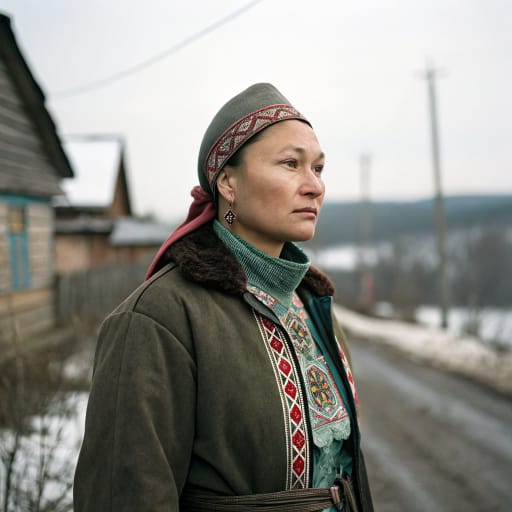
Typical Altai Phenotypes
Reference for AI generation: hair, eyes, skin, facial structure, build
Altai Body & Anatomy Reference
Anatomy by feature, Siberian Indigenous / Tungusic phenotype
Altai Boobs & Breasts
The typical Altai bust is small-to-medium cup, modest projection, in line with the wider Siberian Indigenous / Tungusic pattern. Areolas usually fall in the 26-38mm range, with medium-brown areolar pigmentation against the light-to-medium skin tone. Compared with the fuller Central Asian or East Asian bust, Altai breasts sit forward and are generally firm, modest projection. A faithful AI render of Altai tits keeps that shape and areola size.
Altai Ass & Hips
Butt shape among Altai women: small-to-medium, modest projection, over narrow-to-medium iliac crests. This follows Siberian Indigenous / Tungusic ancestry and looks quite unlike the broader Central Asian hip profile. An accurate Altai ass in adult AI imagery keeps both the silhouette and the overall build (mesomorph, broader stocky frame adapted to cold climate) instead of a generic average.
Altai Vagina & Pussy
Vulvar anatomy among Altai women: medium-brown labial pigmentation. Pubic hair tends to be straight fine-to-medium texture, sparser distribution, in the usual inverted-triangle pattern. Both follow Siberian Indigenous / Tungusic pigmentation, which is why Altai pussy renders should not fall back on a pale, sparse Western template.
Altai Dicks & Penis
The Altai cock profile, from Siberian Indigenous / Tungusic anthropometric data: regional mean ~12cm erect; moderate girth; medium-brown shaft pigmentation. Pubic hair has a straight fine-to-medium texture and forms the usual inverted-V pattern. Whether Altai men are circumcised follows religious and cultural practice rather than phenotype.
Altai Body, Curves & Build
Build and curves among Altai women follow the Siberian Indigenous / Tungusic pattern: mesomorph, broader stocky frame adapted to cold climate, mean adult female BMI 22-25. Proportions matter as much as skin tone, so Altai figures should keep their regional height and limb ratios.
Altai Skin Tone & Hair Texture
The Altai skin range is light to medium (Fitzpatrick II-IV), and hair tends to be straight 1A, dark-brown to black. That combination marks the Siberian Indigenous / Tungusic phenotype, and skin tone is the trait AI generators most often get wrong for Altai women.
Explore phenotype categories
Structured taxonomy with peer-reviewed scales · 22 anatomical categories
Erotic Poses & Sex Positions
From the pose catalog: 219 named positions with reference skeletons
Frequently asked questions about Altai people
Where is the Altai homeland?
The Altai homeland is Altai Republic in southern Siberia, Russia, with smaller communities in Altai Krai and Kemerovo Oblast, and a few thousand in western Mongolia and Xinjiang, China in Northern Asia.
What language do Altai people speak?
Altai people primarily speak Altai: Southern Altai and Northern Altai (Turkic, Kipchak and Siberian branches respectively); Russian widely spoken.
What religion do Altai people practice?
The predominant religion among Altai people is Burkhanism (Ak Jang), shamanism, Russian Orthodoxy, with some Tibetan Buddhist influence.






Make your own Altai images
Five a day, free, no credits to buy. The studio starts from this group's phenotype data, so you can set body type, pose and style and keep the traits accurate.
Start with Altai