Help us get this right
Does this portrait look right for Khongodor?
Nobody has judged this one yet. You would be the first.
Khongodor Erotic
Eastern Sayan and its foothills in southern Siberia, Russia: the Tunka, Oka and Zakamensk districts of Buryatia and the Alar district of Irkutsk Oblast; smaller communities in northern Mongolia.
Buryat, Alar-Tunka dialect group (Mongolic); Russian widely used
Tibetan Buddhism (Gelug) mixed with Buryat shamanism; some Orthodox Christianity, especially in Alar
One of the four main Buryat tribal divisions with the Bulagat, Ekhirit and Khori; regional groups are the Tunka, Oka, Zakamensk and Alar Khongodor, traditionally counted as eight or nine clans
About Khongodor People
The Khongodor are one of the four large tribal divisions of the Buryats, alongside the Bulagat, Ekhirit and Khori, and the one that holds the mountain west. Their country follows the Eastern Sayan and its foothills: the Tunka valley southwest of Lake Baikal, the high Oka plateau, the Zakamensk district along the Mongolian border and, north of the range, the Alar steppe in Irkutsk Oblast. Families of Khongodor descent also live across the border in northern Mongolia. What ties these scattered valleys together is genealogy. A Khongodor knows their clan, tradition counts eight or nine of them, and Russian officials borrowed that framework when they registered the clans by number.
Where they came from is still argued. The usual account has them leaving Mongolia in the late seventeenth century, pushed north by the wars between the Khalkha princes and the Dzungar ruler Galdan, and accepting Russian rule in the Tunka and Alar country. Other scholars treat them as an older Sayan population that moved back and forth across a frontier that did not yet exist. Either way, the Mongolian connection is audible. Khongodor speech belongs to the Alar-Tunka group of Buryat dialects, and the Zakamensk variety shades toward Khalkha Mongolian. Russian dominates daily life now, most heavily in Alar, and keeping Buryat alive among children is a real worry.
The swan is the Khongodor ancestor. An old formula, shared with the Khori, describes them as people of swan descent with a birch hitching post, and the bird is not to be harmed. When swans pass over in spring, older people still sprinkle milk or tea toward them. Religion divides along the mountains. Tunka, Oka and Zakamensk are Gelug Buddhist country, with datsans rebuilt since the 1990s after Soviet destruction. Alar, ringed by shamanist western Buryats and Russian villages, had a datsan of its own, but shamanism stayed stronger there and Orthodox baptism went deeper. In practice the layers mix everywhere: lamas and shamans serve the same families, and mountain spirits get their offerings at roadside oboo cairns. In Tunka the shrine of Burkhan Baabai draws Buddhists and shamanists alike.
Livelihood follows altitude. Oka herders keep yaks and yak-cattle crosses on pastures too high for ordinary stock, while Tunka and Alar run cattle, horses and sheep alongside hay and grain. In recent decades the districts have taken turns hosting a Khongodor gathering, part sports meet with wrestling, archery and horse racing, part family reunion, and it has done much to turn an old tribal name back into a working identity.
Related ethnic groups
Groups that share Khongodor's homeland, region, language, or religious tradition. These are likely candidates for comparative phenotype reference.
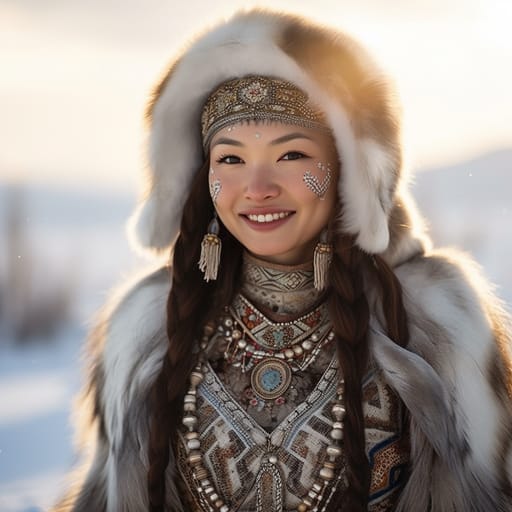
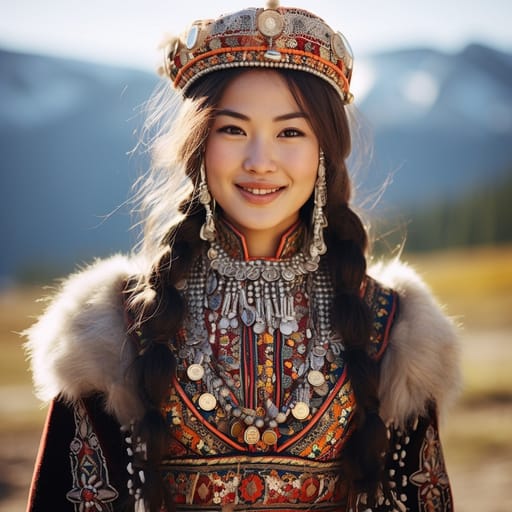
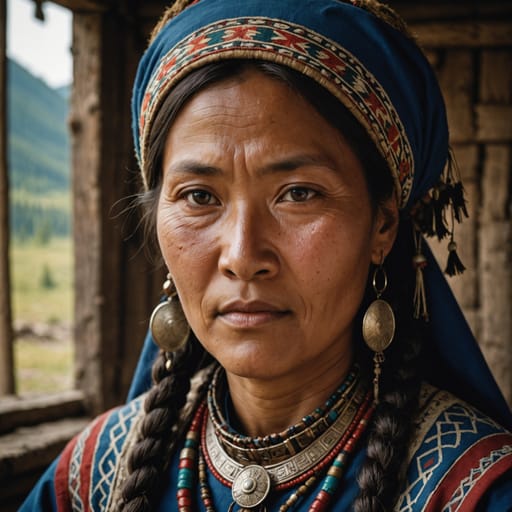
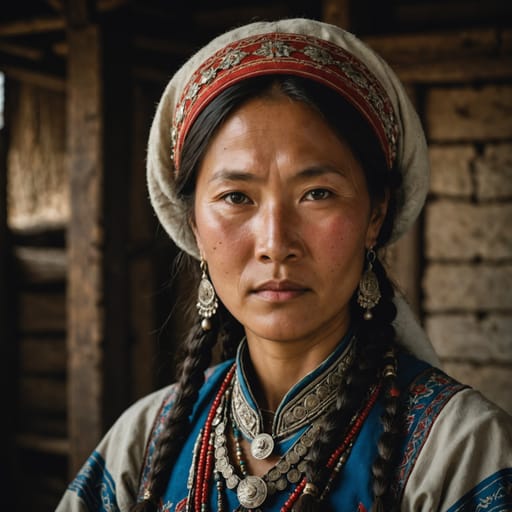
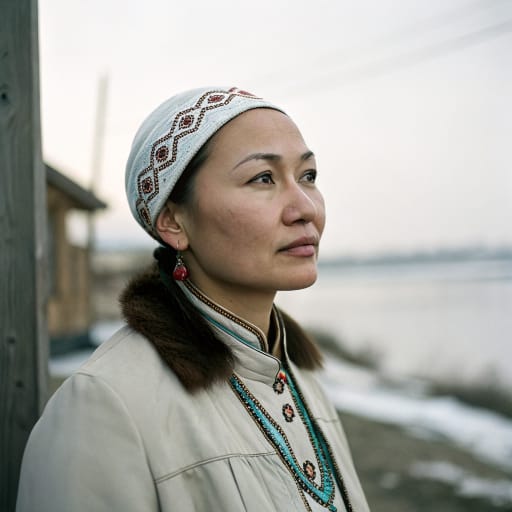
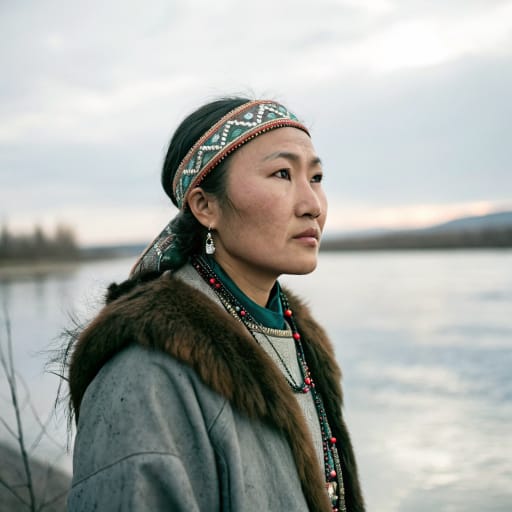
Typical Khongodor Phenotypes
Reference for AI generation: hair, eyes, skin, facial structure, build
Khongodor Body & Anatomy Reference
Per-feature anatomical profile for AI nude generation: Siberian Indigenous / Tungusic phenotype
Khongodor Boobs & Breasts
The typical Khongodor bust is small-to-medium cup, modest projection, in line with the wider Siberian Indigenous / Tungusic pattern. Areolas usually fall in the 26-38mm range, with medium-brown areolar pigmentation against the light-to-medium skin tone. Compared with the fuller Central Asian or East Asian bust, Khongodor breasts sit forward and are generally firm, modest projection. A faithful AI render of Khongodor tits keeps that shape and areola size.
Khongodor Ass & Hips
Butt shape among Khongodor women: small-to-medium, modest projection, over narrow-to-medium iliac crests. This follows Siberian Indigenous / Tungusic ancestry and looks quite unlike the broader Central Asian hip profile. An accurate Khongodor ass in adult AI imagery keeps both the silhouette and the overall build (mesomorph, broader stocky frame adapted to cold climate) instead of a generic average.
Khongodor Vagina & Pussy
Vulvar anatomy among Khongodor women: medium-brown labial pigmentation. Pubic hair tends to be straight fine-to-medium texture, sparser distribution, in the usual inverted-triangle pattern. Both follow Siberian Indigenous / Tungusic pigmentation, which is why Khongodor pussy renders should not fall back on a pale, sparse Western template.
Khongodor Dicks & Penis
The Khongodor cock profile, from Siberian Indigenous / Tungusic anthropometric data: regional mean ~12cm erect; moderate girth; medium-brown shaft pigmentation. Pubic hair has a straight fine-to-medium texture and forms the usual inverted-V pattern. Whether Khongodor men are circumcised follows religious and cultural practice rather than phenotype.
Khongodor Body, Curves & Build
Build and curves among Khongodor women follow the Siberian Indigenous / Tungusic pattern: mesomorph, broader stocky frame adapted to cold climate, mean adult female BMI 22-25. Proportions matter as much as skin tone, so Khongodor figures should keep their regional height and limb ratios.
Khongodor Skin Tone & Hair Texture
The Khongodor skin range is light to medium (Fitzpatrick II-IV), and hair tends to be straight 1A, dark-brown to black. That combination marks the Siberian Indigenous / Tungusic phenotype, and skin tone is the trait AI generators most often get wrong for Khongodor women.
Explore phenotype categories
Structured taxonomy with peer-reviewed scales · 22 anatomical categories
Erotic Poses & Sex Positions
From the pose catalog: 219 named positions with reference skeletons
Frequently asked questions about Khongodor people
Where is the Khongodor homeland?
The Khongodor homeland is Eastern Sayan and its foothills in southern Siberia, Russia: the Tunka, Oka and Zakamensk districts of Buryatia and the Alar district of Irkutsk Oblast; smaller communities in northern Mongolia. in Northern Asia.
What language do Khongodor people speak?
Khongodor people primarily speak Buryat, Alar-Tunka dialect group (Mongolic); Russian widely used.
What religion do Khongodor people practice?
The predominant religion among Khongodor people is Tibetan Buddhism (Gelug) mixed with Buryat shamanism; some Orthodox Christianity, especially in Alar.






Make your own Khongodor images
Five a day, free, no credits to buy. The studio starts from this group's phenotype data, so you can set body type, pose and style and keep the traits accurate.
Start with Khongodor