No portrait yet
Enets Erotic
Lower Yenisei River and western Taymyr Peninsula, Krasnoyarsk Krai, Russia; chiefly the villages of Potapovo and Vorontsovo and the town of Dudinka
Enets, in Forest and Tundra varieties (Samoyedic branch of Uralic); Russian is now the first language of most
Nominally Russian Orthodox, with surviving shamanist and animist practice
Forest Enets (Bai, Muggadi) and Tundra Enets (Somatu, Madu); part of the Samoyedic peoples alongside Nenets, Nganasan and Selkup
About Enets People
The Enets are one of the smallest peoples in Russia with a name of their own: a few hundred reindeer herders, hunters and fishers on the lower Yenisei, where the river widens toward the Kara Sea. Tsarist records called them Yenisei Samoyeds. The word Enets comes from their own word for a person, and it became the official name only in the 1930s, when Soviet ethnographers sorted the Samoyedic groups of the north into separate nationalities. Their homeland is the western edge of the Taymyr Peninsula in Krasnoyarsk Krai. Two villages hold most of the population today, Potapovo south of Dudinka and Vorontsovo far downriver near the Yenisei mouth, with more Enets living in Dudinka itself.
The language is Samoyedic, the eastern wing of the Uralic family, a distant cousin of Finnish and Hungarian and a close relative of Nenets and Nganasan. It comes in two forms that some linguists treat as separate languages: Forest Enets around Potapovo and Tundra Enets around Vorontsovo. The split is also the main social division. Forest Enets lived at the tree line and leaned on fishing and small herds. Tundra Enets moved larger herds onto open tundra and hunted wild reindeer, including the old Taymyr method of spearing animals from boats as migrating herds swam across rivers. Both forms are critically endangered, with speakers numbering in the dozens, nearly all of them elderly. A Cyrillic alphabet was fixed only in the 1980s, and a primer, a few school hours in Potapovo and recent language nest efforts are what stand between Enets and silence.
Historically the Enets were squeezed from two sides. Russian fur tribute arrived in the seventeenth century, and the more numerous Nenets pushed east across the Yenisei over the following two centuries, taking pastures and absorbing whole Enets clans through marriage, while Nganasans absorbed others to the east. Soviet collectivization then moved families off the migration routes into settlements, and boarding schools finished the job on the language. What remains is a people with a strong sense of clan. Descent runs through the father, clans were exogamous, and old names like Bai, Muggadi and Somatu still tell an Enets which side of the forest and tundra line a family came from. Religion on paper is Russian Orthodox, a legacy of tsarist missions, but the working layer is older: shamans mediated with the spirits of river, reindeer and the dead, and spirit figures kept their place in the household long after baptism. Today the Enets are counted among Russia's small-numbered indigenous peoples of the North, with the legal protections and the demographic fragility that status implies.
Related ethnic groups
Groups that share Enets's homeland, region, language, or religious tradition. These are likely candidates for comparative phenotype reference.
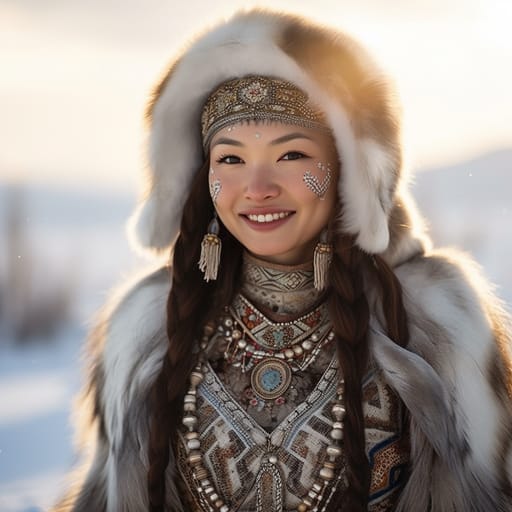
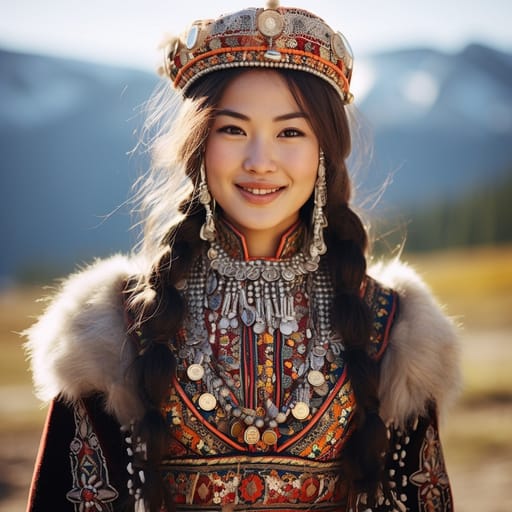
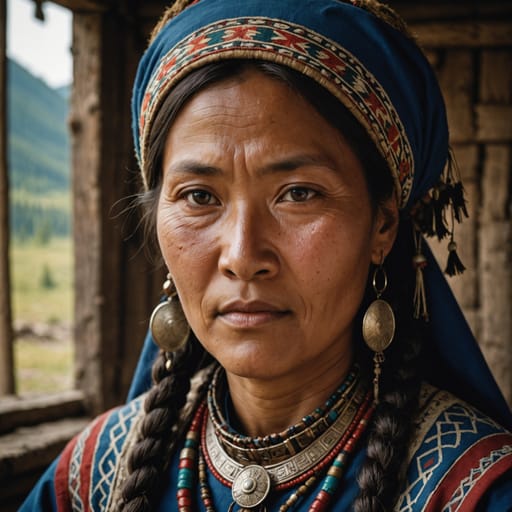
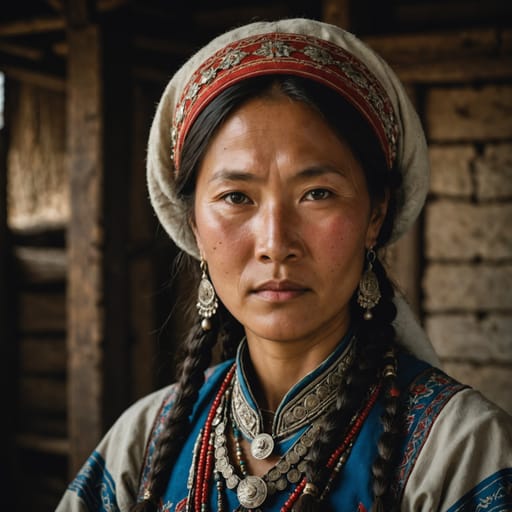
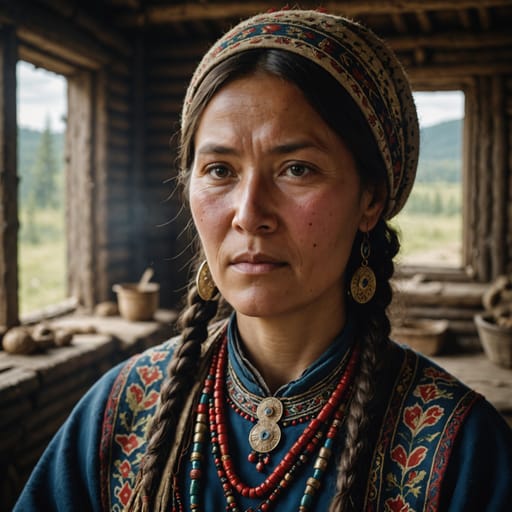
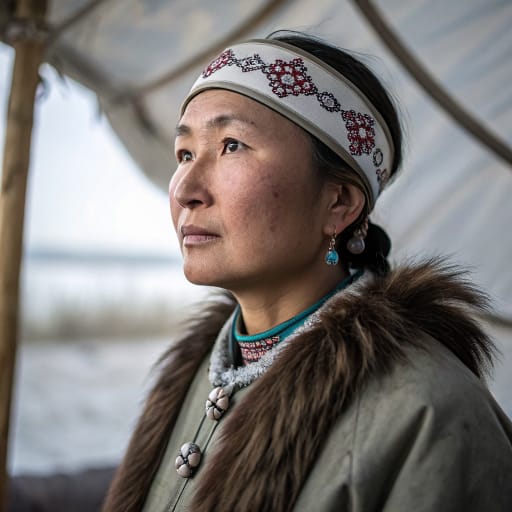
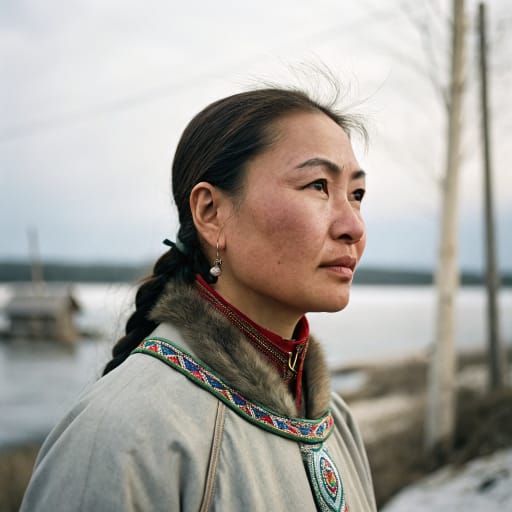
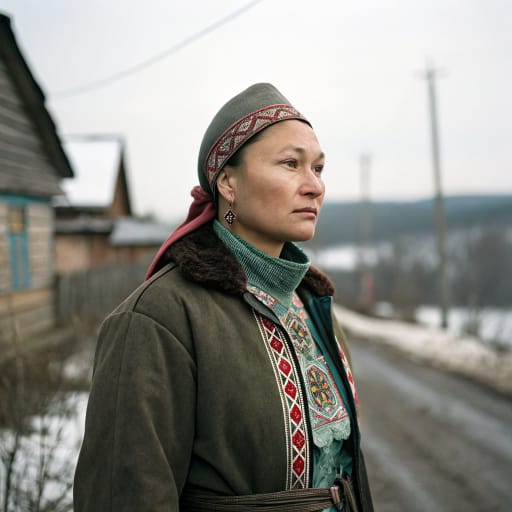
Typical Enets Phenotypes
Reference for AI generation: hair, eyes, skin, facial structure, build
Enets Body & Anatomy Reference
Siberian Indigenous / Tungusic phenotype: anatomy reference for AI nude generation
Enets Boobs & Breasts
Bust reference for Enets women: small-to-medium cup, modest projection, which is typical of Siberian Indigenous / Tungusic ancestry. Areolas measure about 26-38mm across, with medium-brown pigmentation. Body type (mesomorph, broader stocky frame adapted to cold climate) shapes the bust as well, so Enets tits are usually firm, modest projection. In AI imagery, keep the forward-set shape rather than drifting toward the fuller Central Asian or East Asian bust.
Enets Ass & Hips
The Enets ass is typically small-to-medium, modest projection, which sets it apart from the broader Central Asian hip profile. Underneath, the pelvis shows narrow-to-medium iliac crests, part of the Siberian Indigenous / Tungusic skeletal pattern. For Enets butt pics and AI renders, match that silhouette and the overall build (mesomorph, broader stocky frame adapted to cold climate).
Enets Vagina & Pussy
Enets pussy and vulvar anatomy presents medium-brown labial pigmentation, consistent with the Siberian Indigenous / Tungusic phenotype's pigmentation pattern. Enets pubic hair is typically straight fine-to-medium texture, sparser distribution, in the inverted-triangle pattern. For anatomically accurate Enets pussy renders the labial coloration should match the surrounding light to medium skin tone with a continuous gradient, and the hair should keep its straight fine-to-medium texture.
Enets Dicks & Penis
Enets dicks follow the Siberian Indigenous / Tungusic reference data: regional mean ~12cm erect; moderate girth; medium-brown shaft pigmentation. Shaft color should track the light to medium skin tone with a smooth change toward the glans, and Enets pubic hair keeps its straight fine-to-medium texture.
Enets Body, Curves & Build
Enets body type and overall build presents as mesomorph, broader stocky frame adapted to cold climate, with mean adult female BMI 22-25: the characteristic Siberian Indigenous / Tungusic habitus. Enets curves and proportions should keep the regional skeletal frame (height, shoulder-to-hip ratio, limb proportions) rather than a generic mesomorph default.
Enets Skin Tone & Hair Texture
Enets skin sits in the light to medium (Fitzpatrick II-IV) band. Hair is typically straight 1A, dark-brown to black, in keeping with the Siberian Indigenous / Tungusic phenotype. In nude renders the skin should stay one even tone from face to body, and body, pubic and head hair should match.
Explore phenotype categories
Structured taxonomy with peer-reviewed scales · 22 anatomical categories
Erotic Poses & Sex Positions
From the pose catalog: 219 named positions with reference skeletons
Frequently asked questions about Enets people
Where is the Enets homeland?
The Enets homeland is Lower Yenisei River and western Taymyr Peninsula, Krasnoyarsk Krai, Russia; chiefly the villages of Potapovo and Vorontsovo and the town of Dudinka in Northern Asia.
What language do Enets people speak?
Enets people primarily speak Enets, in Forest and Tundra varieties (Samoyedic branch of Uralic); Russian is now the first language of most.
What religion do Enets people practice?
The predominant religion among Enets people is Nominally Russian Orthodox, with surviving shamanist and animist practice.






Make your own Enets images
Five a day, free, no credits to buy. The studio starts from this group's phenotype data, so you can set body type, pose and style and keep the traits accurate.
Start with Enets