Help us get this right
Does this portrait look right for Alyutors?
Nobody has judged this one yet. You would be the first.
Alyutors Erotic
Northern Kamchatka Peninsula, Koryak Okrug of Kamchatka Krai, Russia: the Bering Sea coast around the Olyutorsky and Karaginsky gulfs and the Okhotsk coast near Palana.
Alyutor (Chukotko-Kamchatkan family, Chukotkan branch), closely related to Koryak and now spoken by a few dozen elders; Russian is dominant.
Nominally Russian Orthodox; traditional animism and shamanism persist, centered on Raven (Kutkh) and the autumn seal festival Hololo.
One of the coastal Nymylan groups within the wider Koryak family; dialect divisions Alyutor proper, Karaga, and Palana.
About Alyutors People
The Alyutors are the settled people of the northern Kamchatka coast, and settled is the whole point. Their own name for themselves, nymylan, means villager, and it marked them off from the reindeer Koryaks who followed the herds across the tundra behind them. Russian officials and later Soviet ethnographers folded them into the Koryaks for two centuries, and most Alyutors still write Koryak on official forms. Only in 2000 did Russia list them as a distinct Indigenous people of the North. Census returns of self-declared Alyutors run to a few dozen, while the actual community is usually reckoned in the low thousands.
Home is the neck of the peninsula where Kamchatka meets the mainland, on both shores: the Bering Sea villages of Vyvenka, Tymlat, and Tilichiki around the Olyutorsky and Karaginsky gulfs, and the Okhotsk side near Palana. The economy was built on that coast. Alyutors hunted seal and walrus from hide boats, netted and dried salmon in enormous quantities, and, unusually for a shore people, kept small reindeer herds as insurance, which is why the neat line between sea Koryak and reindeer Koryak never quite held for them. Winter houses were half-underground earth lodges entered by a ladder through the smoke hole, capped with a funnel-shaped storm shield peculiar to the Koryak coast.
The Alyutor language belongs to the Chukotko-Kamchatkan family, closest to Koryak and a cousin of Chukchi. It was treated as a Koryak dialect until linguists in the later twentieth century made the case for a language of its own, with Karaga and Palana varieties. Fluent speakers today are a few dozen elders. Soviet village consolidation did most of the damage: from the 1950s small coastal settlements were closed as unpromising and families were moved into larger mixed villages, where Russian took over within a generation.
Faith is layered rather than replaced. Orthodoxy came with the Cossacks, who found the Alyutors among the hardest people on the peninsula to subdue. Their fortified villages held out through much of the first half of the eighteenth century. Beneath the icons the older world persists: Raven as maker and trickster, guardian charms in the house, and above all Hololo, the autumn seal festival, when the season's catch is thanked with grass seal effigies, alder branches, drumming on the round frame drum, and dances that imitate the animals. Hololo has revived strongly in Tymlat and Vyvenka since the 1990s, and the personal song that each Alyutor traditionally carries, a melody belonging to one person alone, is still handed down.
Related ethnic groups
Groups that share Alyutors's homeland, region, language, or religious tradition. These are likely candidates for comparative phenotype reference.
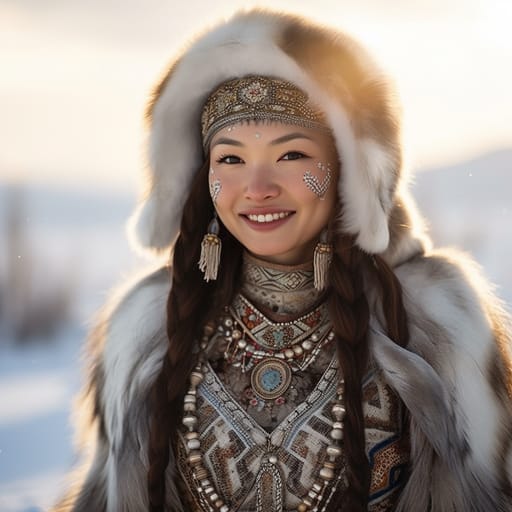
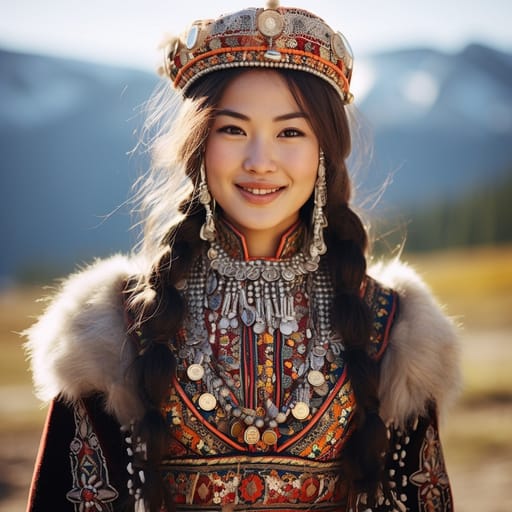
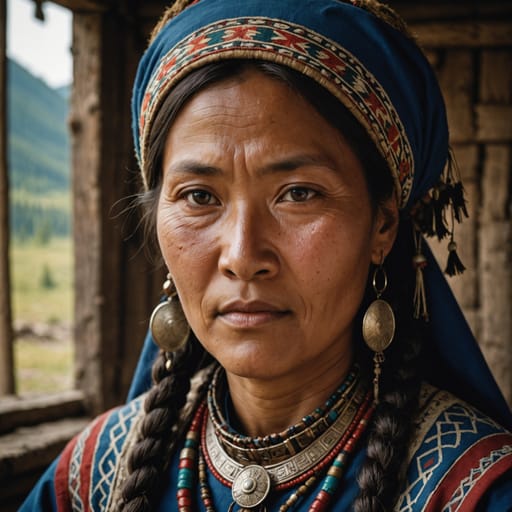
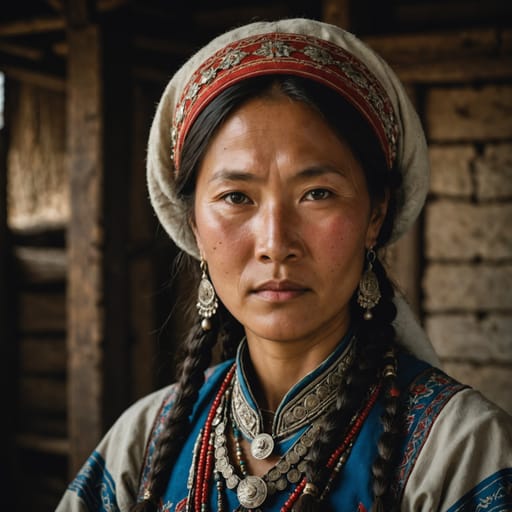
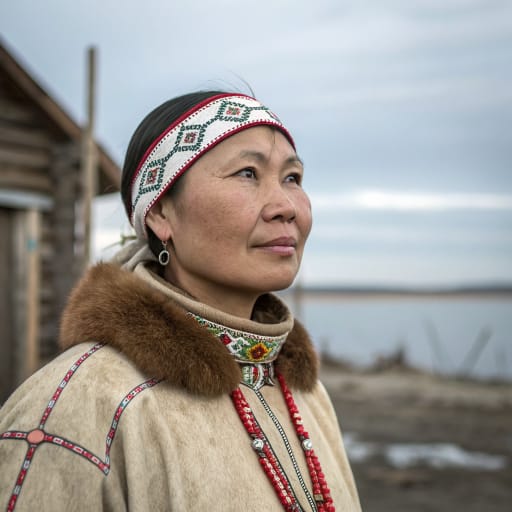
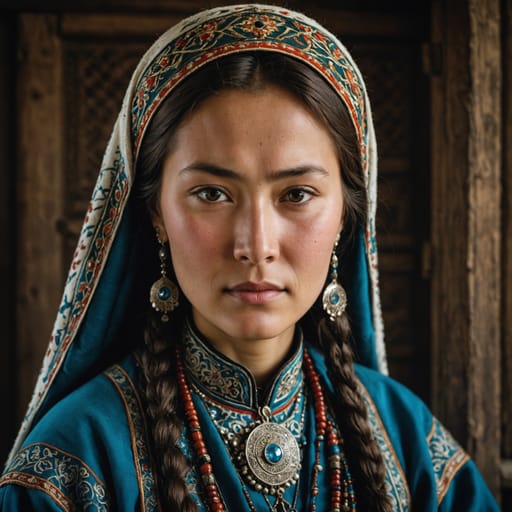
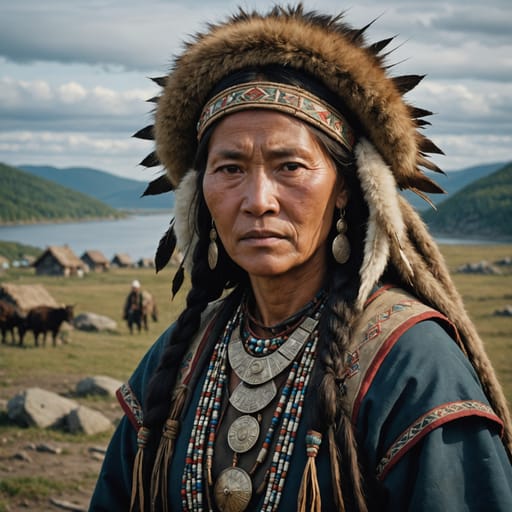
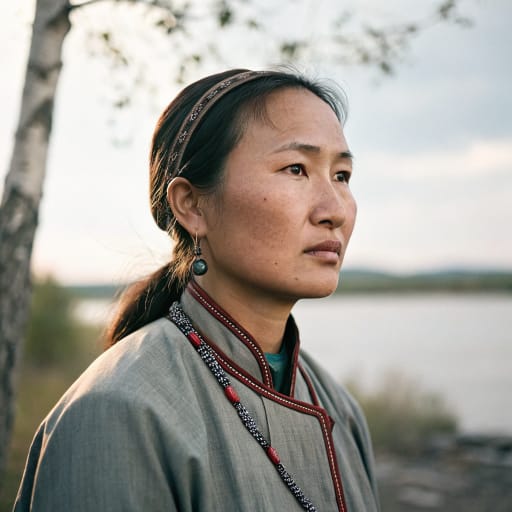
Typical Alyutors Phenotypes
Reference for AI generation: hair, eyes, skin, facial structure, build
Explore phenotype categories
Structured taxonomy with peer-reviewed scales · 22 anatomical categories
Erotic Poses & Sex Positions
From the pose catalog: 219 named positions with reference skeletons
Frequently asked questions about Alyutors people
Where is the Alyutors homeland?
The Alyutors homeland is Northern Kamchatka Peninsula, Koryak Okrug of Kamchatka Krai, Russia: the Bering Sea coast around the Olyutorsky and Karaginsky gulfs and the Okhotsk coast near Palana. in Northern Asia.
What language do Alyutors people speak?
Alyutors people primarily speak Alyutor (Chukotko-Kamchatkan family, Chukotkan branch), closely related to Koryak and now spoken by a few dozen elders; Russian is dominant..
What religion do Alyutors people practice?
The predominant religion among Alyutors people is Nominally Russian Orthodox; traditional animism and shamanism persist, centered on Raven (Kutkh) and the autumn seal festival Hololo..






Make your own Alyutors images
Five a day, free, no credits to buy. The studio starts from this group's phenotype data, so you can set body type, pose and style and keep the traits accurate.
Start with Alyutors