- Home/
- World/
- Northern Asia/
- Oroks
Oroks Erotic
Sakhalin Island in the Russian Far East, chiefly around Val and Nogliki in the north and Poronaysk in the south, with a small community in Hokkaido, Japan
Uilta, also called Orok (Tungusic, southern branch, closest to Ulch and Nanai); Russian in everyday use
Traditionally shamanist and animist with bear ceremonialism; nominal Russian Orthodoxy
Northern (Val and Nogliki) and southern (Poronaysk) groups; part of the wider Tungusic peoples, nearest to the Ulch and Nanai
About Oroks People
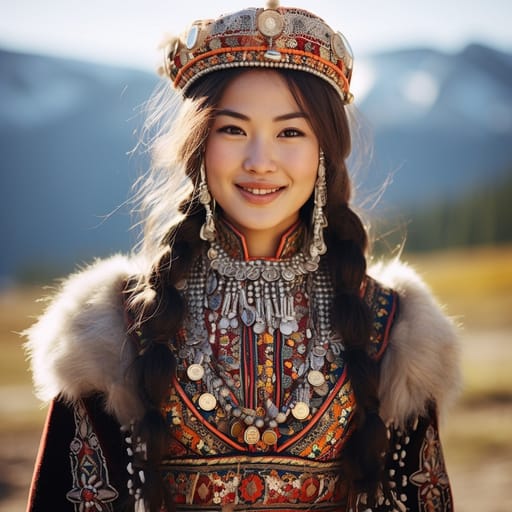
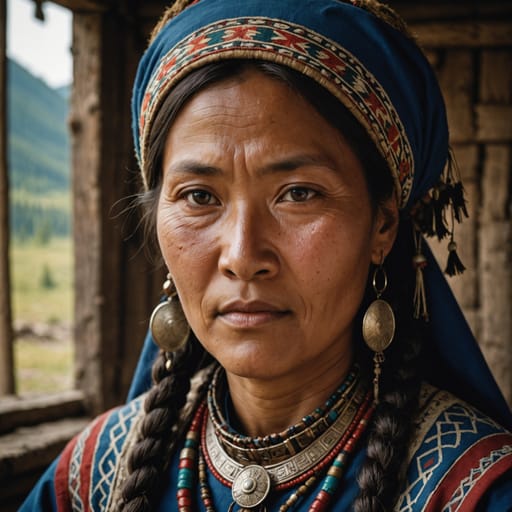
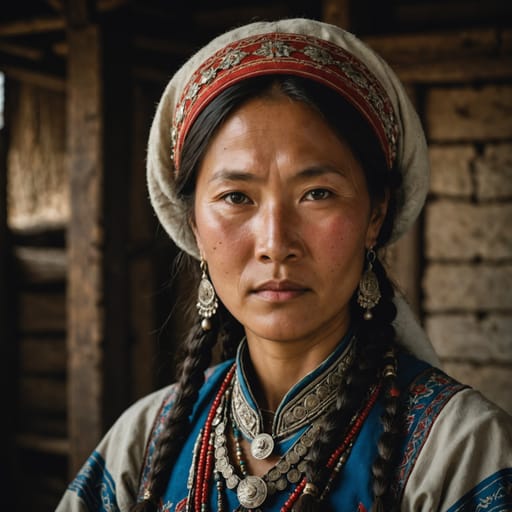
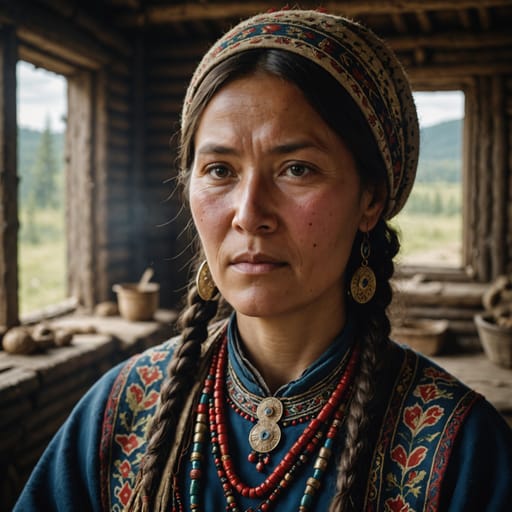
The Oroks call themselves Uilta, a name built on their word for the domesticated reindeer, and that is the fastest way to place them. They are the only reindeer herders on Sakhalin, the long island off the coast of the Russian Far East, and among the southernmost reindeer people anywhere. Their herding never looked like the mass pastoralism of the Nenets further west. A Uilta family kept a few dozen animals, valued as pack and riding beasts and as a source of milk, and moved with them between the coastal lowlands in summer and the interior larch forest in winter. The real calories came from salmon. That combination, small transport herds plus a river-and-sea fishing economy, sets them apart from every neighbor they have. Their language, Uilta, belongs to the Tungusic family and sits closest to Ulch and Nanai on the mainland across the strait, though centuries on the island have left it distinct. It is now critically endangered: the fluent speakers can be counted, and most are elderly. A Cyrillic primer appeared only in the 2000s, produced by Uilta activists working with the Japanese linguist Jiro Ikegami, decades after the language had stopped passing to children.
Older belief was shamanic, organized around clan spirits, the masters of forest and sea, and a bear ceremony shared in outline with the Nivkh and Ainu who also lived on Sakhalin. Orthodox baptism arrived with Russian administration and mostly layered over that rather than replacing it. The twentieth century then cut the people in two. From 1905 to 1945 the southern half of the island was Japanese Karafuto, and Uilta men there were recruited into army units for their command of the terrain. When Soviet forces took Sakhalin in 1945, many of those same men were sentenced as collaborators and sent to labor camps. Some who survived went to Hokkaido, where Dahinien Gendanu spent years pressing Japan to acknowledge and compensate Uilta veterans and founded a small museum at Abashiri, Jakka Duxuni, to hold what was left of the material culture. Those who stayed saw their herds collectivized and their camps consolidated into settlements like Val and Poronaysk. Only a few hundred Oroks remain, still negotiating for pasture and fishing access with the oil and gas industry that reshaped the island and now funds indigenous development programs on it.
Related ethnic groups
Groups that share Oroks's homeland, region, language, or religious tradition — likely candidates for comparative phenotype reference.
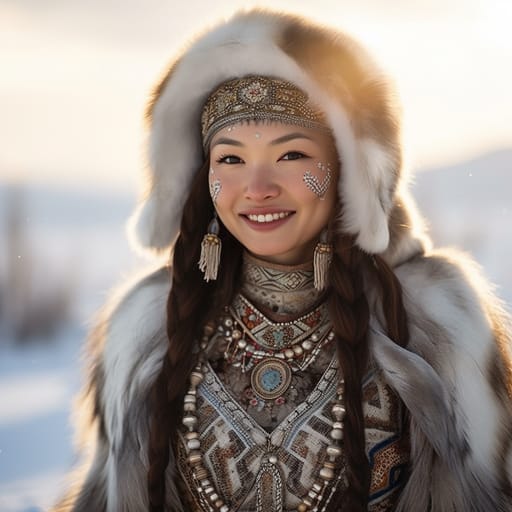
Typical Oroks Phenotypes
Reference for AI generation — hair, eyes, skin, facial structure, build
Oroks Body & Anatomy Reference
Per-feature anatomical profile for AI nude generation — Siberian Indigenous / Tungusic phenotype
Oroks Boobs & Breasts
Oroks tits and boobs run small-to-medium cup, modest projection — the classic Siberian Indigenous / Tungusic bust profile. Oroks nipples and areolas show medium-brown areolar pigmentation against the light-to-medium skin tone, with areolar diameter typically in the 26-38mm range and forward-set positioning rather than the the fuller Central Asian or East Asian bust. Oroks breasts trend firm, modest projection, a function of the mesomorph, broader stocky frame adapted to cold climate body habitus and the mean adult female BMI 22-25. For anatomically-accurate AI-generated Oroks nudes the render preserves: small-to-medium cup, modest projection shape, 26-38mm areolas with medium-brown pigmentation, and the torso proportions of the Siberian Indigenous / Tungusic phenotype.
Oroks Ass & Hips
Oroks ass and hip morphology presents as small-to-medium, modest projection — distinctly different from the broader Central Asian hip profile. The Oroks pelvic profile shows narrow-to-medium iliac crests, anchored in the Siberian Indigenous / Tungusic skeletal pattern. Oroks butt shots in adult AI imagery should render the small-to-medium, modest projection silhouette with the mesomorph, broader stocky frame adapted to cold climate build and the gluteal-femoral fat distribution typical of the Siberian Indigenous / Tungusic phenotype rather than defaulting to a globally-averaged "ethnic" butt that generic AI generators produce. The hip-to-waist ratio characteristic of Oroks women is one of the identifying features of the Siberian Indigenous / Tungusic regional phenotype.
Oroks Vagina & Pussy
Oroks pussy and vulvar anatomy presents medium-brown labial pigmentation — consistent with the Siberian Indigenous / Tungusic phenotype's pigmentation pattern. Oroks pubic hair is typically straight fine-to-medium texture, sparser distribution, distributed in the inverted-triangle pattern with regional-typical density. AI-generated Oroks nude imagery should preserve the medium-brown labial pigmentation and the straight fine-to-medium texture hair texture rather than defaulting to a Western-European pink-and-sparse template. For anatomically-accurate Oroks pussy renders the labial pigmentation and coloration should match the surrounding light to medium skin tone of the Siberian Indigenous / Tungusic phenotype, with continuous gradient rather than an abrupt color transition.
Oroks Dicks & Penis
Oroks dick and penile anatomy in adult AI generation should anchor on the regional reference data: regional mean ~12cm erect, moderate girth, and medium-brown shaft pigmentation. The Oroks cock profile reflects the Siberian Indigenous / Tungusic ancestral population's anthropometric measurements rather than a globally-averaged Western-pornography default. For anatomically-accurate Oroks nude male imagery the shaft pigmentation should track the surrounding light to medium skin tone, the glans-to-shaft pigmentation transition should be continuous, and the pubic hair pattern should match straight fine-to-medium texture texture distributed in the typical inverted-V escutcheon. Circumcision status in Oroks populations varies by religious-cultural tradition rather than ancestral phenotype.
Oroks Body, Curves & Build
Oroks body type and overall build presents as mesomorph, broader stocky frame adapted to cold climate, with mean adult female BMI 22-25 — the characteristic Siberian Indigenous / Tungusic habitus. Oroks curves and proportions in adult AI imagery should preserve the regional skeletal frame (height, shoulder-to-hip ratio, limb proportions) rather than scaling to a Western-European mesomorph default. The Oroks nude female form, when rendered with anatomical fidelity, shows the height range, frame width, and adipose distribution pattern typical of the Siberian Indigenous / Tungusic phenotype. Generic AI image generators tend to collapse regional body types into a few default shapes; the EthnicErotic phenotype-anchored approach preserves the Oroks build as its own reference category.
Oroks Skin Tone & Hair Texture
Oroks skin tone falls in the light to medium (Fitzpatrick II-IV) band — the surface signal most often miscalibrated by generic AI nude generators trained on Western-photographic datasets. Oroks hair texture is typically straight 1A, dark-brown to black, characteristic of the Siberian Indigenous / Tungusic phenotype. For anatomically-accurate Oroks nude renders the skin should hold the Fitzpatrick band consistently across body surface rather than showing the lighter-than-face body shading that AI generators default to. Oroks hair pigmentation and texture on body, pubic, and head should match across the figure rather than mixing textures (a common AI artefact).
Explore phenotype categories
Structured taxonomy with peer-reviewed scales · 22 anatomical categories
Erotic Poses & Sex Positions
From the pose catalog — 219 named positions with reference skeletons
Frequently asked questions about Oroks people
Where is the Oroks homeland?
The Oroks homeland is Sakhalin Island in the Russian Far East, chiefly around Val and Nogliki in the north and Poronaysk in the south, with a small community in Hokkaido, Japan in Northern Asia.
What language do Oroks people speak?
Oroks people primarily speak Uilta, also called Orok (Tungusic, southern branch, closest to Ulch and Nanai); Russian in everyday use.
What religion do Oroks people practice?
The predominant religion among Oroks people is Traditionally shamanist and animist with bear ceremonialism; nominal Russian Orthodoxy.

What does a typical Oroks woman look like?
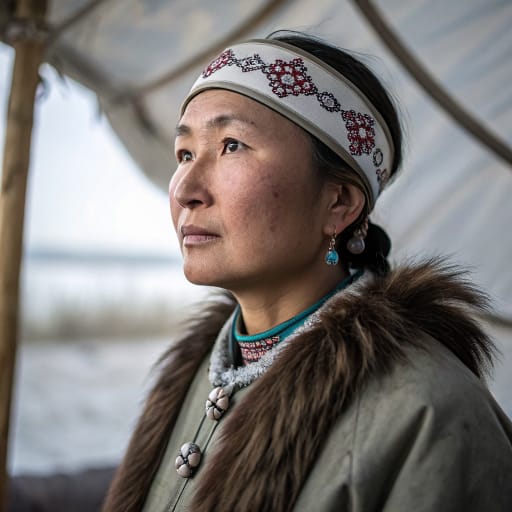
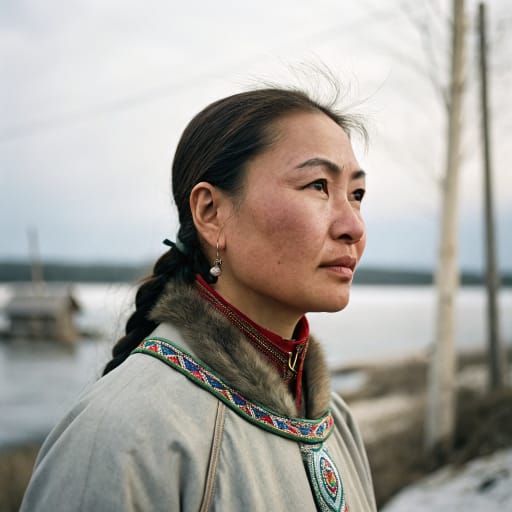
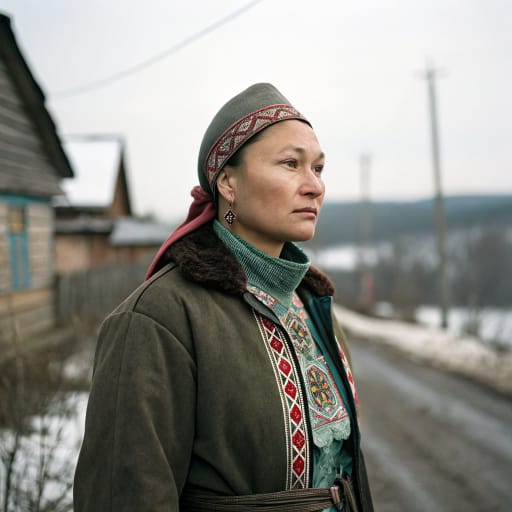
Light to medium skin tones, straight black hair, broad cheekbones and the epicanthic eyefold common across Northeast Asian peoples; stature is generally short to medium. Traditional dress is a side-fastening wrap robe cut in the Amur manner, made of reindeer hide for winter and of tanned fish skin or trade cloth for summer, worn with leggings and soft hide boots.
Make your own Oroks images
Five a day, free, no credits to buy. The studio starts from this group's phenotype data, so you can set body type, pose and style and keep the traits accurate.
Start with Oroks