Help us get this right
Does this portrait look right for Kashgaris?
Nobody has judged this one yet. You would be the first.
Kashgaris Erotic
Kashgar oasis and prefecture at the western edge of the Tarim Basin, Xinjiang, China; descendant communities of 19th-century migrants in the Fergana Valley (Uzbekistan, Kyrgyzstan).
Uyghur, Kashgar variety of the central dialects (Turkic, Karluk branch); Uzbek among Fergana Valley descendants.
Sunni Islam (Hanafi), with strong Naqshbandi Sufi and shrine pilgrimage traditions.
Oasis-based regional group of the Uyghurs, alongside Khotanliks, Turpanliks, the Taranchi of Ili and others; Fergana Valley Kashgarliks were counted separately in Russian and early Soviet records.
About Kashgaris People
Kashgaris are the Uyghurs of the Kashgar oasis, and the name works the way oasis names have long worked in the Tarim Basin. Before Uyghur was revived as a national label in the 1920s and 1930s, the settled Turkic Muslims of the region described themselves by town. A person was Kashgarlik, Khotanlik or Turpanlik, and the differences in accent, dress and temperament those words implied still count for something. Kashgar sits at the far western end of Xinjiang, where the roads around the Taklamakan meet below the Pamirs and the Tian Shan, far closer to Osh and Andijan than to Urumqi. That position made it a market town first, and Kashgaris keep a reputation among other Uyghurs as traders and craftsmen, and for religious conservatism.
The language is Uyghur, a Karluk Turkic language close enough to Uzbek that speakers can largely follow each other. Islam arrived early. The Karakhanid ruler Satuq Bughra Khan converted in the tenth century and is buried at nearby Artush. Two founding works of Turkic letters date to that era: Mahmud al-Kashgari's dictionary of the Turkic dialects, whose author's name means of Kashgar, and Yusuf Khass Hajib's Kutadgu Bilig, completed in Kashgar around 1070. Later the oasis was the stronghold of the White Mountain khojas, Naqshbandi Sufi lords whose feud with the Black Mountain line in Yarkand shaped regional politics for generations. Religion remains Sunni and Hanafi, colored by shrine pilgrimage, and by tradition men dance the sama in the Id Kah Mosque square at the two great festivals, to kettledrums and shawms played from the roof.
The name has a second life across the mountains. Each failed khoja revolt against Qing rule in the nineteenth century, then the fall of Yaqub Beg's Kashgar-based emirate in 1877, pushed refugees and migrant laborers over the passes into the Fergana Valley. Russian officials, and the Soviet census of 1926 after them, counted these settlers as a separate people, the Kashgartsy, distinct from the Taranchi Uyghurs of the Ili region. Most of their descendants around Andijan and Osh were later absorbed into the Uzbek population or reclassified as Uyghurs.
Kashgar prefecture holds several million people, overwhelmingly Uyghur, and the last two decades have been hard on them. Most of the mud-brick old city was demolished and rebuilt after 2009, and since 2017 the region has been at the center of China's campaign of mass detention, surveillance and restrictions on religious practice. Beards, veils and shrine festivals have come under pressure. What persists is the ordinary stuff of oasis life: the Sunday livestock market, tandoor bread, Yengisar knives, coppersmiths, instrument workshops, and a stubborn pride in being from Kashgar.
Related ethnic groups
Groups that share Kashgaris's homeland, region, language, or religious tradition. These are likely candidates for comparative phenotype reference.
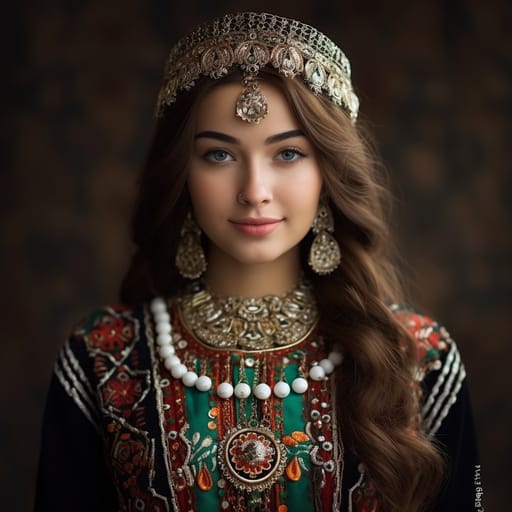
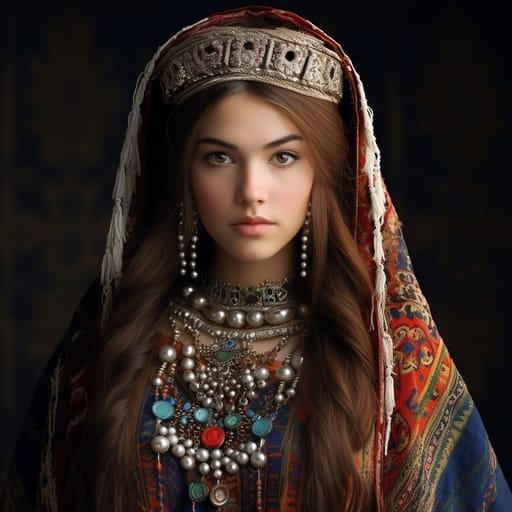
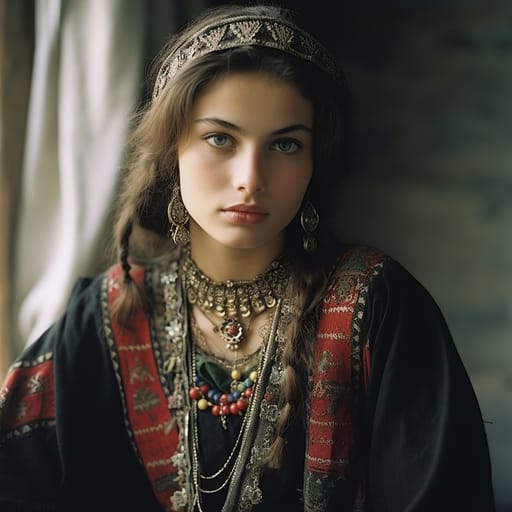
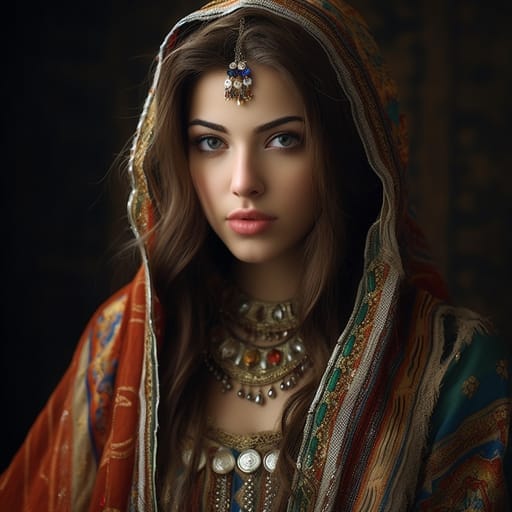
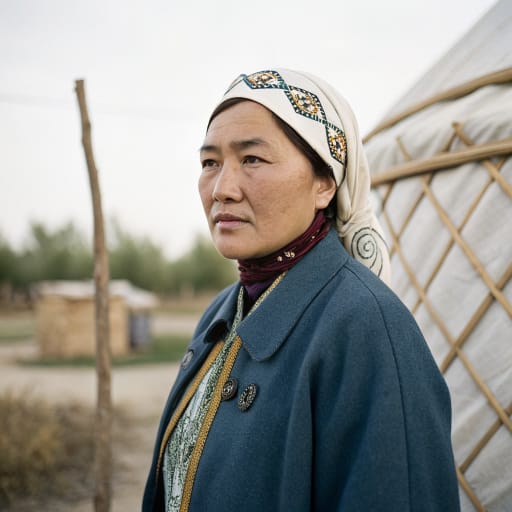
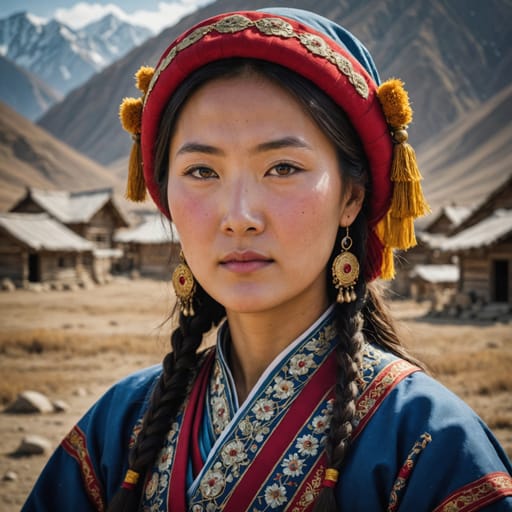
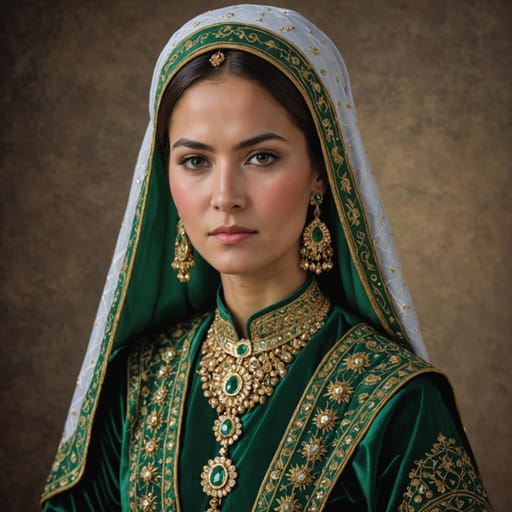
Typical Kashgaris Phenotypes
Reference for AI generation: hair, eyes, skin, facial structure, build
Kashgaris Body & Anatomy Reference
Central Asian Turkic-Mongolic phenotype: anatomy reference for AI nude generation
Kashgaris Boobs & Breasts
Bust reference for Kashgaris women: medium cup, moderate projection, which is typical of Central Asian Turkic-Mongolic ancestry. Areolas measure about 30-42mm across, with medium-brown pigmentation. Body type (mesomorph, broader frame than the East Asian norm) shapes the bust as well, so Kashgaris tits are usually full and modestly projecting. In AI imagery, keep the forward-set shape rather than drifting toward the smaller East Asian bust.
Kashgaris Ass & Hips
The Kashgaris ass is typically medium, moderate projection, broader hip profile than the East Asian norm, which sets it apart from the slim East Asian narrow-hip profile. Underneath, the pelvis shows medium iliac crests, moderate gluteal-femoral fat deposition, part of the Central Asian Turkic-Mongolic skeletal pattern. For Kashgaris butt pics and AI renders, match that silhouette and the overall build (mesomorph, broader frame than the East Asian norm).
Kashgaris Vagina & Pussy
Kashgaris pussy and vulvar anatomy presents medium-brown labial pigmentation, consistent with the Central Asian Turkic-Mongolic phenotype's pigmentation pattern. Kashgaris pubic hair is typically straight-to-wavy medium-coarse texture, in the inverted-triangle pattern. For anatomically accurate Kashgaris pussy renders the labial coloration should match the surrounding tan to light-brown skin tone with a continuous gradient, and the hair should keep its straight-to-wavy medium-coarse texture.
Kashgaris Dicks & Penis
Kashgaris dicks follow the Central Asian Turkic-Mongolic reference data: regional mean ~13cm erect; moderate girth; medium-brown shaft pigmentation. Shaft color should track the tan to light-brown skin tone with a smooth change toward the glans, and Kashgaris pubic hair keeps its straight-to-wavy medium-coarse texture.
Kashgaris Body, Curves & Build
Kashgaris body type and overall build presents as mesomorph, broader frame than the East Asian norm, with mean adult female BMI 23-26: the characteristic Central Asian Turkic-Mongolic habitus. Kashgaris curves and proportions should keep the regional skeletal frame (height, shoulder-to-hip ratio, limb proportions) rather than a generic mesomorph default.
Kashgaris Skin Tone & Hair Texture
Kashgaris skin sits in the tan to light-brown (Fitzpatrick III-IV) band. Hair is typically straight 1A-1B, dark-brown to black, in keeping with the Central Asian Turkic-Mongolic phenotype. In nude renders the skin should stay one even tone from face to body, and body, pubic and head hair should match.
Explore phenotype categories
Structured taxonomy with peer-reviewed scales · 22 anatomical categories
Erotic Poses & Sex Positions
From the pose catalog: 219 named positions with reference skeletons
Frequently asked questions about Kashgaris people
Where is the Kashgaris homeland?
The Kashgaris homeland is Kashgar oasis and prefecture at the western edge of the Tarim Basin, Xinjiang, China; descendant communities of 19th-century migrants in the Fergana Valley (Uzbekistan, Kyrgyzstan). in Central Asia.
What language do Kashgaris people speak?
Kashgaris people primarily speak Uyghur, Kashgar variety of the central dialects (Turkic, Karluk branch); Uzbek among Fergana Valley descendants..
What religion do Kashgaris people practice?
The predominant religion among Kashgaris people is Sunni Islam (Hanafi), with strong Naqshbandi Sufi and shrine pilgrimage traditions..






Make your own Kashgaris images
Five a day, free, no credits to buy. The studio starts from this group's phenotype data, so you can set body type, pose and style and keep the traits accurate.
Start with Kashgaris