No portrait yet
Kangju Erotic
Middle Syr Darya valley and the Tashkent oasis, extending into Sogdiana; present-day Uzbekistan and southern Kazakhstan
Unknown; most likely an Eastern Iranian language close to Sogdian (Indo-European, Iranian), with Turkic and Tocharian also proposed
Unknown; no surviving source describes it
A confederation of a nomadic ruling core and five vassal kingdoms; grouped with the Iranian peoples of the steppe and Sogdiana; possibly ancestral to the Qangli (Kangly) of the Kazakhs
About Kangju People
The Kangju were a historical people, a confederation of mounted nomads and the oasis farmers they ruled along the middle Syr Darya, who appear in the record around the second century BCE and vanish from it by the fifth or sixth century CE, absorbed into the Sogdian city-states and the Turkic khanates that followed. Almost everything known about them comes from Chinese eyes. Zhang Qian, the Han envoy who reached Central Asia around 128 BCE, described a nomadic state on the Jaxartes with customs like those of the Yuezhi, and the Han histories kept watching them for five centuries as a real power on the far northwestern rim of their world. No Kangju account of themselves survives, and the name they used for themselves is unknown.
What the Chinese recorded is a state of a distinct shape: a great king who moved between winter and summer seats, and under him five lesser kings ruling walled oasis towns that scholars still argue about matching to the cities of Sogdiana and Khwarezm. Nomad overlords above settled subjects was the standard pattern of Central Asian empire, and the Kangju worked it early. Their reach ran northwest to the Yancai on the Aral steppe and south into Sogdiana, and their cavalry mattered enough that in 36 BCE an unauthorized Han army marched from the Tarim basin to kill the Xiongnu chanyu Zhizhi, who had taken refuge with a Kangju king and married into his family. Han officials found them insolent. One memorial complained that the Kangju seated the Protector General's officers below the envoys of Wusun and served them only after the king and his nobles had finished eating.
Archaeology is filling in what the texts leave out. The Kaunchi culture of the Tashkent oasis, with its fortified settlements and kurgans, and the Otrar sites along the Syr Darya in southern Kazakhstan are generally read as Kangju. The Kultobe inscriptions found near the city of Turkistan, cut in an archaic Sogdian script, are the nearest thing to a Kangju voice and point to an Eastern Iranian language close to Sogdian, though Turkic and Tocharian identities have also been argued. The legacy is mostly a matter of names. Later Chinese histories called Samarkand simply Kang and described it as the successor of Kangju, and Sogdian immigrants to China took Kang as a surname that persists today. The Qangli of the medieval Kipchak steppe, now a tribe within the Kazakh Senior Zhuz, have long been proposed as their heirs, a claim that stays plausible but unproven.
Related ethnic groups
Groups that share Kangju's homeland, region, language, or religious tradition. These are likely candidates for comparative phenotype reference.
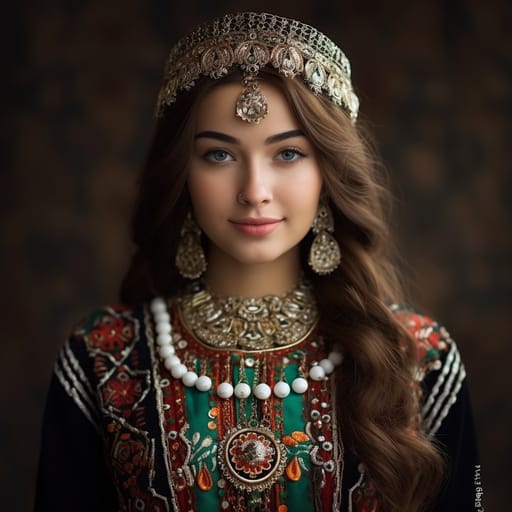
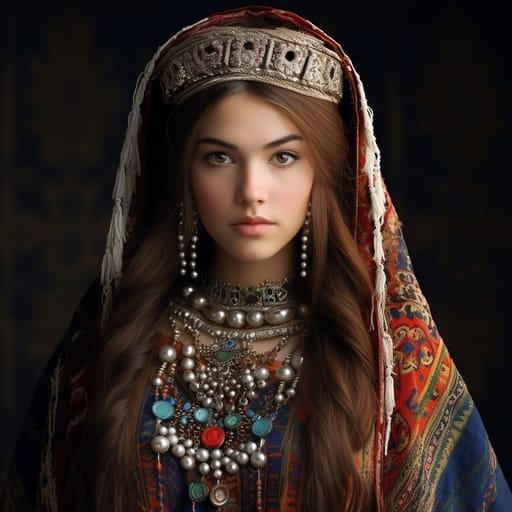
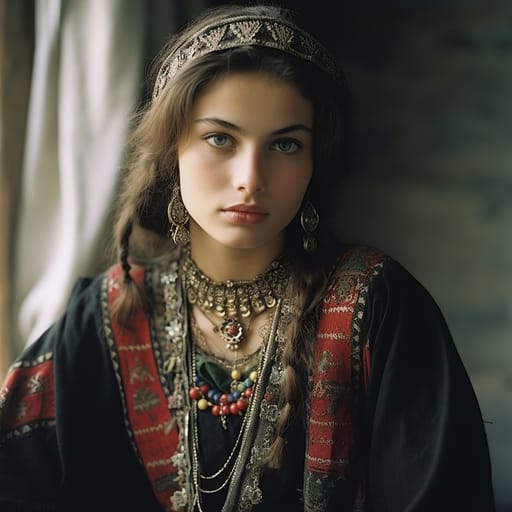
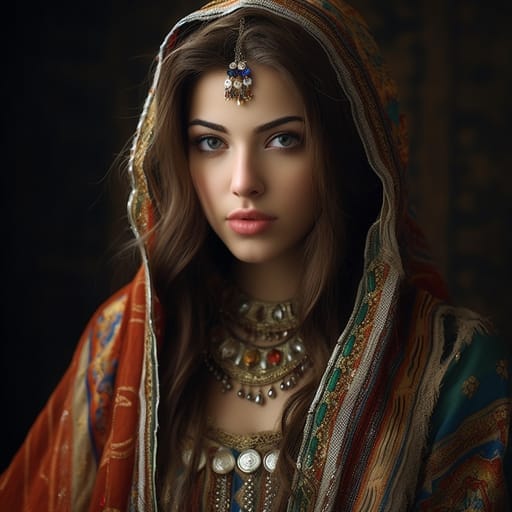
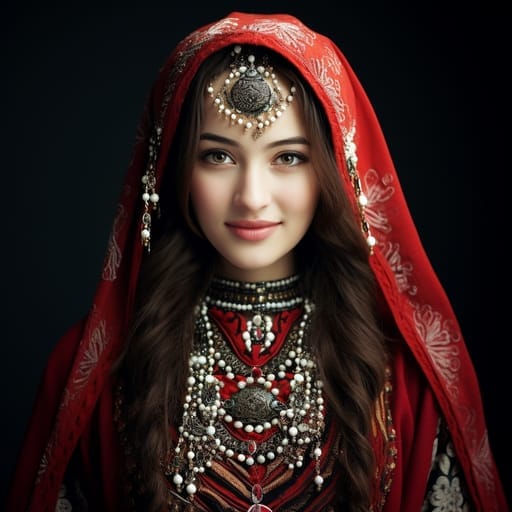
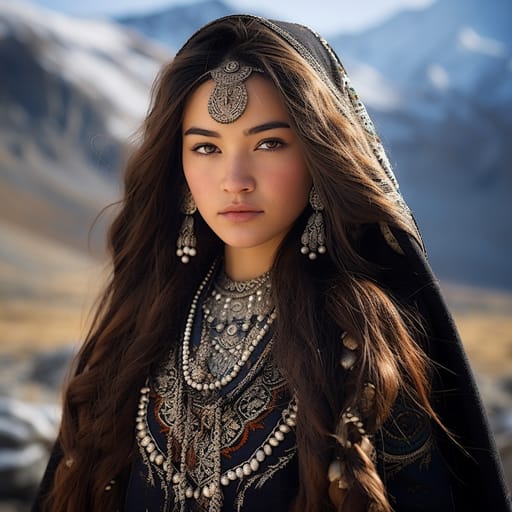
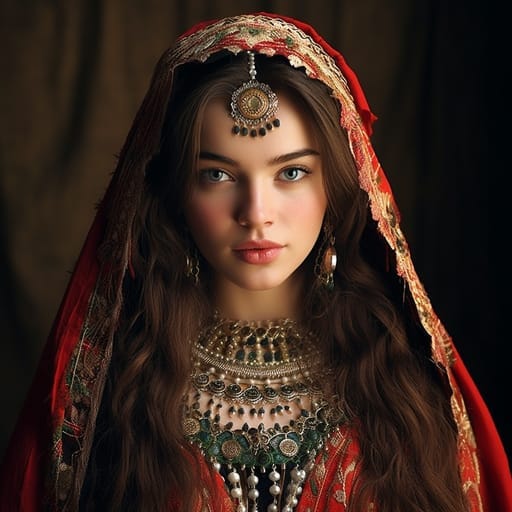
Typical Kangju Phenotypes
Reference for AI generation: hair, eyes, skin, facial structure, build
Explore phenotype categories
Structured taxonomy with peer-reviewed scales · 22 anatomical categories
Erotic Poses & Sex Positions
From the pose catalog: 219 named positions with reference skeletons
Frequently asked questions about Kangju people
Where is the Kangju homeland?
The Kangju homeland is Middle Syr Darya valley and the Tashkent oasis, extending into Sogdiana; present-day Uzbekistan and southern Kazakhstan in Central Asia.
What language do Kangju people speak?
Kangju people primarily speak Unknown; most likely an Eastern Iranian language close to Sogdian (Indo-European, Iranian), with Turkic and Tocharian also proposed.
What religion do Kangju people practice?
The predominant religion among Kangju people is Unknown; no surviving source describes it.






Make your own Kangju images
Five a day, free, no credits to buy. The studio starts from this group's phenotype data, so you can set body type, pose and style and keep the traits accurate.
Start with Kangju