No portrait yet
Karluks Erotic
Originally the Black Irtysh and Tarbagatai country west of the Altai (eastern Kazakhstan and northern Xinjiang, China); from the 8th century Zhetysu, the Chu and Talas valleys, and the western Tian Shan (southeastern Kazakhstan, Kyrgyzstan), later reachin
Old Turkic, then Karakhanid Turkic (Turkic, Common Turkic; ancestor of the Karluk branch that includes Uzbek and Uyghur)
Steppe sky-god religion (Tengrism) and shamanism until the 10th century; Sunni Islam from the mid-10th century under the Karakhanids
The Üch Qarluq (Three Karluks) confederacy; closely tied to the Chigil and Yaghma; core of the Karakhanid Khanate; a Qarluq tribal name survives among Uzbeks and in northern Afghanistan
About Karluks People
The Karluks were a Turkic tribal confederacy of the early medieval steppe, recorded between the fifth and eighth centuries in the country along the Black Irtysh and the Tarbagatai range west of the Altai, and they did not so much disappear as dissolve into the Karakhanid state and, through it, into the ancestry of today's Uzbeks and Uyghurs. Chinese annalists wrote them down as Geluolu. The Orkhon inscriptions call them the Üch Qarluq, the Three Karluks, which tells you the confederacy was three tribes under one leadership rather than a single people with a single origin. For most of their early history they answered to the Türk khagans, until they joined the Uyghurs and Basmyl in the revolt of 742 that finished off the Second Turkic Khaganate. The alliance did not hold. Pushed out of the Mongolian steppe by their former Uyghur partners, the Karluks moved southwest into Zhetysu, the Seven Rivers country of what is now southeastern Kazakhstan and Kyrgyzstan, and in 766 took Suyab, the old Türgesh capital in the Chu valley.
Their one moment in world history that most readers have met is the battle of Talas in 751, where a Karluk contingent attached to the Tang army is reported to have turned on it mid-battle and handed the field to the Abbasids. Treachery or realignment, the result helped settle that Transoxiana would face west toward Islam rather than east toward China, and the Karluks put themselves in position to benefit. Their ruler carried the title yabghu, a rank deliberately below khagan, and only after the Uyghur collapse of 840, in the usual reconstruction, did a Karluk leadership claim the higher title. Out of that claim came the Karakhanids, in which Karluk, Chigil, and Yaghma tribes were welded into a state whose khan, Satuq Bughra, accepted Islam in the mid-tenth century. Arabic chroniclers record two hundred thousand tents of Turks converting in 960, and by 999 this first Muslim Turkic dynasty of Central Asia had taken Bukhara from the Samanids. Before Islam the Karluks kept the sky-god religion of the steppe. After it, their language became a literary one. The Kutadgu Bilig and the great Turkic dictionary of Mahmud al-Kashgari, who counted the Karluks among the nomadic Turkmen and set them apart from the Oghuz, were written in Karakhanid Turkic, and the branch of the family that includes Uzbek and Uyghur still bears the Karluk name. The tribal name outlived the state too. Karluks fought beside the Kara Khitai at Qatwan in 1141, submitted to Genghis Khan in 1211, and small groups calling themselves Qarluq persist in Uzbek clan lists and in the valleys of northern Afghanistan.
Related ethnic groups
Groups that share Karluks's homeland, region, language, or religious tradition. These are likely candidates for comparative phenotype reference.
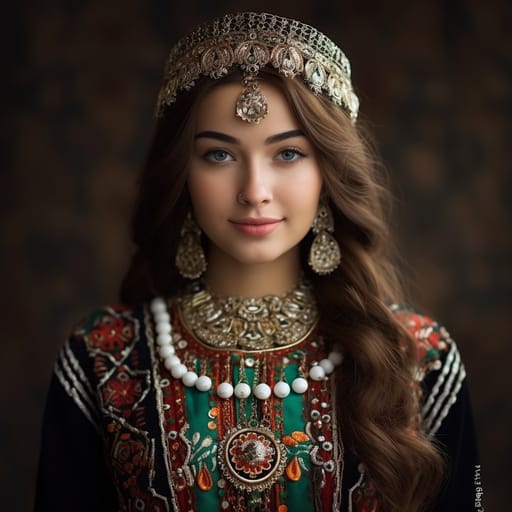
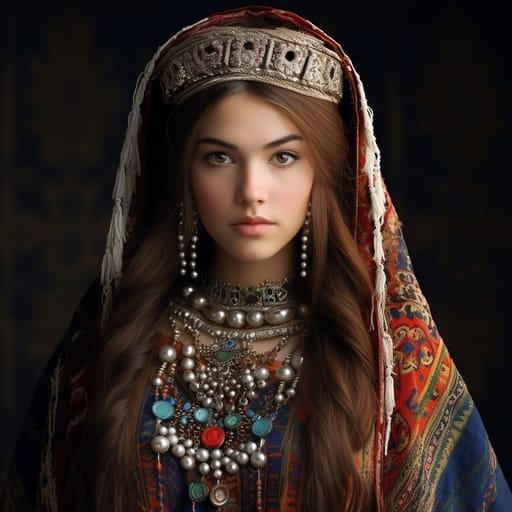
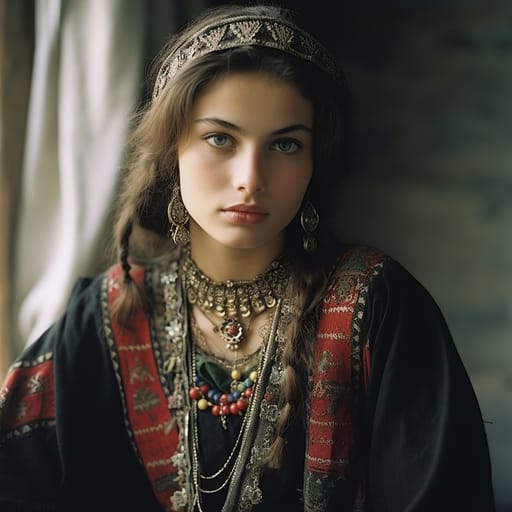
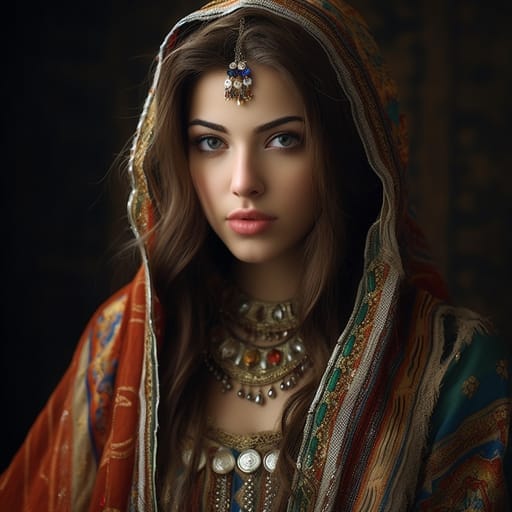
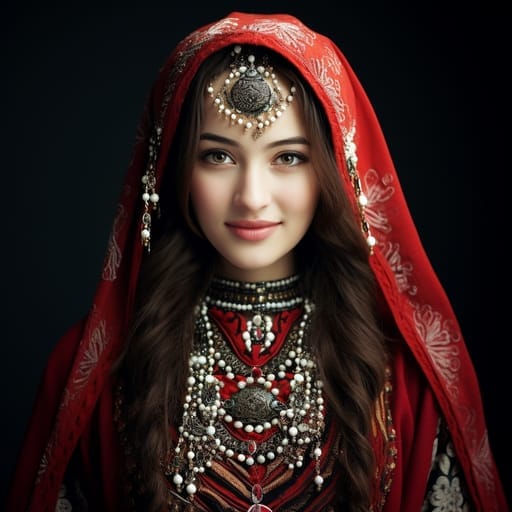
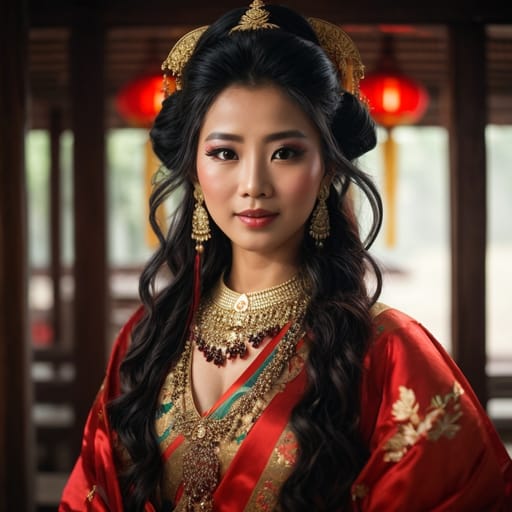
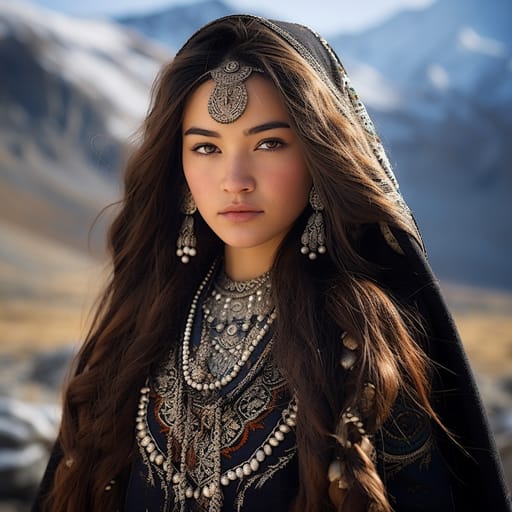
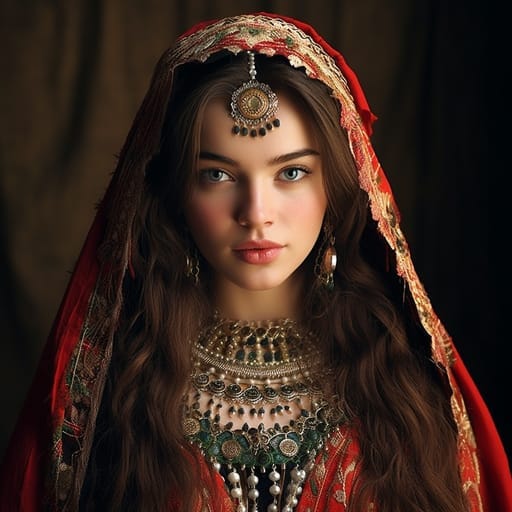
Typical Karluks Phenotypes
Reference for AI generation: hair, eyes, skin, facial structure, build
Karluks Body & Anatomy Reference
Anatomy by feature, Central Asian Turkic-Mongolic phenotype
Karluks Boobs & Breasts
Bust reference for Karluks women: medium cup, moderate projection, which is typical of Central Asian Turkic-Mongolic ancestry. Areolas measure about 30-42mm across, with medium-brown pigmentation. Body type (mesomorph, broader frame than the East Asian norm) shapes the bust as well, so Karluks tits are usually full and modestly projecting. In AI imagery, keep the forward-set shape rather than drifting toward the smaller East Asian bust.
Karluks Ass & Hips
The Karluks ass is typically medium, moderate projection, broader hip profile than the East Asian norm, which sets it apart from the slim East Asian narrow-hip profile. Underneath, the pelvis shows medium iliac crests, moderate gluteal-femoral fat deposition, part of the Central Asian Turkic-Mongolic skeletal pattern. For Karluks butt pics and AI renders, match that silhouette and the overall build (mesomorph, broader frame than the East Asian norm).
Karluks Vagina & Pussy
Karluks pussy and vulvar anatomy presents medium-brown labial pigmentation, consistent with the Central Asian Turkic-Mongolic phenotype's pigmentation pattern. Karluks pubic hair is typically straight-to-wavy medium-coarse texture, in the inverted-triangle pattern. For anatomically accurate Karluks pussy renders the labial coloration should match the surrounding tan to light-brown skin tone with a continuous gradient, and the hair should keep its straight-to-wavy medium-coarse texture.
Karluks Dicks & Penis
Karluks dicks follow the Central Asian Turkic-Mongolic reference data: regional mean ~13cm erect; moderate girth; medium-brown shaft pigmentation. Shaft color should track the tan to light-brown skin tone with a smooth change toward the glans, and Karluks pubic hair keeps its straight-to-wavy medium-coarse texture.
Karluks Body, Curves & Build
Karluks body type and overall build presents as mesomorph, broader frame than the East Asian norm, with mean adult female BMI 23-26: the characteristic Central Asian Turkic-Mongolic habitus. Karluks curves and proportions should keep the regional skeletal frame (height, shoulder-to-hip ratio, limb proportions) rather than a generic mesomorph default.
Karluks Skin Tone & Hair Texture
Karluks skin sits in the tan to light-brown (Fitzpatrick III-IV) band. Hair is typically straight 1A-1B, dark-brown to black, in keeping with the Central Asian Turkic-Mongolic phenotype. In nude renders the skin should stay one even tone from face to body, and body, pubic and head hair should match.
Explore phenotype categories
Structured taxonomy with peer-reviewed scales · 22 anatomical categories
Erotic Poses & Sex Positions
From the pose catalog: 219 named positions with reference skeletons
Frequently asked questions about Karluks people
Where is the Karluks homeland?
The Karluks homeland is Originally the Black Irtysh and Tarbagatai country west of the Altai (eastern Kazakhstan and northern Xinjiang, China); from the 8th century Zhetysu, the Chu and Talas valleys, and the western Tian Shan (southeastern Kazakhstan, Kyrgyzstan), later reachin in Central Asia.
What language do Karluks people speak?
Karluks people primarily speak Old Turkic, then Karakhanid Turkic (Turkic, Common Turkic; ancestor of the Karluk branch that includes Uzbek and Uyghur).
What religion do Karluks people practice?
The predominant religion among Karluks people is Steppe sky-god religion (Tengrism) and shamanism until the 10th century; Sunni Islam from the mid-10th century under the Karakhanids.






Make your own Karluks images
Five a day, free, no credits to buy. The studio starts from this group's phenotype data, so you can set body type, pose and style and keep the traits accurate.
Start with Karluks