Help us get this right
Does this portrait look right for Kalbelia?
Nobody has judged this one yet. You would be the first.
Kalbelia Erotic
Rajasthan, India, concentrated in the Pali, Ajmer, Chittorgarh and Udaipur districts, with communities in Haryana, Punjab, Gujarat and Madhya Pradesh.
Marwari and other Rajasthani varieties, with Hindi as the outside language (Indo-Aryan, Indo-European)
Hindu, with Nath and Shaiva devotion and reverence for snakes
Linked to the wider Nath and Jogi sapera communities; usually recorded as divided into Daliwal and Mewara.
About Kalbelia People
You hear the Kalbelia before you place them: the low, unbroken drone of the been, a gourd pipe played with circular breathing so the note never stops, the sound most of India still attaches to a cobra rising out of a basket. That was the work for generations. Families camped at the edge of Rajasthani villages in temporary settlements called deras, took snakes out of fields and grain stores, kept and showed them for a season, then released them. The snakes came with a sideline in herbal cures and a working knowledge of what to do about a bite. The community traces itself to Kanipav, a disciple of Guru Gorakhnath who, in its own telling, drank the poison his teacher had set aside and was expelled for it. That story does real work: it makes life outside the village a founding condition rather than an accident, and it places the Kalbelia at the edge of the Nath yogi tradition rather than inside it.
Their ground is western and southern Rajasthan, thickest around Pali, Ajmer, Chittorgarh and Udaipur, with families now settled or half settled in Haryana, Punjab, Gujarat and Madhya Pradesh. At home they speak Marwari and neighboring Rajasthani varieties, Indo-Aryan like nearly everything around them, and Hindi outside. They are Hindu, with the emphasis you would expect: Shiva, Bhairav, the goddess in her local forms, and the cobra treated with something closer to kinship than symbolism. Ethnographic accounts record two divisions, Daliwal and Mewara, though the more consequential line now runs between the families with land and schooling and the many with neither.
The break came by statute. The Wildlife Protection Act of 1972 made keeping cobras illegal, and enforcement over the following decades took the livelihood away without offering a replacement. What remained was the music. Kalbelia women dance to the been and the khanjari in a wide black skirt worked with mirrors and silver ribbon, the body loosening as the turns tighten and the tempo climbs; the movement reads as serpentine because it is meant to. The songs are largely improvised, verses built in performance and carried orally, and girls learn by standing at the edge of the circle until they are pulled into it. UNESCO listed Kalbelia folk songs and dances in 2010, and the dancer Gulabo Sapera, who carried the form from camp grounds to stages abroad, is why most people outside India have seen it at all. It has not been an even trade. The dance supports a fraction of the households the snakes once did, and the rest live on construction work, farm labor and the tourist circuits at Pushkar and Jaisalmer.
Related ethnic groups
Groups that share Kalbelia's homeland, region, language, or religious tradition. These are likely candidates for comparative phenotype reference.
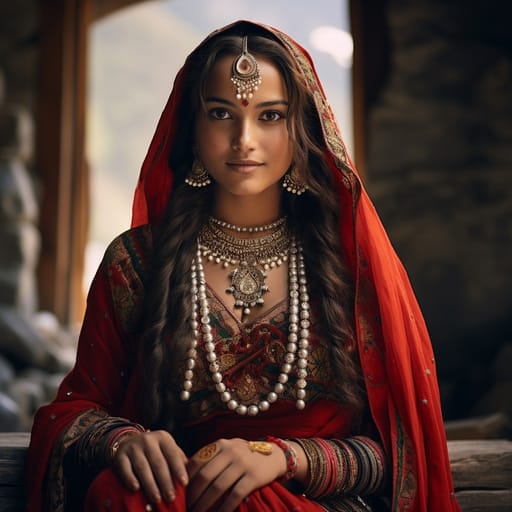
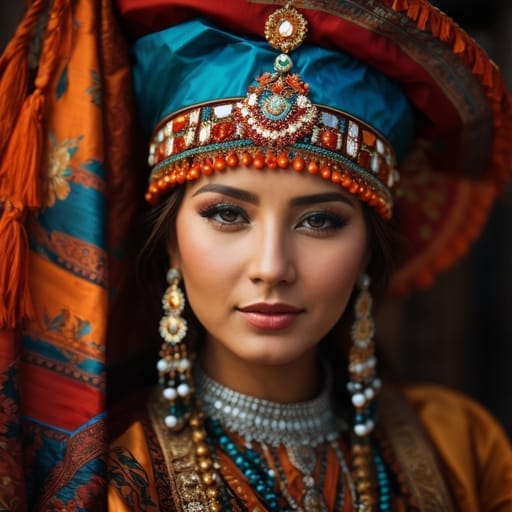
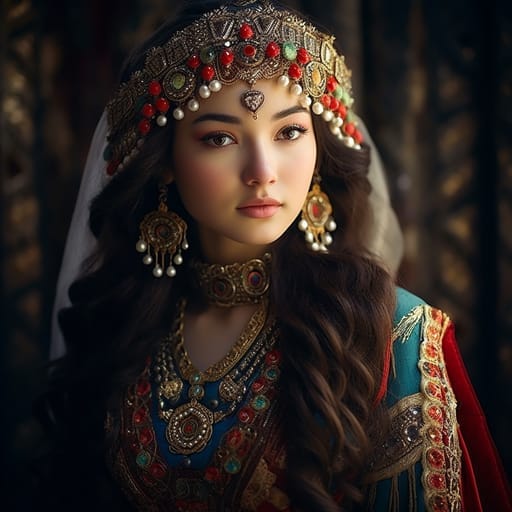
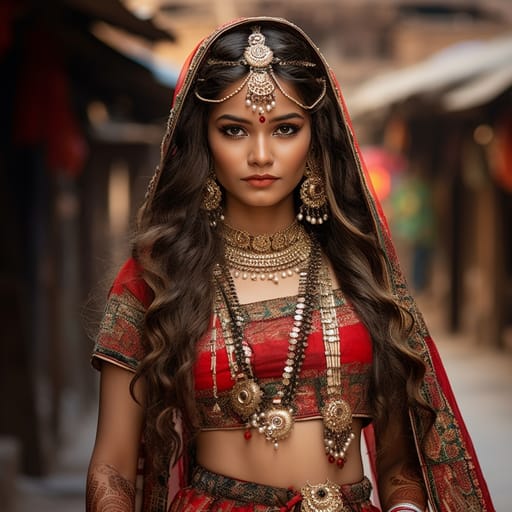
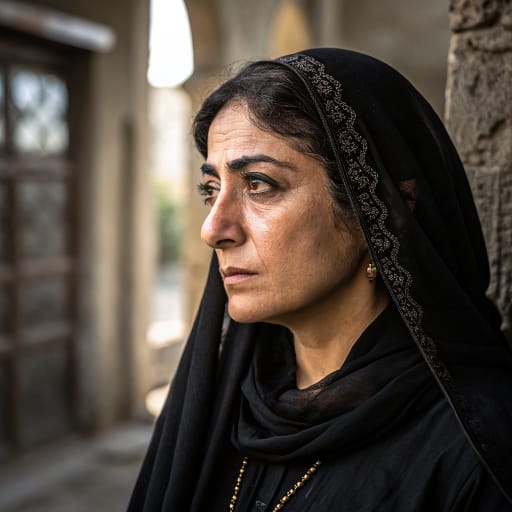
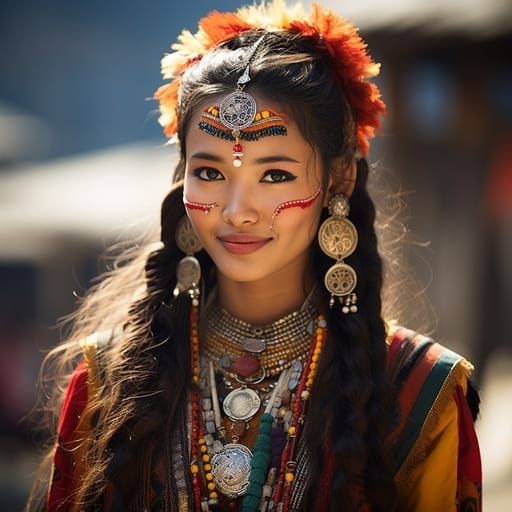
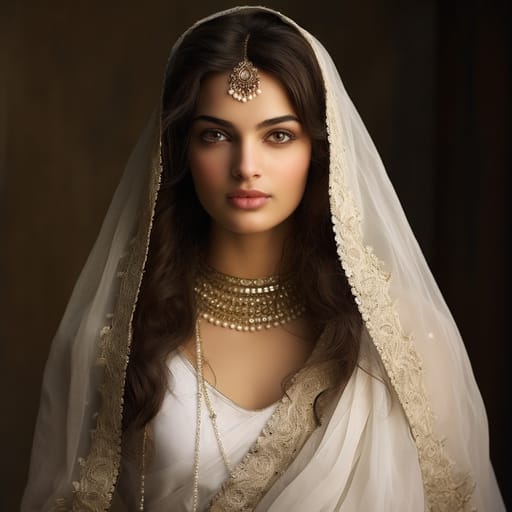
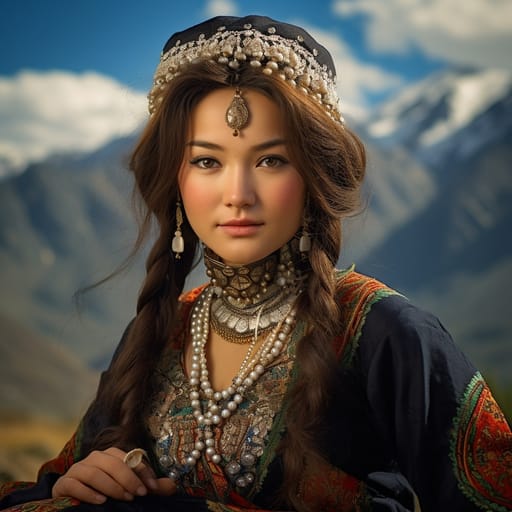
Typical Kalbelia Phenotypes
Reference for AI generation: hair, eyes, skin, facial structure, build
Kalbelia Body & Anatomy Reference
Per-feature anatomical profile for AI nude generation: Indo-Aryan / Dravidian South Asian phenotype
Kalbelia Boobs & Breasts
Bust reference for Kalbelia women: medium-to-large cup, moderate-to-full projection, which is typical of Indo-Aryan / Dravidian South Asian ancestry. Areolas measure about 32-46mm across, with medium-brown to dark-brown pigmentation. Body type (endomorph-to-mesomorph with fuller hip deposition) shapes the bust as well, so Kalbelia tits are usually full and soft, generally fuller than the East Asian norm. In AI imagery, keep the forward-set shape rather than drifting toward the smaller East Asian bust profile.
Kalbelia Ass & Hips
The Kalbelia ass is typically medium-to-full, moderate-to-high projection, classic curvy hip profile, which sets it apart from the slim hip profile of East Asian women. Underneath, the pelvis shows medium-to-wide iliac crests, full gluteal-femoral fat distribution, part of the Indo-Aryan / Dravidian South Asian skeletal pattern. For Kalbelia butt pics and AI renders, match that silhouette and the overall build (endomorph-to-mesomorph with fuller hip deposition).
Kalbelia Vagina & Pussy
Kalbelia pussy and vulvar anatomy presents medium-brown to dark-brown labial pigmentation, fuller labia minora projection, consistent with the Indo-Aryan / Dravidian South Asian phenotype's pigmentation pattern. Kalbelia pubic hair is typically straight-to-wavy coarse texture, dense distribution, in the inverted-triangle pattern. For anatomically accurate Kalbelia pussy renders the labial coloration should match the surrounding wheatish to brown skin tone with a continuous gradient, and the hair should keep its straight-to-wavy coarse texture.
Kalbelia Dicks & Penis
Kalbelia dicks follow the Indo-Aryan / Dravidian South Asian reference data: regional mean ~13cm erect; moderate girth; medium-brown shaft pigmentation. Shaft color should track the wheatish to brown skin tone with a smooth change toward the glans, and Kalbelia pubic hair keeps its straight-to-wavy coarse texture.
Kalbelia Body, Curves & Build
Kalbelia body type and overall build presents as endomorph-to-mesomorph with fuller hip deposition, with mean adult female BMI 22-25: the characteristic Indo-Aryan / Dravidian South Asian habitus. Kalbelia curves and proportions should keep the regional skeletal frame (height, shoulder-to-hip ratio, limb proportions) rather than a generic mesomorph default.
Kalbelia Skin Tone & Hair Texture
Kalbelia skin sits in the wheatish to brown (Fitzpatrick III-V) band. Hair is typically straight-to-wavy 1A-2B, dense, dark-brown to black, in keeping with the Indo-Aryan / Dravidian South Asian phenotype. In nude renders the skin should stay one even tone from face to body, and body, pubic and head hair should match.
Explore phenotype categories
Structured taxonomy with peer-reviewed scales · 22 anatomical categories
Erotic Poses & Sex Positions
From the pose catalog: 219 named positions with reference skeletons
Frequently asked questions about Kalbelia people
Where is the Kalbelia homeland?
The Kalbelia homeland is Rajasthan, India, concentrated in the Pali, Ajmer, Chittorgarh and Udaipur districts, with communities in Haryana, Punjab, Gujarat and Madhya Pradesh. in Southern Asia.
What language do Kalbelia people speak?
Kalbelia people primarily speak Marwari and other Rajasthani varieties, with Hindi as the outside language (Indo-Aryan, Indo-European).
What religion do Kalbelia people practice?
The predominant religion among Kalbelia people is Hindu, with Nath and Shaiva devotion and reverence for snakes.






Make your own Kalbelia images
Five a day, free, no credits to buy. The studio starts from this group's phenotype data, so you can set body type, pose and style and keep the traits accurate.
Start with Kalbelia