No portrait yet
Kalaallit Erotic
Greenland (Kalaallit Nunaat), an autonomous territory of the Kingdom of Denmark, with a large community in Denmark itself.
Kalaallisut, or West Greenlandic (Inuit branch of the Inuit-Yupik-Unangan family), with Tunumiisut in the east and Inuktun in the northwest; Danish widely spoken as a second language.
Lutheran Christianity, through the Church of Greenland, layered over an older Inuit cosmology that survives in story, drum song and place name.
Kalaallit proper of West Greenland, alongside the Tunumiit of the east coast and the Inughuit of the far northwest; part of the wider Inuit world reaching across Canada, Alaska and Chukotka.
About Kalaallit People
The Kalaallit are the only Inuit people who form the clear majority of a country, and they name the country after themselves: Kalaallit Nunaat, the land of the Kalaallit, which the rest of the world calls Greenland. Some fifty thousand live there, nearly all on a thin ribbon of ice-free coast, in towns and settlements with no roads between them, connected by boat, helicopter and snowmobile. Several thousand more live in Denmark. Their ancestors were Thule hunters who moved east out of Arctic Canada around the thirteenth century with dog sleds, skin boats and the toggling harpoon, and who absorbed or displaced the earlier Dorset population that Greenlandic tradition remembers as the Tuniit. Strictly speaking, Kalaallit means the West Greenlanders, the people of Nuuk and Sisimiut and Ilulissat; the Tunumiit of the east coast and the Inughuit of the far northwest keep their own dialects, their own histories and their own reasons for not being folded into the label. Living is still substantially off the water. Cold-water shrimp and halibut pay the bills nationally, while seal, narwhal and seabird remain household food, which is why European campaigns against the seal trade landed here as an economic injury rather than a moral argument.
Kalaallisut belongs to the Inuit branch of the Inuit-Yupik-Unangan family, close kin to Inuktitut and a distant relative of the Yupik languages, and it is polysynthetic: one long word does the work of an English sentence. It is the sole official language of the country, used in parliament, in schools and in a genuinely large pop and rock catalog, which almost no other Arctic language can claim. Religion has been Lutheran since Hans Egede landed in 1721, though the older cosmology of Sassuma Arnaa, the woman beneath the sea who withholds the animals when people behave badly, never fully went quiet. Two customs are worth knowing. The first is the kaffemik: an open house for a birthday, a confirmation or a first catch, where the door stays unlocked and guests arrive, eat cake, and leave to make room for the next ones. The second is naming. A child is often given the name of someone recently dead, and the name carries something of that person forward, which makes a Greenlandic name a piece of continuity rather than a label. The political arc is recent and unfinished: county status in 1953, home rule in 1979, self-government in 2009, and an ongoing reckoning with what the colonial administration did in between, including the contraceptive coil campaign imposed on Greenlandic women and girls in the 1960s and 1970s.
Related ethnic groups
Groups that share Kalaallit's homeland, region, language, or religious tradition. These are likely candidates for comparative phenotype reference.
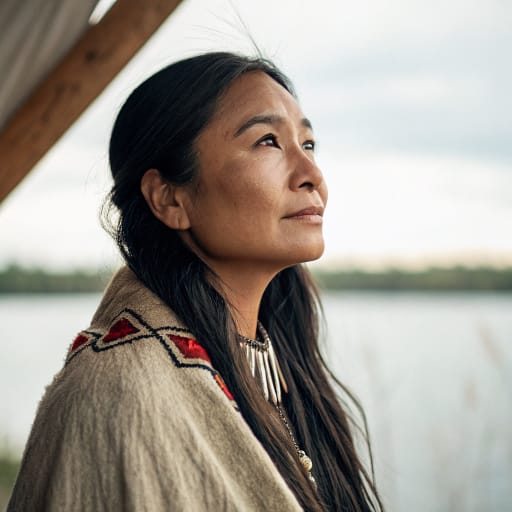
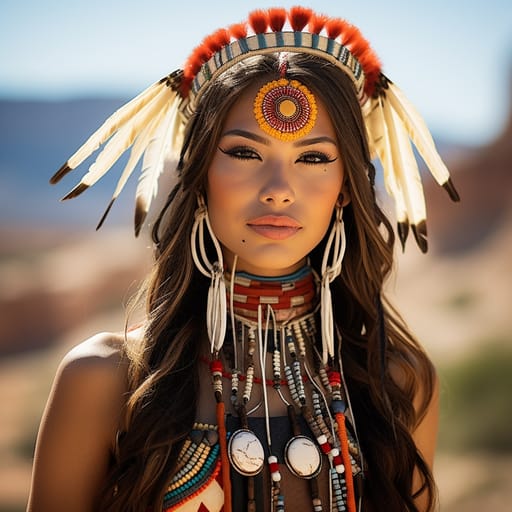
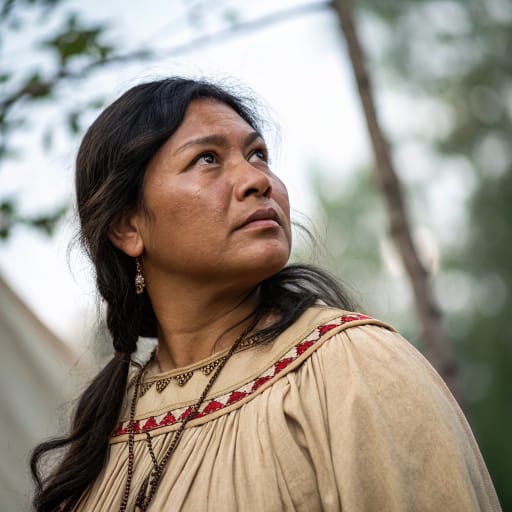
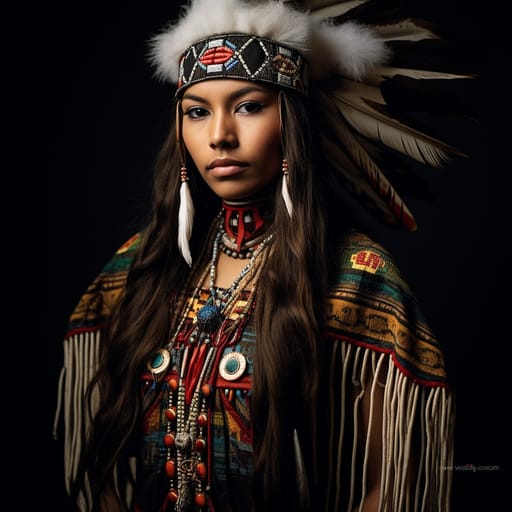
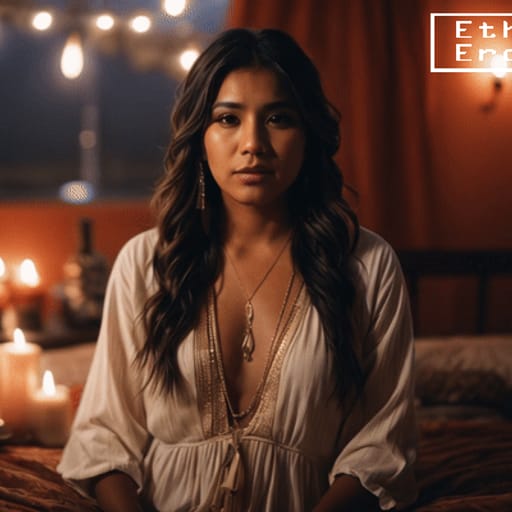
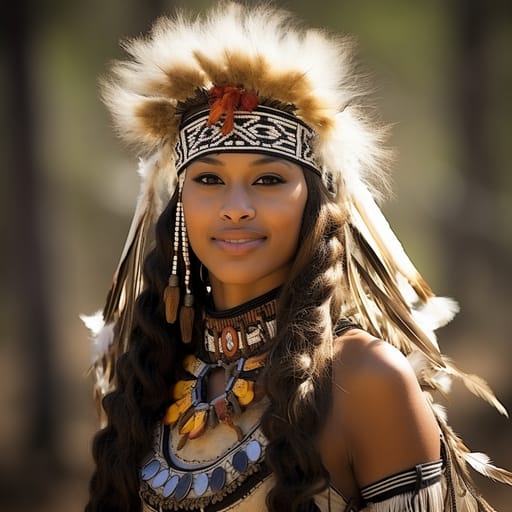
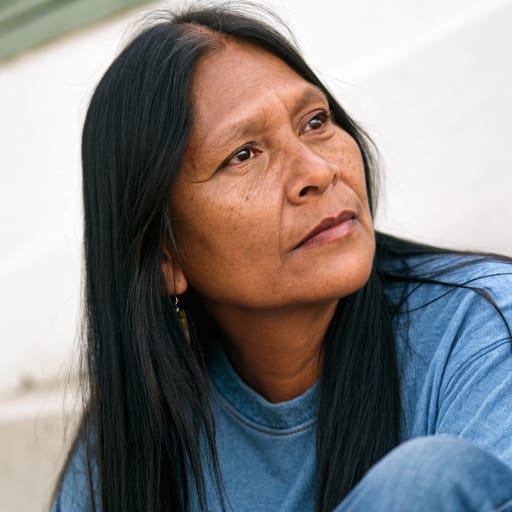
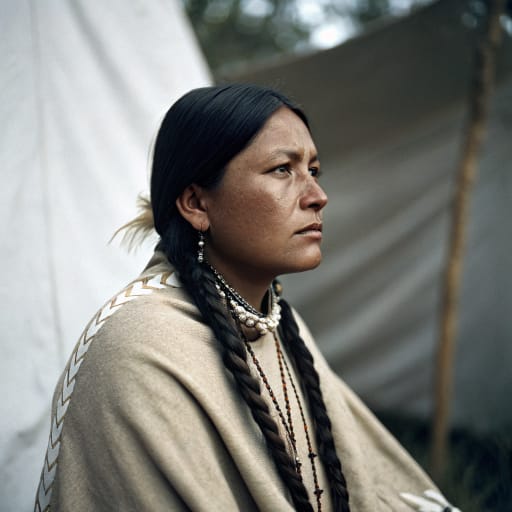
Typical Kalaallit Phenotypes
Reference for AI generation: hair, eyes, skin, facial structure, build
Kalaallit Body & Anatomy Reference
Anatomy by feature, Indigenous Northern American / Algonquian-Iroquoian phenotype
Kalaallit Boobs & Breasts
Bust reference for Kalaallit women: medium cup, moderate projection, which is typical of Indigenous Northern American / Algonquian-Iroquoian ancestry. Areolas measure about 30-44mm across, with medium-brown pigmentation. Body type (mesomorph, broader frame in northern Indigenous populations) shapes the bust as well, so Kalaallit tits are usually full and moderate projection. In AI imagery, keep the forward-set shape rather than drifting toward the smaller East Asian bust.
Kalaallit Ass & Hips
The Kalaallit ass is typically medium, moderate-to-full projection, which sets it apart from the slim East Asian narrow-hip profile. Underneath, the pelvis shows medium iliac crests, part of the Indigenous Northern American / Algonquian-Iroquoian skeletal pattern. For Kalaallit butt pics and AI renders, match that silhouette and the overall build (mesomorph, broader frame in northern Indigenous populations).
Kalaallit Vagina & Pussy
Kalaallit pussy and vulvar anatomy presents medium-brown labial pigmentation, consistent with the Indigenous Northern American / Algonquian-Iroquoian phenotype's pigmentation pattern. Kalaallit pubic hair is typically straight medium-coarse texture, in the inverted-triangle pattern. For anatomically accurate Kalaallit pussy renders the labial coloration should match the surrounding copper to medium-brown skin tone with a continuous gradient, and the hair should keep its straight medium-coarse texture.
Kalaallit Dicks & Penis
Kalaallit dicks follow the Indigenous Northern American / Algonquian-Iroquoian reference data: regional mean ~13cm erect; moderate girth; medium-brown shaft pigmentation. Shaft color should track the copper to medium-brown skin tone with a smooth change toward the glans, and Kalaallit pubic hair keeps its straight medium-coarse texture.
Kalaallit Body, Curves & Build
Kalaallit body type and overall build presents as mesomorph, broader frame in northern Indigenous populations, with mean adult female BMI 25-28: the characteristic Indigenous Northern American / Algonquian-Iroquoian habitus. Kalaallit curves and proportions should keep the regional skeletal frame (height, shoulder-to-hip ratio, limb proportions) rather than a generic mesomorph default.
Kalaallit Skin Tone & Hair Texture
Kalaallit skin sits in the copper to medium-brown (Fitzpatrick III-V) band. Hair is typically straight 1A, dark-brown to black, often thick and dense, in keeping with the Indigenous Northern American / Algonquian-Iroquoian phenotype. In nude renders the skin should stay one even tone from face to body, and body, pubic and head hair should match.
Explore phenotype categories
Structured taxonomy with peer-reviewed scales · 22 anatomical categories
Erotic Poses & Sex Positions
From the pose catalog: 219 named positions with reference skeletons
Frequently asked questions about Kalaallit people
Where is the Kalaallit homeland?
The Kalaallit homeland is Greenland (Kalaallit Nunaat), an autonomous territory of the Kingdom of Denmark, with a large community in Denmark itself. in North America.
What language do Kalaallit people speak?
Kalaallit people primarily speak Kalaallisut, or West Greenlandic (Inuit branch of the Inuit-Yupik-Unangan family), with Tunumiisut in the east and Inuktun in the northwest; Danish widely spoken as a second language..
What religion do Kalaallit people practice?
The predominant religion among Kalaallit people is Lutheran Christianity, through the Church of Greenland, layered over an older Inuit cosmology that survives in story, drum song and place name..






Make your own Kalaallit images
Five a day, free, no credits to buy. The studio starts from this group's phenotype data, so you can set body type, pose and style and keep the traits accurate.
Start with Kalaallit