Help us get this right
Does this portrait look right for Jidwaq?
Nobody has judged this one yet. You would be the first.
Jidwaq Erotic
Fafan Zone of Ethiopia's Somali Region, centered on the city of Jijiga
Somali (Cushitic, Afroasiatic)
Sunni Islam
A clan of the Absame branch of the Darod clan family; its lineages include the Bartire
About Jidwaq People
Ask a Somali from the plains around Jijiga who they are, and the answer often comes as a recited chain of fathers rather than a place name. The Jidwaq are one of those chains: a clan that traces its descent through the Absame branch of the Darod, one of the major Somali clan families. Membership passes through the male line and lives in memory rather than on paper. Still, knowing where you sit in the genealogy decides whose elders speak for you and who shares the bill when a dispute turns costly.
Their heartland is the Fafan Zone of Ethiopia's Somali Region, with Jijiga, the regional capital, at its center. This is open country where herding and farming overlap. Families keep camels, cattle, sheep and goats, and many also plant sorghum and maize when the rains come. Jijiga has grown into a busy trading town on the road to Hargeisa and the port of Berbera beyond. Plenty of Jidwaq households now keep a foot in both worlds, with livestock on the range and relatives running shops in town.
They speak Somali, a Cushitic language of the Afroasiatic family. That puts them in one speech community with Somalis in Somalia, Djibouti and Kenya, while Oromo, a related Cushitic language, is spoken just to the west. Sunni Islam shapes the ordinary day: prayer times, the Ramadan fast, Quranic lessons for children, and weddings and settlements that bring religious men and clan elders to the same gathering. Conflicts are still commonly handled through xeer, Somali customary law, under which compensation is negotiated between lineages rather than left to individuals.
History has pressed hard on this ground. Ethiopian expansion from Harar in the late nineteenth century brought the Jijiga plains under imperial rule, and boundary treaties with the colonial powers cut across Somali grazing land. The Ogaden War of 1977 and 1978 was fought over the same terrain, and Jijiga changed hands before Ethiopian forces retook it. When Ethiopia's federal system created the Somali Region in the 1990s, Jijiga became its capital, putting the Jidwaq homeland at the center of regional politics.
Among the clan's lineages, the Bartire have a special place in local memory through Garaad Wiil Waal, a ruler of the Jijiga area whose riddles and tests of wit still circulate as folktales told to Somali children.
Related ethnic groups
Groups that share Jidwaq's homeland, region, language, or religious tradition. These are likely candidates for comparative phenotype reference.
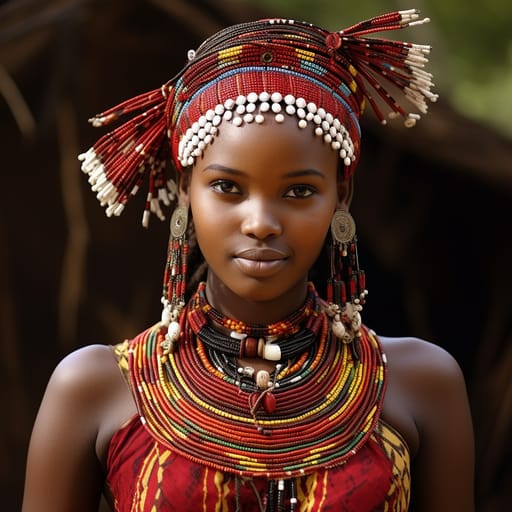
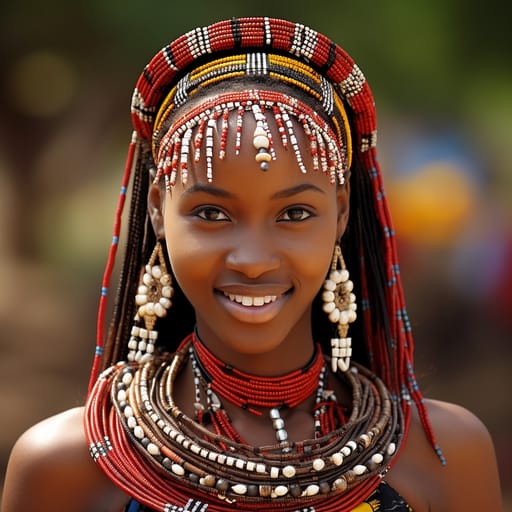
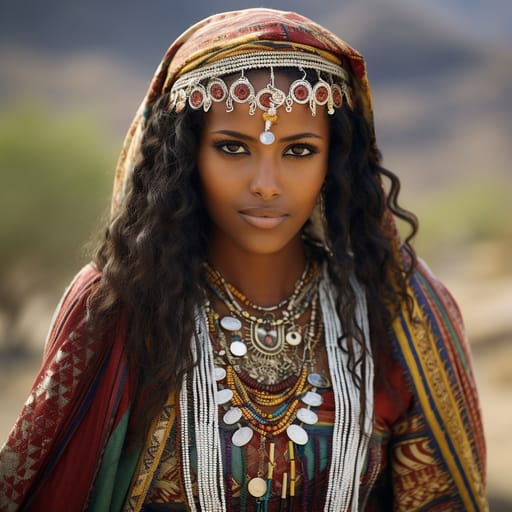
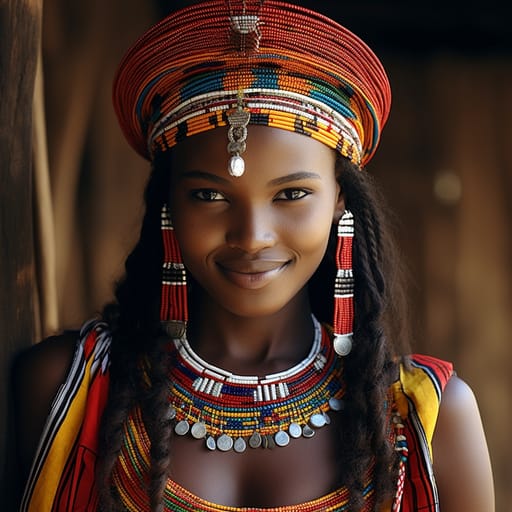
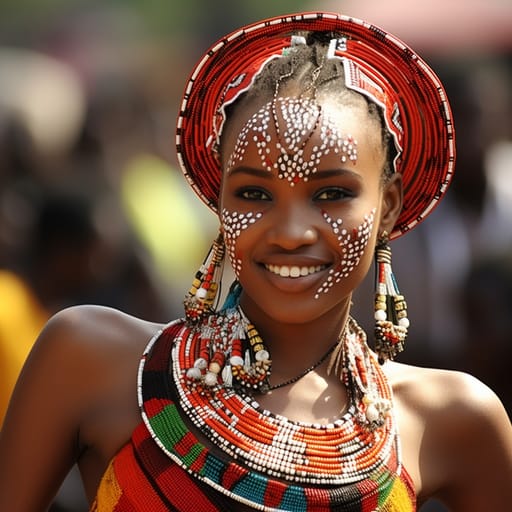
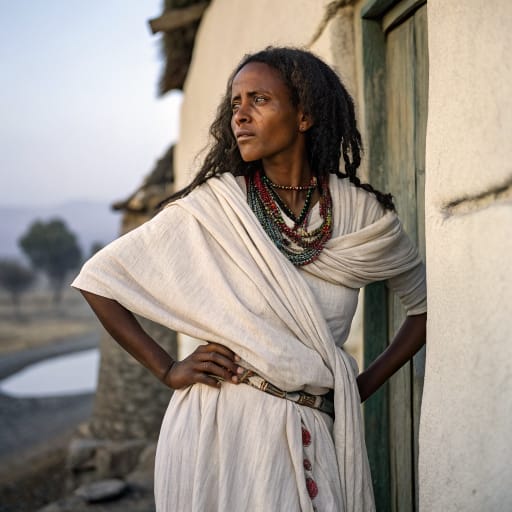
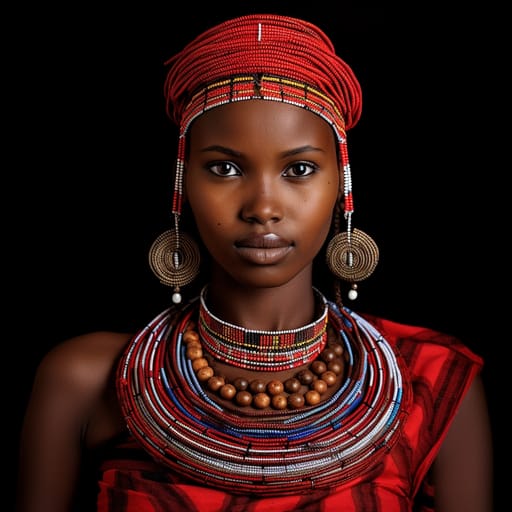
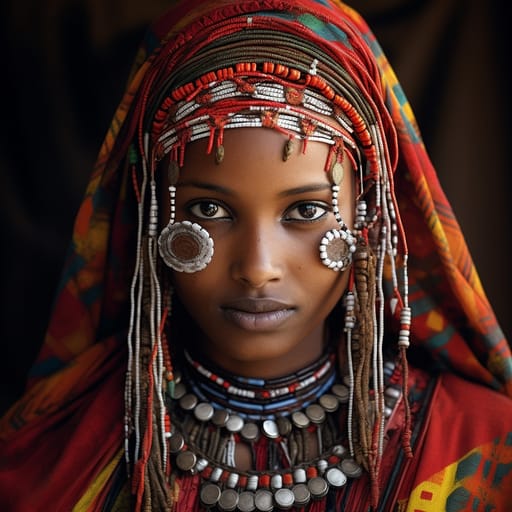
Typical Jidwaq Phenotypes
Reference for AI generation: hair, eyes, skin, facial structure, build
Jidwaq Body & Anatomy Reference
Anatomy by feature, Cushitic / Nilo-Cushitic East African phenotype
Jidwaq Boobs & Breasts
Jidwaq tits and boobs run small-to-medium-cup, high-set, conical, the classic Cushitic / Nilo-Cushitic East African bust profile. Jidwaq nipples and areolas show moderate-to-high areolar pigmentation against the brown-to-deep-brown skin tone, with areolar diameter typically in the 28-38mm range and forward-set positioning rather than the lateral spread of the West African phenotype. Jidwaq breasts trend firmer and less projecting than the African-American or West African norm, a function of the lean ectomorph-to-mesomorph body habitus and the mean adult female BMI 19-22. For anatomically accurate AI-generated Jidwaq nudes the render preserves the small-to-medium-cup, high-set, conical shape, 28-38mm areolas with moderate-to-high pigmentation, and the torso proportions of the Cushitic / Nilo-Cushitic East African phenotype.
Jidwaq Ass & Hips
Jidwaq hips and butt usually read as small-to-medium, high-set, rounded. The skeletal base is narrow-to-medium iliac crests, longer torso-to-leg ratio, the Cushitic / Nilo-Cushitic East African pattern. Set against the wide-set heavy-projection West African or African-American norm, the difference is easy to see, and the hip-to-waist ratio is often what identifies Jidwaq women in photos.
Jidwaq Vagina & Pussy
Expect brown-to-deep-brown labial pigmentation, narrow-to-medium labia minora projection on Jidwaq women, in keeping with Cushitic / Nilo-Cushitic East African ancestry. The pubic hair is tightly-coiled coarse texture, densely distributed. Coloring should run evenly from the brown to deep brown skin of the thighs to the labia, and Jidwaq nude imagery should keep the hair's tightly-coiled coarse texture.
Jidwaq Dicks & Penis
Jidwaq dick and penile anatomy in adult AI generation should anchor on the regional reference data: regional mean ~13.5cm erect, moderate girth, ~12cm circumference, and deeper-pigmented than the West African norm. The Jidwaq cock profile reflects the Cushitic / Nilo-Cushitic East African population's anthropometric measurements. The shaft pigmentation should track the surrounding brown to deep brown skin tone, and the pubic hair should keep its tightly-coiled coarse texture in the typical inverted-V escutcheon.
Jidwaq Body, Curves & Build
Jidwaq body type: lean ectomorph-to-mesomorph, with mean adult female BMI 19-22. This is the typical Cushitic / Nilo-Cushitic East African build. Height range, shoulder-to-hip ratio and fat distribution all follow from it, which is what an accurate Jidwaq nude body should show.
Jidwaq Skin Tone & Hair Texture
Jidwaq skin tone falls in the brown to deep brown (Fitzpatrick V-VI) band, the surface signal most often miscalibrated by generic AI nude generators. Jidwaq hair texture is typically tight 4A-4C coil, often worn natural or in braided/twisted protective styles, characteristic of the Cushitic / Nilo-Cushitic East African phenotype. In Jidwaq nude renders the skin should hold that band consistently across the body.
Explore phenotype categories
Structured taxonomy with peer-reviewed scales · 22 anatomical categories
Erotic Poses & Sex Positions
From the pose catalog: 219 named positions with reference skeletons
Frequently asked questions about Jidwaq people
Where is the Jidwaq homeland?
The Jidwaq homeland is Fafan Zone of Ethiopia's Somali Region, centered on the city of Jijiga in Eastern Africa.
What language do Jidwaq people speak?
Jidwaq people primarily speak Somali (Cushitic, Afroasiatic).
What religion do Jidwaq people practice?
The predominant religion among Jidwaq people is Sunni Islam.






Make your own Jidwaq images
Five a day, free, no credits to buy. The studio starts from this group's phenotype data, so you can set body type, pose and style and keep the traits accurate.
Start with Jidwaq