Help us get this right
Does this portrait look right for Jemez?
Nobody has judged this one yet. You would be the first.
Jemez Erotic
Walatowa (Jemez Pueblo) on the Jemez River in Sandoval County, New Mexico, United States, northwest of Albuquerque
Towa, also called Jemez (Kiowa-Tanoan), kept unwritten by tribal policy; English, some Spanish
Traditional Pueblo religion practiced alongside Roman Catholicism
Pueblo peoples; the only surviving Towa-speaking pueblo, incorporating the descendants of Pecos Pueblo since 1838; Squash and Turquoise kiva groups
About Jemez People
The Jemez are the people of Walatowa, a single village on the Jemez River in the red-rock canyon country of Sandoval County, New Mexico, about fifty miles northwest of Albuquerque. What marks them out among the nineteen New Mexico pueblos is their language. Towa belongs to the Kiowa-Tanoan family, cousin to the Tiwa of Taos and the Tewa of the Rio Grande valley and, more distantly, to Kiowa on the southern Plains, and the Jemez are the only community left that speaks it. They have kept it that way on purpose. By tribal policy the language is never written down, so there is no dictionary and no orthography, and children learn it the way it has always been learned, by ear and at home. A large share of the tribe still speaks it, which makes it one of the healthier Pueblo languages.
Their ancestors came into the Jemez Mountains from the north in the late 1200s and built stone villages on the mesa tops, several of them among the largest in the Southwest. The Spanish arrived in 1541, and by the 1620s Franciscans had raised the San José mission at Giusewa, whose ruins sit beside the hot springs at Jemez Springs. The Jemez fought in the Pueblo Revolt of 1680, retreated to the mesas when the Spanish came back, and in 1694 lost a bloody fight at Astialakwa on Guadalupe Mesa. Many families scattered to Navajo and Hopi country afterward, and the Navajo Coyote Pass clan still traces its descent from those refugees. The survivors gathered in the valley at Walatowa, where they remain. In 1838 the last handful of people from Pecos Pueblo, the only other Towa-speaking town, walked west and were taken in. Congress merged the two tribes in 1936, and every August 2 the Jemez still hold the Pecos feast, complete with a costumed bull chased through the village.
Religion is layered in the usual Pueblo way. The Catholic feast of San Diego on November 12 fills the same plaza where the Squash and Turquoise kiva groups dance, and much of the ceremonial calendar is closed to outsiders. Redondo Peak and the Valles Caldera above the village are sacred ground, and the tribe led the 1999 reburial at Pecos of nearly two thousand ancestors returned from Harvard's Peabody Museum. The Jemez are also known across the Southwest for distance running. The village has produced generations of mountain runners, including Steve Gachupin, who won the Pikes Peak Marathon six years running in the late 1960s.
Related ethnic groups
Groups that share Jemez's homeland, region, language, or religious tradition. These are likely candidates for comparative phenotype reference.
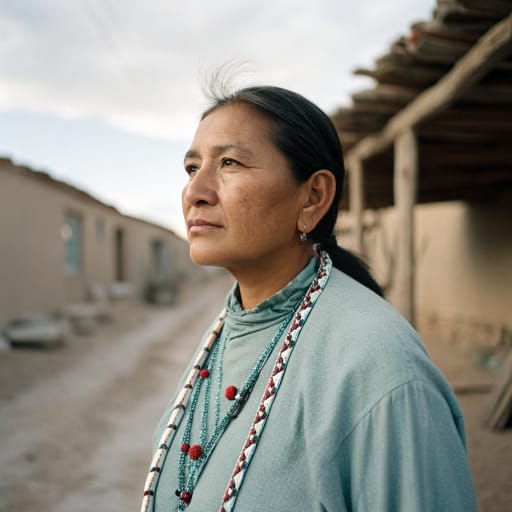
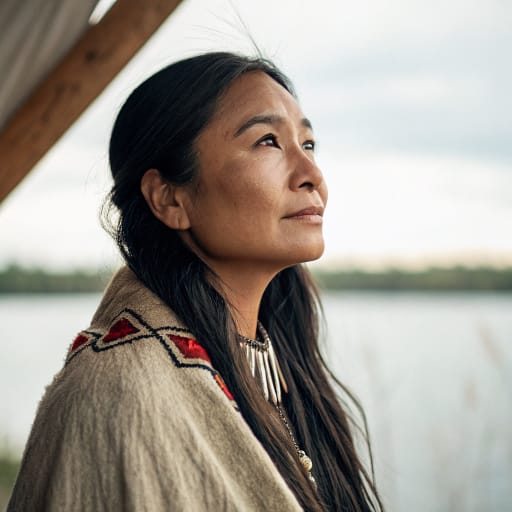
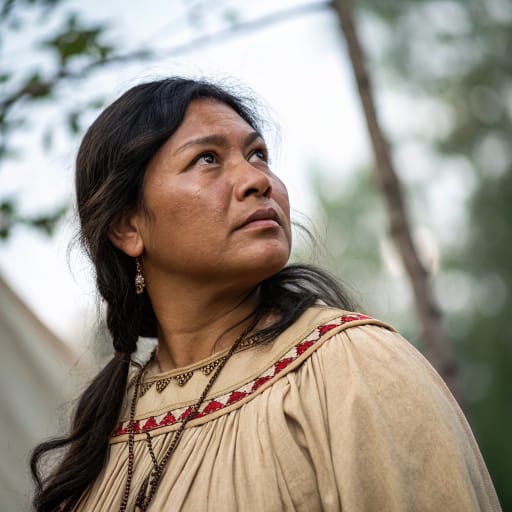
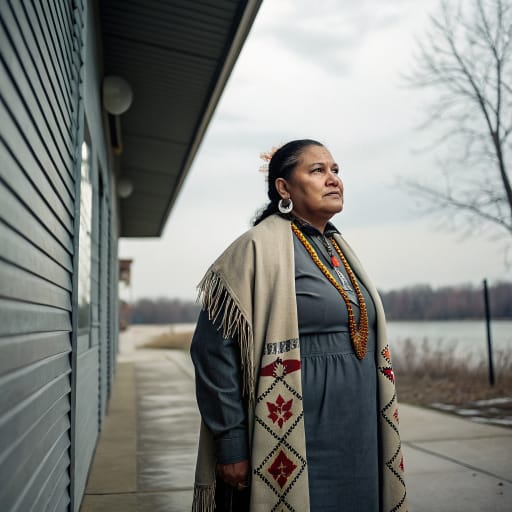
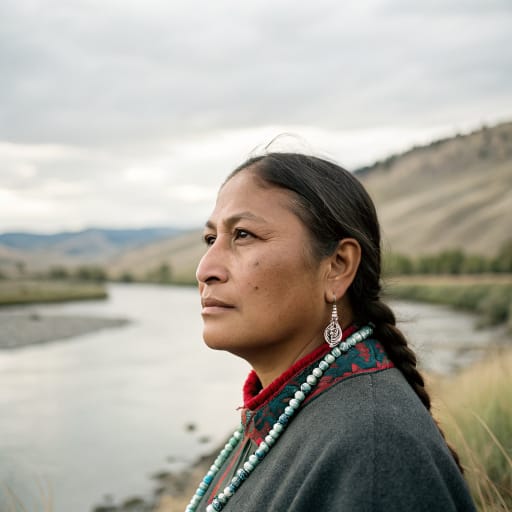
Typical Jemez Phenotypes
Reference for AI generation: hair, eyes, skin, facial structure, build
Jemez Body & Anatomy Reference
Indigenous Northern American / Algonquian-Iroquoian phenotype: anatomy reference for AI nude generation
Jemez Boobs & Breasts
Bust reference for Jemez women: medium cup, moderate projection, which is typical of Indigenous Northern American / Algonquian-Iroquoian ancestry. Areolas measure about 30-44mm across, with medium-brown pigmentation. Body type (mesomorph, broader frame in northern Indigenous populations) shapes the bust as well, so Jemez tits are usually full and moderate projection. In AI imagery, keep the forward-set shape rather than drifting toward the smaller East Asian bust.
Jemez Ass & Hips
The Jemez ass is typically medium, moderate-to-full projection, which sets it apart from the slim East Asian narrow-hip profile. Underneath, the pelvis shows medium iliac crests, part of the Indigenous Northern American / Algonquian-Iroquoian skeletal pattern. For Jemez butt pics and AI renders, match that silhouette and the overall build (mesomorph, broader frame in northern Indigenous populations).
Jemez Vagina & Pussy
Jemez pussy and vulvar anatomy presents medium-brown labial pigmentation, consistent with the Indigenous Northern American / Algonquian-Iroquoian phenotype's pigmentation pattern. Jemez pubic hair is typically straight medium-coarse texture, in the inverted-triangle pattern. For anatomically accurate Jemez pussy renders the labial coloration should match the surrounding copper to medium-brown skin tone with a continuous gradient, and the hair should keep its straight medium-coarse texture.
Jemez Dicks & Penis
Jemez dicks follow the Indigenous Northern American / Algonquian-Iroquoian reference data: regional mean ~13cm erect; moderate girth; medium-brown shaft pigmentation. Shaft color should track the copper to medium-brown skin tone with a smooth change toward the glans, and Jemez pubic hair keeps its straight medium-coarse texture.
Jemez Body, Curves & Build
Jemez body type and overall build presents as mesomorph, broader frame in northern Indigenous populations, with mean adult female BMI 25-28: the characteristic Indigenous Northern American / Algonquian-Iroquoian habitus. Jemez curves and proportions should keep the regional skeletal frame (height, shoulder-to-hip ratio, limb proportions) rather than a generic mesomorph default.
Jemez Skin Tone & Hair Texture
Jemez skin sits in the copper to medium-brown (Fitzpatrick III-V) band. Hair is typically straight 1A, dark-brown to black, often thick and dense, in keeping with the Indigenous Northern American / Algonquian-Iroquoian phenotype. In nude renders the skin should stay one even tone from face to body, and body, pubic and head hair should match.
Explore phenotype categories
Structured taxonomy with peer-reviewed scales · 22 anatomical categories
Erotic Poses & Sex Positions
From the pose catalog: 219 named positions with reference skeletons
Frequently asked questions about Jemez people
Where is the Jemez homeland?
The Jemez homeland is Walatowa (Jemez Pueblo) on the Jemez River in Sandoval County, New Mexico, United States, northwest of Albuquerque in North America.
What language do Jemez people speak?
Jemez people primarily speak Towa, also called Jemez (Kiowa-Tanoan), kept unwritten by tribal policy; English, some Spanish.
What religion do Jemez people practice?
The predominant religion among Jemez people is Traditional Pueblo religion practiced alongside Roman Catholicism.






Make your own Jemez images
Five a day, free, no credits to buy. The studio starts from this group's phenotype data, so you can set body type, pose and style and keep the traits accurate.
Start with Jemez