Help us get this right
Does this portrait look right for Iznassen?
Nobody has judged this one yet. You would be the first.
Iznassen Erotic
The Beni Snassen mountains and the neighboring Triffa and Angad plains of northeastern Morocco, around Berkane, near the Algerian border
Beni Iznassen Berber (Afroasiatic, Berber, Zenati); Moroccan Arabic, eastern dialect (Afroasiatic, Semitic)
Sunni Islam of the Maliki school, with the Moroccan practice of honoring local saints and shrines
Zenata Amazigh confederation made up of four main fractions: Beni Khaled, Beni Mengouch, Beni Atig and Beni Ourimech
About Iznassen People
The Iznassen, known in most French and English sources as the Beni Snassen, take their identity from a block of mountains: the limestone massif that rises between the Moulouya River and the Algerian border in northeastern Morocco. Their villages sit in the valleys and on the slopes of that high ground. The Triffa plain opens to the north toward the Mediterranean, and the Angad plain lies to the south around Oujda. The mountain is still what defines who belongs. Within the confederation, four fractions have long marked the main divisions: Beni Khaled, Beni Mengouch, Beni Atig and Beni Ourimech.
They are Amazigh, traditionally counted among the Zenata. Their own speech belongs to the Zenati branch of Berber and is close to the Tarifit spoken across the Moulouya in the Rif, so the two are often treated as neighbors on one continuum. Moroccan Arabic, in the eastern dialect shared with Oujda, has long been the language of the markets and the plains. The Berber of the mountains has been losing ground to Arabic for generations, fastest in the towns, and in many households it is now the older generation that keeps it.
Religion is Sunni Islam of the Maliki school, practiced the Moroccan way: prayer, Ramadan and the great feasts, alongside respect for local saints and their shrines. In the twentieth century, irrigation from the Moulouya turned the Triffa plain into orchard country. Berkane, the main town, is now known across Morocco for its clementines.
The massif entered colonial history early. In late 1907, more than four years before the protectorate of 1912, French columns under Hubert Lyautey advanced from Algeria after raids and clashes along the frontier. That made the Beni Snassen one of the first Moroccan confederations brought under French control. The frontier has shaped the region ever since, through cross-border trade, smuggling, and a land border with Algeria that has stayed closed since 1994.
The custom most outsiders recognize is the reggada, a dance rooted among the Beni Snassen and the wider Oujda country. Men dressed in white move in tight lines, shoulders snapping to drums and reed flutes, sometimes with rifles raised overhead. It began as a celebration of fighting men and is now the standard sound of weddings across eastern Morocco and in its emigrant communities. Up in the hills, the Pigeon Cave at Taforalt has yielded shell beads roughly 82,000 years old, among the oldest ornaments found anywhere. People have been making a home in these mountains for a very long time.
Related ethnic groups
Groups that share Iznassen's homeland, region, language, or religious tradition. These are likely candidates for comparative phenotype reference.
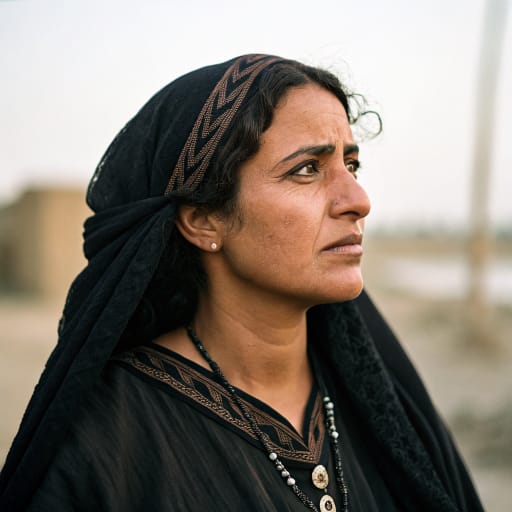
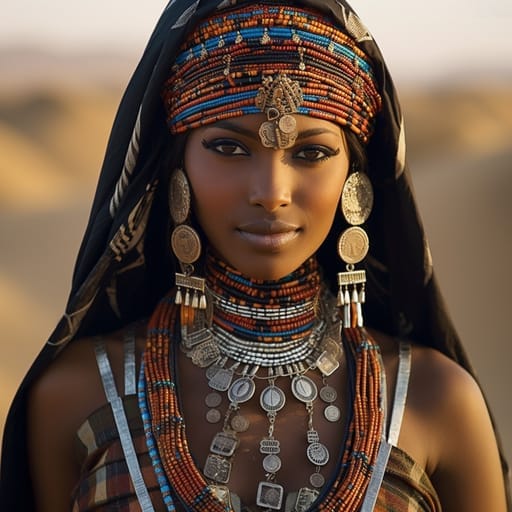
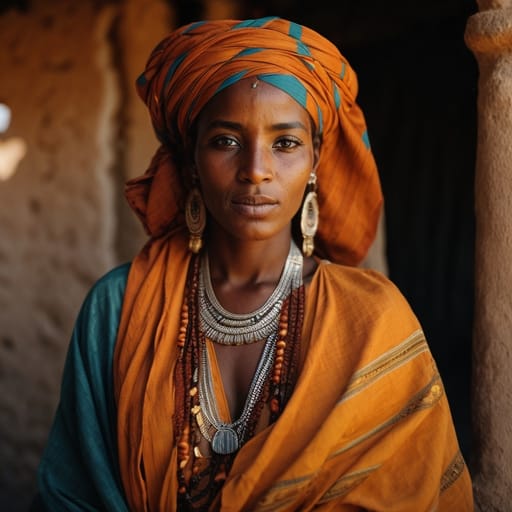
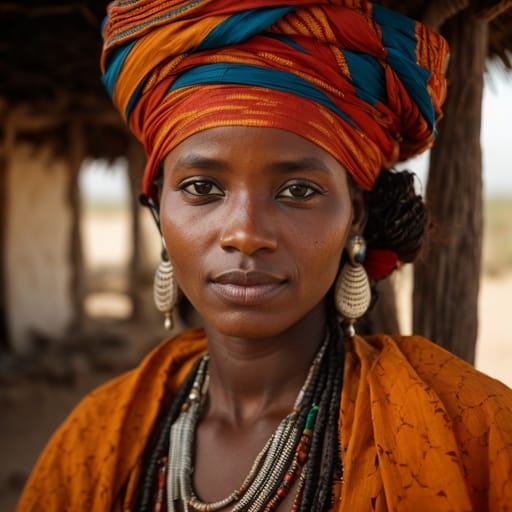
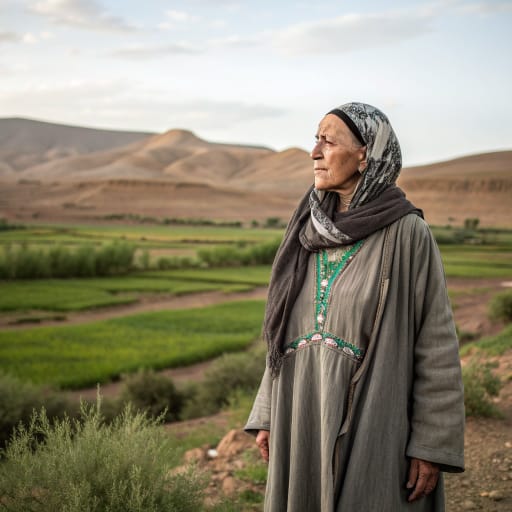
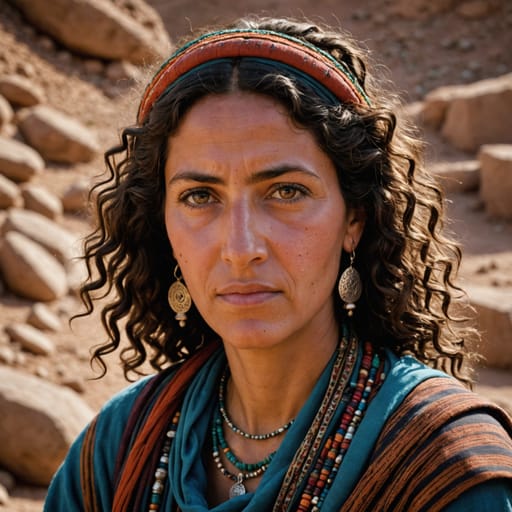
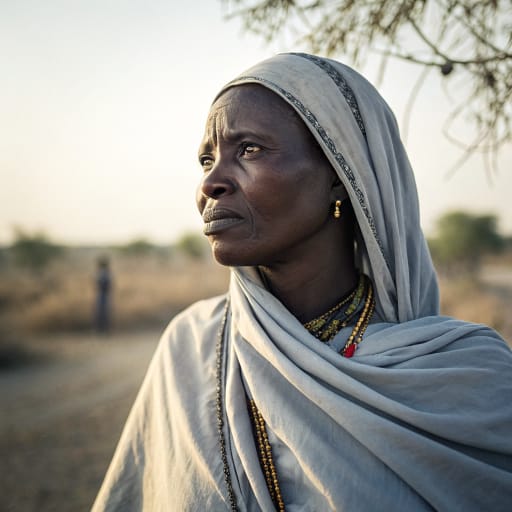
Typical Iznassen Phenotypes
Reference for AI generation: hair, eyes, skin, facial structure, build
Iznassen Body & Anatomy Reference
Anatomy by feature, Berber / Mediterranean-Saharan phenotype
Iznassen Boobs & Breasts
The typical Iznassen bust is medium-to-large cup, full, moderate projection, in line with the wider Berber / Mediterranean-Saharan pattern. Areolas usually fall in the 30-44mm range, with medium-brown to dark-brown areolar pigmentation against the olive-to-light-brown skin tone. Compared with the smaller East Asian bust profile, Iznassen breasts sit forward and are generally fuller and softer than the Cushitic East African norm. A faithful AI render of Iznassen tits keeps that shape and areola size.
Iznassen Ass & Hips
Butt shape among Iznassen women: medium-to-full, moderate projection, broader hip profile, over medium-to-wide iliac crests, fuller gluteal-femoral fat distribution. This follows Berber / Mediterranean-Saharan ancestry and looks quite unlike the slim narrow-hip Cushitic East African profile. An accurate Iznassen ass in adult AI imagery keeps both the silhouette and the overall build (mesomorph with fuller hip-and-bust deposition) instead of a generic average.
Iznassen Vagina & Pussy
Vulvar anatomy among Iznassen women: medium-brown to dark-brown labial pigmentation, fuller labia minora. Pubic hair tends to be wavy-to-coiled medium-coarse texture, dense distribution, in the usual inverted-triangle pattern. Both follow Berber / Mediterranean-Saharan pigmentation, which is why Iznassen pussy renders should not fall back on a pale, sparse Western template.
Iznassen Dicks & Penis
The Iznassen cock profile, from Berber / Mediterranean-Saharan anthropometric data: regional mean ~13-14cm erect; moderate girth; medium-brown shaft pigmentation. Pubic hair has a wavy-to-coiled medium-coarse texture and forms the usual inverted-V pattern. Whether Iznassen men are circumcised follows religious and cultural practice rather than phenotype.
Iznassen Body, Curves & Build
Build and curves among Iznassen women follow the Berber / Mediterranean-Saharan pattern: mesomorph with fuller hip-and-bust deposition, mean adult female BMI 24-28. Proportions matter as much as skin tone, so Iznassen figures should keep their regional height and limb ratios.
Iznassen Skin Tone & Hair Texture
The Iznassen skin range is olive to medium-brown (Fitzpatrick III-V), and hair tends to be wavy-to-curly 2B-3C, often dark-brown to black. That combination marks the Berber / Mediterranean-Saharan phenotype, and skin tone is the trait AI generators most often get wrong for Iznassen women.
Explore phenotype categories
Structured taxonomy with peer-reviewed scales · 22 anatomical categories
Erotic Poses & Sex Positions
From the pose catalog: 219 named positions with reference skeletons
Frequently asked questions about Iznassen people
Where is the Iznassen homeland?
The Iznassen homeland is The Beni Snassen mountains and the neighboring Triffa and Angad plains of northeastern Morocco, around Berkane, near the Algerian border in Northern Africa.
What language do Iznassen people speak?
Iznassen people primarily speak Beni Iznassen Berber (Afroasiatic, Berber, Zenati); Moroccan Arabic, eastern dialect (Afroasiatic, Semitic).
What religion do Iznassen people practice?
The predominant religion among Iznassen people is Sunni Islam of the Maliki school, with the Moroccan practice of honoring local saints and shrines.






Make your own Iznassen images
Five a day, free, no credits to buy. The studio starts from this group's phenotype data, so you can set body type, pose and style and keep the traits accurate.
Start with Iznassen