No portrait yet
Humbu Erotic
Kinshasa and its surrounding countryside around Malebo Pool on the Congo River, western Democratic Republic of the Congo
Humbu (Bantu, Niger-Congo); Lingala, Kikongo and French widely used
Mainly Christian (Catholic, Protestant and independent churches), with ancestral and land-based customs tied to chieftaincy
Bantu peoples of the Malebo Pool and lower Congo region; historically paired with the Teke as the original landholders of the Kinshasa area
About Humbu People
Ask who owns the ground under Kinshasa and, sooner or later, someone will name the Humbu. Along with the Teke, they are counted among the first occupants of the land on the south bank of the Congo River where Africa's largest French-speaking city now sprawls. That claim is not a museum label. It still shapes who can sell a plot on the city's edge, and whose chiefs are approached when farmland is carved into housing lots.
The Humbu are a Bantu-speaking people of western DR Congo. Their villages sat on the plateau and valleys around Malebo Pool, the wide, lake-like stretch of the Congo just above the rapids that block river traffic to the sea. Before colonial rule, the Pool was a hinge of regional trade. Goods coming down the river met the caravan routes to the Atlantic coast there, and the peoples settled around it lived inside that commercial orbit. The turning point came in 1881, when Henry Morton Stanley set up a station nearby for King Leopold II. Léopoldville grew into the colonial capital, drew workers from across the colony, and absorbed one lineage village after another.
The result is an unusual position: an original people who are now a small minority in their own homeland. Kinshasa runs on Lingala and French, with Kikongo widely heard too. The Humbu language holds its ground mostly at home and in the outlying villages, not in the markets and shared taxis of the capital. Christianity, in its Catholic, Protestant and independent church forms, is the everyday faith for most. Older obligations toward ancestors and toward the land itself have not vanished, though. They show most clearly around chieftaincy, where authority rests on descent from the lineages that first held a territory.
That lineage principle is the thread worth following. As Kinshasa pushes out into what were recently fields, fallow ground and patches of forest, Teke and Humbu customary chiefs have become central, and often contested, figures in the land market. Being Humbu today has less to do with costume or ritual display than with memory: knowing which hill, stream or old village site belongs to which lineage, in a city of millions where most residents trace their roots to somewhere else.
Related ethnic groups
Groups that share Humbu's homeland, region, language, or religious tradition. These are likely candidates for comparative phenotype reference.
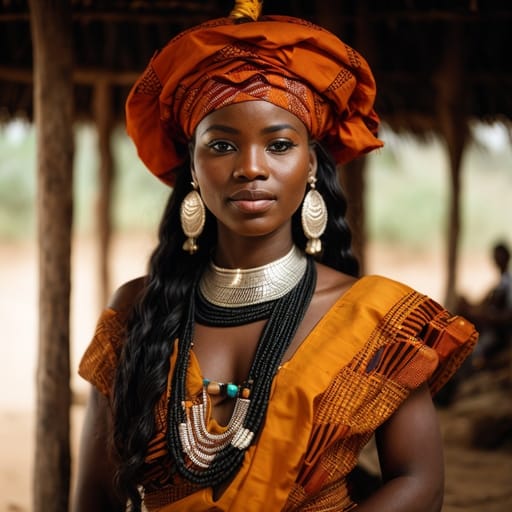
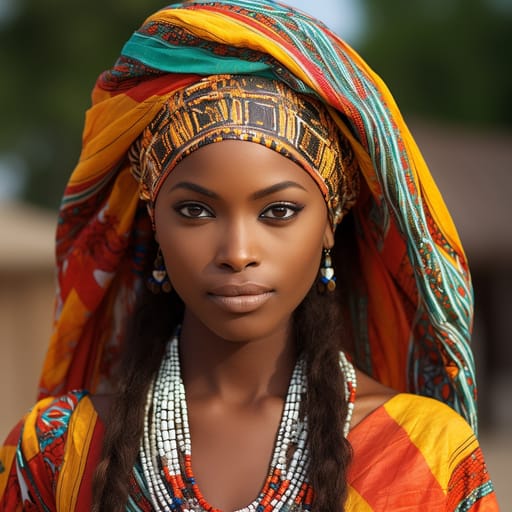
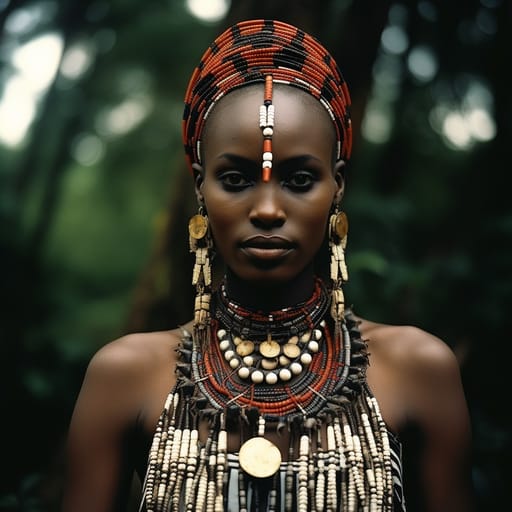
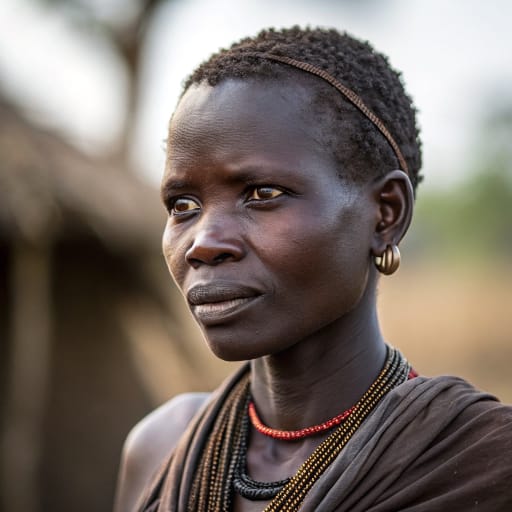
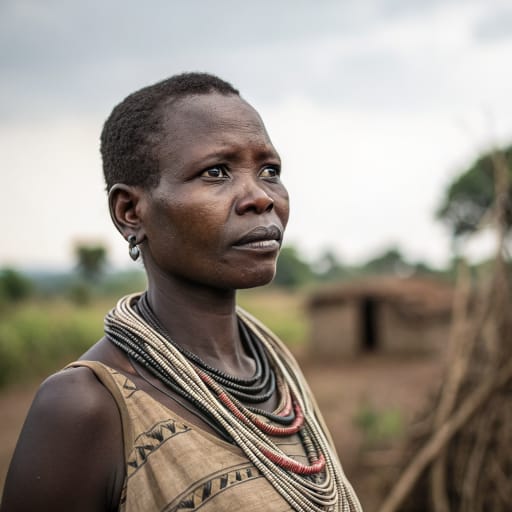
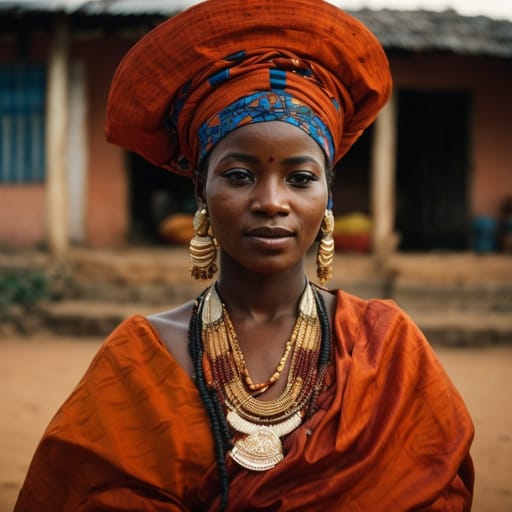
Typical Humbu Phenotypes
Reference for AI generation: hair, eyes, skin, facial structure, build
Humbu Body & Anatomy Reference
Anatomy by feature, Bantu / Central African Niger-Congo phenotype
Humbu Boobs & Breasts
Bust reference for Humbu women: medium-to-large cup, full, projecting, which is typical of Bantu / Central African Niger-Congo ancestry. Areolas measure about 32-48mm across, with deep-brown pigmentation. Body type (mesomorph with strong gluteal-femoral fat deposition) shapes the bust as well, so Humbu tits are usually fuller projection than East African; comparable to West African norm. In AI imagery, keep the forward-set shape rather than drifting toward the smaller East African conical profile.
Humbu Ass & Hips
The Humbu ass is typically full, projected, wide-set glutes, which sets it apart from the slim narrow-hip Cushitic East African profile. Underneath, the pelvis shows broad iliac crests, gynoid pelvic pattern, part of the Bantu / Central African Niger-Congo skeletal pattern. For Humbu butt pics and AI renders, match that silhouette and the overall build (mesomorph with strong gluteal-femoral fat deposition).
Humbu Vagina & Pussy
Humbu pussy and vulvar anatomy presents deep-brown labial pigmentation, fuller labia minora, consistent with the Bantu / Central African Niger-Congo phenotype's pigmentation pattern. Humbu pubic hair is typically tightly-coiled coarse texture, dense distribution, in the inverted-triangle pattern. For anatomically accurate Humbu pussy renders the labial coloration should match the surrounding deep-brown skin tone with a continuous gradient, and the hair should keep its tightly-coiled coarse texture.
Humbu Dicks & Penis
Humbu dicks follow the Bantu / Central African Niger-Congo reference data: regional mean ~14cm erect; above-average girth; deep-brown shaft pigmentation. Shaft color should track the deep-brown skin tone with a smooth change toward the glans, and Humbu pubic hair keeps its tightly-coiled coarse texture.
Humbu Body, Curves & Build
Humbu body type and overall build presents as mesomorph with strong gluteal-femoral fat deposition, with mean adult female BMI 23-26: the characteristic Bantu / Central African Niger-Congo habitus. Humbu curves and proportions should keep the regional skeletal frame (height, shoulder-to-hip ratio, limb proportions) rather than a generic mesomorph default.
Humbu Skin Tone & Hair Texture
Humbu skin sits in the deep-brown (Fitzpatrick VI) band. Hair is typically tight 4A-4C coil, in keeping with the Bantu / Central African Niger-Congo phenotype. In nude renders the skin should stay one even tone from face to body, and body, pubic and head hair should match.
Explore phenotype categories
Structured taxonomy with peer-reviewed scales · 22 anatomical categories
Erotic Poses & Sex Positions
From the pose catalog: 219 named positions with reference skeletons
Frequently asked questions about Humbu people
Where is the Humbu homeland?
The Humbu homeland is Kinshasa and its surrounding countryside around Malebo Pool on the Congo River, western Democratic Republic of the Congo in Central Africa.
What language do Humbu people speak?
Humbu people primarily speak Humbu (Bantu, Niger-Congo); Lingala, Kikongo and French widely used.
What religion do Humbu people practice?
The predominant religion among Humbu people is Mainly Christian (Catholic, Protestant and independent churches), with ancestral and land-based customs tied to chieftaincy.






Make your own Humbu images
Five a day, free, no credits to buy. The studio starts from this group's phenotype data, so you can set body type, pose and style and keep the traits accurate.
Start with Humbu