Help us get this right
Does this portrait look right for Gullah?
Nobody has judged this one yet. You would be the first.
Gullah Erotic
The Lowcountry and Sea Islands of South Carolina and Georgia, extending into southeastern North Carolina and northeastern Florida, United States.
Gullah, also called Sea Island Creole English (English-lexifier Atlantic creole with West and Central African substrate); English.
Protestant Christianity, mainly Baptist and Methodist, alongside retained African spiritual practice including rootwork and hoodoo.
A branch of African Americans; Geechee is the Georgia and Florida designation; closely related to the Afro-Seminole Creole speakers among the Black Seminoles.
About Gullah People
The Gullah are identifiable first by how they talk. Along the tidal coast of South Carolina and Georgia, on the barrier islands and in the marsh towns behind them, people speak a creole built from English words on West and Central African grammar, sound, and sense. Georgians more often say Geechee, and Gullah Geechee has become the usual name for the whole. For most of two centuries outsiders heard the language as broken English. Then Lorenzo Dow Turner worked through the vocabulary in the 1930s and 1940s and came back with thousands of items traceable to Mende, Vai, Wolof, Kikongo, Twi, and Mandinka, including the private basket names families give children alongside their English ones. Gullah has relatives: Bahamian, Krio in Sierra Leone, and Afro-Seminole Creole, carried into Florida and later to Texas and Mexico by people who ran. The culture held together for a reason that is not romantic. Lowcountry planters wanted rice, and they bought captives from the Rice Coast of Sierra Leone, Guinea, and Senegambia who already knew how to grow it in tidal fields. Those plantations ran on a Black majority, sometimes an overwhelming one, and the owners left for higher ground every fever season. Isolation did the rest.
Religion is Baptist and Methodist on the surface and older underneath. Communities worshiped in praise houses, small plain buildings where the ring shout is still done: a counterclockwise shuffle, feet never crossing, driven by clapping and a stick beaten on the floor. Candidates for baptism go through seeking, a stretch of solitary prayer and dreaming guided by a spiritual mother. Root doctors treat what the clinic does not, and porch ceilings get painted haint blue to turn away spirits that travel over water. Coiled sweetgrass baskets, the same form as the Senegambian fanner used for winnowing rice, are still sewn and sold in Mount Pleasant. The historical hinges are sharp: Igbo Landing in 1803, where captives walked into a Georgia creek rather than into slavery; the Port Royal Experiment of 1861, when Union forces took the islands, the planters fled, and freedpeople worked the land for themselves years ahead of emancipation; the Penn School on St. Helena, founded in 1862 and a century later one of the few places in the South where Martin Luther King Jr. and the SCLC could meet across the color line. The present threat is quieter. Bridges reached the islands, resorts followed, and land held as heirs' property, passed down without wills and owned in common by dozens of descendants, is easy to force onto the auction block. Congress drew the Gullah Geechee Cultural Heritage Corridor in 2006, from North Carolina to Florida. Families keep going back to Sierra Leone.
Related ethnic groups
Groups that share Gullah's homeland, region, language, or religious tradition. These are likely candidates for comparative phenotype reference.
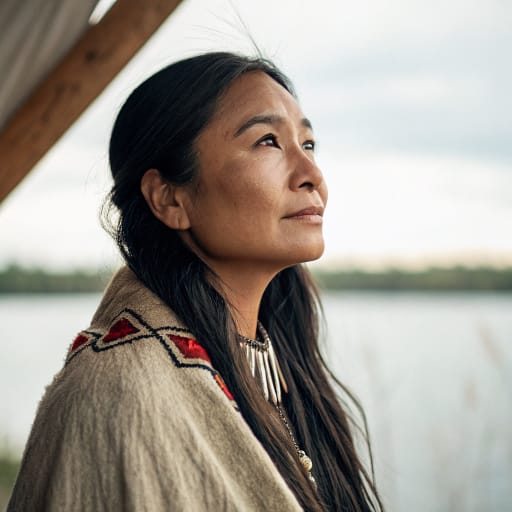
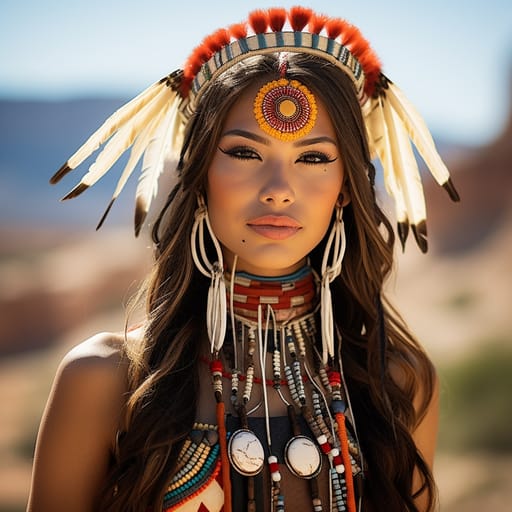
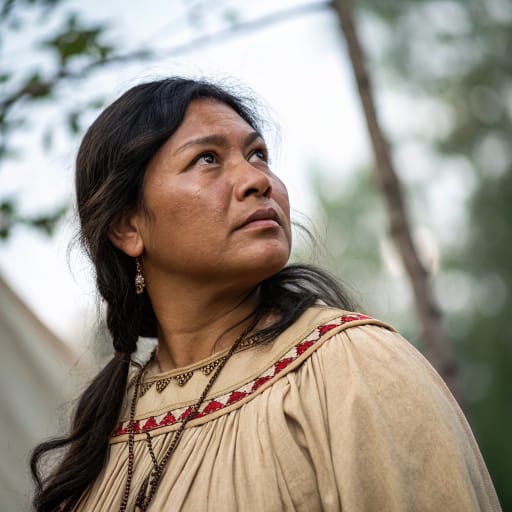
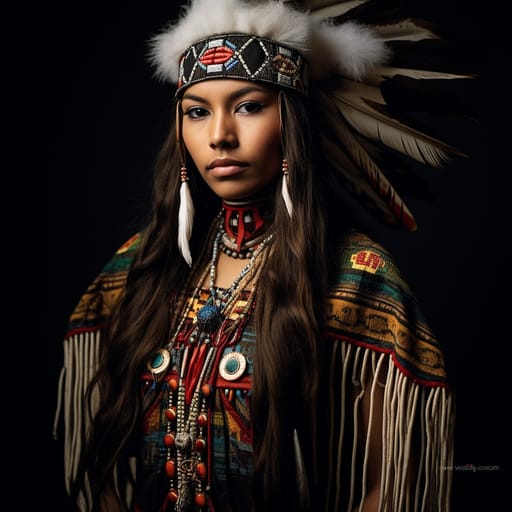
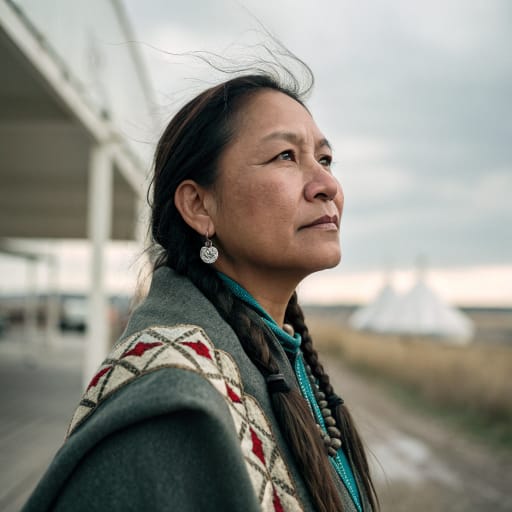
Typical Gullah Phenotypes
Reference for AI generation: hair, eyes, skin, facial structure, build
Gullah Body & Anatomy Reference
Anatomy by feature, Indigenous Northern American / Algonquian-Iroquoian phenotype
Gullah Boobs & Breasts
Bust reference for Gullah women: medium cup, moderate projection, which is typical of Indigenous Northern American / Algonquian-Iroquoian ancestry. Areolas measure about 30-44mm across, with medium-brown pigmentation. Body type (mesomorph, broader frame in northern Indigenous populations) shapes the bust as well, so Gullah tits are usually full and moderate projection. In AI imagery, keep the forward-set shape rather than drifting toward the smaller East Asian bust.
Gullah Ass & Hips
The Gullah ass is typically medium, moderate-to-full projection, which sets it apart from the slim East Asian narrow-hip profile. Underneath, the pelvis shows medium iliac crests, part of the Indigenous Northern American / Algonquian-Iroquoian skeletal pattern. For Gullah butt pics and AI renders, match that silhouette and the overall build (mesomorph, broader frame in northern Indigenous populations).
Gullah Vagina & Pussy
Gullah pussy and vulvar anatomy presents medium-brown labial pigmentation, consistent with the Indigenous Northern American / Algonquian-Iroquoian phenotype's pigmentation pattern. Gullah pubic hair is typically straight medium-coarse texture, in the inverted-triangle pattern. For anatomically accurate Gullah pussy renders the labial coloration should match the surrounding copper to medium-brown skin tone with a continuous gradient, and the hair should keep its straight medium-coarse texture.
Gullah Dicks & Penis
Gullah dicks follow the Indigenous Northern American / Algonquian-Iroquoian reference data: regional mean ~13cm erect; moderate girth; medium-brown shaft pigmentation. Shaft color should track the copper to medium-brown skin tone with a smooth change toward the glans, and Gullah pubic hair keeps its straight medium-coarse texture.
Gullah Body, Curves & Build
Gullah body type and overall build presents as mesomorph, broader frame in northern Indigenous populations, with mean adult female BMI 25-28: the characteristic Indigenous Northern American / Algonquian-Iroquoian habitus. Gullah curves and proportions should keep the regional skeletal frame (height, shoulder-to-hip ratio, limb proportions) rather than a generic mesomorph default.
Gullah Skin Tone & Hair Texture
Gullah skin sits in the copper to medium-brown (Fitzpatrick III-V) band. Hair is typically straight 1A, dark-brown to black, often thick and dense, in keeping with the Indigenous Northern American / Algonquian-Iroquoian phenotype. In nude renders the skin should stay one even tone from face to body, and body, pubic and head hair should match.
Explore phenotype categories
Structured taxonomy with peer-reviewed scales · 22 anatomical categories
Erotic Poses & Sex Positions
From the pose catalog: 219 named positions with reference skeletons
Frequently asked questions about Gullah people
Where is the Gullah homeland?
The Gullah homeland is The Lowcountry and Sea Islands of South Carolina and Georgia, extending into southeastern North Carolina and northeastern Florida, United States. in North America.
What language do Gullah people speak?
Gullah people primarily speak Gullah, also called Sea Island Creole English (English-lexifier Atlantic creole with West and Central African substrate); English..
What religion do Gullah people practice?
The predominant religion among Gullah people is Protestant Christianity, mainly Baptist and Methodist, alongside retained African spiritual practice including rootwork and hoodoo..






Make your own Gullah images
Five a day, free, no credits to buy. The studio starts from this group's phenotype data, so you can set body type, pose and style and keep the traits accurate.
Start with Gullah