Help us get this right
Does this portrait look right for Gilaks?
One tap. It takes a second and it is recorded.
0 say it looks right, 1 says it looks off.
Gilaks Erotic
Gilan, Iran
Indo-European / Iranian languages / Western Iranian / Gilaki
Islam / Shia Islam
About Gilaks People
The Gilaks live along the south Caspian shore, packed into the narrow strip between the Alborz mountains and the sea where Iran's climate suddenly stops behaving like Iran. Gilan is humid, green, and rice-growing — a place of paddy fields, tea terraces, citrus orchards, and wooden houses raised on stilts against the damp. The landscape shapes the people as much as anything else: a Caspian lowland culture wedged into a Persian state, looking outward to the water as much as inward to Tehran.
Their language, Gilaki, belongs to the northwestern branch of Iranian and is a close relative of Mazandarani, spoken by their neighbors to the east, and a cousin once removed of Persian rather than a dialect of it. A Persian speaker can catch fragments of a Gilaki conversation but will not really follow it. The language has its own grammar, its own vocabulary for the things that matter locally — fishing gear, rice cultivation, the specific weather of the coast — and it survives mostly through speech rather than print, though there is a small body of Gilaki poetry and, in recent decades, a renewed effort to write in it.
Gilaks are Shia Muslims, in line with the Iranian mainstream, but the religion sits inside a regional culture that has its own grain. Gender norms in Gilan are noticeably less restrictive than in much of the country: women have historically worked the rice fields alongside men, run market stalls, and moved through public space with a freedom that visitors from other provinces sometimes remark on. The cuisine reflects the geography — heavy on fish, herbs, sour fruits, walnuts, and the rice that grows underfoot — and is regarded across Iran as one of the country's distinct regional kitchens rather than a variant of the Persian one.
Historically, Gilan spent long stretches as something close to its own world. The medieval Zaydi imamate, the later Safavid absorption, the brief Soviet-backed Persian Socialist Republic of 1920–21, and the Jangal movement under Mirza Kuchak Khan in the same period all left marks on local memory. The province sits inside the Iranian state but carries a quiet sense of itself as separate — a Caspian people with their own language, their own food, their own weather, and a long habit of getting on with things while empires changed hands above them.
Related ethnic groups
Groups that share Gilaks's homeland, region, language, or religious tradition. These are likely candidates for comparative phenotype reference.
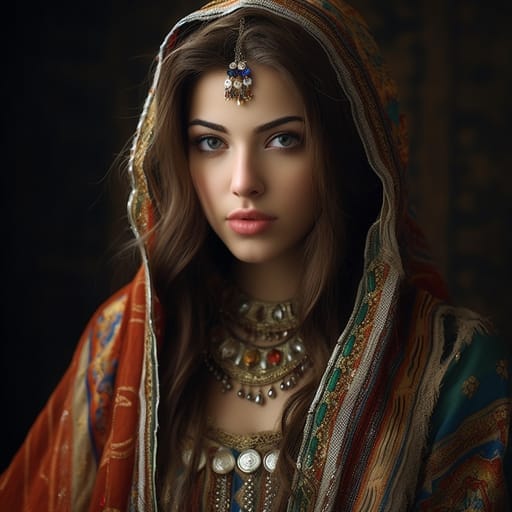
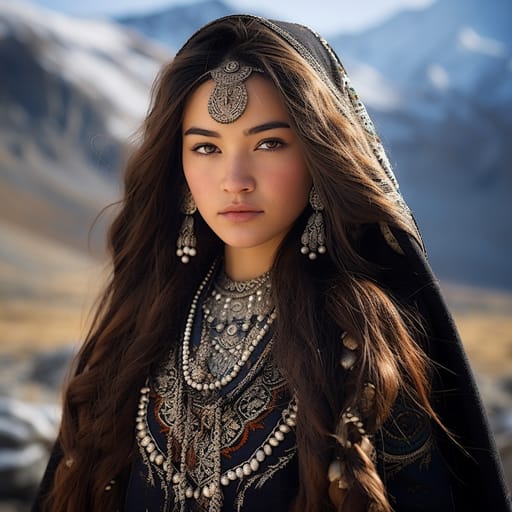
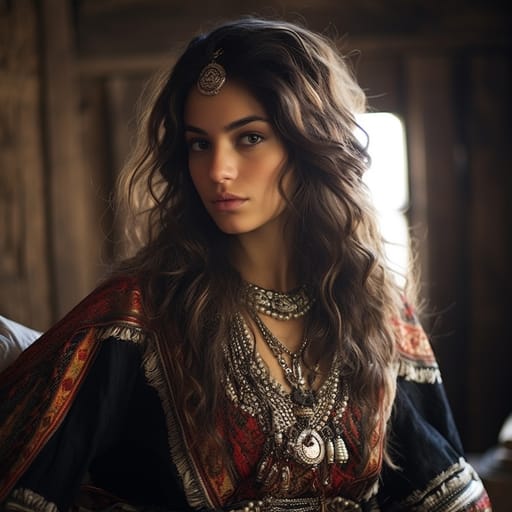
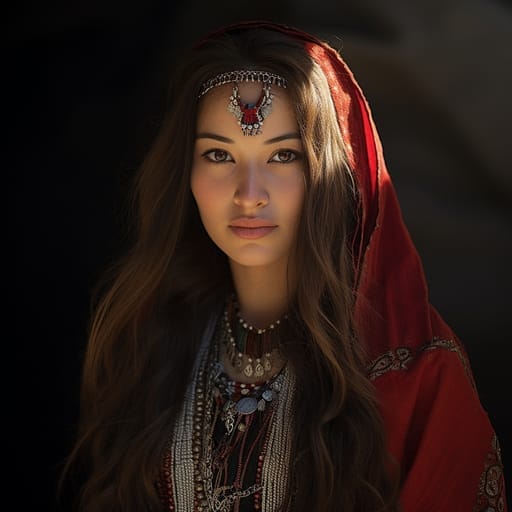
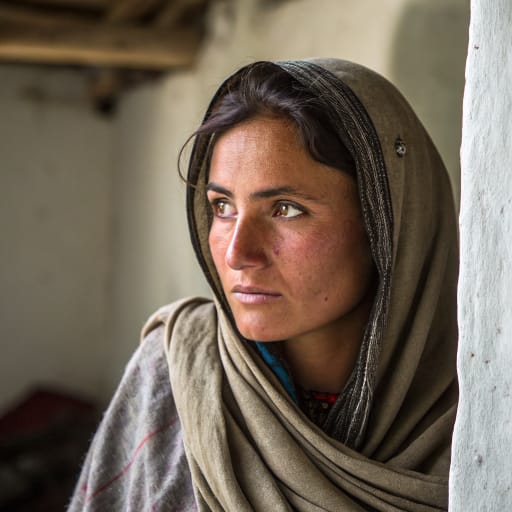
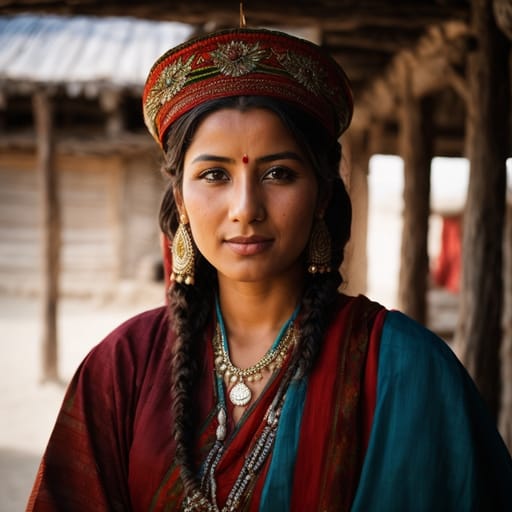
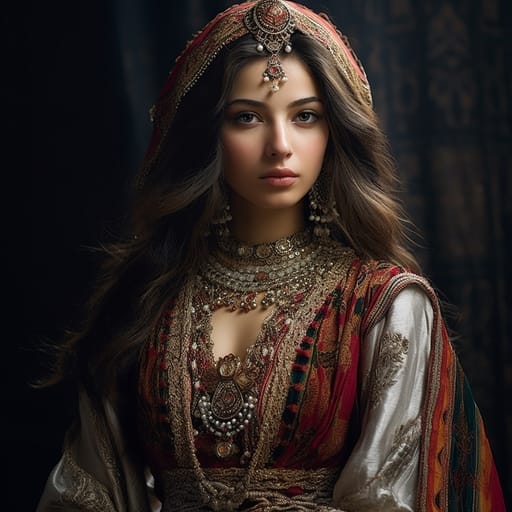
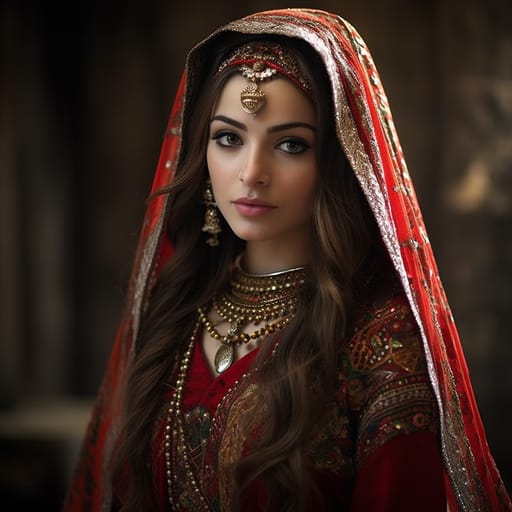
Typical Gilaks Phenotypes
Reference for AI generation: hair, eyes, skin, facial structure, build
Gilaks are a Caspian Iranian people from the humid lowlands and Alborz foothills of Gilan province, and their phenotype reflects that wet, forested ecology more than the Plateau Iranian image most outsiders carry. Hair is overwhelmingly dark brown to near-black, typically straight to gently wavy, with thicker, coarser shafts than neighboring Persians; chestnut and lighter brown shades surface in the mountain villages above Rasht and Lahijan, and a small minority show genuine light-brown hair into adulthood. Body and facial hair is moderate to heavy in men, less pronounced than in Lurs or Kurds.
Eyes run dark brown to a softer hazel-brown that catches green in good light, with a meaningful minority — particularly among highland Gilaks and along the Talysh-adjacent coast — showing pale green or gray-green. Eyelids are open and almond-shaped without epicanthic folds; brows are dark, full, and often nearly straight rather than arched.
Skin sits mainly in Fitzpatrick II–III, paler than central or southern Iranian populations because of low UV exposure under the Caspian cloud cover, with olive and slightly pinkish undertones rather than the warmer golden cast of Persians from Isfahan or Shiraz. Faces are typically oval to softly rounded, with a moderately high straight nasal bridge, narrower alar base than Arabs or southern Iranians, and a slight convexity in profile that's less pronounced than the classical Persian aquiline. Cheekbones are present but not sharp; lips are medium in fullness, the lower fuller than the upper; jaws are compact in women and squared in men.
Build leans short to medium-statured — men typically 168–174 cm, women 156–162 cm — with a tendency toward solid, slightly stocky frames, broader hips and bust in women, and a propensity to carry weight centrally with age. Rural Gilaks working rice paddies and tea fields stay leaner and more wiry; urban Rashti populations show the softer, fairer-skinned build the region is locally known for.
Data depth
0/100Coverage of image-grounded phenotype observations · drives AI generation diversity
- Sample size
- 0/40· 0 images
- Image quality
- 0/30· 0% high
- Confidence
- 0/20
- Source diversity
- 0/10
- ·No image observations yet
Explore phenotype categories
Structured taxonomy with peer-reviewed scales · 22 anatomical categories
Erotic Poses & Sex Positions
From the pose catalog: 219 named positions with reference skeletons
Frequently asked questions about Gilaks people
Where is the Gilaks homeland?
The Gilaks homeland is Gilan, Iran in Central Asia.
What language do Gilaks people speak?
Gilaks people primarily speak Indo-European / Iranian languages / Western Iranian / Gilaki.
What religion do Gilaks people practice?
The predominant religion among Gilaks people is Islam / Shia Islam.






Make your own Gilaks images
Five a day, free, no credits to buy. The studio starts from this group's phenotype data, so you can set body type, pose and style and keep the traits accurate.
Start with Gilaks