Help us get this right
Does this portrait look right for Ervipiame?
Nobody has judged this one yet. You would be the first.
Ervipiame Erotic
Northeastern Coahuila (Mexico) and the Rio Grande country in the 1670s; from the early 1700s the Brazos and San Gabriel river area of east central Texas (United States).
Unrecorded. Probably a language of the Coahuiltecan area originally (Coahuilteco has been suggested); sometimes classed as Tonkawan by later association. Spanish was used in the missions.
Indigenous beliefs, largely undocumented; some families were baptized Catholic in Spanish missions.
Usually counted among the Coahuiltecan bands of northeastern Mexico and south Texas; leading group of the Ranchería Grande alliance; absorbed into the Tonkawa in the later 1700s.
About Ervipiame People
The Ervipiame were a small Indigenous people of northeastern Coahuila and Texas, recorded by the Spanish from the 1670s until the late eighteenth century, when the survivors folded into the Tonkawa, whose descendants today form the Tonkawa Tribe of Oklahoma. They are remembered less for a territory than for a decision: faced with missions, disease and Spanish pressure along the Rio Grande, most of them left.
When Spanish expeditions first listed them, the Ervipiame were mobile hunters and gatherers working the dry country on both sides of the Rio Grande, one of scores of small named bands that historians lump together as Coahuiltecan. Around 1700 some families entered the missions near the river, San Juan Bautista and San Francisco Solano among them. The larger part moved a few hundred miles northeast to the wooded prairies along the Brazos River in east central Texas. There they became the leading group of Ranchería Grande, a big mixed encampment of refugees, mission runaways and local bands that the Spanish watched with both interest and unease.
Their best known figure is Juan Rodríguez, an Ervipiame chief who guided the Aguayo expedition across Texas in 1721. The following year the Spanish founded Mission San Francisco Xavier de Nájera at San Antonio for him and his followers. It never amounted to much, and within a few years its people were absorbed into neighboring Mission San Antonio de Valero, the compound later known as the Alamo. In the 1740s Ervipiame still living at Ranchería Grande joined the request that produced the San Xavier missions on the San Gabriel River, where they shared Mission San Francisco Xavier de Horcasitas with the Mayeye and Yojuane. Drought, disease, Apache raids and quarrels between friars and soldiers ended that experiment by 1755.
After that the Ervipiame disappear as a separate name. The remnant joined the Mayeye, Yojuane and others in the alliance that became the historic Tonkawa. Their language is the open question. It went unrecorded, so scholars argue from geography and company: a Coahuila origin points toward the Coahuiltecan languages, while their later allies have led some to class them as Tonkawan. Neither case can be proven.
What the Ervipiame show is how fluid identity was on the Spanish frontier. A band could cross a river, gather other displaced people around it, deal with Spanish governors through a chief with a Spanish name, and end as part of a different nation entirely. Their line continues, unnamed, inside the Tonkawa.
Related ethnic groups
Groups that share Ervipiame's homeland, region, language, or religious tradition. These are likely candidates for comparative phenotype reference.
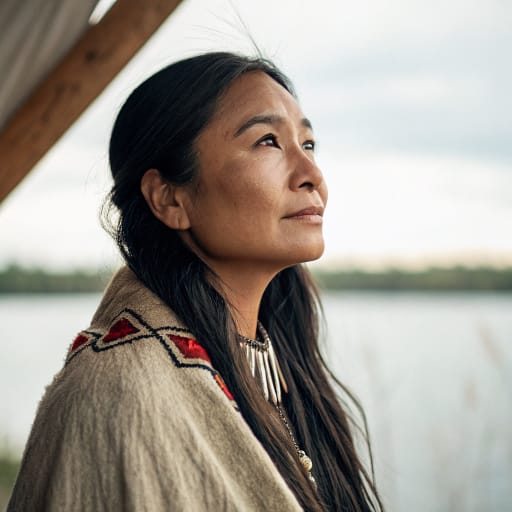
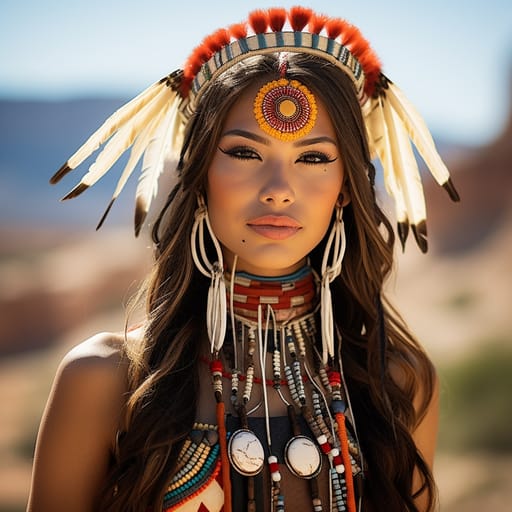
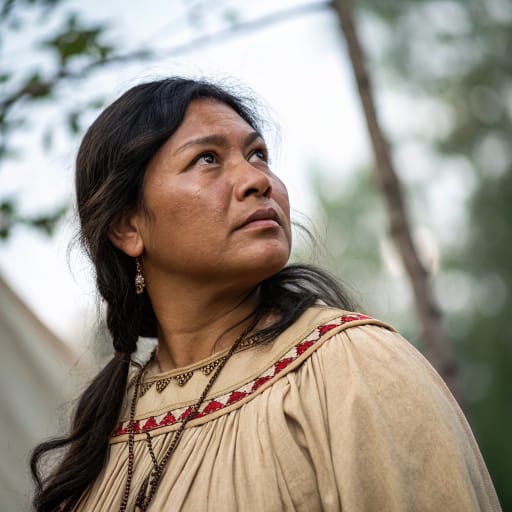
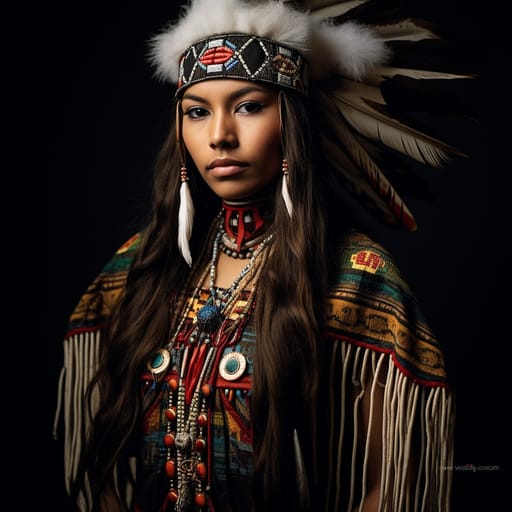
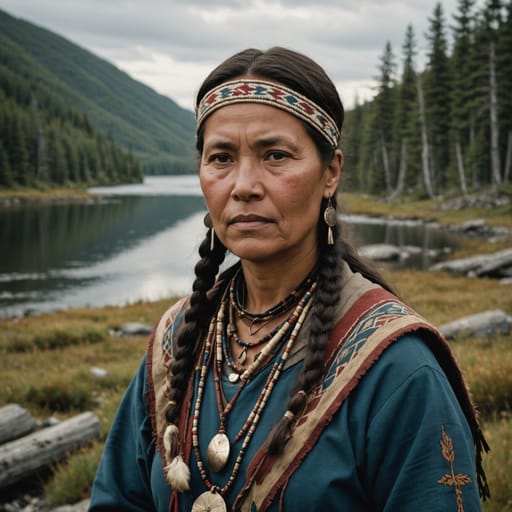
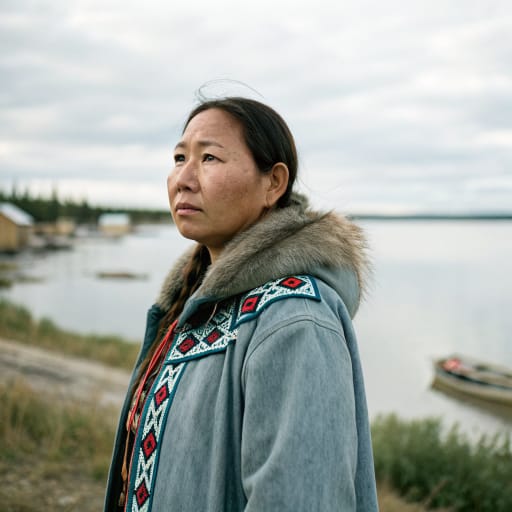
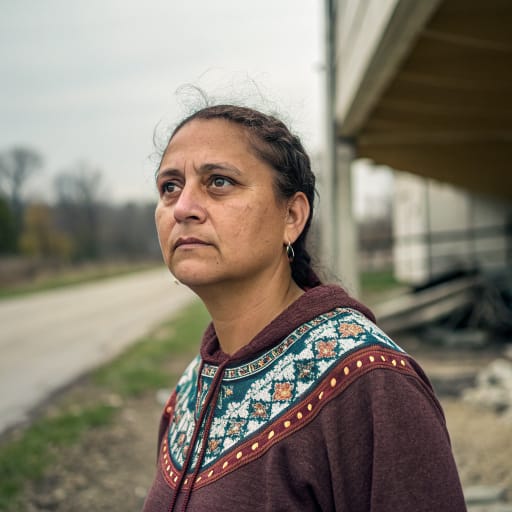
Typical Ervipiame Phenotypes
Reference for AI generation: hair, eyes, skin, facial structure, build
Ervipiame Body & Anatomy Reference
Anatomy by feature, Indigenous Northern American / Algonquian-Iroquoian phenotype
Ervipiame Boobs & Breasts
Ervipiame boobs follow the Indigenous Northern American / Algonquian-Iroquoian profile: medium cup, moderate projection. Areolar diameter is usually 30-44mm, and the coloring is medium-brown areolar pigmentation against the copper-to-medium-brown skin tone. Breast shape tracks body composition (mesomorph, broader frame in northern Indigenous populations, mean adult female BMI 25-28), so Ervipiame breasts tend to be full and moderate projection. Expect a forward-set shape, not the smaller East Asian bust.
Ervipiame Ass & Hips
Ervipiame ass and hip morphology presents as medium, moderate-to-full projection, distinctly different from the slim East Asian narrow-hip profile. The Ervipiame pelvic profile shows medium iliac crests, anchored in the Indigenous Northern American / Algonquian-Iroquoian skeletal pattern. Ervipiame butt shots in adult AI imagery should render the medium, moderate-to-full projection silhouette with the overall build (mesomorph, broader frame in northern Indigenous populations) and the fat distribution typical of the Indigenous Northern American / Algonquian-Iroquoian phenotype.
Ervipiame Vagina & Pussy
Ervipiame pussy anatomy typically shows medium-brown labial pigmentation. Pubic hair is usually straight medium-coarse texture. In AI-generated Ervipiame nudes, labial color should blend into the copper to medium-brown skin with a gradual transition, and the hair should keep its straight medium-coarse texture.
Ervipiame Dicks & Penis
Penis reference for Ervipiame men: regional mean ~13cm erect, moderate girth. Coloring: medium-brown shaft pigmentation. An accurate Ervipiame cock in AI imagery matches the surrounding copper to medium-brown skin rather than a generic porn default. Circumcision depends on religion and custom, not ancestry.
Ervipiame Body, Curves & Build
The Ervipiame figure is generally mesomorph, broader frame in northern Indigenous populations, with mean adult female BMI 25-28, characteristic of Indigenous Northern American / Algonquian-Iroquoian ancestry. AI image tools tend to flatten regional body types into a few stock shapes; here the Ervipiame build is kept as its own reference.
Ervipiame Skin Tone & Hair Texture
Skin: copper to medium-brown (Fitzpatrick III-V). Hair: straight 1A, dark-brown to black, often thick and dense. Both are typical of Indigenous Northern American / Algonquian-Iroquoian ancestry. The most common mistake in AI nudes of Ervipiame women is a body rendered lighter than the face.
Explore phenotype categories
Structured taxonomy with peer-reviewed scales · 22 anatomical categories
Erotic Poses & Sex Positions
From the pose catalog: 219 named positions with reference skeletons
Frequently asked questions about Ervipiame people
Where is the Ervipiame homeland?
The Ervipiame homeland is Northeastern Coahuila (Mexico) and the Rio Grande country in the 1670s; from the early 1700s the Brazos and San Gabriel river area of east central Texas (United States). in North America.
What language do Ervipiame people speak?
Ervipiame people primarily speak Unrecorded. Probably a language of the Coahuiltecan area originally (Coahuilteco has been suggested); sometimes classed as Tonkawan by later association. Spanish was used in the missions..
What religion do Ervipiame people practice?
The predominant religion among Ervipiame people is Indigenous beliefs, largely undocumented; some families were baptized Catholic in Spanish missions..






Make your own Ervipiame images
Five a day, free, no credits to buy. The studio starts from this group's phenotype data, so you can set body type, pose and style and keep the traits accurate.
Start with Ervipiame