No portrait yet
Dongotona Erotic
The Dongotona Mountains of Eastern Equatoria, South Sudan, around Ikotos, near the Ugandan border
Dongotono (Eastern Nilotic, Lotuxo branch), closely related to Otuho; Juba Arabic and English as second languages
Mostly Christian, largely Catholic, alongside traditional beliefs tied to rain, harvest and ancestors
Part of the Otuho-speaking cluster of Eastern Nilotic peoples, with the Lotuko, Lopit and Lokoya
About Dongotona People
The Dongotona take their name from the mountains they live in. The Dongotona range rises out of the plains of Eastern Equatoria in South Sudan, north of the Ugandan border, and the people who farm its slopes and valleys see themselves as people of that high ground. Outsiders often lump them in with the much larger Lotuko, or Otuho, population around Torit. The link is real, because the two speak closely related languages and organize public life in similar ways. Still, the Dongotona have kept their own name and their own speech, and they think of themselves as hill people, not plains people.
Their language, Dongotono, belongs to the Lotuxo cluster of Eastern Nilotic. That puts it in the same broad family as Maasai, Turkana and Teso, though its closest relatives are Otuho and Lopit. Many languages meet in this corner of the country. Didinga, a Surmic language, is spoken in the hills to the east, and Luo-speaking Acholi communities live to the southwest. Juba Arabic is the everyday go-between language here, as it is across most of South Sudan, and English has spread through schools and churches.
Daily life runs on farming and livestock, with sorghum and maize from hillside fields and goats and cattle kept alongside. Like their Otuho relatives, the Dongotona have traditionally given public authority to the monyomiji. These are the men of the ruling generation, who run a community's affairs for a set period and then formally hand power to the next generation. Rainmakers held an office that was powerful and risky in equal measure, because a failed rainy season could be blamed on them.
Most Dongotona today are Christian, and the Catholic Church has deep roots in the Torit area. Older practices tied to rain, harvest and ancestors have not disappeared. Recent history has been hard on them. Sudan's first civil war began with an army mutiny in nearby Torit in 1955, and Eastern Equatoria was a battleground again in the second war. Raids by the Lord's Resistance Army added to the damage. Many families spent years displaced or in refugee camps across the border. Since South Sudan became independent in 2011, the Dongotona have been rebuilding villages, schools and the local institutions that war kept breaking up. Cattle raiding and insecurity still trouble the region.
Related ethnic groups
Groups that share Dongotona's homeland, region, language, or religious tradition. These are likely candidates for comparative phenotype reference.
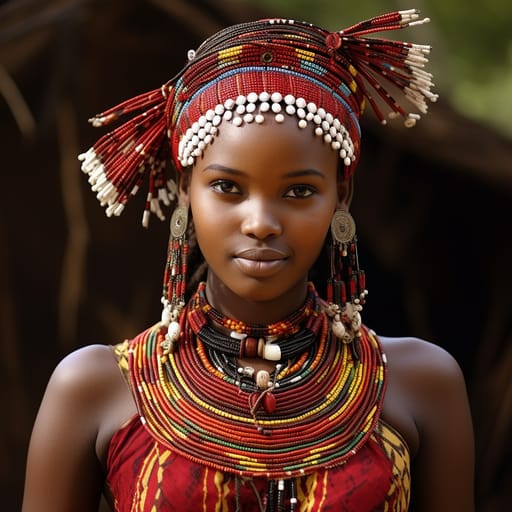
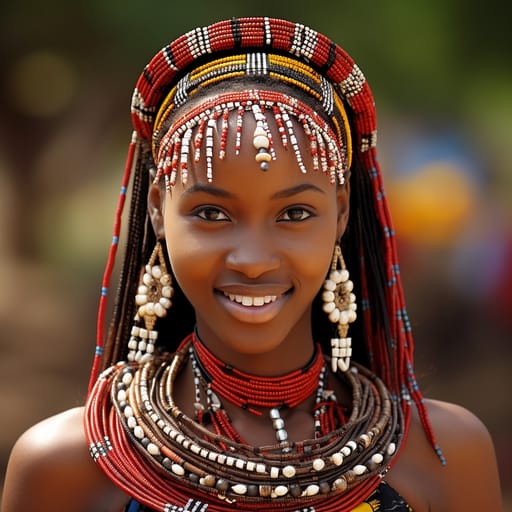
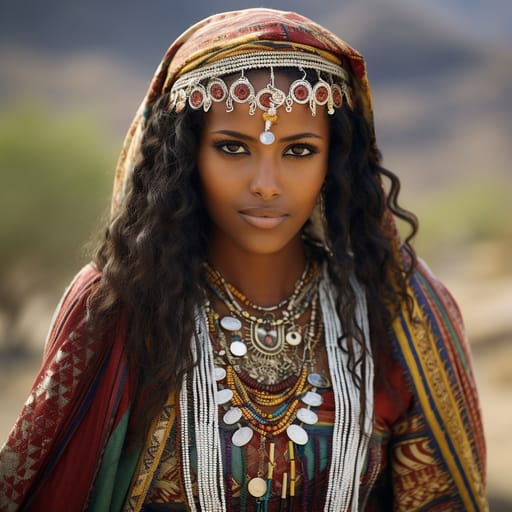
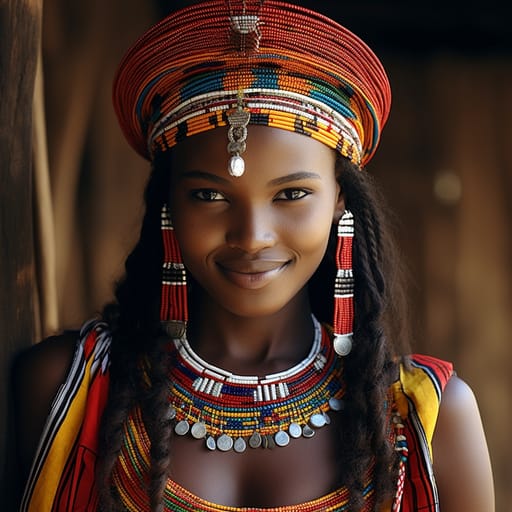
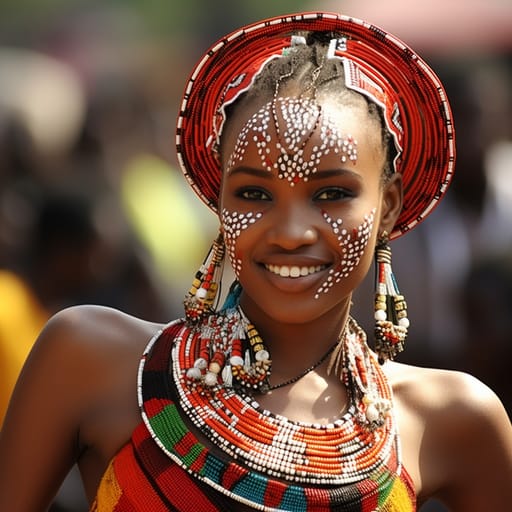
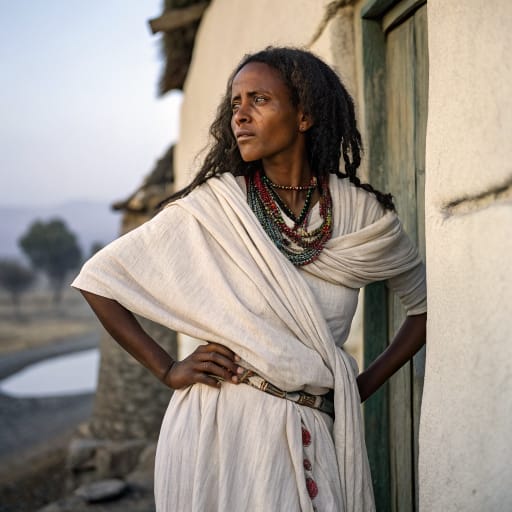
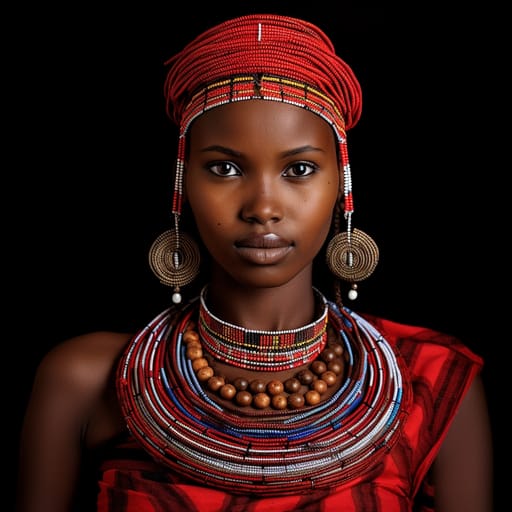
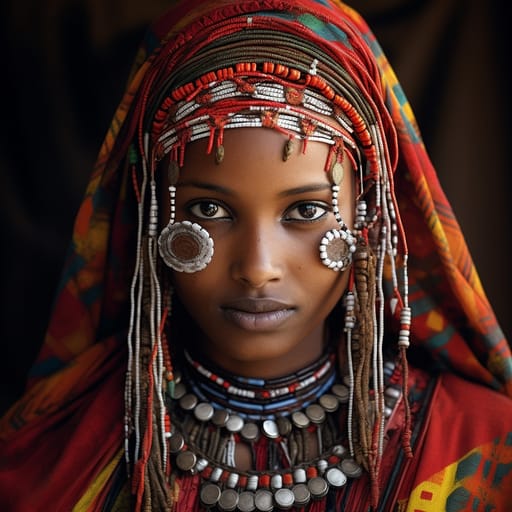
Typical Dongotona Phenotypes
Reference for AI generation: hair, eyes, skin, facial structure, build
Dongotona Body & Anatomy Reference
Per-feature anatomical profile for AI nude generation: Cushitic / Nilo-Cushitic East African phenotype
Dongotona Boobs & Breasts
Bust reference for Dongotona women: small-to-medium-cup, high-set, conical, which is typical of Cushitic / Nilo-Cushitic East African ancestry. Areolas measure about 28-38mm across, with moderate-to-high pigmentation. Body type (lean ectomorph-to-mesomorph) shapes the bust as well, so Dongotona tits are usually firmer and less projecting than the African-American or West African norm. In AI imagery, keep the forward-set shape rather than drifting toward the lateral spread of the West African phenotype.
Dongotona Ass & Hips
The Dongotona ass is typically small-to-medium, high-set, rounded, which sets it apart from the wide-set heavy-projection West African or African-American norm. Underneath, the pelvis shows narrow-to-medium iliac crests, longer torso-to-leg ratio, part of the Cushitic / Nilo-Cushitic East African skeletal pattern. For Dongotona butt pics and AI renders, match that silhouette and the overall build (lean ectomorph-to-mesomorph).
Dongotona Vagina & Pussy
Dongotona pussy and vulvar anatomy presents brown-to-deep-brown labial pigmentation, narrow-to-medium labia minora projection, consistent with the Cushitic / Nilo-Cushitic East African phenotype's pigmentation pattern. Dongotona pubic hair is typically tightly-coiled coarse texture, densely distributed, in the inverted-triangle pattern. For anatomically accurate Dongotona pussy renders the labial coloration should match the surrounding brown to deep brown skin tone with a continuous gradient, and the hair should keep its tightly-coiled coarse texture.
Dongotona Dicks & Penis
Dongotona dicks follow the Cushitic / Nilo-Cushitic East African reference data: regional mean ~13.5cm erect; moderate girth, ~12cm circumference; deeper-pigmented than the West African norm. Shaft color should track the brown to deep brown skin tone with a smooth change toward the glans, and Dongotona pubic hair keeps its tightly-coiled coarse texture.
Dongotona Body, Curves & Build
Dongotona body type and overall build presents as lean ectomorph-to-mesomorph, with mean adult female BMI 19-22: the characteristic Cushitic / Nilo-Cushitic East African habitus. Dongotona curves and proportions should keep the regional skeletal frame (height, shoulder-to-hip ratio, limb proportions) rather than a generic mesomorph default.
Dongotona Skin Tone & Hair Texture
Dongotona skin sits in the brown to deep brown (Fitzpatrick V-VI) band. Hair is typically tight 4A-4C coil, often worn natural or in braided/twisted protective styles, in keeping with the Cushitic / Nilo-Cushitic East African phenotype. In nude renders the skin should stay one even tone from face to body, and body, pubic and head hair should match.
Explore phenotype categories
Structured taxonomy with peer-reviewed scales · 22 anatomical categories
Erotic Poses & Sex Positions
From the pose catalog: 219 named positions with reference skeletons
Frequently asked questions about Dongotona people
Where is the Dongotona homeland?
The Dongotona homeland is The Dongotona Mountains of Eastern Equatoria, South Sudan, around Ikotos, near the Ugandan border in Eastern Africa.
What language do Dongotona people speak?
Dongotona people primarily speak Dongotono (Eastern Nilotic, Lotuxo branch), closely related to Otuho; Juba Arabic and English as second languages.
What religion do Dongotona people practice?
The predominant religion among Dongotona people is Mostly Christian, largely Catholic, alongside traditional beliefs tied to rain, harvest and ancestors.






Make your own Dongotona images
Five a day, free, no credits to buy. The studio starts from this group's phenotype data, so you can set body type, pose and style and keep the traits accurate.
Start with Dongotona