Help us get this right
Does this portrait look right for Dida?
Nobody has judged this one yet. You would be the first.
Dida Erotic
South-central Côte d'Ivoire, around Divo, Lakota and Guitry, west of the lower Bandama River and south toward the coastal lagoons near Grand-Lahou.
Dida, in Lakota and Yocoboué varieties (Niger-Congo, Kru, Eastern Kru)
Mostly Christian (Catholic, Protestant and Harrist), with ancestral and funeral customs still followed.
Lakota Dida and Yocoboué Dida dialect groups; part of the Eastern Kru peoples, closely related to the Bété and Godié.
About Dida People
The Dida live on the eastern edge of the Kru-speaking world in Côte d'Ivoire, and that is the quickest way to place them. West of the lower Bandama River, the forest peoples speak Kru languages. Cross to the east and Akan and lagoon languages take over. Dida country runs from around Divo and Lakota south toward the coastal lagoons near Grand-Lahou. It was rainforest, and over the twentieth century much of it became cocoa, coffee and oil palm farms. Being Dida has never depended on a king or a capital. It rests on the village, the lineage and a shared language. That language is really a cluster of dialects, usually grouped as Lakota Dida and Yocoboué Dida, and Bété and Godié speakers to the west know it as a close relative of their own. Like its relatives it is tonal, so the pitch of a word changes its meaning as much as its consonants do. Older Dida society had no central state. Power sat with lineage elders and village councils, and villages dealt with each other through alliance and negotiation rather than orders from above.
French forces brought this forest under control through military campaigns in the early twentieth century, and colonial rule rebuilt the local economy around export crops. Plantations drew migrants from Baoulé country, Burkina Faso and Mali, and many Dida villages now share their land with large migrant communities. Who owns the soil, and who only farms it, is still a live question. Religious life changed in the same era. The Liberian prophet William Wadé Harris preached along the nearby coast in 1913 and 1914, and the mass conversions he set off fed both the mission churches and the independent Harrist Church. Most Dida today belong to Catholic, Protestant or Harrist congregations, while duties to the ancestors, especially around funerals, still shape family life. The Dida craft known farthest from home is cloth. Weavers make raffia fiber into tube skirts, wrappers and shawls, which are then tie-dyed so that rings, squares and grids of dots appear in browns, reds, yellows and black. These garments were worn at funerals, dances and other important occasions, and the best older pieces are now in museum collections, a long way from the villages that made them.
Related ethnic groups
Groups that share Dida's homeland, region, language, or religious tradition. These are likely candidates for comparative phenotype reference.
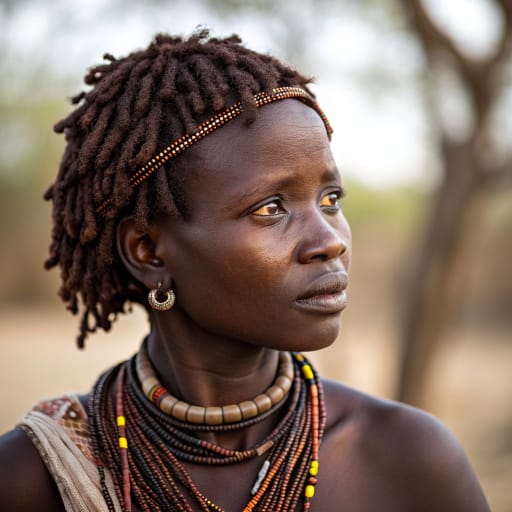
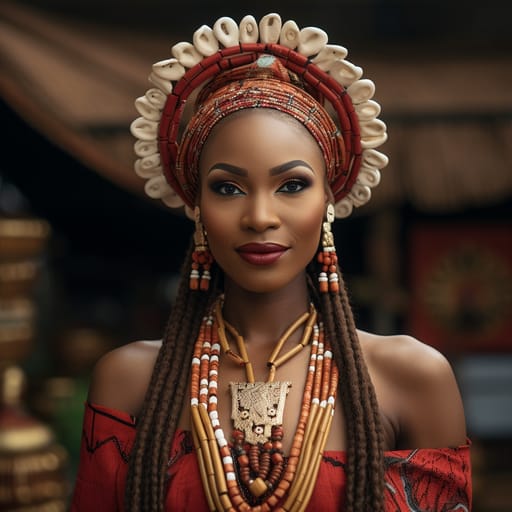
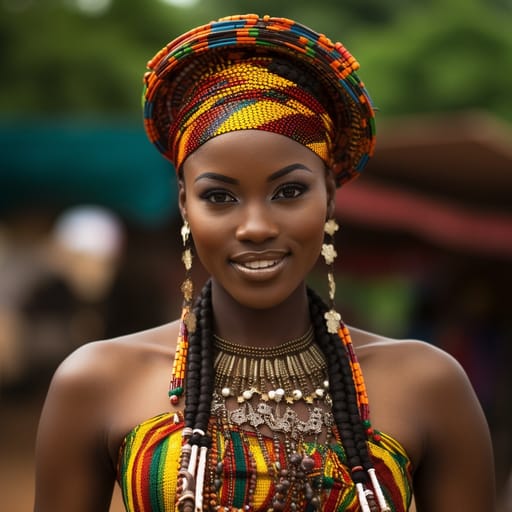
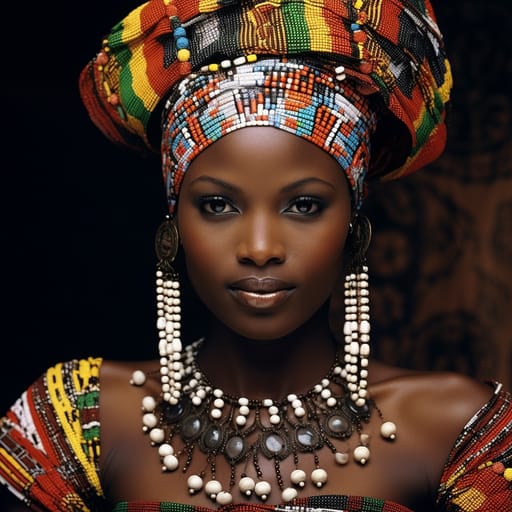
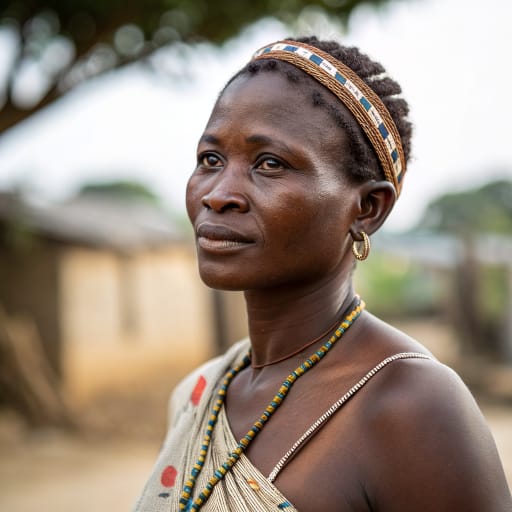
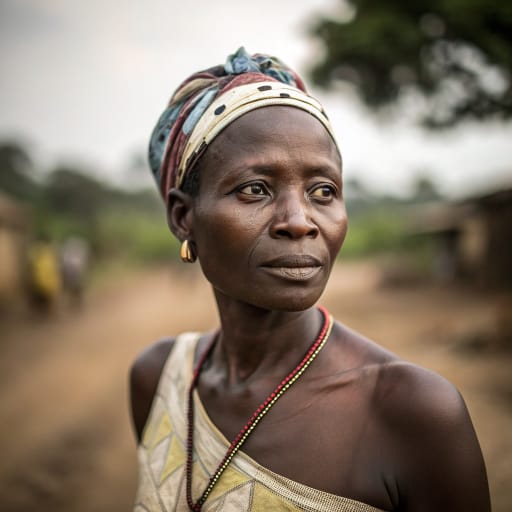
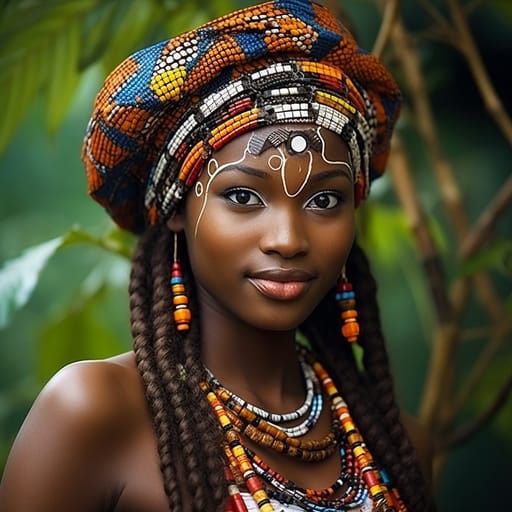
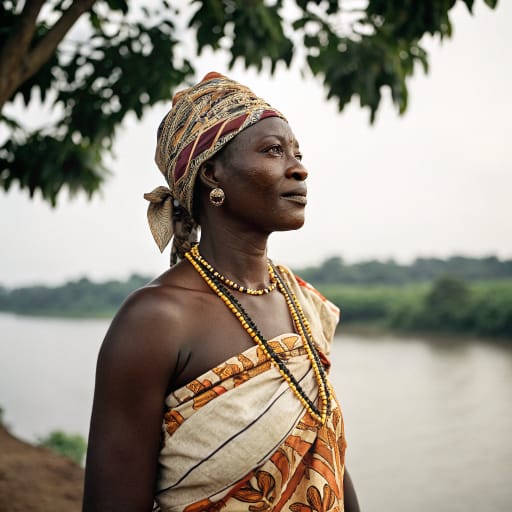
Typical Dida Phenotypes
Reference for AI generation: hair, eyes, skin, facial structure, build
Dida Body & Anatomy Reference
Per-feature anatomical profile for AI nude generation: West African Niger-Congo phenotype
Dida Boobs & Breasts
Dida boobs follow the West African Niger-Congo profile: medium-to-large cup, full, projecting. Areolar diameter is usually 35-50mm, and the coloring is deep-brown to near-black areolar pigmentation against the medium-to-deep-brown skin tone. Breast shape tracks body composition (mesomorph with strong gluteal-femoral fat distribution, mean adult female BMI 24-27), so Dida breasts tend to be fuller and more projecting than the East African norm. Expect a forward-set shape, not the smaller conical Cushitic East African profile.
Dida Ass & Hips
Dida ass and hip morphology presents as wide-set, full, heavily projected glutes, distinctly different from the slim narrow-hip Cushitic East African profile. The Dida pelvic profile shows wide iliac crests, broad gynoid pelvic pattern, high glute-to-waist ratio, anchored in the West African Niger-Congo skeletal pattern. Dida butt shots in adult AI imagery should render the wide-set, full, heavily projected glutes silhouette with the overall build (mesomorph with strong gluteal-femoral fat distribution) and the fat distribution typical of the West African Niger-Congo phenotype.
Dida Vagina & Pussy
Dida pussy anatomy typically shows deep-brown to near-black labial pigmentation, fuller labia minora. Pubic hair is usually tightly-coiled coarse texture, densely distributed. In AI-generated Dida nudes, labial color should blend into the medium-brown to deep-brown skin with a gradual transition, and the hair should keep its tightly-coiled coarse texture.
Dida Dicks & Penis
Penis reference for Dida men: regional mean ~14-15cm erect, above-average girth, ~13cm circumference. Coloring: deep-brown-to-near-black shaft pigmentation. An accurate Dida cock in AI imagery matches the surrounding medium-brown to deep-brown skin rather than a generic porn default. Circumcision depends on religion and custom, not ancestry.
Dida Body, Curves & Build
The Dida figure is generally mesomorph with strong gluteal-femoral fat distribution, with mean adult female BMI 24-27, characteristic of West African Niger-Congo ancestry. AI image tools tend to flatten regional body types into a few stock shapes; here the Dida build is kept as its own reference.
Dida Skin Tone & Hair Texture
Skin: medium-brown to deep-brown (Fitzpatrick V-VI). Hair: tight 4A-4C coil, often worn natural, braided, or relaxed. Both are typical of West African Niger-Congo ancestry. The most common mistake in AI nudes of Dida women is a body rendered lighter than the face.
Explore phenotype categories
Structured taxonomy with peer-reviewed scales · 22 anatomical categories
Erotic Poses & Sex Positions
From the pose catalog: 219 named positions with reference skeletons
Frequently asked questions about Dida people
Where is the Dida homeland?
The Dida homeland is South-central Côte d'Ivoire, around Divo, Lakota and Guitry, west of the lower Bandama River and south toward the coastal lagoons near Grand-Lahou. in Western Africa.
What language do Dida people speak?
Dida people primarily speak Dida, in Lakota and Yocoboué varieties (Niger-Congo, Kru, Eastern Kru).
What religion do Dida people practice?
The predominant religion among Dida people is Mostly Christian (Catholic, Protestant and Harrist), with ancestral and funeral customs still followed..






Make your own Dida images
Five a day, free, no credits to buy. The studio starts from this group's phenotype data, so you can set body type, pose and style and keep the traits accurate.
Start with Dida