Help us get this right
Does this portrait look right for Burun?
One tap. It takes a second and it is recorded.
0 say it looks right, 1 says it looks off.
Burun Erotic
Eastern Upper Nile, South Sudan, around Dajo, Pacime, Waldese and Kigile, near the borders with Sudan and Ethiopia; speakers of the language also live in neighboring Sudan
Burun (Nilotic: Western Nilotic, Luo branch), closely related to Mabaan and Jumjum
Luo branch of the Western Nilotic peoples; closest relatives are the Mabaan and Jumjum
About Burun People
The Burun are a small Nilotic people of eastern Upper Nile, living on the flat clay plains where South Sudan meets Sudan and Ethiopia. Their language is the clearest thing that marks them as a people. Burun belongs to the Luo branch of Western Nilotic, the same family that includes Shilluk and Anywaa. Its closest relatives are the languages of their neighbors, the Mabaan and the Jumjum. Together they form a small cluster at the northern edge of the Luo world, far from the Acholi of Uganda and the Luo of Kenya, who speak the better-known languages of the same family.
The 2008 census counted about 8,000 Burun, living in and around places such as Dajo, Pacime, Waldese and Kigile. Take that number with some caution. In older Sudanese Arabic usage, Burun was a loose label for several non-Arab peoples along the southern Blue Nile frontier. Outsiders, linguists and the communities themselves have not always agreed on where the Burun end and their closest relatives begin. Speakers of the language also live on the Sudanese side of the border.
That border is the turning point of modern Burun history. For most of the twentieth century, this corner of the Nile basin was a remote edge of a single Sudan. Khartoum governed it lightly, and it was fought over again and again in the civil wars between the government and southern rebels. When South Sudan became independent in 2011, an internal boundary became an international one, splitting communities that had long lived on both sides of it. The same year, fighting in Sudan's Blue Nile State drove a large wave of refugees south into eastern Upper Nile. The camps grew far larger than the local communities around them, and tension over farmland, water and firewood followed. South Sudan's own civil war, which broke out in late 2013, brought more upheaval to Upper Nile.
There are few detailed written accounts of Burun religion, clan structure or ceremony, and much of what gets said about them is borrowed from better-studied neighbors. What is solid is enough to place them: the Burun are a rural community held together by a shared language and a particular stretch of land. States, borders and armies have reshaped that land around them several times within living memory.
Related ethnic groups
Groups that share Burun's homeland, region, language, or religious tradition. These are likely candidates for comparative phenotype reference.
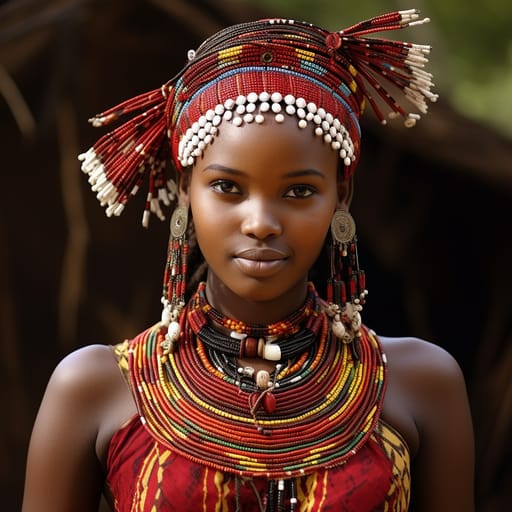
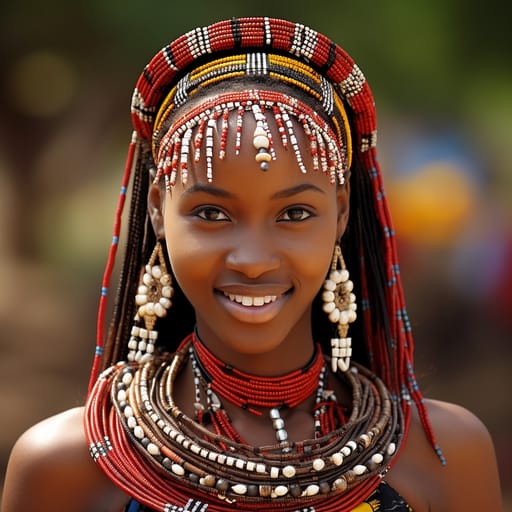
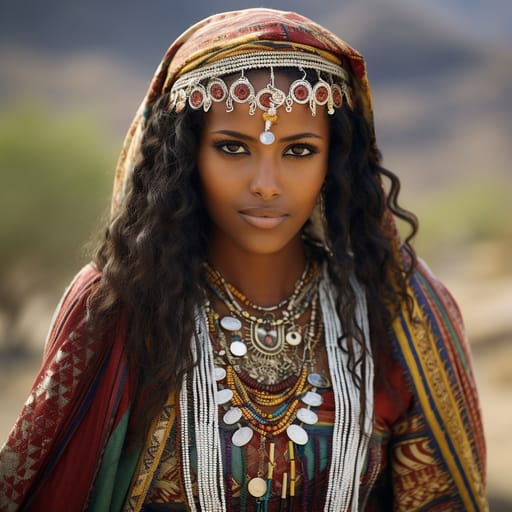
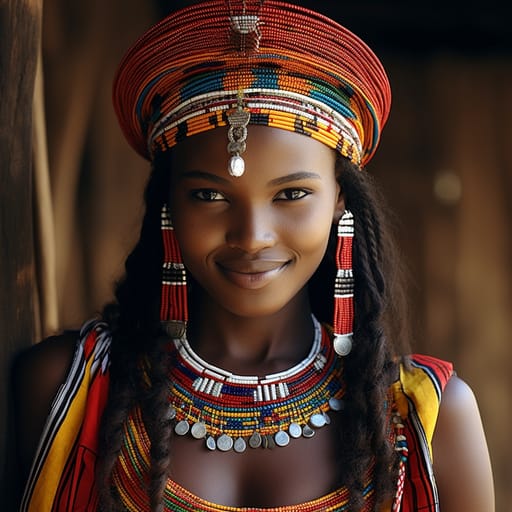
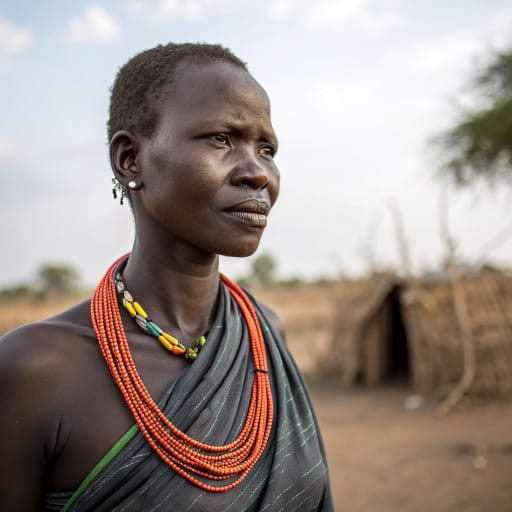
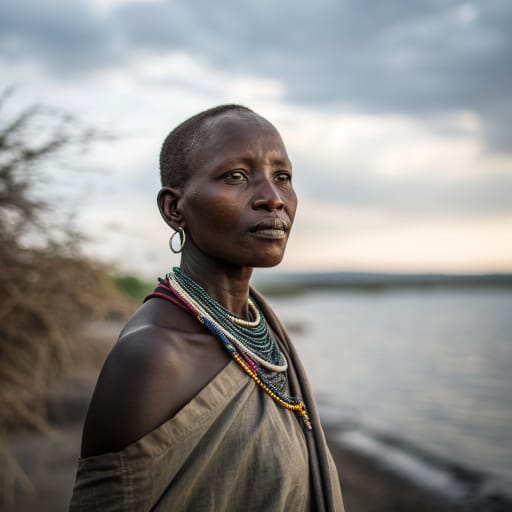
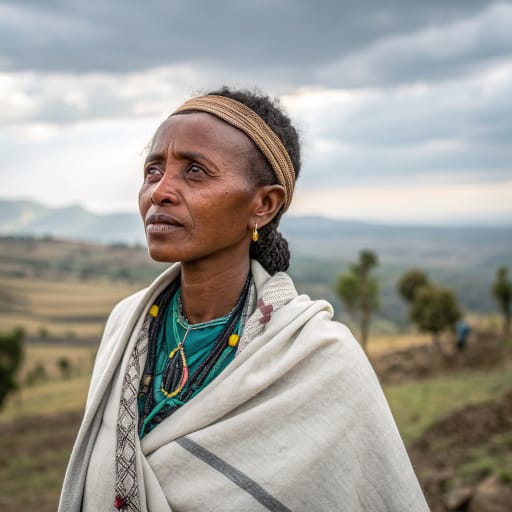
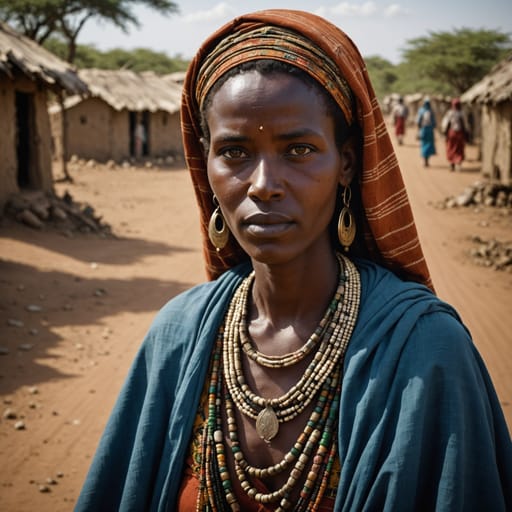
Typical Burun Phenotypes
Reference for AI generation: hair, eyes, skin, facial structure, build
Burun Body & Anatomy Reference
Anatomy by feature, Cushitic / Nilo-Cushitic East African phenotype
Burun Boobs & Breasts
Burun boobs follow the Cushitic / Nilo-Cushitic East African profile: small-to-medium-cup, high-set, conical. Areolar diameter is usually 28-38mm, and the coloring is moderate-to-high areolar pigmentation against the brown-to-deep-brown skin tone. Breast shape tracks body composition (lean ectomorph-to-mesomorph, mean adult female BMI 19-22), so Burun breasts tend to be firmer and less projecting than the African-American or West African norm. Expect a forward-set shape, not the lateral spread of the West African phenotype.
Burun Ass & Hips
Burun ass and hip morphology presents as small-to-medium, high-set, rounded, distinctly different from the wide-set heavy-projection West African or African-American norm. The Burun pelvic profile shows narrow-to-medium iliac crests, longer torso-to-leg ratio, anchored in the Cushitic / Nilo-Cushitic East African skeletal pattern. Burun butt shots in adult AI imagery should render the small-to-medium, high-set, rounded silhouette with the overall build (lean ectomorph-to-mesomorph) and the fat distribution typical of the Cushitic / Nilo-Cushitic East African phenotype.
Burun Vagina & Pussy
Burun pussy anatomy typically shows brown-to-deep-brown labial pigmentation, narrow-to-medium labia minora projection. Pubic hair is usually tightly-coiled coarse texture, densely distributed. In AI-generated Burun nudes, labial color should blend into the brown to deep brown skin with a gradual transition, and the hair should keep its tightly-coiled coarse texture.
Burun Dicks & Penis
Penis reference for Burun men: regional mean ~13.5cm erect, moderate girth, ~12cm circumference. Coloring: deeper-pigmented than the West African norm. An accurate Burun cock in AI imagery matches the surrounding brown to deep brown skin rather than a generic porn default. Circumcision depends on religion and custom, not ancestry.
Burun Body, Curves & Build
The Burun figure is generally lean ectomorph-to-mesomorph, with mean adult female BMI 19-22, characteristic of Cushitic / Nilo-Cushitic East African ancestry. AI image tools tend to flatten regional body types into a few stock shapes; here the Burun build is kept as its own reference.
Burun Skin Tone & Hair Texture
Skin: brown to deep brown (Fitzpatrick V-VI). Hair: tight 4A-4C coil, often worn natural or in braided/twisted protective styles. Both are typical of Cushitic / Nilo-Cushitic East African ancestry. The most common mistake in AI nudes of Burun women is a body rendered lighter than the face.
Explore phenotype categories
Structured taxonomy with peer-reviewed scales · 22 anatomical categories
Erotic Poses & Sex Positions
From the pose catalog: 219 named positions with reference skeletons
Frequently asked questions about Burun people
Where is the Burun homeland?
The Burun homeland is Eastern Upper Nile, South Sudan, around Dajo, Pacime, Waldese and Kigile, near the borders with Sudan and Ethiopia; speakers of the language also live in neighboring Sudan in Eastern Africa.
What language do Burun people speak?
Burun people primarily speak Burun (Nilotic: Western Nilotic, Luo branch), closely related to Mabaan and Jumjum.






Make your own Burun images
Five a day, free, no credits to buy. The studio starts from this group's phenotype data, so you can set body type, pose and style and keep the traits accurate.
Start with Burun