No portrait yet
Chebo Erotic
The Shewa highlands southwest of Addis Ababa, centered on the Woliso area of the Southwest Shewa Zone, Oromia Region, Ethiopia
Afaan Oromoo (Cushitic, Afroasiatic); Amharic widely spoken as a second language
Mainly Ethiopian Orthodox Christian, with Muslim and Protestant minorities and traces of traditional Waaqeffannaa belief
A Shewan Oromo community, part of the wider Oromo people
About Chebo People
The Chebo are an Oromo community of Shewa, the cool, heavily farmed plateau that stretches southwest of Addis Ababa. The name belongs to a territory as much as to a people: through much of the twentieth century, the administrative district around the market town of Woliso was officially called Chebo and Gurage, a label that simply recorded who lived there. To call yourself Chebo is to be Oromo first, with the local name placing your family within the larger Oromo world.
They speak Afaan Oromoo, a Cushitic language of the Afroasiatic family and the most widely spoken first language in Ethiopia. Around Woliso it shares the roads and markets with Amharic, long the language of government and schooling, and with the Ethio-Semitic Gurage languages spoken to the south. Many people also speak Amharic, especially in town.
Oromo groups settled these highlands during the great migrations of the sixteenth century and ran their own affairs through gadaa, the age-grade system in which leadership passes to a new generation set every eight years. That independence ended in the nineteenth century: by its close, the expanding Shewan kingdom of Menelik II had taken over the region and handed land and tribute rights to the crown and its officials. Many Oromo farmers became tenants on ground their grandparents had held. The Derg's land reform of 1975 ended that arrangement, and since the 1990s the area has been part of the Oromia Region, with Woliso as the seat of the Southwest Shewa Zone.
Orthodox Christianity is the main faith locally, much of it dating from that takeover, with Muslim and Protestant congregations alongside. Older Oromo religion, centered on Waaqa, the creator, has not disappeared. It shows in the blessings elders give, in the importance of great shade trees as places to meet and settle disputes, and in Irreecha, the thanksgiving held beside water as the rains end, which has grown into a major public event across Oromia in recent decades. Daily life still turns on the farm: teff, wheat and barley on ox-plowed fields, and cattle kept close to the homestead.
Related ethnic groups
Groups that share Chebo's homeland, region, language, or religious tradition. These are likely candidates for comparative phenotype reference.
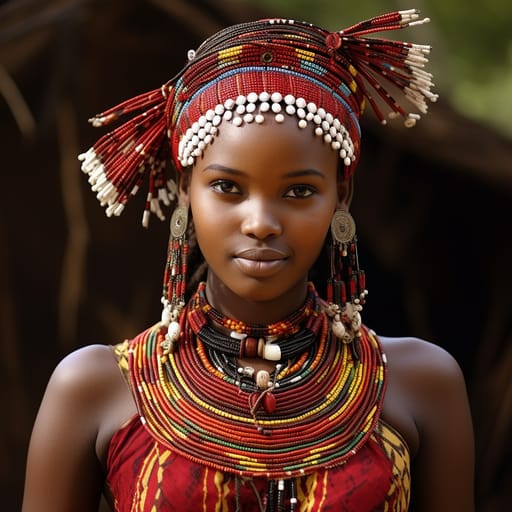
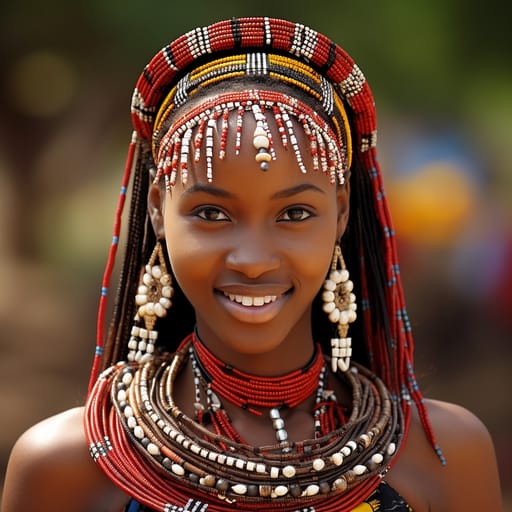
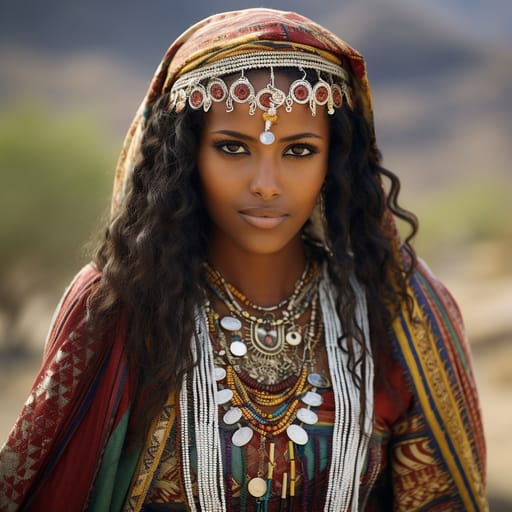
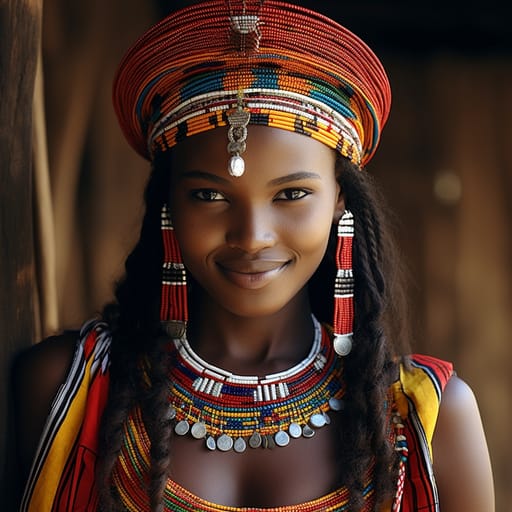
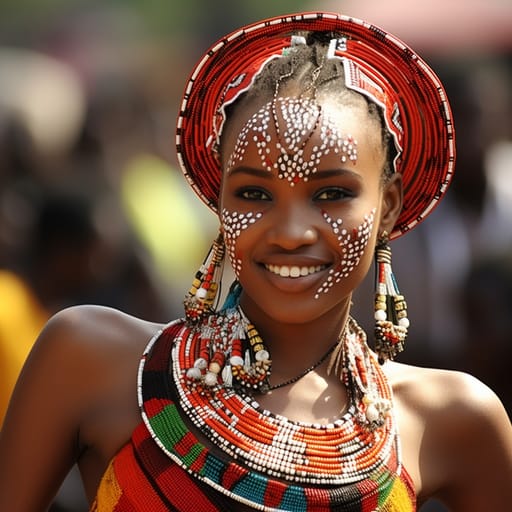
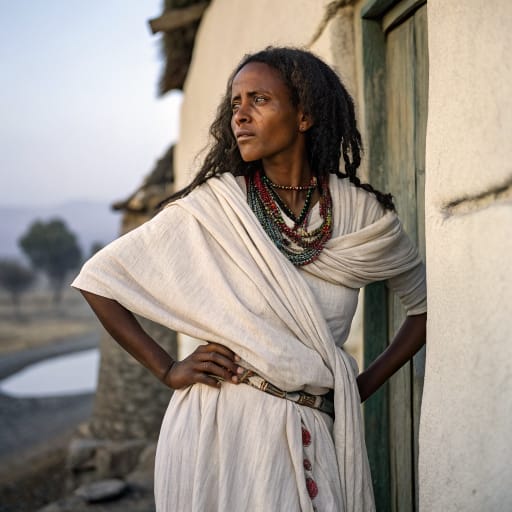
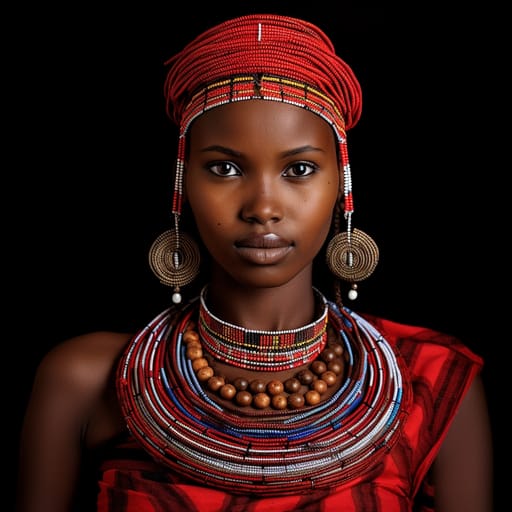
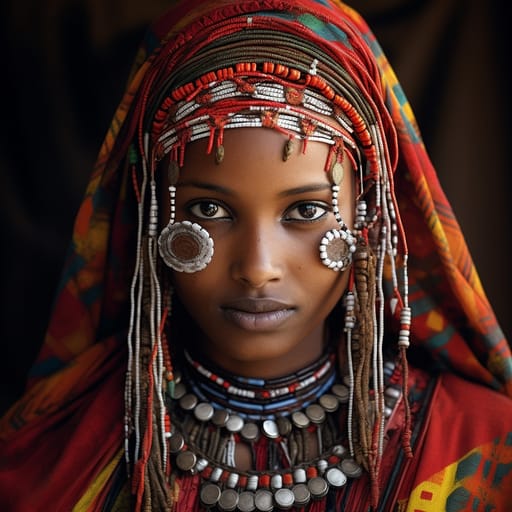
Typical Chebo Phenotypes
Reference for AI generation: hair, eyes, skin, facial structure, build
Chebo Body & Anatomy Reference
Per-feature anatomical profile for AI nude generation: Cushitic / Nilo-Cushitic East African phenotype
Chebo Boobs & Breasts
The typical Chebo bust is small-to-medium-cup, high-set, conical, in line with the wider Cushitic / Nilo-Cushitic East African pattern. Areolas usually fall in the 28-38mm range, with moderate-to-high areolar pigmentation against the brown-to-deep-brown skin tone. Compared with the lateral spread of the West African phenotype, Chebo breasts sit forward and are generally firmer and less projecting than the African-American or West African norm. A faithful AI render of Chebo tits keeps that shape and areola size.
Chebo Ass & Hips
Butt shape among Chebo women: small-to-medium, high-set, rounded, over narrow-to-medium iliac crests, longer torso-to-leg ratio. This follows Cushitic / Nilo-Cushitic East African ancestry and looks quite unlike the wide-set heavy-projection West African or African-American norm. An accurate Chebo ass in adult AI imagery keeps both the silhouette and the overall build (lean ectomorph-to-mesomorph) instead of a generic average.
Chebo Vagina & Pussy
Vulvar anatomy among Chebo women: brown-to-deep-brown labial pigmentation, narrow-to-medium labia minora projection. Pubic hair tends to be tightly-coiled coarse texture, densely distributed, in the usual inverted-triangle pattern. Both follow Cushitic / Nilo-Cushitic East African pigmentation, which is why Chebo pussy renders should not fall back on a pale, sparse Western template.
Chebo Dicks & Penis
The Chebo cock profile, from Cushitic / Nilo-Cushitic East African anthropometric data: regional mean ~13.5cm erect; moderate girth, ~12cm circumference; deeper-pigmented than the West African norm. Pubic hair has a tightly-coiled coarse texture and forms the usual inverted-V pattern. Whether Chebo men are circumcised follows religious and cultural practice rather than phenotype.
Chebo Body, Curves & Build
Build and curves among Chebo women follow the Cushitic / Nilo-Cushitic East African pattern: lean ectomorph-to-mesomorph, mean adult female BMI 19-22. Proportions matter as much as skin tone, so Chebo figures should keep their regional height and limb ratios.
Chebo Skin Tone & Hair Texture
The Chebo skin range is brown to deep brown (Fitzpatrick V-VI), and hair tends to be tight 4A-4C coil, often worn natural or in braided/twisted protective styles. That combination marks the Cushitic / Nilo-Cushitic East African phenotype, and skin tone is the trait AI generators most often get wrong for Chebo women.
Explore phenotype categories
Structured taxonomy with peer-reviewed scales · 22 anatomical categories
Erotic Poses & Sex Positions
From the pose catalog: 219 named positions with reference skeletons
Frequently asked questions about Chebo people
Where is the Chebo homeland?
The Chebo homeland is The Shewa highlands southwest of Addis Ababa, centered on the Woliso area of the Southwest Shewa Zone, Oromia Region, Ethiopia in Eastern Africa.
What language do Chebo people speak?
Chebo people primarily speak Afaan Oromoo (Cushitic, Afroasiatic); Amharic widely spoken as a second language.
What religion do Chebo people practice?
The predominant religion among Chebo people is Mainly Ethiopian Orthodox Christian, with Muslim and Protestant minorities and traces of traditional Waaqeffannaa belief.






Make your own Chebo images
Five a day, free, no credits to buy. The studio starts from this group's phenotype data, so you can set body type, pose and style and keep the traits accurate.
Start with Chebo