Help us get this right
Does this portrait look right for Bassari?
Nobody has judged this one yet. You would be the first.
Bassari Erotic
Wooded uplands of southeastern Senegal (Kédougou Region, around Salémata) and neighboring northern Guinea, on the edge of the Futa Jallon highlands
Oniyan, also called Basari (Tenda group, Atlantic branch of Niger-Congo); many also speak Pulaar, Malinke and French
Traditional religion centered on ancestors, spirits and initiation; a large Catholic community; a smaller Muslim minority
One of the Tenda peoples, alongside the closely related Bedik and Konyagi (Coniagui); communities in both Senegal and Guinea
About Bassari People
The Bassari call themselves Beliyan. What holds them together is less a town or a chief than a shared way of growing up. In the ridged, wooded uplands where southeastern Senegal meets northern Guinea, on the edge of the Futa Jallon highlands, a Bassari life moves through a series of initiations and age grades. Each step brings its own work, its own privileges and its own ceremonies, and the whole community keeps track of who stands where. Salémata, in Senegal's Kédougou Region, is the main town of what is now called Bassari Country.
Their language, Oniyan, belongs to the small Tenda group within the Atlantic branch of Niger-Congo. Its closest relatives are spoken by the neighboring Bedik and Konyagi, who share much of the Bassari's history and custom. Around this Tenda pocket the larger languages are Pulaar and Malinke, and most Bassari speak one or both, plus French from school. The name causes confusion: the Bassar of northern Togo share it, but they are an unrelated people who speak a Gur language.
History pressed the Bassari hard. In the eighteenth and nineteenth centuries the Fula state of Futa Jallon spread across the region, and its raids for captives fell on the non-Muslim peoples of the frontier. The Bassari held on in rough country and kept their older religion, built around ancestors, spirits and the initiation cycle. French colonial rule came next. Catholic missions later won a large following, and a smaller number of Bassari became Muslims, but the initiation calendar is still at the center of village life.
The initiation season is what outsiders hear about. Masked figures dressed in leaves and bark fiber come into the villages as spirits who teach, test and discipline the young men going through the rites. Millet and sorghum beer is part of the gatherings, and age sets also serve as work crews in the fields. In 2012 UNESCO made the area a World Heritage cultural landscape shared by the Bassari, Bedik and Fula. Today gold mining, new roads and the pull of the towns are changing the uplands, and young Bassari often split their lives between the village calendar and school or work somewhere else.
Related ethnic groups
Groups that share Bassari's homeland, region, language, or religious tradition. These are likely candidates for comparative phenotype reference.
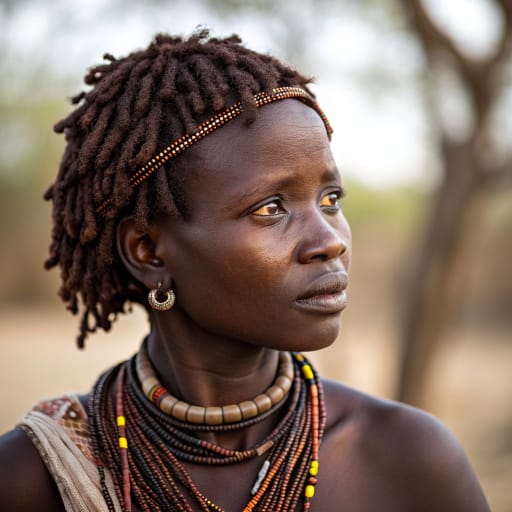
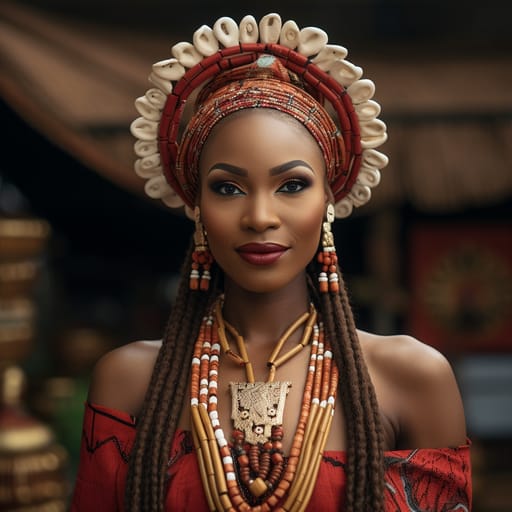
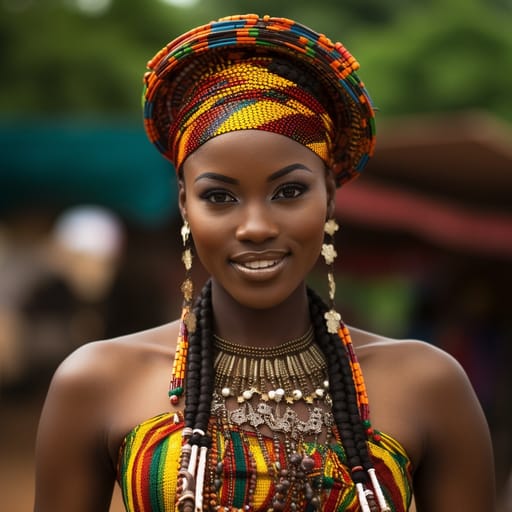
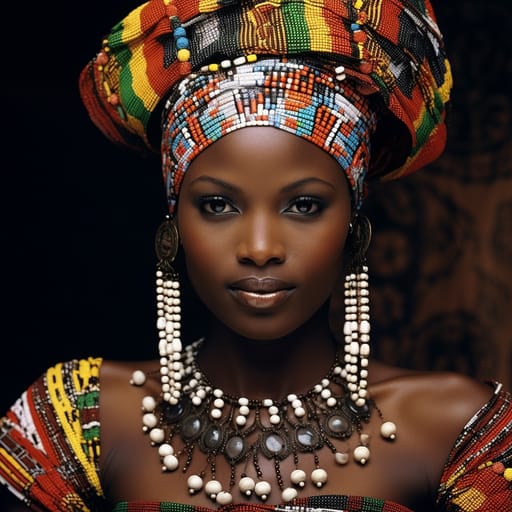
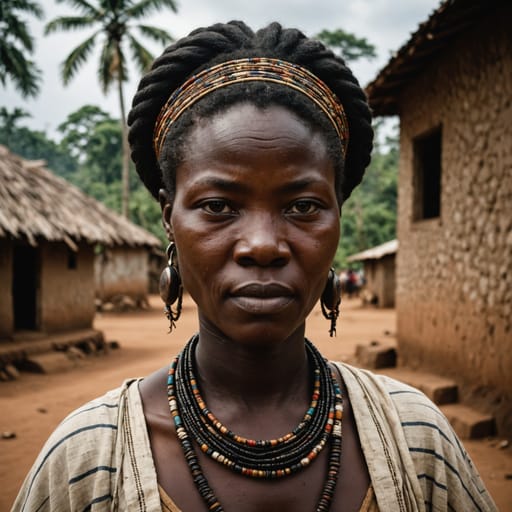
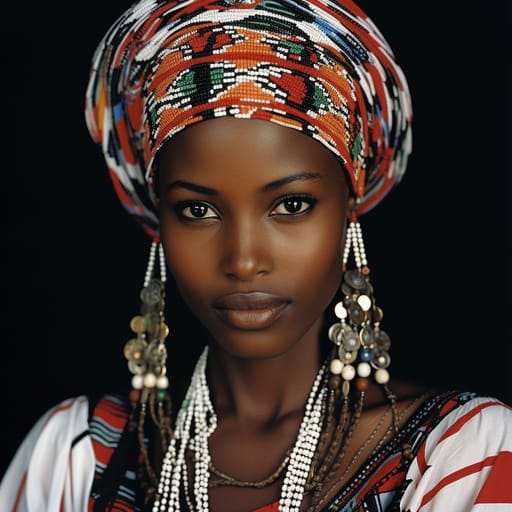
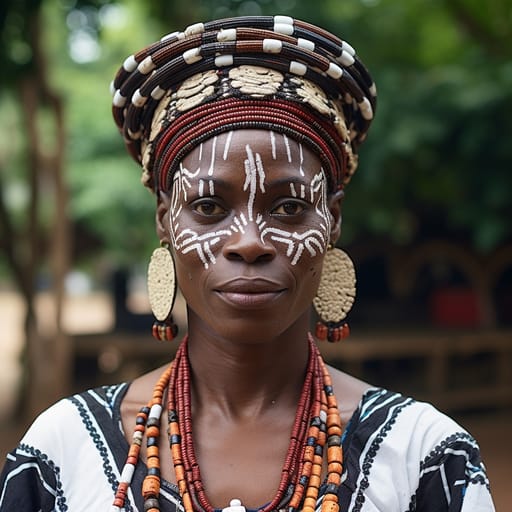
Typical Bassari Phenotypes
Reference for AI generation: hair, eyes, skin, facial structure, build
Bassari Body & Anatomy Reference
Per-feature anatomical profile for AI nude generation: West African Niger-Congo phenotype
Bassari Boobs & Breasts
Bust reference for Bassari women: medium-to-large cup, full, projecting, which is typical of West African Niger-Congo ancestry. Areolas measure about 35-50mm across, with deep-brown to near-black pigmentation. Body type (mesomorph with strong gluteal-femoral fat distribution) shapes the bust as well, so Bassari tits are usually fuller and more projecting than the East African norm. In AI imagery, keep the forward-set shape rather than drifting toward the smaller conical Cushitic East African profile.
Bassari Ass & Hips
The Bassari ass is typically wide-set, full, heavily projected glutes, which sets it apart from the slim narrow-hip Cushitic East African profile. Underneath, the pelvis shows wide iliac crests, broad gynoid pelvic pattern, high glute-to-waist ratio, part of the West African Niger-Congo skeletal pattern. For Bassari butt pics and AI renders, match that silhouette and the overall build (mesomorph with strong gluteal-femoral fat distribution).
Bassari Vagina & Pussy
Bassari pussy and vulvar anatomy presents deep-brown to near-black labial pigmentation, fuller labia minora, consistent with the West African Niger-Congo phenotype's pigmentation pattern. Bassari pubic hair is typically tightly-coiled coarse texture, densely distributed, in the inverted-triangle pattern. For anatomically accurate Bassari pussy renders the labial coloration should match the surrounding medium-brown to deep-brown skin tone with a continuous gradient, and the hair should keep its tightly-coiled coarse texture.
Bassari Dicks & Penis
Bassari dicks follow the West African Niger-Congo reference data: regional mean ~14-15cm erect; above-average girth, ~13cm circumference; deep-brown-to-near-black shaft pigmentation. Shaft color should track the medium-brown to deep-brown skin tone with a smooth change toward the glans, and Bassari pubic hair keeps its tightly-coiled coarse texture.
Bassari Body, Curves & Build
Bassari body type and overall build presents as mesomorph with strong gluteal-femoral fat distribution, with mean adult female BMI 24-27: the characteristic West African Niger-Congo habitus. Bassari curves and proportions should keep the regional skeletal frame (height, shoulder-to-hip ratio, limb proportions) rather than a generic mesomorph default.
Bassari Skin Tone & Hair Texture
Bassari skin sits in the medium-brown to deep-brown (Fitzpatrick V-VI) band. Hair is typically tight 4A-4C coil, often worn natural, braided, or relaxed, in keeping with the West African Niger-Congo phenotype. In nude renders the skin should stay one even tone from face to body, and body, pubic and head hair should match.
Explore phenotype categories
Structured taxonomy with peer-reviewed scales · 22 anatomical categories
Erotic Poses & Sex Positions
From the pose catalog: 219 named positions with reference skeletons
Frequently asked questions about Bassari people
Where is the Bassari homeland?
The Bassari homeland is Wooded uplands of southeastern Senegal (Kédougou Region, around Salémata) and neighboring northern Guinea, on the edge of the Futa Jallon highlands in Western Africa.
What language do Bassari people speak?
Bassari people primarily speak Oniyan, also called Basari (Tenda group, Atlantic branch of Niger-Congo); many also speak Pulaar, Malinke and French.
What religion do Bassari people practice?
The predominant religion among Bassari people is Traditional religion centered on ancestors, spirits and initiation; a large Catholic community; a smaller Muslim minority.






Make your own Bassari images
Five a day, free, no credits to buy. The studio starts from this group's phenotype data, so you can set body type, pose and style and keep the traits accurate.
Start with Bassari