Help us get this right
Does this portrait look right for Aweer?
Nobody has judged this one yet. You would be the first.
Aweer Erotic
Coastal hinterland forest of southeastern Kenya, chiefly Lamu County and the Ijara area of Garissa County, with historic range extending into southern Somalia
Aweer, also called Boni (Afroasiatic, Eastern Cushitic, Omo-Tana branch); Swahili in wide daily use, some Somali
Predominantly Sunni Muslim, alongside retained older ritual practice tied to the forest
Eastern Cushitic; counted with Kenya's other Cushitic-speaking hunter-gatherer minorities such as the Waata and Dahalo; organized in named local sections associated with particular forest territories
About Aweer People
The Aweer are a small people of the dry coastal forest behind Lamu, in the strip of Kenya that runs north and east toward the Somali border. Most outsiders know them as Boni, a name pinned on them by pastoralist neighbors to mark hunters as a lesser sort of person, and one the Aweer do not use for themselves. Their language is Cushitic, sitting in the same Omo-Tana cluster as Somali and Garre, which means their nearest linguistic relatives are camel and cattle people. The Aweer were not. They lived by hunting, trapping and above all by honey, moving through thicket and groundwater forest that looks like an impenetrable green wall from the road and reads as a set of named places, water points and hive trees to anyone raised in it. That gap, between how the forest looks from outside and how it is known from inside, explains a great deal of what has happened to them.
Honey is the thread that runs through Aweer life, and it involves a partner. Honey hunters work with the greater honeyguide, a bird that leads people to wild hives and takes the wax and grubs left behind as its share. The hunter whistles, the bird answers and moves ahead, and the arrangement holds because both sides keep it. Colonial administrators and then the Kenyan state had no category for any of this, and treated forest hunting as poaching; the national hunting ban of 1977 turned a livelihood into an offense. Earlier, the shifta conflict of the 1960s had already pushed Aweer families out of the forest interior into roadside settlements, where they have mostly stayed. Islam came through centuries of trade, marriage and proximity to the Swahili coast, and most Aweer today are Sunni Muslims, with older forest-facing practice folded in rather than discarded.
They number in the low thousands, which makes them one of Kenya's smallest recognized communities, and their language is classified as endangered, with Swahili doing more of the daily work each generation. Since 2015 their homeland has been a military operations zone, closed roads and closed schools included, because armed groups took cover in the same forest the Aweer know better than anyone. They are still there, still pressing a claim to ground that has been designated, on paper, as everything except theirs.
Related ethnic groups
Groups that share Aweer's homeland, region, language, or religious tradition. These are likely candidates for comparative phenotype reference.
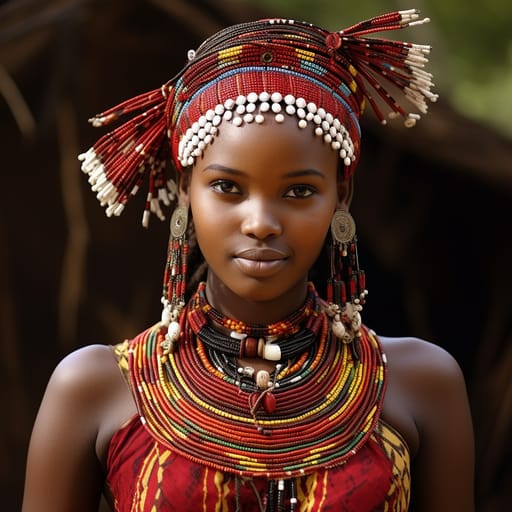
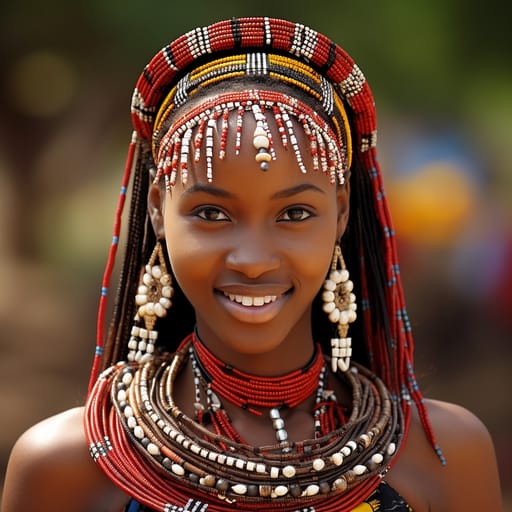
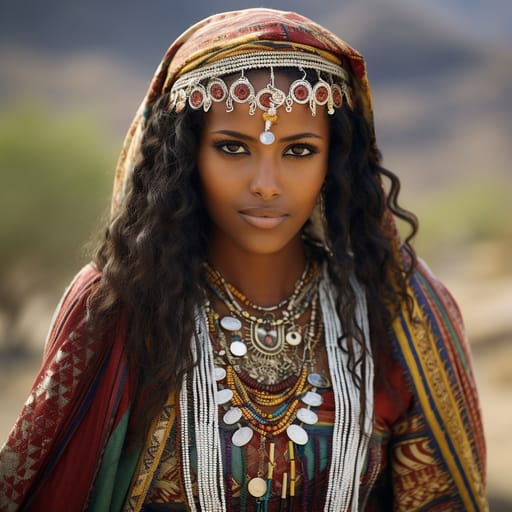
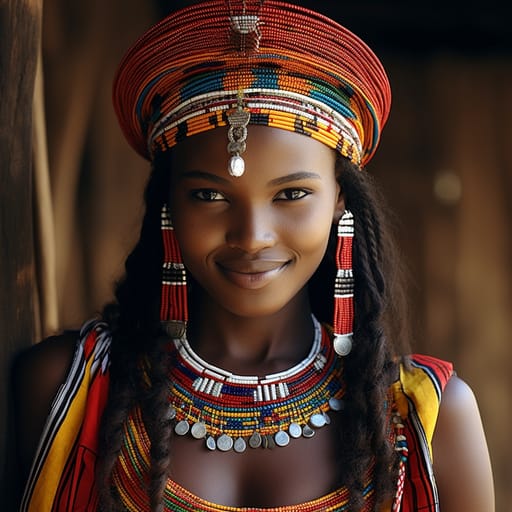
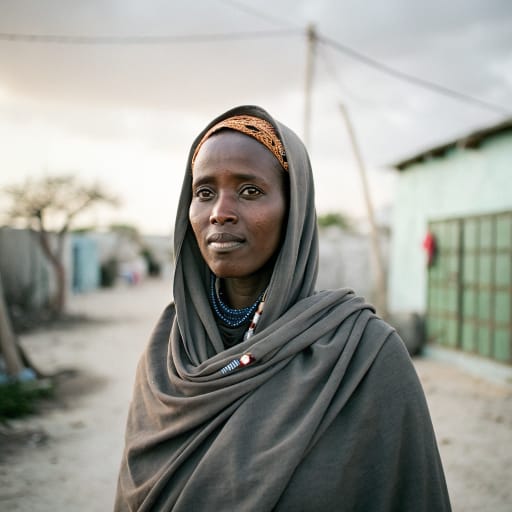
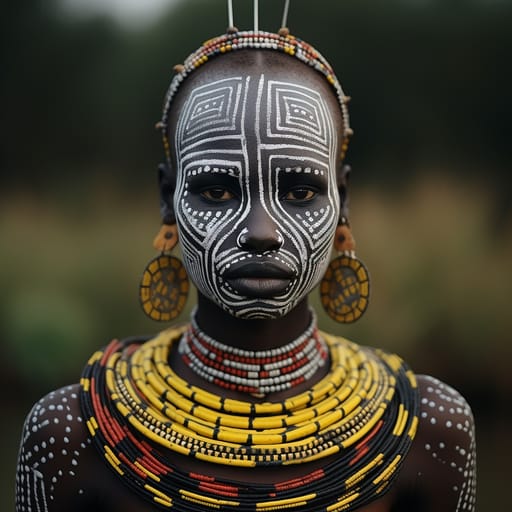
Typical Aweer Phenotypes
Reference for AI generation: hair, eyes, skin, facial structure, build
Aweer Body & Anatomy Reference
Cushitic / Nilo-Cushitic East African phenotype: anatomy reference for AI nude generation
Aweer Boobs & Breasts
Aweer tits and boobs run small-to-medium-cup, high-set, conical, the classic Cushitic / Nilo-Cushitic East African bust profile. Aweer nipples and areolas show moderate-to-high areolar pigmentation against the brown-to-deep-brown skin tone, with areolar diameter typically in the 28-38mm range and forward-set positioning rather than the lateral spread of the West African phenotype. Aweer breasts trend firmer and less projecting than the African-American or West African norm, a function of the lean ectomorph-to-mesomorph body habitus and the mean adult female BMI 19-22. For anatomically accurate AI-generated Aweer nudes the render preserves the small-to-medium-cup, high-set, conical shape, 28-38mm areolas with moderate-to-high pigmentation, and the torso proportions of the Cushitic / Nilo-Cushitic East African phenotype.
Aweer Ass & Hips
Aweer hips and butt usually read as small-to-medium, high-set, rounded. The skeletal base is narrow-to-medium iliac crests, longer torso-to-leg ratio, the Cushitic / Nilo-Cushitic East African pattern. Set against the wide-set heavy-projection West African or African-American norm, the difference is easy to see, and the hip-to-waist ratio is often what identifies Aweer women in photos.
Aweer Vagina & Pussy
Expect brown-to-deep-brown labial pigmentation, narrow-to-medium labia minora projection on Aweer women, in keeping with Cushitic / Nilo-Cushitic East African ancestry. The pubic hair is tightly-coiled coarse texture, densely distributed. Coloring should run evenly from the brown to deep brown skin of the thighs to the labia, and Aweer nude imagery should keep the hair's tightly-coiled coarse texture.
Aweer Dicks & Penis
Aweer dick and penile anatomy in adult AI generation should anchor on the regional reference data: regional mean ~13.5cm erect, moderate girth, ~12cm circumference, and deeper-pigmented than the West African norm. The Aweer cock profile reflects the Cushitic / Nilo-Cushitic East African population's anthropometric measurements. The shaft pigmentation should track the surrounding brown to deep brown skin tone, and the pubic hair should keep its tightly-coiled coarse texture in the typical inverted-V escutcheon.
Aweer Body, Curves & Build
Aweer body type: lean ectomorph-to-mesomorph, with mean adult female BMI 19-22. This is the typical Cushitic / Nilo-Cushitic East African build. Height range, shoulder-to-hip ratio and fat distribution all follow from it, which is what an accurate Aweer nude body should show.
Aweer Skin Tone & Hair Texture
Aweer skin tone falls in the brown to deep brown (Fitzpatrick V-VI) band, the surface signal most often miscalibrated by generic AI nude generators. Aweer hair texture is typically tight 4A-4C coil, often worn natural or in braided/twisted protective styles, characteristic of the Cushitic / Nilo-Cushitic East African phenotype. In Aweer nude renders the skin should hold that band consistently across the body.
Explore phenotype categories
Structured taxonomy with peer-reviewed scales · 22 anatomical categories
Erotic Poses & Sex Positions
From the pose catalog: 219 named positions with reference skeletons
Frequently asked questions about Aweer people
Where is the Aweer homeland?
The Aweer homeland is Coastal hinterland forest of southeastern Kenya, chiefly Lamu County and the Ijara area of Garissa County, with historic range extending into southern Somalia in Eastern Africa.
What language do Aweer people speak?
Aweer people primarily speak Aweer, also called Boni (Afroasiatic, Eastern Cushitic, Omo-Tana branch); Swahili in wide daily use, some Somali.
What religion do Aweer people practice?
The predominant religion among Aweer people is Predominantly Sunni Muslim, alongside retained older ritual practice tied to the forest.






Make your own Aweer images
Five a day, free, no credits to buy. The studio starts from this group's phenotype data, so you can set body type, pose and style and keep the traits accurate.
Start with Aweer