Yıva Erotic
Syr Darya and Aral Sea steppe (today Kazakhstan and Uzbekistan); later dispersed through Khorasan, Iran, Iraq, Azerbaijan and Anatolia (Turkey)
Tengrism and steppe folk religion; Sunni Islam from the 10th and 11th centuries
One of the 24 Oghuz tribes; Üçok (Three Arrows) division, line of Deniz Khan alongside the İğdir, Büğdüz and Kınık
About Yıva People
The Yıva were one of the twenty-four tribes of the medieval Oghuz Turks. They were a herding clan on the steppe along the lower Syr Darya and the Aral Sea in the ninth and tenth centuries. Later they moved west with the Seljuk conquests into Iran, Iraq, Azerbaijan and Anatolia, and their descendants blended into the Turkmen, Azerbaijani and Turkish peoples. What made them a group was family descent more than territory. Oghuz tradition treated all its tribes as one family: the grandsons of the legendary ruler Oghuz Khagan, sorted under his six sons. The Yıva traced their line to Deniz Khan, the Sea Khan and youngest son, along with the İğdir, Büğdüz and Kınık tribes. That put them in the Üçok, the Three Arrows, the junior half of the Oghuz alliance, as opposed to the senior Bozok. In the story, the elder brothers found a golden bow and broke it into shares, while the younger ones found three silver arrows. The image became shorthand for rank, precedence and who sat where when the Oghuz gathered.
Almost everything known about the Yıva comes from the people who wrote the Oghuz down. Mahmud al-Kashgari, compiling his Turkic dictionary in the 1070s, listed the Yıva and drew their tamga, the mark each tribe put on its horses and herds. More than two centuries later the Persian historian Rashid al-Din gave every tribe a meaning, a totem bird and a set cut of meat at feasts. He said the name Yıva meant roughly of high rank. They spoke Oghuz Turkic, the branch that later produced Turkmen, Azerbaijani and Turkish. Like the Oghuz in general, they moved from worship of the sky god Tengri to Sunni Islam during the tenth and eleventh centuries, without dropping older steppe custom. After the Seljuk victory at Dandanaqan in 1040, Yıva bands spread across the new Turkic lands to the west. The Turkish historian Faruk Sümer argued that the Qara Qoyunlu, the Turkmen dynasty that ruled Azerbaijan, Iraq and western Iran for much of the fifteenth century, were of Yıva descent.
No living community goes by the name today. The Yıva survive as a line in the origin story that Turkmen, Azerbaijanis and Turks still tell about themselves, and as one of the twenty-four tamgas reproduced wherever that story is retold.
Related ethnic groups
Groups that share Yıva's homeland, region, language, or religious tradition. These are likely candidates for comparative phenotype reference.
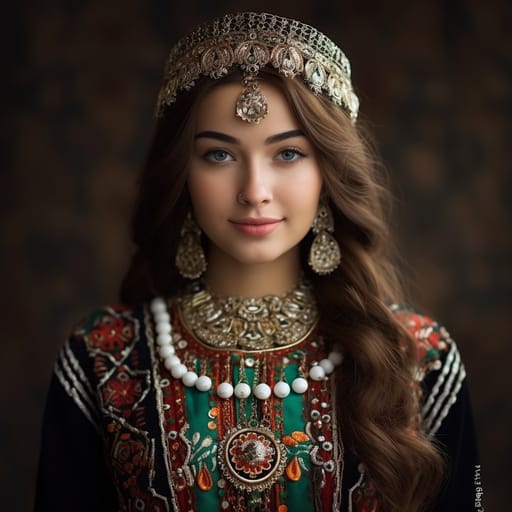
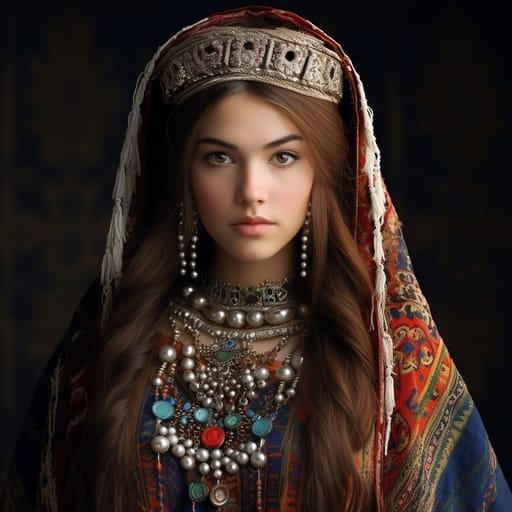
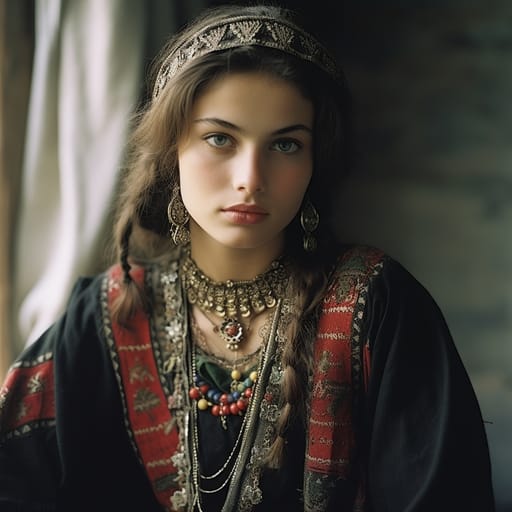
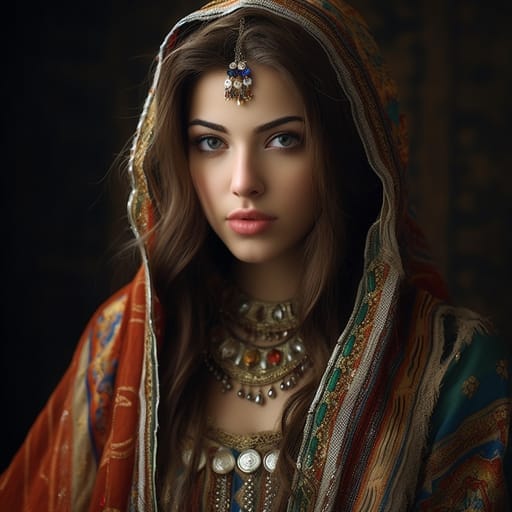
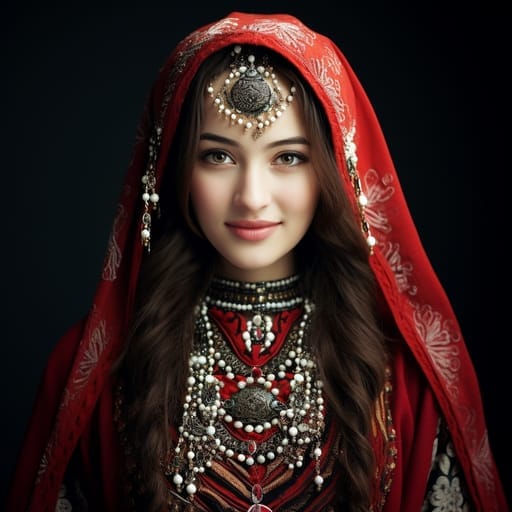
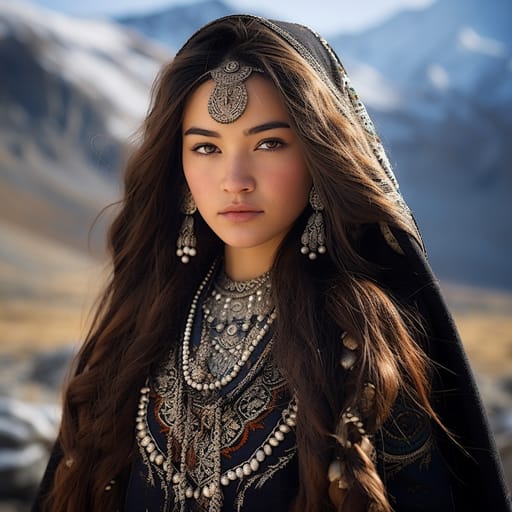
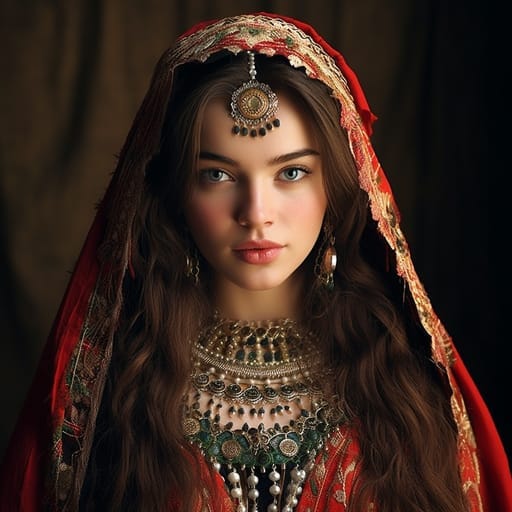
Typical Yıva Phenotypes
Reference for AI generation: hair, eyes, skin, facial structure, build
Yıva Body & Anatomy Reference
Central Asian Turkic-Mongolic phenotype: anatomy reference for AI nude generation
Yıva Boobs & Breasts
The typical Yıva bust is medium cup, moderate projection, in line with the wider Central Asian Turkic-Mongolic pattern. Areolas usually fall in the 30-42mm range, with medium-brown areolar pigmentation against the tan-to-light-brown skin tone. Compared with the smaller East Asian bust, Yıva breasts sit forward and are generally full and modestly projecting. A faithful AI render of Yıva tits keeps that shape and areola size.
Yıva Ass & Hips
Butt shape among Yıva women: medium, moderate projection, broader hip profile than the East Asian norm, over medium iliac crests, moderate gluteal-femoral fat deposition. This follows Central Asian Turkic-Mongolic ancestry and looks quite unlike the slim East Asian narrow-hip profile. An accurate Yıva ass in adult AI imagery keeps both the silhouette and the overall build (mesomorph, broader frame than the East Asian norm) instead of a generic average.
Yıva Vagina & Pussy
Vulvar anatomy among Yıva women: medium-brown labial pigmentation. Pubic hair tends to be straight-to-wavy medium-coarse texture, in the usual inverted-triangle pattern. Both follow Central Asian Turkic-Mongolic pigmentation, which is why Yıva pussy renders should not fall back on a pale, sparse Western template.
Yıva Dicks & Penis
The Yıva cock profile, from Central Asian Turkic-Mongolic anthropometric data: regional mean ~13cm erect; moderate girth; medium-brown shaft pigmentation. Pubic hair has a straight-to-wavy medium-coarse texture and forms the usual inverted-V pattern. Whether Yıva men are circumcised follows religious and cultural practice rather than phenotype.
Yıva Body, Curves & Build
Build and curves among Yıva women follow the Central Asian Turkic-Mongolic pattern: mesomorph, broader frame than the East Asian norm, mean adult female BMI 23-26. Proportions matter as much as skin tone, so Yıva figures should keep their regional height and limb ratios.
Yıva Skin Tone & Hair Texture
The Yıva skin range is tan to light-brown (Fitzpatrick III-IV), and hair tends to be straight 1A-1B, dark-brown to black. That combination marks the Central Asian Turkic-Mongolic phenotype, and skin tone is the trait AI generators most often get wrong for Yıva women.
Explore phenotype categories
Structured taxonomy with peer-reviewed scales · 22 anatomical categories
Erotic Poses & Sex Positions
From the pose catalog: 219 named positions with reference skeletons
Frequently asked questions about Yıva people
Where is the Yıva homeland?
The Yıva homeland is Syr Darya and Aral Sea steppe (today Kazakhstan and Uzbekistan); later dispersed through Khorasan, Iran, Iraq, Azerbaijan and Anatolia (Turkey) in Central Asia.
What language do Yıva people speak?
Yıva people primarily speak Oghuz Turkic (Turkic, Oghuz branch).
What religion do Yıva people practice?
The predominant religion among Yıva people is Tengrism and steppe folk religion; Sunni Islam from the 10th and 11th centuries.






Make your own Yıva images
Five a day, free, no credits to buy. The studio starts from this group's phenotype data, so you can set body type, pose and style and keep the traits accurate.
Start with Yıva