No portrait yet
Xokó Erotic
São Pedro Island and the Caiçara lands on the lower São Francisco River, municipality of Porto da Folha, Sergipe, Brazil
Portuguese (Indo-European, Romance); the ancestral Xokó language is extinct and unclassified
Roman Catholic, practiced alongside the Indigenous toré ritual tradition
Indigenous peoples of Northeast Brazil; historically linked to the Kariri-Xocó of Porto Real do Colégio, Alagoas
About Xokó People
The Xokó are the Indigenous people of Sergipe, Brazil's smallest state, and the only one it officially recognizes. Their center is São Pedro Island, a stretch of land in the lower São Francisco River near the town of Porto da Folha, together with the adjoining Caiçara lands on the Sergipe bank. That one place holds most of their story. Their ancestors were gathered at a Catholic mission on the island in colonial times. The land was later taken from them for generations, and in the end the people took it back themselves.
They lost it slowly. In the nineteenth century, officials declared the old mission village extinct, a paperwork move repeated across the Brazilian Northeast that turned Indigenous land into private property. Xokó families stayed where they were, but now as tenants and sharecroppers working for ranchers on ground their grandparents had held. Official Brazil stopped counting them as Indigenous at all and saw them simply as poor riverside farmers. That changed in the late 1970s, when Xokó families reoccupied the island with backing from the Catholic diocese of Propriá. Federal recognition followed, and the territory was eventually made official, though not without years of conflict with the landholders.
Their language was lost along the way. Nobody speaks it now, and too little was written down to place it in any language family. Daily life runs in Portuguese, the rural Northeastern kind. Being Xokó rests instead on descent, on the land and on ritual. The toré, a circle dance with chanting and rattles shared by many Indigenous peoples of the region, is central to it. The Xokó rebuilt their practice through contact with the Kariri-Xocó, a people downriver on the Alagoas bank with whom they share history and family ties. Catholic devotion is no rival to this. The mission past, the island named for Saint Peter and the toré all sit together in how the community sees itself.
They make their living from the river: fishing, small farms, and rice grown in floodplain lagoons, a system that has come under strain since dams upstream changed the São Francisco's floods. The Xokó number in the hundreds. Their return to the island is one of the better-known cases of a Northeastern people reclaiming an identity the state had written off.
Related ethnic groups
Groups that share Xokó's homeland, region, language, or religious tradition. These are likely candidates for comparative phenotype reference.
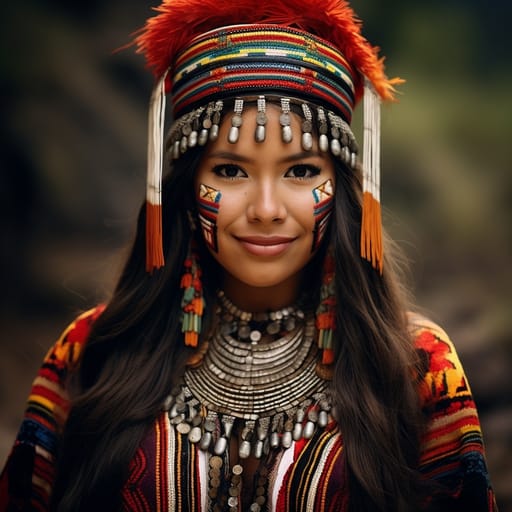
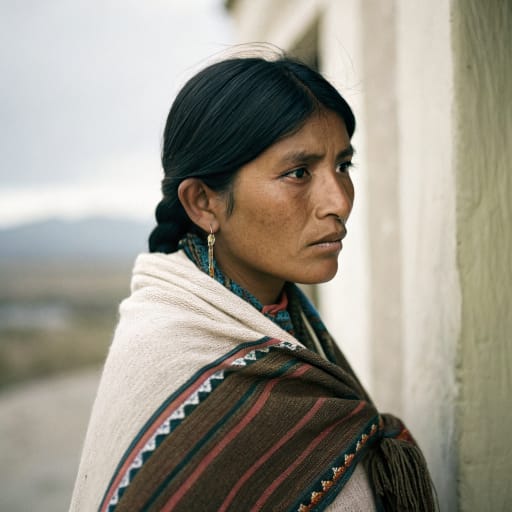
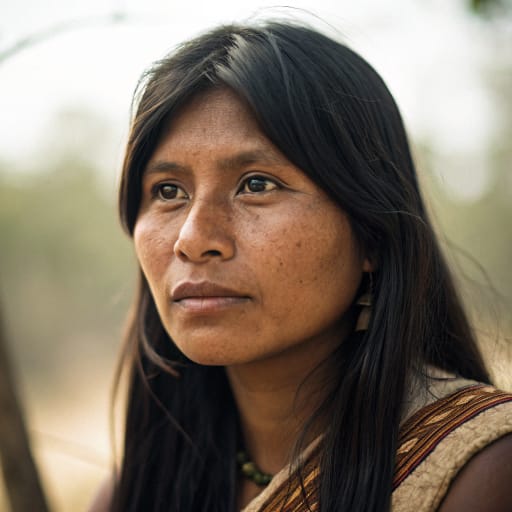
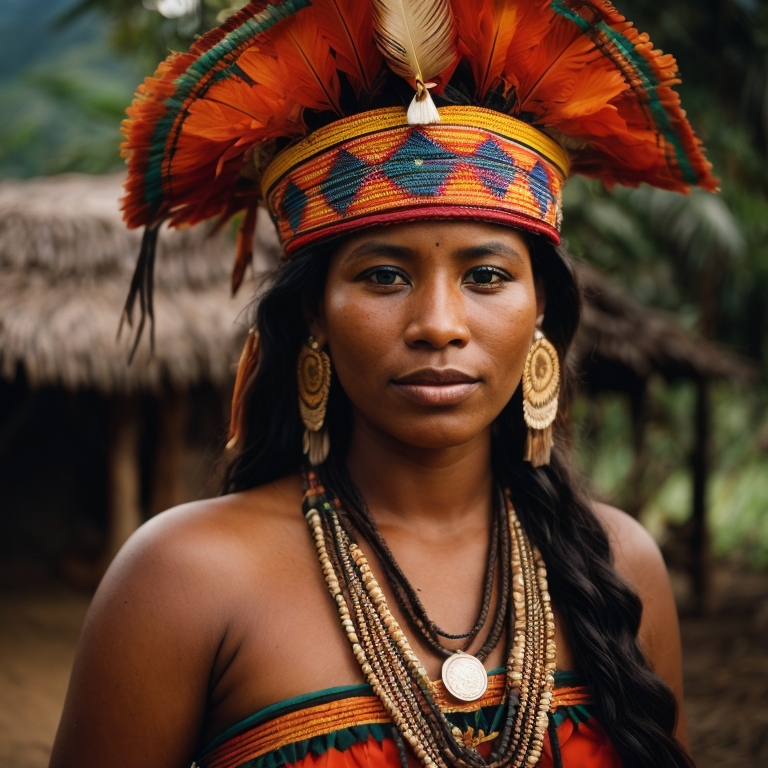
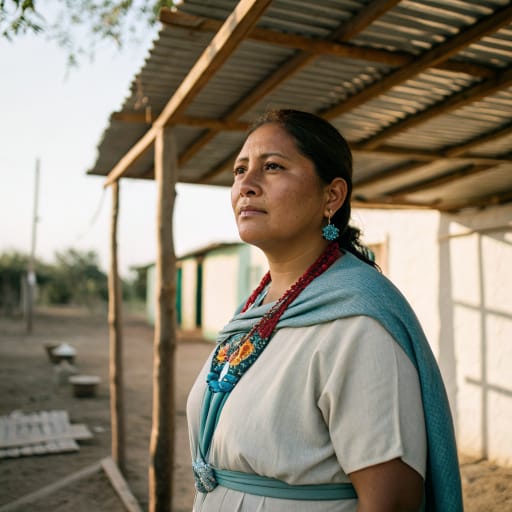
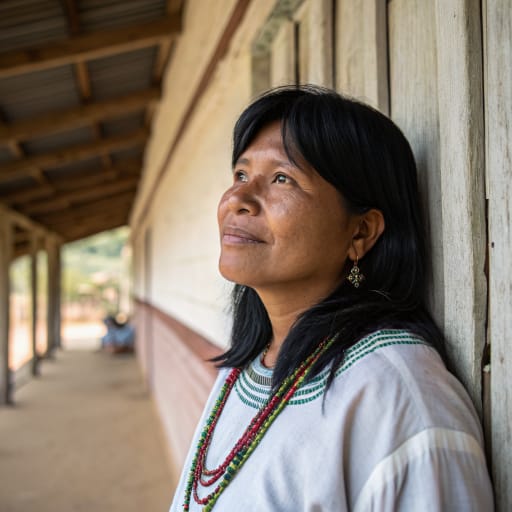
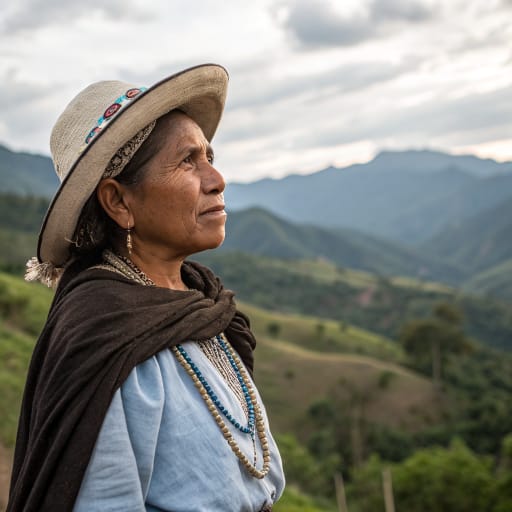
Typical Xokó Phenotypes
Reference for AI generation: hair, eyes, skin, facial structure, build
Xokó Body & Anatomy Reference
South American Indigenous / European-Mestizo / Afro-Latino mix phenotype: anatomy reference for AI nude generation
Xokó Boobs & Breasts
The typical Xokó bust is medium-to-large cup, full, high projection, in line with the wider South American Indigenous / European-Mestizo / Afro-Latino mix pattern. Areolas usually fall in the 32-46mm range, with medium-brown to dark-brown areolar pigmentation against the tan-to-deep-brown skin tone. Compared with the smaller bust profile of Andean Indigenous sub-populations, Xokó breasts sit forward and are generally the classic Brazilian / Latina curvy bust profile in lowland populations; smaller and shorter-set in Andean Indigenous populations. A faithful AI render of Xokó tits keeps that shape and areola size.
Xokó Ass & Hips
Butt shape among Xokó women: full, high projection, the famous Brazilian / Latina bunda profile, over wide iliac crests, very full gluteal-femoral fat deposition (the hallmark Brazilian / Latina hip-to-waist ratio). This follows South American Indigenous / European-Mestizo / Afro-Latino mix ancestry and looks quite unlike the slim narrow-hip East Asian profile. An accurate Xokó ass in adult AI imagery keeps both the silhouette and the overall build (endomorph-to-mesomorph with high gluteal-femoral deposition) instead of a generic average.
Xokó Vagina & Pussy
Vulvar anatomy among Xokó women: medium-brown to dark-brown labial pigmentation, fuller labia minora. Pubic hair tends to be wavy-to-curly coarse dark texture, dense distribution, in the usual inverted-triangle pattern. Both follow South American Indigenous / European-Mestizo / Afro-Latino mix pigmentation, which is why Xokó pussy renders should not fall back on a pale, sparse Western template.
Xokó Dicks & Penis
The Xokó cock profile, from South American Indigenous / European-Mestizo / Afro-Latino mix anthropometric data: regional mean ~13cm erect; moderate-to-above-average girth; medium-brown shaft pigmentation. Pubic hair has a wavy-to-curly coarse dark texture and forms the usual inverted-V pattern. Whether Xokó men are circumcised follows religious and cultural practice rather than phenotype.
Xokó Body, Curves & Build
Build and curves among Xokó women follow the South American Indigenous / European-Mestizo / Afro-Latino mix pattern: endomorph-to-mesomorph with high gluteal-femoral deposition, mean adult female BMI 25-28. Proportions matter as much as skin tone, so Xokó figures should keep their regional height and limb ratios.
Xokó Skin Tone & Hair Texture
The Xokó skin range is tan to deep-brown (Fitzpatrick III-VI), and hair tends to be straight-to-curly 1A-3C, varies widely by ancestral composition. That combination marks the South American Indigenous / European-Mestizo / Afro-Latino mix phenotype, and skin tone is the trait AI generators most often get wrong for Xokó women.
Explore phenotype categories
Structured taxonomy with peer-reviewed scales · 22 anatomical categories
Erotic Poses & Sex Positions
From the pose catalog: 219 named positions with reference skeletons
Frequently asked questions about Xokó people
Where is the Xokó homeland?
The Xokó homeland is São Pedro Island and the Caiçara lands on the lower São Francisco River, municipality of Porto da Folha, Sergipe, Brazil in South America.
What language do Xokó people speak?
Xokó people primarily speak Portuguese (Indo-European, Romance); the ancestral Xokó language is extinct and unclassified.
What religion do Xokó people practice?
The predominant religion among Xokó people is Roman Catholic, practiced alongside the Indigenous toré ritual tradition.






Make your own Xokó images
Five a day, free, no credits to buy. The studio starts from this group's phenotype data, so you can set body type, pose and style and keep the traits accurate.
Start with Xokó