Help us get this right
Does this portrait look right for Chitareros?
Nobody has judged this one yet. You would be the first.
Chitareros Erotic
Eastern Andes around Pamplona, in Norte de Santander and northeastern Santander, Colombia, reaching into Táchira, Venezuela.
Chitarero (presumed Chibchan), extinct and virtually unrecorded; survives mainly in place names.
Indigenous religion, scarcely documented; Catholicism imposed under Spanish rule.
Northern Chibchan highland peoples, neighbors of the Guane, Lache, U'wa and Muisca; organized as independent local chiefdoms rather than named branches.
About Chitareros People
The Chitareros were a Chibchan-speaking farming people of the northeastern Colombian Andes, settled around present-day Pamplona in Norte de Santander and across the border in Venezuelan Táchira. The Spanish conquered them in the mid sixteenth century, and within a few generations they had ceased to exist as a distinct people. Their descendants are part of the mestizo highland population of the region. Even their name is an outsider's label. Spanish soldiers are said to have taken it from the gourd the men carried at the waist, filled with chicha, and nobody recorded what they called themselves.
They sat at the northern end of the Chibchan highland world, with the Guane to the southwest, the Lache and U'wa to the south and east, and the Muisca further down the cordillera. Unlike the Muisca, they had no confederation and no paramount rulers. They lived in scattered hamlets strung across steep valleys, each under its own local chief, and used the vertical country well: maize, beans and root crops in the cool uplands, cassava, cotton and achiote lower down. Cotton cloth and dye moved along the trade paths that tied them to their neighbors. Their language went unwritten and survives almost entirely in place names, which is why its Chibchan classification rests on geography and toponyms rather than on any recorded grammar.
Their first appearance in European history was a violent one. In 1533 the German conquistador Ambrosius Ehinger, marching out of Venezuela for the Welser banking house, took an arrow in the neck in the valley of Chinácota and died days later. The arrow is usually said to have been poisoned. Sixteen years after that, Pedro de Ursúa and Ortún Velasco founded Pamplona in the middle of Chitarero country, and the hamlets were parceled out among settlers as encomiendas. Gold strikes in the nearby páramos in the 1550s pulled forced labor uphill into the mines. Epidemics, overwork and flight did the rest, and the Chitareros gradually stopped being counted as a people at all.
What survives is mostly on the map. Chinácota, Cácota, Chitagá, Labateca, Bochalema: the town names of southern Norte de Santander are largely theirs. Regional histories of Pamplona and its neighbors open with the Chitareros and claim them as ancestors. That is accurate in blood if not in memory, since almost nothing of their religion, stories or speech was written down before it was gone.
Related ethnic groups
Groups that share Chitareros's homeland, region, language, or religious tradition. These are likely candidates for comparative phenotype reference.
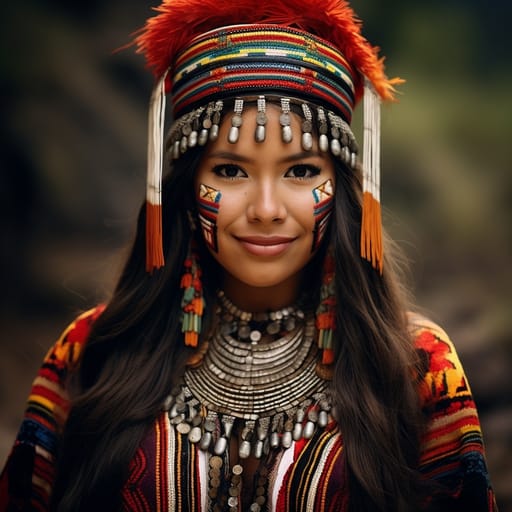
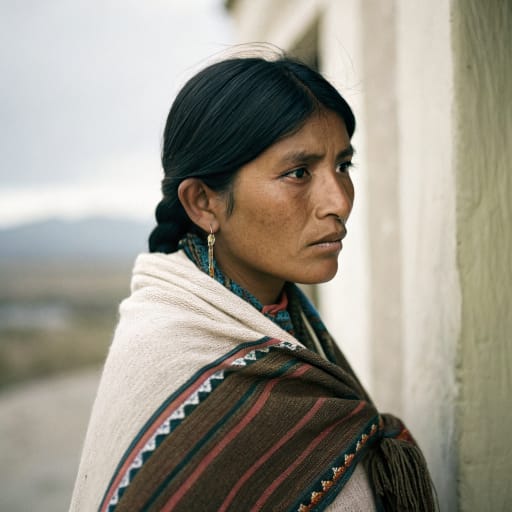
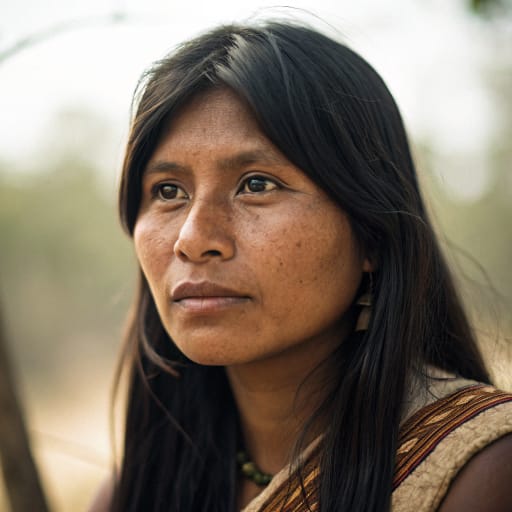
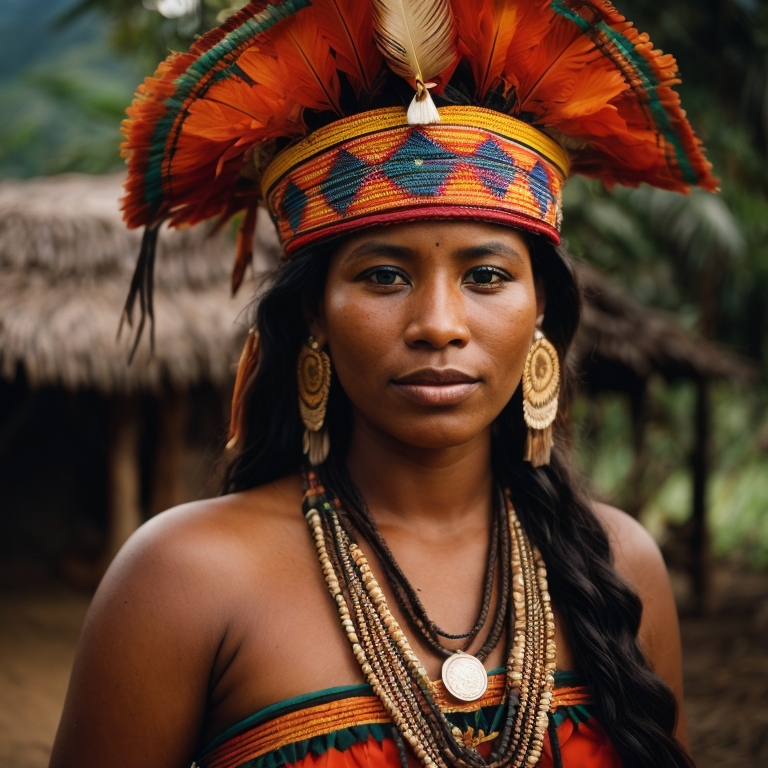
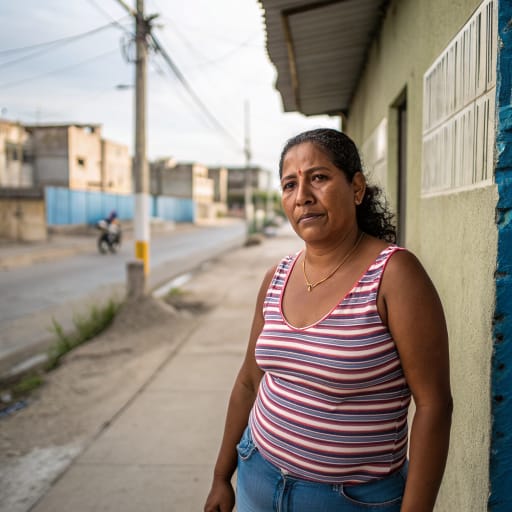
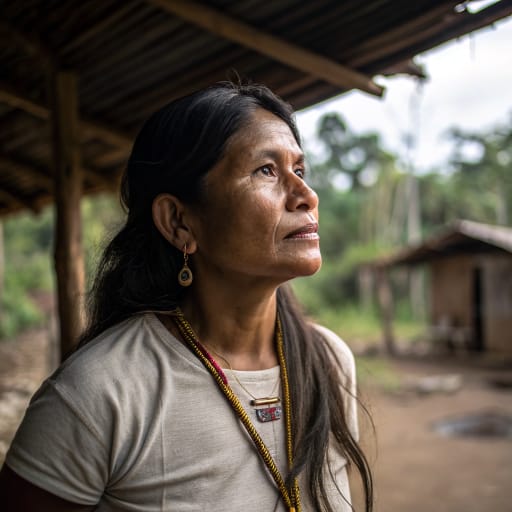
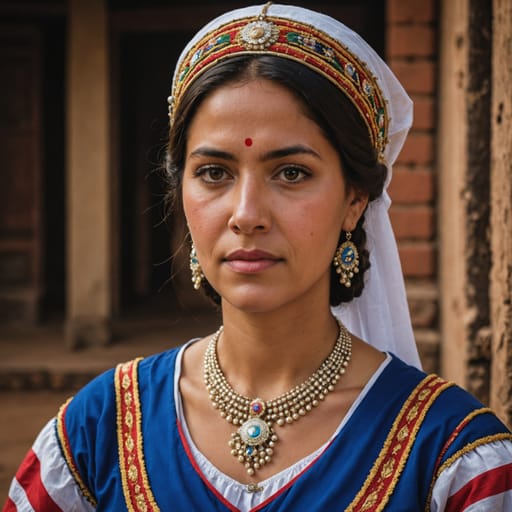
Typical Chitareros Phenotypes
Reference for AI generation: hair, eyes, skin, facial structure, build
Chitareros Body & Anatomy Reference
South American Indigenous / European-Mestizo / Afro-Latino mix phenotype: anatomy reference for AI nude generation
Chitareros Boobs & Breasts
Chitareros boobs follow the South American Indigenous / European-Mestizo / Afro-Latino mix profile: medium-to-large cup, full, high projection. Areolar diameter is usually 32-46mm, and the coloring is medium-brown to dark-brown areolar pigmentation against the tan-to-deep-brown skin tone. Breast shape tracks body composition (endomorph-to-mesomorph with high gluteal-femoral deposition, mean adult female BMI 25-28), so Chitareros breasts tend to be the classic Brazilian / Latina curvy bust profile in lowland populations; smaller and shorter-set in Andean Indigenous populations. Expect a forward-set shape, not the smaller bust profile of Andean Indigenous sub-populations.
Chitareros Ass & Hips
Chitareros ass and hip morphology presents as full, high projection, the famous Brazilian / Latina bunda profile, distinctly different from the slim narrow-hip East Asian profile. The Chitareros pelvic profile shows wide iliac crests, very full gluteal-femoral fat deposition (the hallmark Brazilian / Latina hip-to-waist ratio), anchored in the South American Indigenous / European-Mestizo / Afro-Latino mix skeletal pattern. Chitareros butt shots in adult AI imagery should render the full, high projection, the famous Brazilian / Latina bunda profile silhouette with the overall build (endomorph-to-mesomorph with high gluteal-femoral deposition) and the fat distribution typical of the South American Indigenous / European-Mestizo / Afro-Latino mix phenotype.
Chitareros Vagina & Pussy
Chitareros pussy anatomy typically shows medium-brown to dark-brown labial pigmentation, fuller labia minora. Pubic hair is usually wavy-to-curly coarse dark texture, dense distribution. In AI-generated Chitareros nudes, labial color should blend into the tan to deep-brown skin with a gradual transition, and the hair should keep its wavy-to-curly coarse dark texture.
Chitareros Dicks & Penis
Penis reference for Chitareros men: regional mean ~13cm erect, moderate-to-above-average girth. Coloring: medium-brown shaft pigmentation. An accurate Chitareros cock in AI imagery matches the surrounding tan to deep-brown skin rather than a generic porn default. Circumcision depends on religion and custom, not ancestry.
Chitareros Body, Curves & Build
The Chitareros figure is generally endomorph-to-mesomorph with high gluteal-femoral deposition, with mean adult female BMI 25-28, characteristic of South American Indigenous / European-Mestizo / Afro-Latino mix ancestry. AI image tools tend to flatten regional body types into a few stock shapes; here the Chitareros build is kept as its own reference.
Chitareros Skin Tone & Hair Texture
Skin: tan to deep-brown (Fitzpatrick III-VI). Hair: straight-to-curly 1A-3C, varies widely by ancestral composition. Both are typical of South American Indigenous / European-Mestizo / Afro-Latino mix ancestry. The most common mistake in AI nudes of Chitareros women is a body rendered lighter than the face.
Explore phenotype categories
Structured taxonomy with peer-reviewed scales · 22 anatomical categories
Erotic Poses & Sex Positions
From the pose catalog: 219 named positions with reference skeletons
Frequently asked questions about Chitareros people
Where is the Chitareros homeland?
The Chitareros homeland is Eastern Andes around Pamplona, in Norte de Santander and northeastern Santander, Colombia, reaching into Táchira, Venezuela. in South America.
What language do Chitareros people speak?
Chitareros people primarily speak Chitarero (presumed Chibchan), extinct and virtually unrecorded; survives mainly in place names..
What religion do Chitareros people practice?
The predominant religion among Chitareros people is Indigenous religion, scarcely documented; Catholicism imposed under Spanish rule..






Make your own Chitareros images
Five a day, free, no credits to buy. The studio starts from this group's phenotype data, so you can set body type, pose and style and keep the traits accurate.
Start with Chitareros