No portrait yet
Xionites Erotic
Transoxiana and Bactria, 4th to 6th centuries CE: modern Uzbekistan, Tajikistan, Turkmenistan and northern Afghanistan
Unknown; debated between Eastern Iranian and Turkic; successor states wrote in Bactrian (Indo-European, Iranian)
Unknown; steppe funerary rites including cremation attested; not Zoroastrian, though Zoroastrianism and Buddhism prevailed in their territories
Counted among the so-called Iranian Huns with the Kidarites, Alkhon, Nezak and Hephthalites; Persian tradition distinguishes Red Xyon (Karmir Xyon) and White Xyon (Spet Xyon)
About Xionites People
The Xionites were a nomadic people who rode into Transoxiana and Bactria, in what is now Uzbekistan, Tajikistan, Turkmenistan and northern Afghanistan, in the middle of the fourth century CE, and who were absorbed within about two centuries into the Kidarite and Hephthalite states that grew out of the same movement. What made them a group was less a language or a faith than an entrance: they came off the steppe as mounted raiders, hit the eastern frontier of Sasanian Persia hard enough that Shapur II spent years fighting them, and then signed on as his allies. The Roman officer and historian Ammianus Marcellinus saw them in person at the siege of Amida in 359, riding with the Persian army under a king he calls Grumbates, and his account is nearly all the direct testimony that survives.
Almost everything else about them is argued over. The name, Chionitae in Latin and Xyon in Middle Persian, is probably the same root as Hun, and Persian writers reused an old Avestan word for a legendary enemy nation, the Hyaona, to label them, which says how the Sasanians saw them: a recurring threat from the east wearing a familiar name. Whether they spoke an Eastern Iranian language or a Turkic one is unresolved. The states that followed them used Bactrian, the local Iranian language, on coins and in documents, which tells us more about their subjects than about them. Modern scholars usually place them at the head of the so-called Iranian Huns, a sequence running through the Kidarites, the Alkhon, the Nezak and the Hephthalites, and later Persian tradition split the Xyon into Red and White, labels usually matched to the Kidarites and the Hephthalites.
The one vivid window Ammianus leaves open is a funeral. Grumbates' son was killed by a bolt from the walls of Amida, and the Xionites stopped the war to mourn him: the body lay in state for a week ringed by ten effigies of the dead, the camp wailed, and then the corpse was burned and the bones sealed in a silver urn to be carried home. Cremation was an abomination to the Zoroastrian Persians beside them, so the scene marks the Xionites as something other than a Persian client, a steppe people keeping their own rites inside an empire that needed their cavalry. Their legacy is mostly a name and a pattern. The Huna who broke into Gupta India, the Hephthalites who killed a Persian king in battle, and the long Persian habit of calling every eastern horseman a Xyon all lead back to the people Ammianus watched grieve outside a Roman fortress.
Related ethnic groups
Groups that share Xionites's homeland, region, language, or religious tradition. These are likely candidates for comparative phenotype reference.
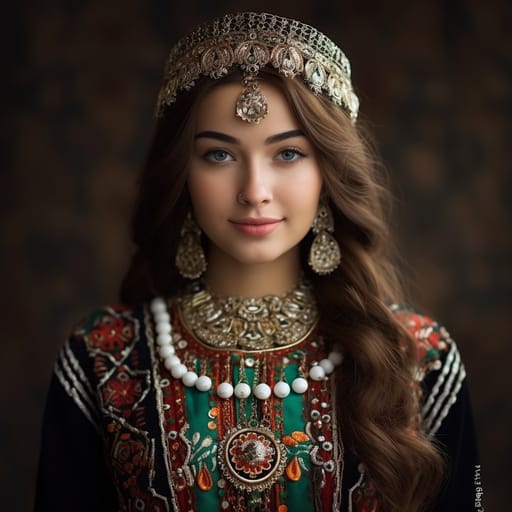
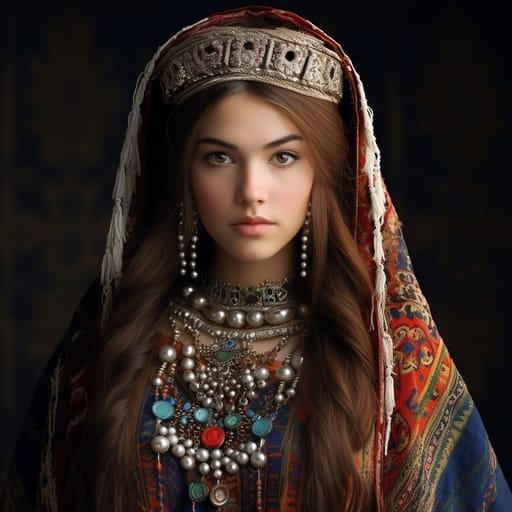
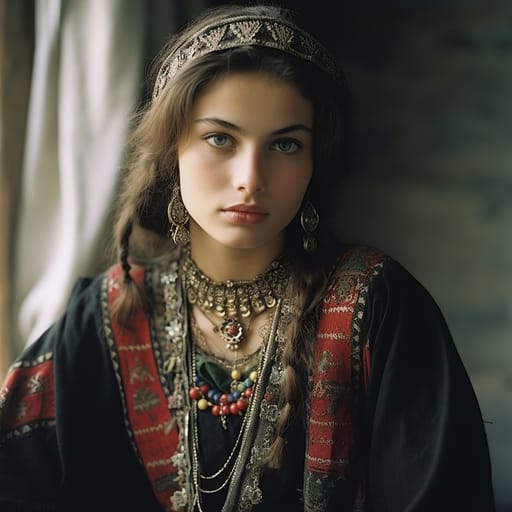
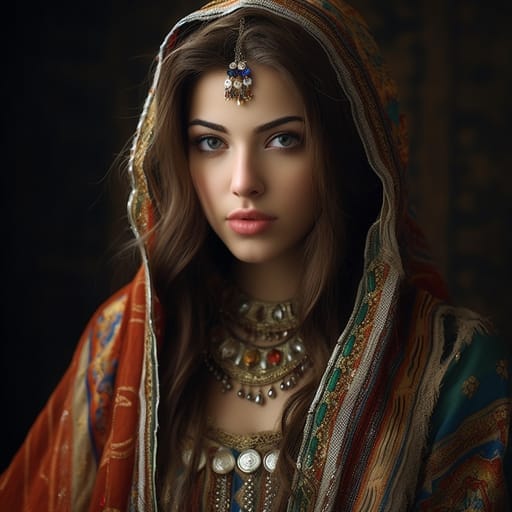
Typical Xionites Phenotypes
Reference for AI generation: hair, eyes, skin, facial structure, build
Xionites Body & Anatomy Reference
Central Asian Turkic-Mongolic phenotype: anatomy reference for AI nude generation
Xionites Boobs & Breasts
The typical Xionites bust is medium cup, moderate projection, in line with the wider Central Asian Turkic-Mongolic pattern. Areolas usually fall in the 30-42mm range, with medium-brown areolar pigmentation against the tan-to-light-brown skin tone. Compared with the smaller East Asian bust, Xionites breasts sit forward and are generally full and modestly projecting. A faithful AI render of Xionites tits keeps that shape and areola size.
Xionites Ass & Hips
Butt shape among Xionites women: medium, moderate projection, broader hip profile than the East Asian norm, over medium iliac crests, moderate gluteal-femoral fat deposition. This follows Central Asian Turkic-Mongolic ancestry and looks quite unlike the slim East Asian narrow-hip profile. An accurate Xionites ass in adult AI imagery keeps both the silhouette and the overall build (mesomorph, broader frame than the East Asian norm) instead of a generic average.
Xionites Vagina & Pussy
Vulvar anatomy among Xionites women: medium-brown labial pigmentation. Pubic hair tends to be straight-to-wavy medium-coarse texture, in the usual inverted-triangle pattern. Both follow Central Asian Turkic-Mongolic pigmentation, which is why Xionites pussy renders should not fall back on a pale, sparse Western template.
Xionites Dicks & Penis
The Xionites cock profile, from Central Asian Turkic-Mongolic anthropometric data: regional mean ~13cm erect; moderate girth; medium-brown shaft pigmentation. Pubic hair has a straight-to-wavy medium-coarse texture and forms the usual inverted-V pattern. Whether Xionites men are circumcised follows religious and cultural practice rather than phenotype.
Xionites Body, Curves & Build
Build and curves among Xionites women follow the Central Asian Turkic-Mongolic pattern: mesomorph, broader frame than the East Asian norm, mean adult female BMI 23-26. Proportions matter as much as skin tone, so Xionites figures should keep their regional height and limb ratios.
Xionites Skin Tone & Hair Texture
The Xionites skin range is tan to light-brown (Fitzpatrick III-IV), and hair tends to be straight 1A-1B, dark-brown to black. That combination marks the Central Asian Turkic-Mongolic phenotype, and skin tone is the trait AI generators most often get wrong for Xionites women.
Explore phenotype categories
Structured taxonomy with peer-reviewed scales · 22 anatomical categories
Erotic Poses & Sex Positions
From the pose catalog: 219 named positions with reference skeletons
Frequently asked questions about Xionites people
Where is the Xionites homeland?
The Xionites homeland is Transoxiana and Bactria, 4th to 6th centuries CE: modern Uzbekistan, Tajikistan, Turkmenistan and northern Afghanistan in Central Asia.
What language do Xionites people speak?
Xionites people primarily speak Unknown; debated between Eastern Iranian and Turkic; successor states wrote in Bactrian (Indo-European, Iranian).
What religion do Xionites people practice?
The predominant religion among Xionites people is Unknown; steppe funerary rites including cremation attested; not Zoroastrian, though Zoroastrianism and Buddhism prevailed in their territories.






Make your own Xionites images
Five a day, free, no credits to buy. The studio starts from this group's phenotype data, so you can set body type, pose and style and keep the traits accurate.
Start with Xionites