No portrait yet
Walla Walla Erotic
The lower Walla Walla and Columbia river confluence in southeastern Washington and northeastern Oregon, United States; most enrolled members now live on or near the Umatilla Indian Reservation outside Pendleton, Oregon.
Walla Walla dialect of Sahaptin, called Ichishkíin by speakers (Sahaptian, Plateau Penutian); English is the everyday language today.
Washat or Seven Drums longhouse religion alongside Presbyterian and Catholic Christianity, frequently practiced together.
One of the Sahaptin-speaking Plateau peoples; confederated with the Cayuse and Umatilla in the CTUIR, with related families enrolled at Yakama.
About Walla Walla People
The name is stamped all over the interior Northwest: a river, a valley, a county seat in Washington, a wine appellation, a famously sweet onion. The people it came from are far less visible to most Americans, which is its own kind of irony, because Walúulapam carries a sense of "many waters" and the Walla Walla were above all a people of confluences. Their country sits where the Walla Walla River meets the Columbia, spilling across what is now southeastern Washington and northeastern Oregon: dry benchland and sagebrush steppe, cut by canyons, backed by the Blue Mountains. Nothing about it is lush. The wealth was in the rivers, and the rivers ran with salmon. They speak Sahaptin, which speakers call Ichishkíin, a Sahaptian language whose dialects shade into Umatilla and Yakama speech and stand at a greater remove from Nez Perce. Life ran on a seasonal circuit rather than a fixed address: winter villages of tule mat lodges along the water, spring on the uplands digging cous, camas and bitterroot, summer at the fishing scaffolds, fall in the mountains for huckleberries and deer. Horses arrived in the eighteenth century and stretched that circuit east, and the Walla Walla valley became a place where Plateau, Plains and coastal goods changed hands.
Lewis and Clark came through in 1805 and again in 1806, hosted by a headman the journals record as Yellepit. Fifty years later the treaty council of 1855 took most of the land and created the Umatilla Reservation, and that same winter the leader Peopeomoxmox was killed while held under a flag of truce, his body mutilated by soldiers. It is not a grievance anyone here has filed away. The Walla Walla today are one of three peoples, with the Cayuse and the Umatilla, in the Confederated Tribes of the Umatilla Indian Reservation near Pendleton, Oregon, with relatives among the Yakama. Many belong to the Washat or Seven Drums longhouse tradition, some to Christian congregations, plenty to both. The First Foods are served at a longhouse meal in a fixed order: water, salmon, deer, cous, huckleberry. The tribes' natural resources department manages land and water by that same order, which is one of the more quietly radical things any government in the region does.
Related ethnic groups
Groups that share Walla Walla's homeland, region, language, or religious tradition. These are likely candidates for comparative phenotype reference.
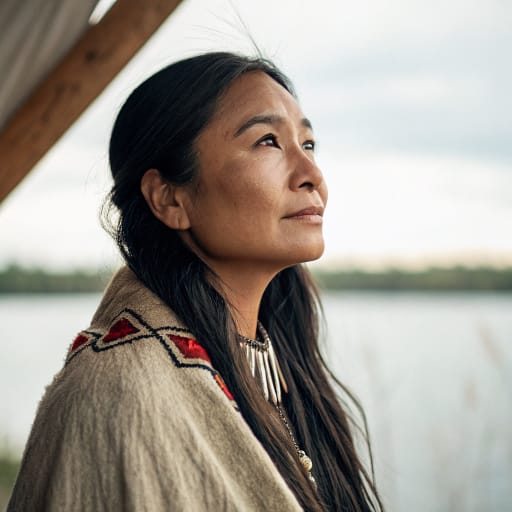
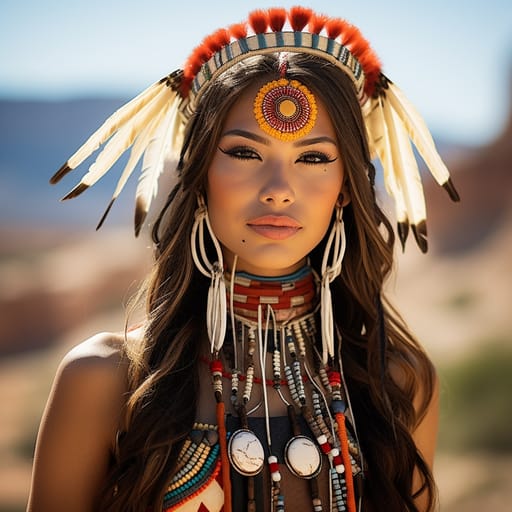
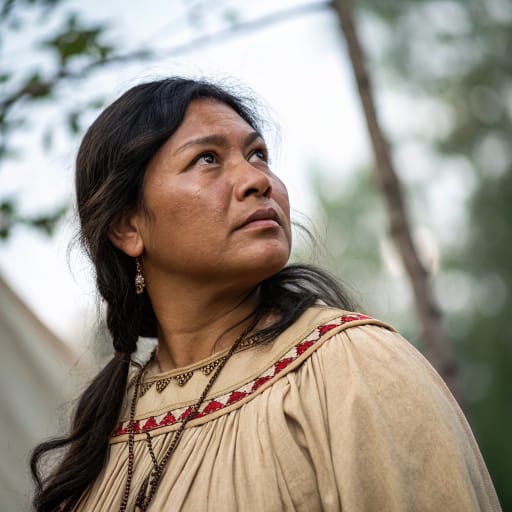
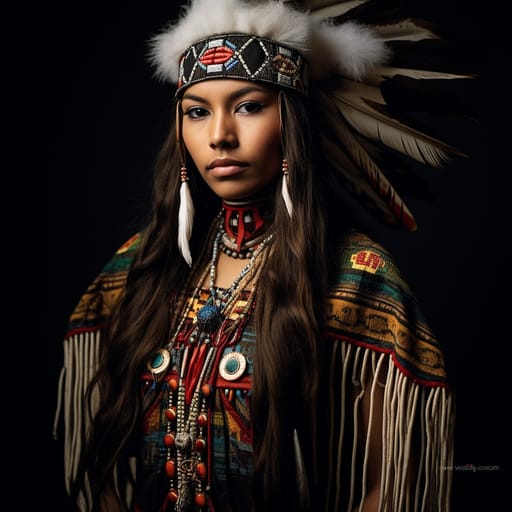
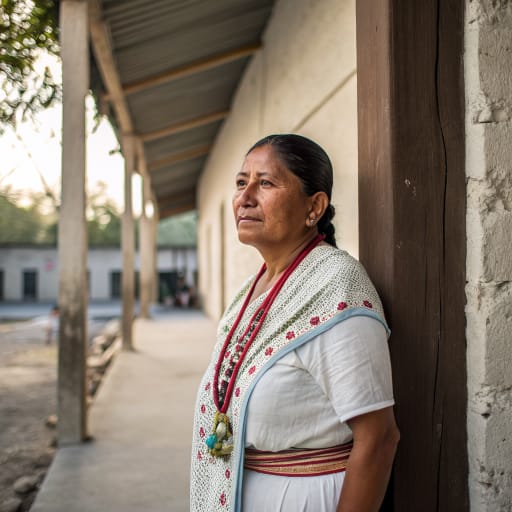
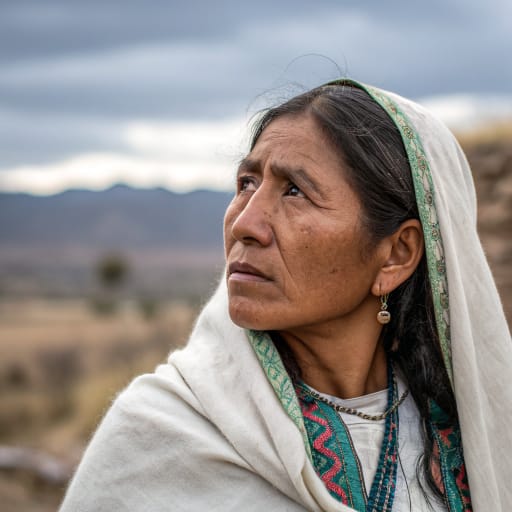
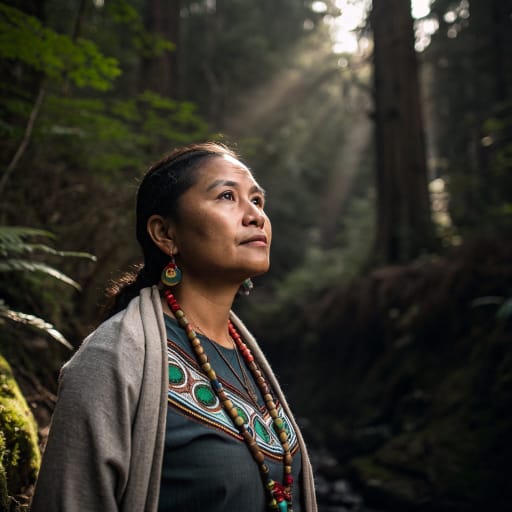
Typical Walla Walla Phenotypes
Reference for AI generation: hair, eyes, skin, facial structure, build
Walla Walla Body & Anatomy Reference
Indigenous Northern American / Algonquian-Iroquoian phenotype: anatomy reference for AI nude generation
Walla Walla Boobs & Breasts
Walla Walla tits and boobs run medium cup, moderate projection, the classic Indigenous Northern American / Algonquian-Iroquoian bust profile. Walla Walla nipples and areolas show medium-brown areolar pigmentation against the copper-to-medium-brown skin tone, with areolar diameter typically in the 30-44mm range and forward-set positioning rather than the smaller East Asian bust. Walla Walla breasts trend full and moderate projection, a function of the mesomorph, broader frame in northern Indigenous populations body habitus and the mean adult female BMI 25-28. For anatomically accurate AI-generated Walla Walla nudes the render preserves the medium cup, moderate projection shape, 30-44mm areolas with medium-brown pigmentation, and the torso proportions of the Indigenous Northern American / Algonquian-Iroquoian phenotype.
Walla Walla Ass & Hips
Walla Walla hips and butt usually read as medium, moderate-to-full projection. The skeletal base is medium iliac crests, the Indigenous Northern American / Algonquian-Iroquoian pattern. Set against the slim East Asian narrow-hip profile, the difference is easy to see, and the hip-to-waist ratio is often what identifies Walla Walla women in photos.
Walla Walla Vagina & Pussy
Expect medium-brown labial pigmentation on Walla Walla women, in keeping with Indigenous Northern American / Algonquian-Iroquoian ancestry. The pubic hair is straight medium-coarse texture. Coloring should run evenly from the copper to medium-brown skin of the thighs to the labia, and Walla Walla nude imagery should keep the hair's straight medium-coarse texture.
Walla Walla Dicks & Penis
Walla Walla dick and penile anatomy in adult AI generation should anchor on the regional reference data: regional mean ~13cm erect, moderate girth, and medium-brown shaft pigmentation. The Walla Walla cock profile reflects the Indigenous Northern American / Algonquian-Iroquoian population's anthropometric measurements. The shaft pigmentation should track the surrounding copper to medium-brown skin tone, and the pubic hair should keep its straight medium-coarse texture in the typical inverted-V escutcheon.
Walla Walla Body, Curves & Build
Walla Walla body type: mesomorph, broader frame in northern Indigenous populations, with mean adult female BMI 25-28. This is the typical Indigenous Northern American / Algonquian-Iroquoian build. Height range, shoulder-to-hip ratio and fat distribution all follow from it, which is what an accurate Walla Walla nude body should show.
Walla Walla Skin Tone & Hair Texture
Walla Walla skin tone falls in the copper to medium-brown (Fitzpatrick III-V) band, the surface signal most often miscalibrated by generic AI nude generators. Walla Walla hair texture is typically straight 1A, dark-brown to black, often thick and dense, characteristic of the Indigenous Northern American / Algonquian-Iroquoian phenotype. In Walla Walla nude renders the skin should hold that band consistently across the body.
Explore phenotype categories
Structured taxonomy with peer-reviewed scales · 22 anatomical categories
Erotic Poses & Sex Positions
From the pose catalog: 219 named positions with reference skeletons
Frequently asked questions about Walla Walla people
Where is the Walla Walla homeland?
The Walla Walla homeland is The lower Walla Walla and Columbia river confluence in southeastern Washington and northeastern Oregon, United States; most enrolled members now live on or near the Umatilla Indian Reservation outside Pendleton, Oregon. in North America.
What language do Walla Walla people speak?
Walla Walla people primarily speak Walla Walla dialect of Sahaptin, called Ichishkíin by speakers (Sahaptian, Plateau Penutian); English is the everyday language today..
What religion do Walla Walla people practice?
The predominant religion among Walla Walla people is Washat or Seven Drums longhouse religion alongside Presbyterian and Catholic Christianity, frequently practiced together..






Make your own Walla Walla images
Five a day, free, no credits to buy. The studio starts from this group's phenotype data, so you can set body type, pose and style and keep the traits accurate.
Start with Walla Walla