No portrait yet
Umbri Erotic
Central Italy, east of the Tiber and across the Apennines toward the Adriatic: roughly modern Umbria with adjoining parts of Marche, Tuscany and Emilia-Romagna, Italy
Umbrian (Italic, Sabellic or Osco-Umbrian branch of Indo-European), replaced by Latin by the first century AD
Italic polytheism centered on augury and civic purification rites, with a triad of Jupiter, Mars and Vofionus Grabovius; later Roman religion
Sabellic Italic peoples, kin to the Sabines, Samnites and Picentes; organized as city communities such as Iguvium, Tuder, Ameria, Spoletium, Camerinum and Sarsina
About Umbri People
The Umbri were an Italic people of central Italy who held the upper Tiber valley and the Apennine hill country east of it from the early Iron Age until Rome absorbed them, and their language had fallen silent by the first century AD. They left their name on the modern region of Umbria, whose people descend from them only in the loose way that everyone in central Italy descends from the peninsula's ancient inhabitants. What made the Umbri a people, to themselves and to their neighbors, was speech and rite. Umbrian belonged to the Sabellic branch of Italic, close kin to Oscan and to the tongues of the Sabines and Samnites, a cousin of Latin rather than a sibling. They wrote it right to left in an alphabet borrowed from the Etruscans, and later in Latin letters. The neighbors were not gentle. Etruscans held the west bank of the Tiber, including Perugia, which ancient writers said had once been Umbrian. Gaulish Senones seized the Adriatic coast around 400 BC. Rome, after breaking an Umbrian, Samnite, Etruscan and Gaulish coalition at Sentinum in 295 BC, planted colonies at Narni and Spoleto and drove the Via Flaminia straight through Umbrian country. Citizenship came with the Social War in 90 BC, and Augustus filed what remained under Regio VI, Umbria.
Nearly everything intimate we know about them comes from seven bronze tablets dug up at Gubbio in 1444. The Iguvine Tablets are the longest text in any ancient Italic language other than Latin, not laws or epic but a liturgical manual for a priestly brotherhood, the Atiedian Brethren. They lay out the yearly purification of the town: take the auspices from named birds in named quarters of the sky, sacrifice oxen at each of three gates to Jupiter, Mars and Vofionus, each carrying the title Grabovius, then lead the assembled citizens around the walls while the priest curses the Etruscans, the people of Tadinum and other enemies by name. Vofionus and the goddess Tursa have no clean Roman equivalent. This was its own religion, not a provincial copy. An Etruscan-made bronze warrior found near Todi, the Mars of Todi, carries an Umbrian dedication from a man called Ahal Trutitis: an Umbrian buying art from the neighbors and signing it in his own language. Pliny the Elder called them the oldest people in Italy, and the Greeks told a story that their name meant they had survived the flood. Rome got two writers out of them that it still reads, the comic playwright Plautus from Sarsina and the poet Propertius from Assisi, both in Latin. That is the arc: a people whose tongue was swallowed by the state it helped build, and whose rites survive because someone in Gubbio put the instructions in bronze.
Related ethnic groups
Groups that share Umbri's homeland, region, language, or religious tradition. These are likely candidates for comparative phenotype reference.
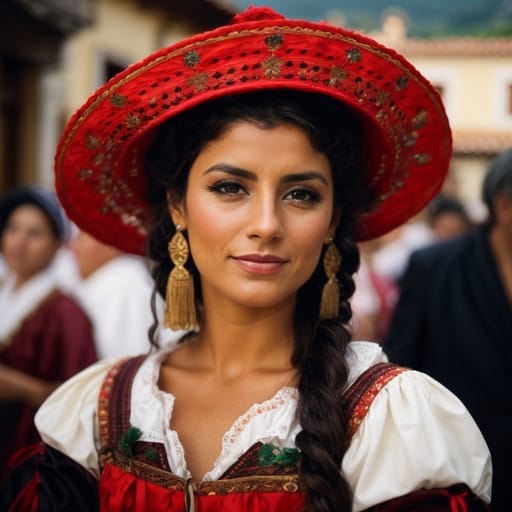
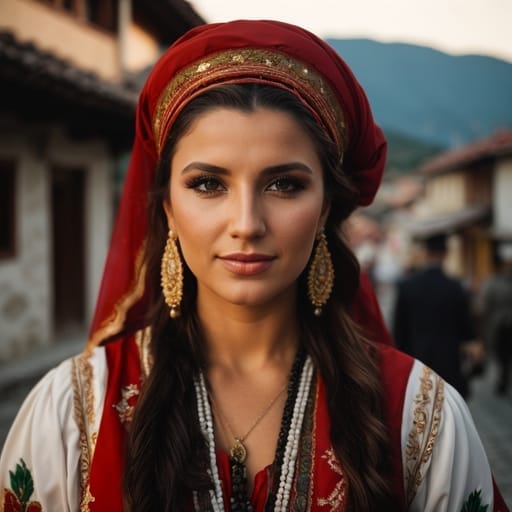
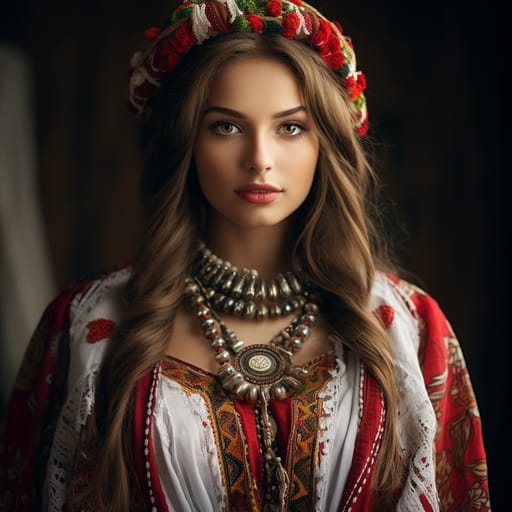
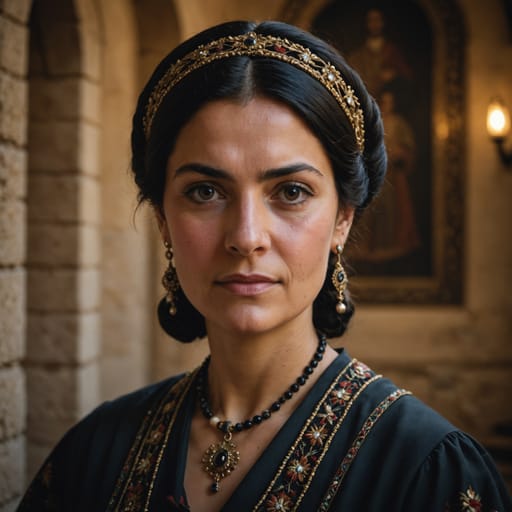
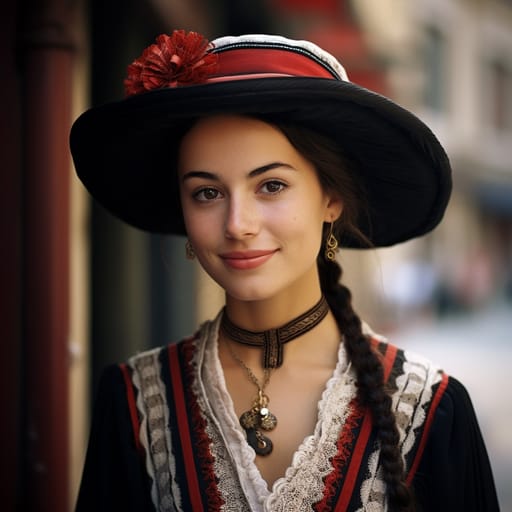
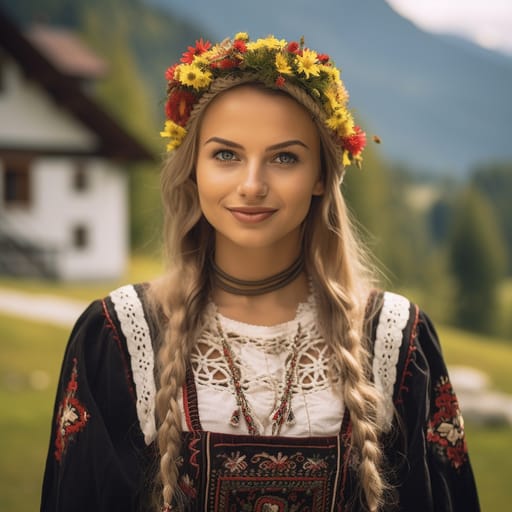
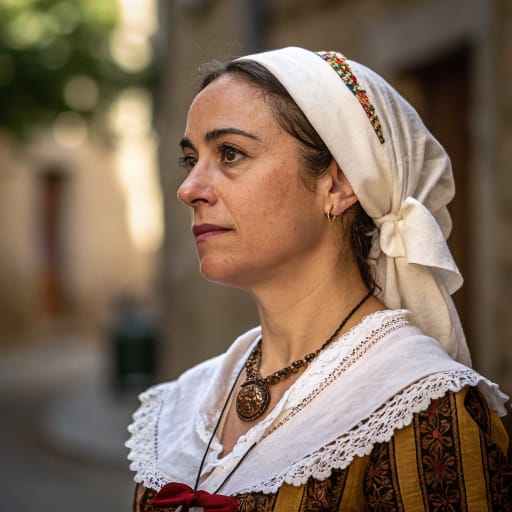
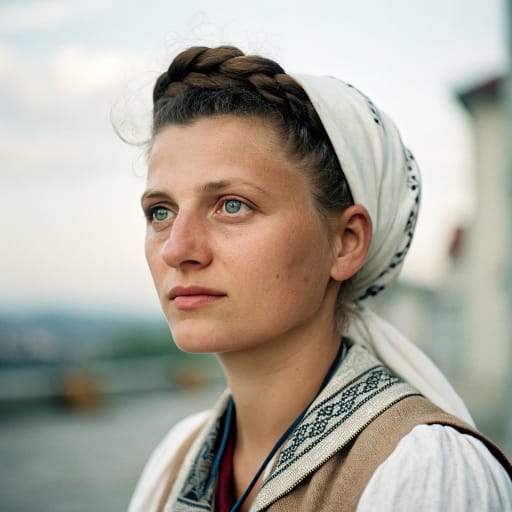
Typical Umbri Phenotypes
Reference for AI generation: hair, eyes, skin, facial structure, build
Umbri Body & Anatomy Reference
Anatomy by feature, Southern European / Mediterranean phenotype
Umbri Boobs & Breasts
The typical Umbri bust is medium-to-large cup, full, moderate-to-high projection, in line with the wider Southern European / Mediterranean pattern. Areolas usually fall in the 32-46mm range, with medium-brown to dark-brown areolar pigmentation against the olive-to-light-brown skin tone. Compared with the lighter pigmentation of the Northern European bust, Umbri breasts sit forward and are generally full and projecting, generally the classic Mediterranean curvy bust profile. A faithful AI render of Umbri tits keeps that shape and areola size.
Umbri Ass & Hips
Butt shape among Umbri women: medium-to-full, moderate-to-high projection, broader hip profile, over medium-to-wide iliac crests, full gluteal-femoral fat distribution. This follows Southern European / Mediterranean ancestry and looks quite unlike the slim Northern European narrow-hip pattern. An accurate Umbri ass in adult AI imagery keeps both the silhouette and the overall build (mesomorph with full hip-and-bust deposition) instead of a generic average.
Umbri Vagina & Pussy
Vulvar anatomy among Umbri women: medium-brown to dark-brown labial pigmentation, fuller labia minora. Pubic hair tends to be wavy-to-curly medium-coarse dark texture, dense distribution, in the usual inverted-triangle pattern. Both follow Southern European / Mediterranean pigmentation, which is why Umbri pussy renders should not fall back on a pale, sparse Western template.
Umbri Dicks & Penis
The Umbri cock profile, from Southern European / Mediterranean anthropometric data: regional mean ~13-14cm erect; moderate girth; medium-brown shaft pigmentation. Pubic hair has a wavy-to-curly medium-coarse dark texture and forms the usual inverted-V pattern. Whether Umbri men are circumcised follows religious and cultural practice rather than phenotype.
Umbri Body, Curves & Build
Build and curves among Umbri women follow the Southern European / Mediterranean pattern: mesomorph with full hip-and-bust deposition, mean adult female BMI 24-28. Proportions matter as much as skin tone, so Umbri figures should keep their regional height and limb ratios.
Umbri Skin Tone & Hair Texture
The Umbri skin range is olive to medium (Fitzpatrick III-IV), and hair tends to be wavy-to-curly 2B-3B, dark-brown to black. That combination marks the Southern European / Mediterranean phenotype, and skin tone is the trait AI generators most often get wrong for Umbri women.
Explore phenotype categories
Structured taxonomy with peer-reviewed scales · 22 anatomical categories
Erotic Poses & Sex Positions
From the pose catalog: 219 named positions with reference skeletons
Frequently asked questions about Umbri people
Where is the Umbri homeland?
The Umbri homeland is Central Italy, east of the Tiber and across the Apennines toward the Adriatic: roughly modern Umbria with adjoining parts of Marche, Tuscany and Emilia-Romagna, Italy in Southern Europe.
What language do Umbri people speak?
Umbri people primarily speak Umbrian (Italic, Sabellic or Osco-Umbrian branch of Indo-European), replaced by Latin by the first century AD.
What religion do Umbri people practice?
The predominant religion among Umbri people is Italic polytheism centered on augury and civic purification rites, with a triad of Jupiter, Mars and Vofionus Grabovius; later Roman religion.






Make your own Umbri images
Five a day, free, no credits to buy. The studio starts from this group's phenotype data, so you can set body type, pose and style and keep the traits accurate.
Start with Umbri