No portrait yet
Tukudeka Erotic
Mountains of the northern Rockies, United States: Yellowstone and the Absaroka and Wind River ranges in Wyoming, the Salmon River Mountains of central Idaho, and southwestern Montana
Shoshoni (Uto-Aztecan, Numic)
Traditional Shoshone spirituality built around puha (spiritual power) and vision seeking; descendants today also practice the Sun Dance, the Native American Church and Christianity
Mountain Shoshone band within the wider Shoshone people; descendants are enrolled mainly with the Eastern Shoshone of Wind River and the Shoshone-Bannock of Fort Hall
About Tukudeka People
The Tukudeka took their name from what they hunted. In Shoshoni the word means sheep eaters, and the bighorn sheep of the northern Rockies shaped almost everything about how this band of Mountain Shoshone lived. Their relatives on the plains built their lives around horses and buffalo, but the Tukudeka stayed high. They worked the ridges and basins of what is now Yellowstone National Park, the Absaroka and Wind River ranges of Wyoming, and the mountains of central Idaho and southwestern Montana. Many families kept dogs rather than horses and used them to carry their camps between seasonal hunting grounds.
They spoke Shoshoni, a Numic language of the Uto-Aztecan family. Shoshone communities across the Great Basin and the Snake River country share the language, and it is closely related to Comanche. Shoshone band names were food names, not fixed tribal borders. A family that moved down to the rivers and lived on fish could become salmon eaters, and one that took up horseback buffalo hunting could become buffalo eaters. The Tukudeka were less a closed tribe than a way of making a living in the mountains.
That living took real skill. Hunters built log catch pens and drive fences to steer bighorns into traps, and remains of some still stand in the high country. To make their bows, they softened ram horn with heat, shaped it and backed it with sinew. People across the region prized these bows, and a single one could be traded for horses. Their tanned sheep and deer hides impressed outsiders. A fur trapper who came across a Tukudeka camp in the Lamar Valley in the 1830s described the people there as well dressed and content. Religious life centered on puha, the spiritual power Shoshone people sought through dreams and solitary vigils. Researchers have linked the ghostly figures carved into rock at Dinwoody in the Wind River Basin to Mountain Shoshone belief.
The nineteenth century ended life in the mountains. Early Yellowstone officials described the Sheep Eaters as a timid, poor remnant. For decades the park also told visitors that Native people had avoided the geyser country, a story historians and archaeologists have since disproved. In Idaho, the Army's 1879 Sheepeater campaign chased a small group through the Salmon River Mountains over killings that may not have been theirs. By the 1880s most Tukudeka had moved onto reservations, mainly Wind River in Wyoming and Fort Hall and Lemhi in Idaho. Their descendants are enrolled today among the Eastern Shoshone and the Shoshone-Bannock, and some families still trace their line to the Sheep Eaters.
Related ethnic groups
Groups that share Tukudeka's homeland, region, language, or religious tradition. These are likely candidates for comparative phenotype reference.
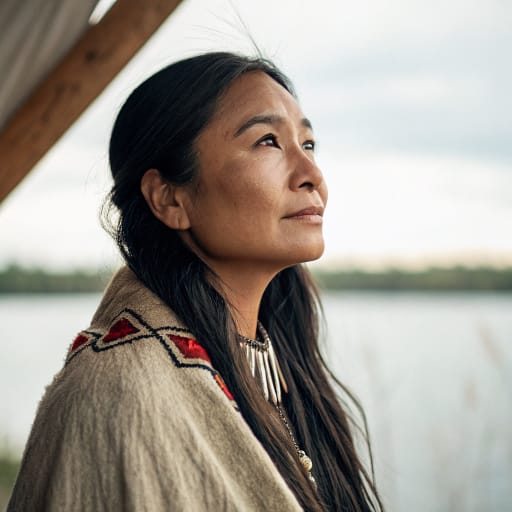
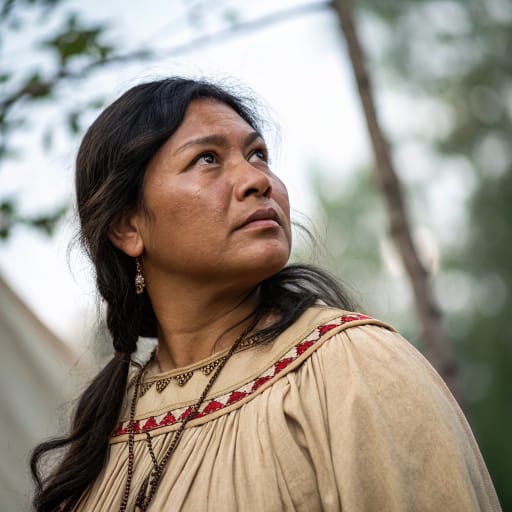
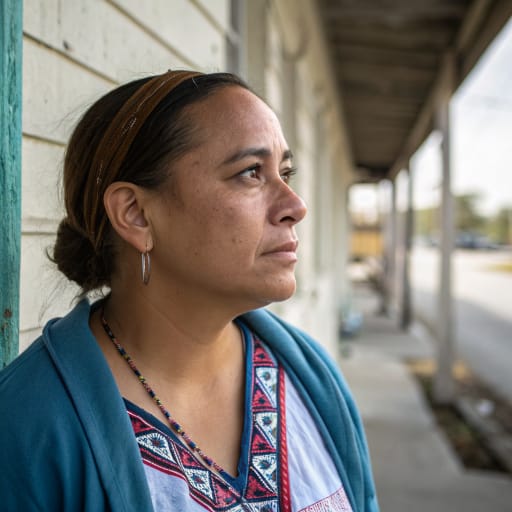
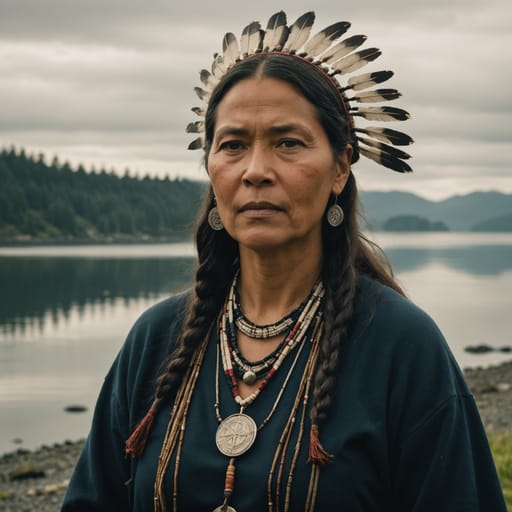
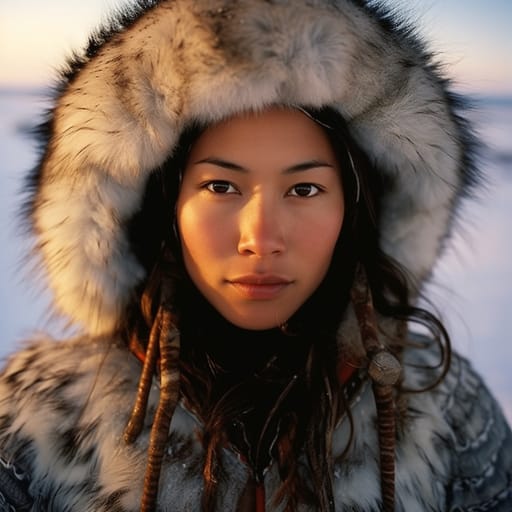
Typical Tukudeka Phenotypes
Reference for AI generation: hair, eyes, skin, facial structure, build
Tukudeka Body & Anatomy Reference
Per-feature anatomical profile for AI nude generation: Indigenous Northern American / Algonquian-Iroquoian phenotype
Tukudeka Boobs & Breasts
Tukudeka boobs follow the Indigenous Northern American / Algonquian-Iroquoian profile: medium cup, moderate projection. Areolar diameter is usually 30-44mm, and the coloring is medium-brown areolar pigmentation against the copper-to-medium-brown skin tone. Breast shape tracks body composition (mesomorph, broader frame in northern Indigenous populations, mean adult female BMI 25-28), so Tukudeka breasts tend to be full and moderate projection. Expect a forward-set shape, not the smaller East Asian bust.
Tukudeka Ass & Hips
Tukudeka ass and hip morphology presents as medium, moderate-to-full projection, distinctly different from the slim East Asian narrow-hip profile. The Tukudeka pelvic profile shows medium iliac crests, anchored in the Indigenous Northern American / Algonquian-Iroquoian skeletal pattern. Tukudeka butt shots in adult AI imagery should render the medium, moderate-to-full projection silhouette with the overall build (mesomorph, broader frame in northern Indigenous populations) and the fat distribution typical of the Indigenous Northern American / Algonquian-Iroquoian phenotype.
Tukudeka Vagina & Pussy
Tukudeka pussy anatomy typically shows medium-brown labial pigmentation. Pubic hair is usually straight medium-coarse texture. In AI-generated Tukudeka nudes, labial color should blend into the copper to medium-brown skin with a gradual transition, and the hair should keep its straight medium-coarse texture.
Tukudeka Dicks & Penis
Penis reference for Tukudeka men: regional mean ~13cm erect, moderate girth. Coloring: medium-brown shaft pigmentation. An accurate Tukudeka cock in AI imagery matches the surrounding copper to medium-brown skin rather than a generic porn default. Circumcision depends on religion and custom, not ancestry.
Tukudeka Body, Curves & Build
The Tukudeka figure is generally mesomorph, broader frame in northern Indigenous populations, with mean adult female BMI 25-28, characteristic of Indigenous Northern American / Algonquian-Iroquoian ancestry. AI image tools tend to flatten regional body types into a few stock shapes; here the Tukudeka build is kept as its own reference.
Tukudeka Skin Tone & Hair Texture
Skin: copper to medium-brown (Fitzpatrick III-V). Hair: straight 1A, dark-brown to black, often thick and dense. Both are typical of Indigenous Northern American / Algonquian-Iroquoian ancestry. The most common mistake in AI nudes of Tukudeka women is a body rendered lighter than the face.
Explore phenotype categories
Structured taxonomy with peer-reviewed scales · 22 anatomical categories
Erotic Poses & Sex Positions
From the pose catalog: 219 named positions with reference skeletons
Frequently asked questions about Tukudeka people
Where is the Tukudeka homeland?
The Tukudeka homeland is Mountains of the northern Rockies, United States: Yellowstone and the Absaroka and Wind River ranges in Wyoming, the Salmon River Mountains of central Idaho, and southwestern Montana in North America.
What language do Tukudeka people speak?
Tukudeka people primarily speak Shoshoni (Uto-Aztecan, Numic).
What religion do Tukudeka people practice?
The predominant religion among Tukudeka people is Traditional Shoshone spirituality built around puha (spiritual power) and vision seeking; descendants today also practice the Sun Dance, the Native American Church and Christianity.






Make your own Tukudeka images
Five a day, free, no credits to buy. The studio starts from this group's phenotype data, so you can set body type, pose and style and keep the traits accurate.
Start with Tukudeka